 English
 русский
 Español
 عربى


Plain-Colored Two-Tone Comforter Set: A Complete Seven-Piece Bedding Solution for Modern Homes
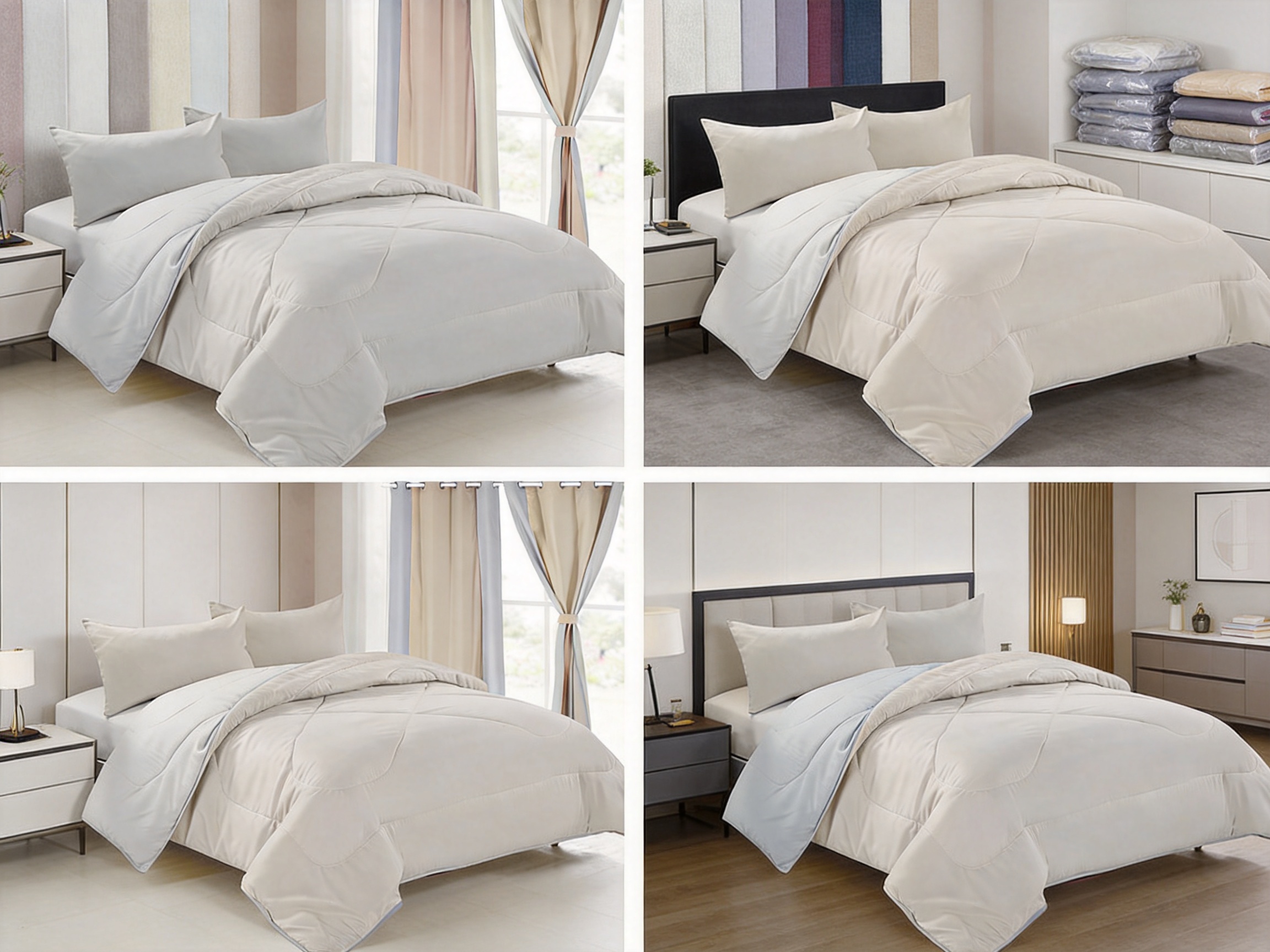
Introduction
The bedroom is one of the most important spaces in any home. It is where people rest, recover, and begin each new day. For that reason, bedding must provide more than an attractive appearance. It should offer comfort, practical coverage, dependable construction, easy coordination, and long-term value. The Plain-Colored Two-Tone Comforter Set is designed to bring these qualities together in one coordinated seven-piece package.
This bedding set combines a solid-color two-tone design with a practical selection of essential bedroom textiles. The package includes one quilt, one flat bed sheet, one fitted sheet, two pillowcases, and two curtains. Available in both queen and king sizes, it offers a convenient way to create a coordinated bedroom without purchasing each item separately.
The design is intentionally simple. Rather than relying on busy patterns or short-lived decorative trends, it uses two solid colors to create visual contrast and depth. This approach gives the set a modern appearance while allowing it to work with a wide range of furniture, wall colors, flooring, and interior styles. The result is bedding that can suit a minimalist apartment, a family bedroom, a guest room, a hotel-inspired interior, or a contemporary home textile collection.
Behind the product is Dongyangshi Menghui Textile Co., Ltd., an industrial and trading enterprise focused on the research, development, production, sales, and export of home textile products. Its product range includes bed sheets, quilt covers, pillowcases, cushions, quilts, waterproof mattress protectors, curtains, and complete bedding sets. With a factory of more than 10,000 square meters, intelligent production equipment, more than 100 employees, standardized management, and an experienced foreign trade service team, the company is positioned to support both regular supply and customized textile programs.
This article examines the product’s design, materials, dimensions, functional advantages, manufacturing strengths, quality considerations, and suitability for different markets. It also explains why a coordinated seven-piece set can offer advantages over purchasing separate bedding components from multiple suppliers.
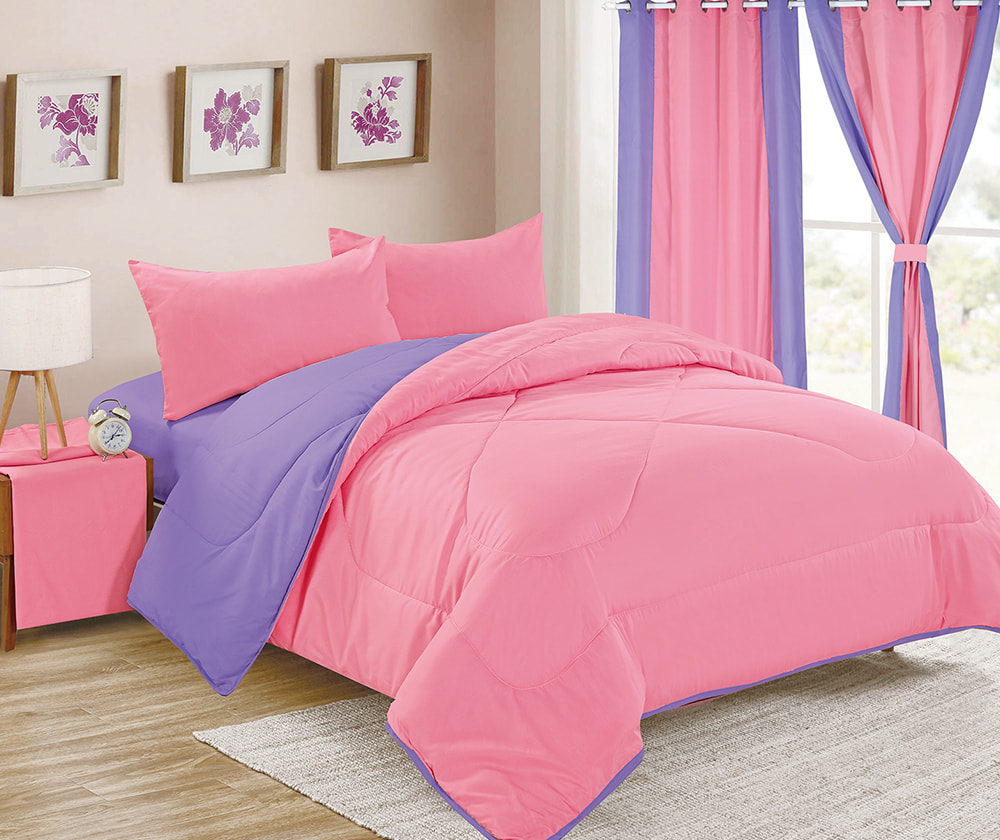
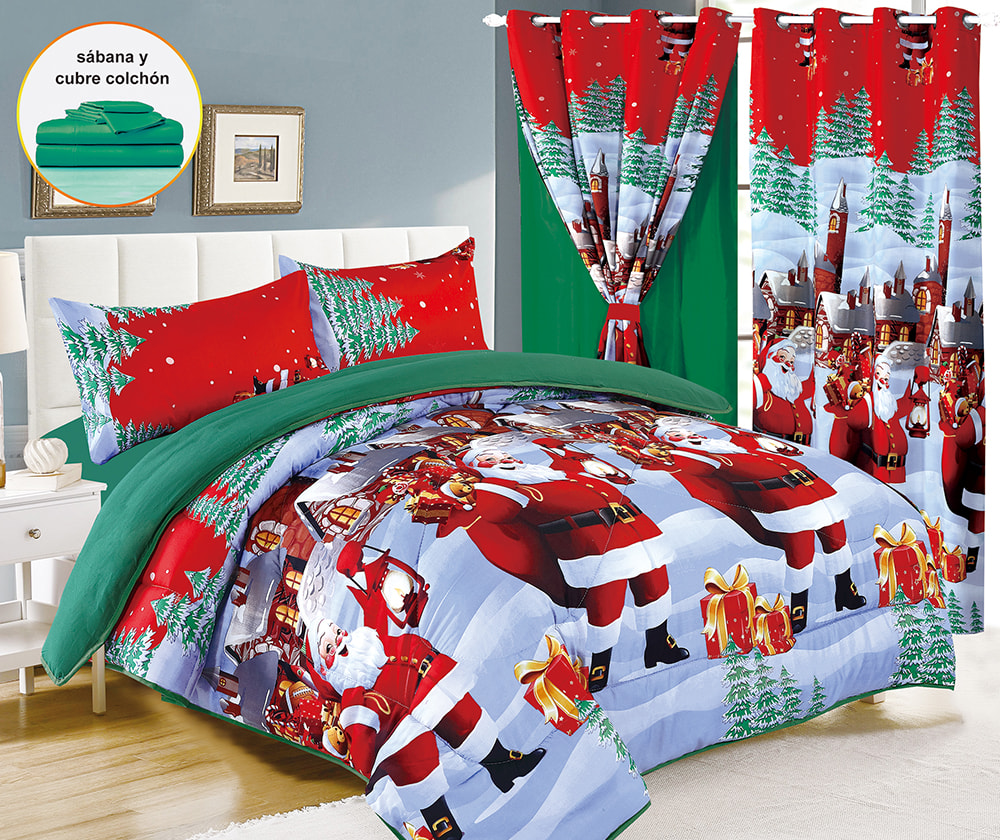
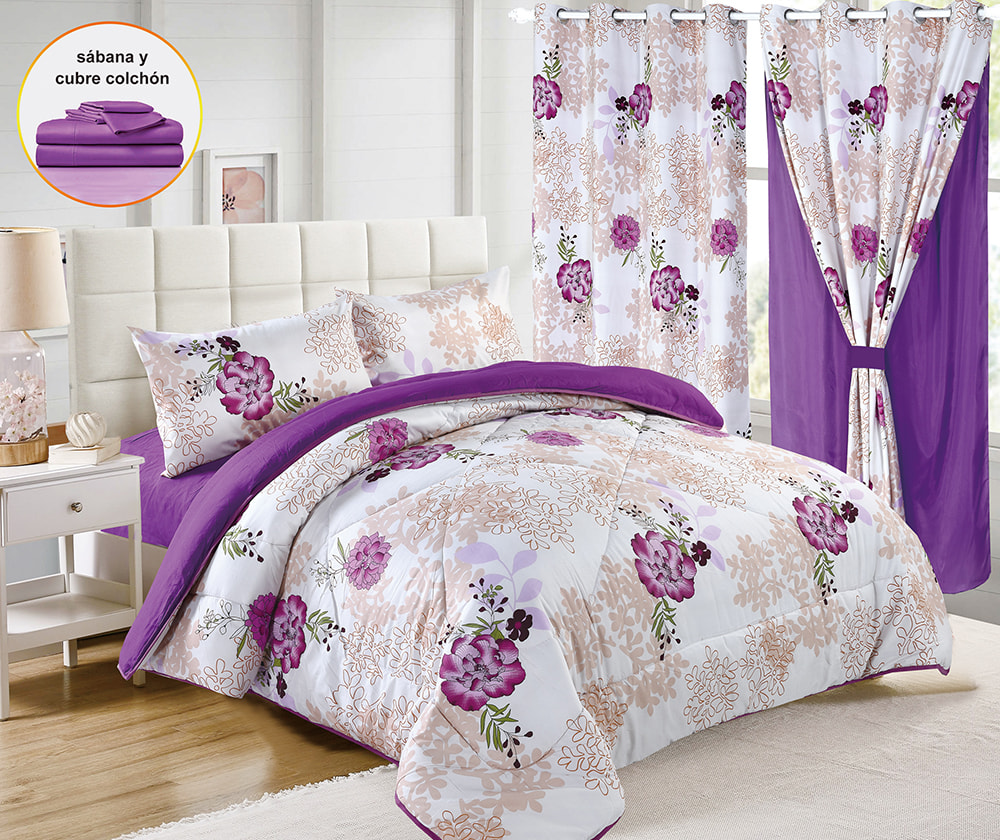
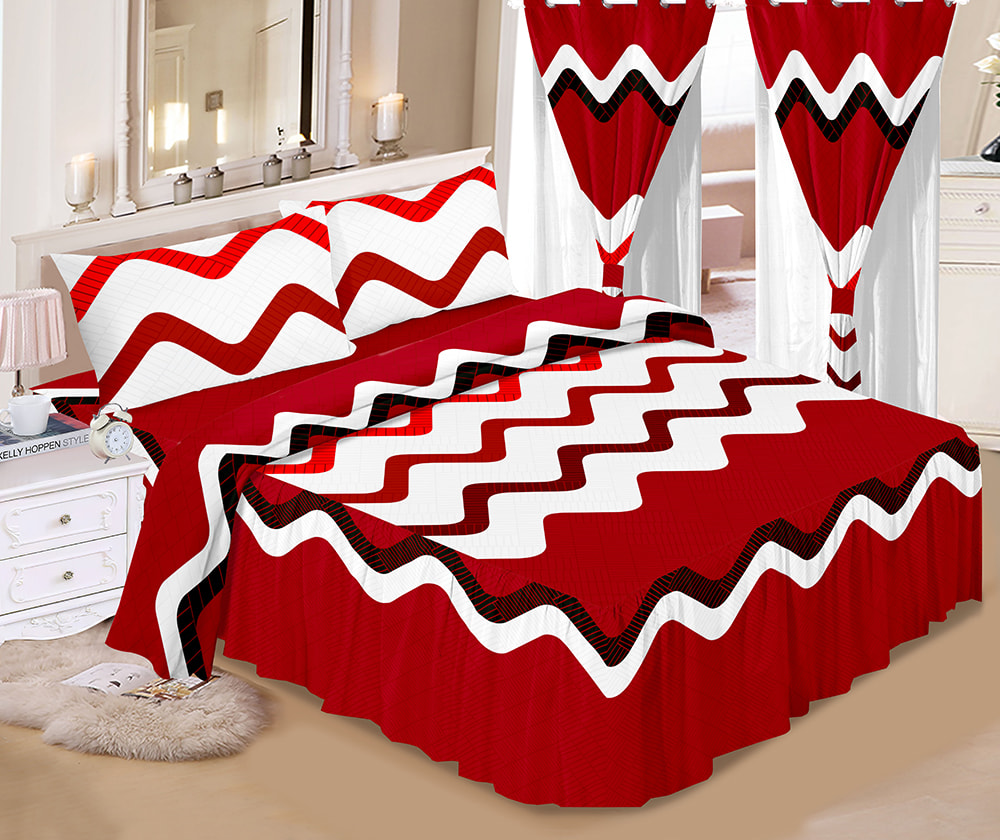
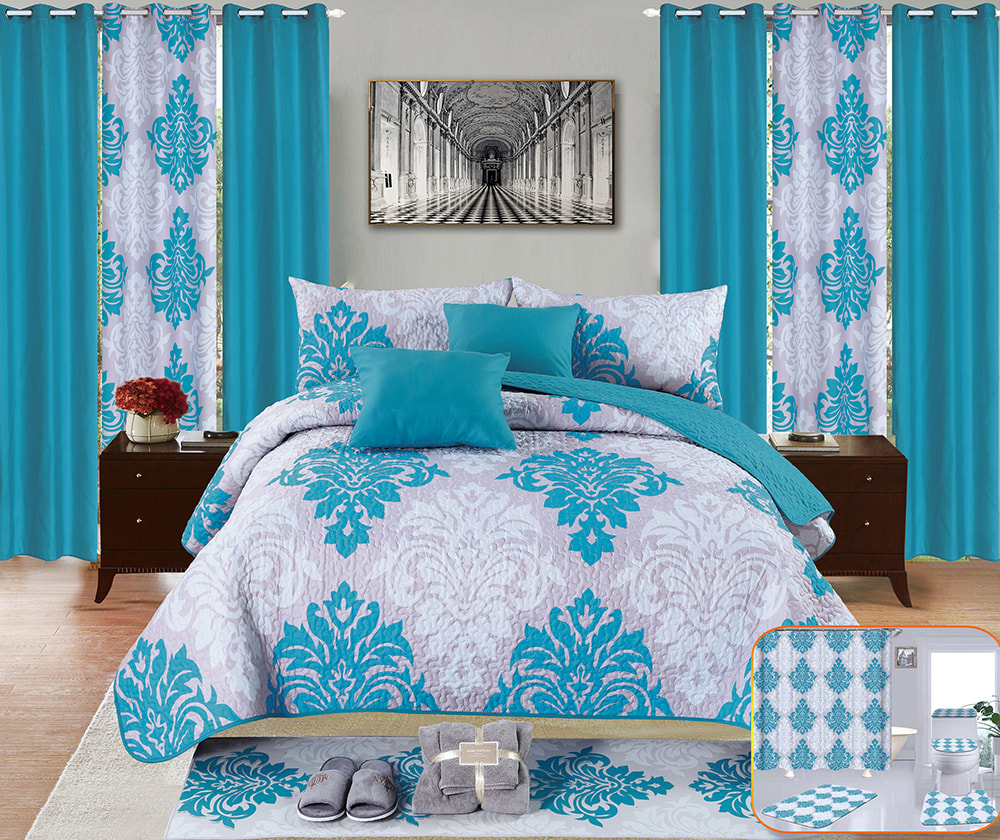
Plain-Colored Two-Tone Comforter Set (7 Pieces)
Product Overview
The Plain-Colored Two-Tone Comforter Set is a complete bedding and bedroom textile package made from 100% polyester. The product is presented as a solid-color quilt seven-piece set and is also suitable for buyers seeking a comforter set, luxury sheet set, or coordinated home textile solution. Its two-tone construction gives the bedding a layered visual effect without introducing complex printed motifs.
The central item is the quilt, which serves as the primary covering for the bed. It is accompanied by both a flat bed sheet and a fitted sheet, giving users flexibility in how they arrange the bed. The fitted sheet is designed with added depth, helping it cover the mattress more securely. Two pillowcases complete the basic bedding arrangement, while two matching curtains extend the coordinated appearance beyond the bed itself.
The seven pieces are organized as follows:
| Component | Queen Size | King Size | Quantity |
|---|---|---|---|
| Quilt | 223 × 228 cm | 226 × 260 cm | 1 piece |
| Flat Bed Sheet | 210 × 230 cm | 235 × 270 cm | 1 piece |
| Fitted Sheet | 152 × 203 + 30 cm | 198 × 203 + 30 cm | 1 piece |
| Pillowcases | 50 × 70 cm | 50 × 100 cm | 2 pieces |
| Curtains | 120 × 220 cm | 120 × 220 cm | 2 pieces |
The inclusion of both a flat sheet and a fitted sheet is particularly useful. Some consumers prefer the smooth, traditional arrangement of a flat sheet, while others prefer the mattress grip provided by a fitted sheet. By including both, the set can accommodate different sleeping habits and household preferences.
The curtains are another distinguishing feature. Many bedding sets stop at the bed itself, leaving buyers to find separate window treatments that may not match. This seven-piece package extends the color coordination into the surrounding room. Depending on the window arrangement and installation method, the curtains may be used in bedrooms, guest rooms, dormitory-style spaces, or other interior areas that benefit from a consistent color scheme.
Two-Tone Design with Timeless Appeal
The strongest visual feature of the product is its combination of two solid colors. The design creates contrast and layering while maintaining a clean and uncluttered appearance. This makes it different from highly patterned bedding, which can dominate a room and become difficult to coordinate with existing décor.
Two-tone bedding has a practical design advantage because it can provide more visual interest than a single-color set without becoming overly decorative. The solid-color arrangement emphasizes the structure of the quilt and can make the bed appear more carefully styled. It also supports a broad range of decorating preferences, including modern, minimalist, transitional, contemporary, and understated hotel-inspired interiors.
Unlike seasonal prints or novelty motifs, plain colors are less likely to appear outdated when room décor changes. A buyer can replace cushions, rugs, wall art, or curtains in the future without necessarily replacing the entire bedding set. This supports longer product use and may provide better value over time.
The calm color concept is also suitable for commercial and hospitality applications. Guest rooms, serviced apartments, rental properties, and hospitality projects often require bedding that looks neat and attractive but does not appeal to only one narrow design preference. A restrained two-tone appearance can help create a consistent visual identity across multiple rooms while remaining broadly acceptable to guests.
For retailers, this design can be easier to merchandise than highly specialized styles. It may appeal to consumers searching for simple bedding, modern bedding, neutral bedroom décor, coordinated comforter sets, or practical home textile gifts. Its broad styling potential can support different sales channels and seasonal collections.
Material Benefits of 100% Polyester
The set is made from 100% polyester. Polyester is widely used in bedding and home textiles because it offers a practical balance of softness, durability, color stability, production flexibility, and cost control. When properly manufactured and finished, polyester bedding can provide a smooth hand feel while remaining suitable for regular household use.
The product description emphasizes a smooth and soft touch. This surface quality is important because bedding remains in direct contact with the body for many hours. A comfortable hand feel helps create a more pleasant sleep environment and improves the perceived quality of the product.
Polyester also supports efficient textile production. The fiber can be woven, knitted, dyed, printed, finished, cut, and sewn in a controlled industrial process. This makes it suitable for larger production runs as well as product development programs that require multiple color combinations or size specifications.
Another benefit is durability. Bedding is exposed to repeated use, washing, folding, storage, and handling. A suitably constructed polyester fabric can resist everyday wear and maintain its general appearance over time. Durable stitching and careful assembly further support the product’s service life.
Polyester is also valued for its relatively easy-care properties. Consumers and commercial users generally look for bedding that can be maintained without complicated treatment. Care requirements should always follow the final product label and buyer specifications, but polyester home textiles are commonly selected for their practical handling and suitability for routine laundering.
The material can also contribute to reliable color presentation. Solid-color bedding depends heavily on even dyeing and consistent shade control. Polyester provides manufacturers with a suitable base for producing clear, stable color effects and for coordinating multiple components within one set.
It is important to understand that material performance depends not only on fiber content. Fabric construction, weight, finishing, filling, stitching, washing instructions, packaging, and quality inspection all affect the final user experience. The value of this product therefore comes from the combination of 100% polyester material and the manufacturing processes used to turn that material into a complete bedding package.
Comfort, Warmth, and Breathability
The product is designed to balance warmth and breathability. This balance is important because bedding that is too heavy or poorly ventilated can feel uncomfortable, while bedding that provides insufficient coverage may not meet the needs of users in cooler conditions.
The quilt provides the primary layer of warmth. Its dimensions are designed to cover queen and king beds, allowing users to create a complete sleeping surface with appropriate side and end coverage. The exact level of warmth may vary according to the quilt construction, filling weight, room temperature, and personal preference. Buyers should therefore confirm detailed filling specifications when preparing a purchase order or product listing.
Breathability is influenced by the fabric structure and the way moisture and air move through the textile. A well-finished polyester bedding fabric can feel smooth and comfortable while allowing a practical level of airflow. The sheets provide an additional layer between the sleeper and the quilt, helping create a familiar and comfortable bedding arrangement.
The combination of quilt, sheet, and fitted sheet allows users to adjust their sleeping setup. On warmer nights, the sheet may provide sufficient coverage by itself. During cooler periods, the quilt can be added. This flexibility makes the set useful across different seasons and household preferences, although the most suitable use will depend on local climate and individual comfort requirements.
Comfort is also related to fit. A properly sized fitted sheet is less likely to shift excessively during sleep. The included mattress depth allowance of 30 centimeters provides additional coverage for compatible mattresses. Mattress thickness should be checked before purchase because actual fit depends on the mattress dimensions, topper thickness, and elastic design.
Complete Seven-Piece Convenience
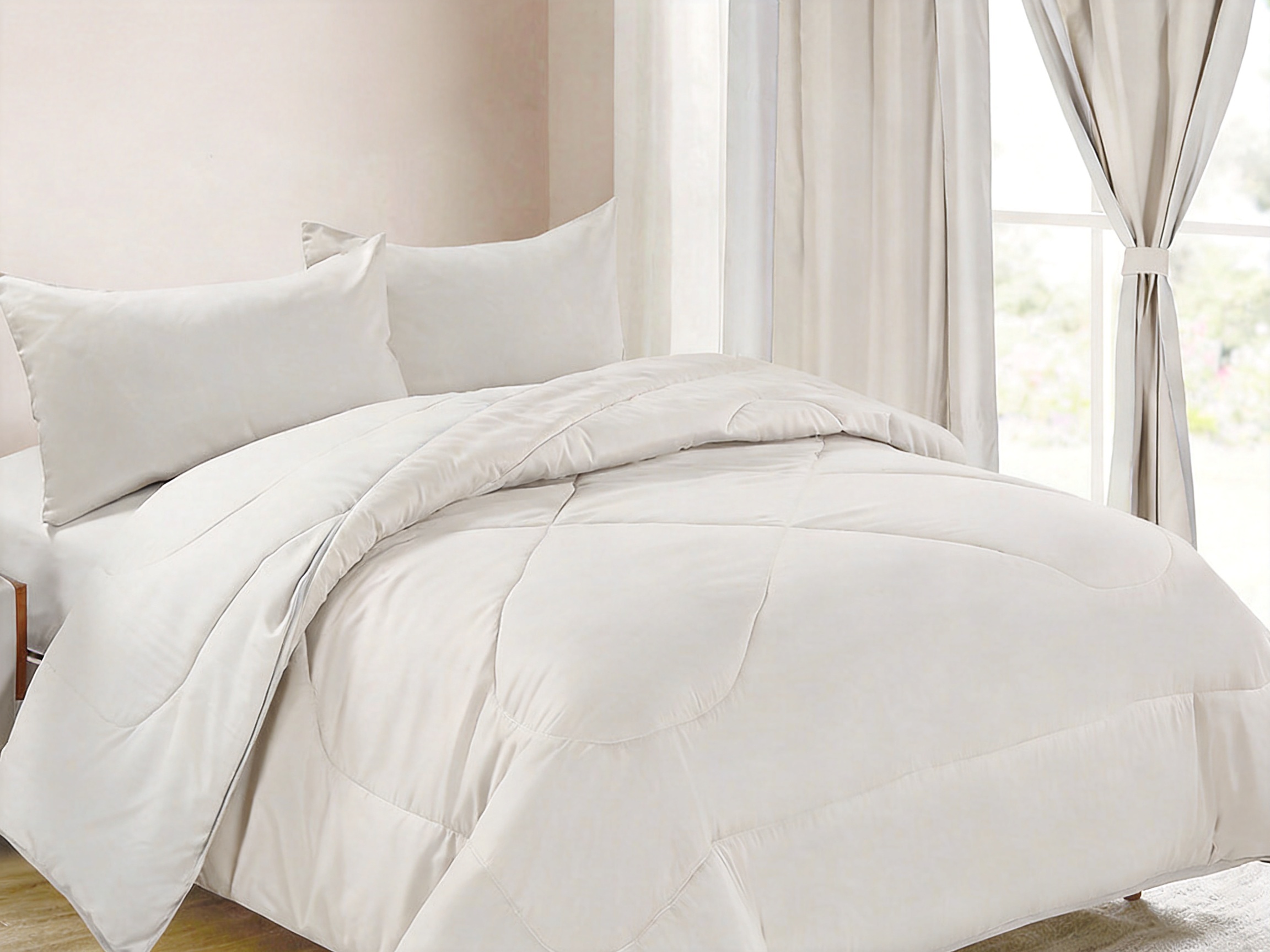
One of the product’s clearest advantages over many conventional comforter sets is its complete configuration. Buyers do not receive only a quilt and pillowcases; they receive a broader set of textiles intended to support the entire bedroom arrangement.
Purchasing separate items from different suppliers can create several difficulties. The colors may not match exactly, fabric surfaces may vary, dimensions may be inconsistent, and delivery schedules may be difficult to coordinate. A complete set reduces these concerns by placing the main components under one product concept and one manufacturing program.
The set includes:
One quilt for the main bed covering.
One flat bed sheet for flexible layering and traditional bed-making.
One fitted sheet for a more secure mattress fit.
Two pillowcases for coordinated head-of-bed styling.
Two curtains for extending the color theme into the room.
This configuration is convenient for households furnishing a bedroom from the beginning. It may also be useful for property managers, accommodation providers, retailers, wholesalers, and project buyers who need a coordinated textile package rather than a collection of unrelated products.
The seven-piece structure can also simplify inventory management. A retailer can present one complete product rather than stocking several separate items that customers must combine. For export buyers, consolidated packaging and unified quality control may reduce the complexity of managing multiple product codes.
For consumers, the set may offer stronger visual coordination and potentially better purchasing value than buying equivalent pieces separately. The final commercial advantage will depend on order quantity, packaging, freight, and market positioning, but the complete-set structure is inherently attractive for customers seeking convenience.
Queen and King Size Options
Offering both queen and king sizes improves the product’s market flexibility. The two sizes address common household requirements and allow sellers to serve different bedroom layouts without changing the overall design concept.
The queen-size quilt measures 223 × 228 centimeters. The queen-size flat sheet measures 210 × 230 centimeters, while the fitted sheet measures 152 × 203 centimeters with a 30-centimeter depth allowance. The queen-size pillowcases measure 50 × 70 centimeters. The two curtains measure 120 × 220 centimeters.
The king-size quilt measures 226 × 260 centimeters. The king-size flat sheet measures 235 × 270 centimeters, and the fitted sheet measures 198 × 203 centimeters with a 30-centimeter depth allowance. The king-size pillowcases measure 50 × 100 centimeters. The king-size package also includes two curtains measuring 120 × 220 centimeters.
These dimensions should be reviewed carefully against the target market before ordering. Bed and mattress standards can vary between countries, and consumers may use different definitions for queen and king sizes. Export buyers should confirm product measurements, tolerances, packaging details, and labeling requirements before production.
The availability of two sizes also supports retail range planning. A seller can introduce a consistent color story across both queen and king products, helping customers select the required size without sacrificing the overall aesthetic. For hospitality or property projects, separate size options make it easier to furnish rooms with different bed configurations while maintaining a unified design direction.
Manufacturing Strengths and Production Capability
The manufacturer operates as an integrated industrial and trade enterprise. This structure combines product development, manufacturing, sales, and export service within one organization. Such integration can improve communication between design teams, production departments, quality personnel, and overseas customers.
Research and development is important for products such as the two-tone comforter set because the design involves more than selecting colors. The manufacturer must consider fabric hand feel, color coordination, component dimensions, sewing construction, quilt assembly, curtain presentation, packaging, and target-market requirements. An integrated company can manage these elements as one product program rather than treating each component as an isolated purchase.
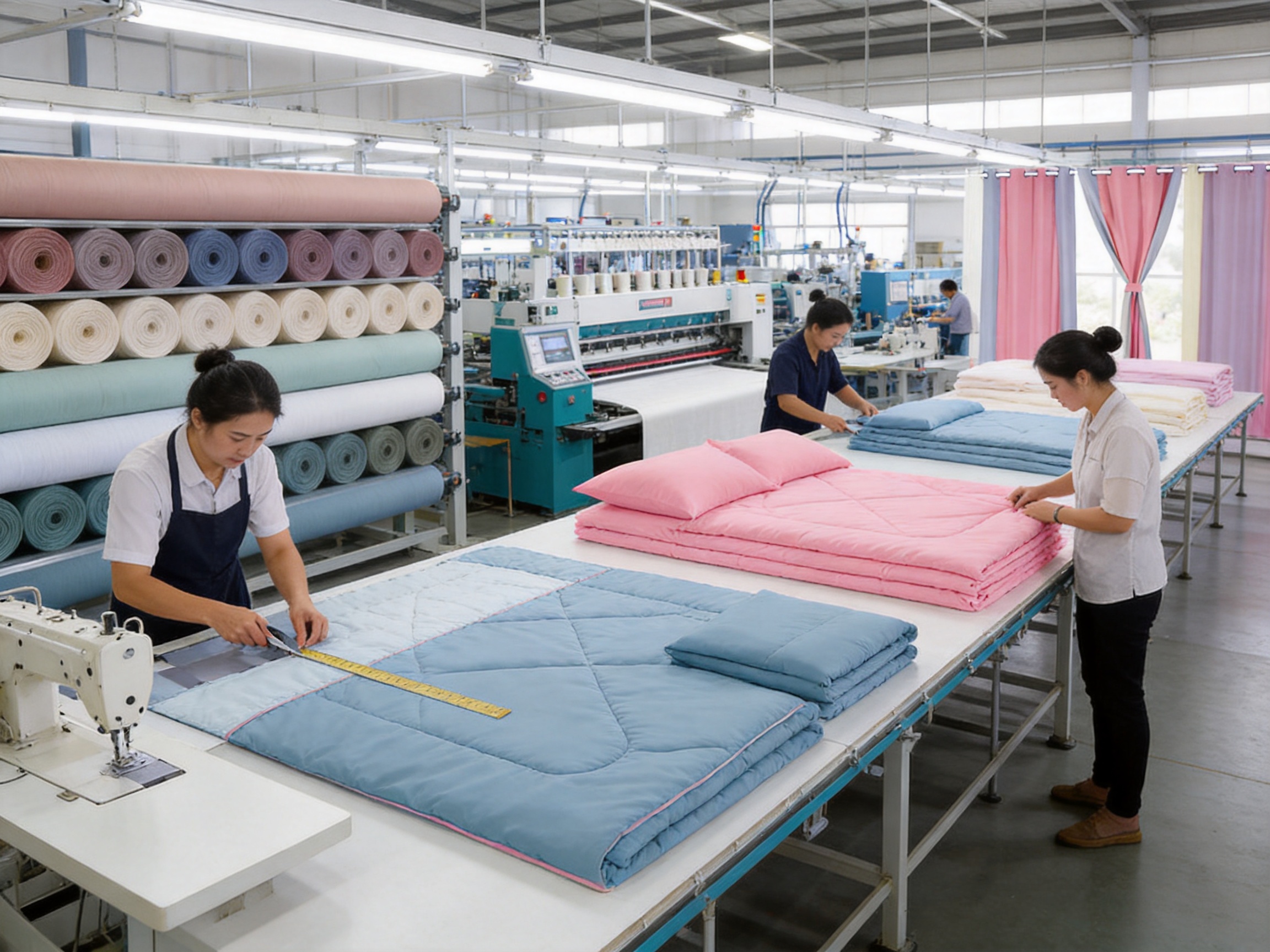
The company’s factory covers more than 10,000 square meters. A facility of this scale provides space for material storage, cutting, sewing, quilting, inspection, finishing, packing, and shipment preparation. Proper separation of these operations can help reduce handling confusion and support a more organized production flow.
The company is equipped with intelligent production equipment. Modern equipment can improve consistency in cutting, stitching, quilting, measurement, and production scheduling. Automation and digital assistance may help reduce avoidable variation, improve repeatability, and support production efficiency. Equipment alone does not guarantee quality, but it can provide a stronger foundation for standardized manufacturing when combined with trained personnel and inspection procedures.
With more than 100 employees, the manufacturer has the workforce needed to support multiple operational functions. A complete home textile program requires personnel for product development, material preparation, production, quality control, packaging, documentation, customer communication, and export coordination. A larger and organized team can be especially valuable for buyers managing repeat orders or several product categories.
The company also maintains a standardized management system. Standardization is essential in bedding production because a set contains several components that must match in color, dimensions, appearance, and overall quality. Production standards can help define acceptable measurements, seam appearance, fabric condition, component quantities, and packing requirements.
An experienced foreign trade service team further supports international orders. Export transactions often involve detailed communication about sizes, samples, labeling, packaging, delivery schedules, documents, inspections, and destination-market expectations. A capable foreign trade team can help translate buyer requirements into production instructions and coordinate the flow of information from inquiry to shipment.
Production Process for a Coordinated Bedding Set
Product Development and Specification Confirmation
The manufacturing process begins with product development and specification confirmation. The two-tone appearance, material, size, component list, and intended market must be defined before bulk production. Samples may be prepared to verify the visual effect and hand feel.
For an export buyer, this stage is also the appropriate time to confirm the required size standard, color references, packaging format, labels, carton markings, and inspection requirements. Clear specifications reduce the possibility of misunderstandings during later production stages.
Fabric and Material Preparation
Once specifications are confirmed, fabric and other materials are prepared. The manufacturer must ensure that the selected materials are suitable for the quilt, sheets, pillowcases, and curtains. Fabric width, color consistency, surface quality, and usable length are important considerations.
Two-tone products require particular attention to shade matching. The two colors must create the intended contrast, while related components should remain visually coordinated. Inspection at the material stage can help identify issues before fabric is cut into multiple pieces.
Cutting and Panel Organization
Accurate cutting is essential because the set contains several products in different dimensions. The quilt, flat sheet, fitted sheet, pillowcases, and curtains each require their own cutting plans. Efficient cutting can reduce material waste and support consistent sizing.
Panel organization is equally important. Components must be grouped correctly so that each finished set contains the required number of pieces and the intended color arrangement. Organized production control helps prevent missing components, mismatched panels, or incorrect size combinations.
Sewing and Assembly
The sewing stage gives the product its structure and durability. Seams must be aligned, edges finished, and panels joined according to the approved construction. Pillowcases and sheets require neat hems, while fitted sheets require careful handling of corners and depth allowance.
The quilt requires additional attention because its outer fabric and internal structure must remain stable during use. Consistent stitching helps reduce shifting and supports a clean appearance. The product description highlights meticulous workmanship and durable stitching, which are important qualities for bedding exposed to repeated movement and washing.
Curtains also require accurate sewing and finishing. Their dimensions must remain consistent across pairs, and the finished edges should support a neat hanging appearance. Because the curtains are part of the same set, their color and surface presentation should complement the quilt and sheets.
Inspection and Finishing
After assembly, products can be inspected for appearance, measurements, stitching, fabric defects, component quantities, and general cleanliness. Inspection is especially important for a seven-piece package because the quality of the set depends on the condition of every component, not only the quilt.
Finishing may include thread trimming, folding, pressing, measurement checks, and visual presentation. Neat finishing improves the product’s appearance when opened by the customer and helps maintain a professional retail presentation.
Packaging and Export Preparation
The final stage includes folding, packing, labeling, carton preparation, and shipment coordination. The packaging should protect the bedding from moisture, dust, compression, and handling damage during transportation. Export buyers may request individual bags, branded packaging, insert cards, barcode labels, or master cartons according to their sales channel.
As an enterprise with export experience, the manufacturer can support the documentation and communication required for international supply. Buyers should confirm packaging specifications and destination requirements in advance so that the final shipment meets commercial and regulatory expectations.
Advantages Over Incomplete or Uncoordinated Alternatives
The product offers several practical advantages compared with a basic comforter-only package. A comforter by itself may provide the main bed covering, but it does not necessarily solve the need for sheets, pillowcases, or matching room textiles. Buyers must often spend additional time and money finding compatible products.
A separate-item purchasing model can also result in subtle color differences. Even when two products are described as the same color, variations in fabric type, dye lot, finishing, and supplier standards can make them appear different. A coordinated set reduces this risk by bringing key components together under one production plan.
The two-tone design also has an advantage over highly decorated bedding for buyers who want long-term flexibility. Busy patterns may appeal to a specific customer segment, but plain colors generally provide broader compatibility with changing room décor. This can support more stable retail demand and reduce the risk of a design becoming quickly outdated.
Compared with single-color bedding, the two-tone arrangement provides additional visual structure. It can create a more finished appearance without requiring embroidery, complex printing, or excessive ornamentation. This may help achieve an elevated look while preserving a clean and commercially accessible design.
The product’s polyester construction can offer practical advantages over more delicate materials in applications where frequent handling and regular laundering are expected. Although different fibers have different comfort characteristics, polyester is often selected for its durability, production efficiency, and ease of maintenance.
The company’s manufacturing scale also offers advantages over suppliers that only trade finished goods. A manufacturer with product development and production capability can potentially respond more directly to requests for custom colors, dimensions, packaging, labels, or sample-based development. Customization remains subject to technical feasibility and order requirements, but the company’s stated service model is designed to support customer samples and customized home textile programs.
Customization and OEM Opportunities
The company provides customized home textile services based on customer samples. This is valuable for importers, wholesalers, retailers, hospitality groups, and private-label brands that require products aligned with a specific market identity.
Possible customization areas may include color combinations, fabric specifications, size adjustments, packaging, labeling, logo application, and component configuration. Any requested change should be confirmed through technical discussion and sampling before bulk production.
For a two-tone set, color customization can be particularly important. Different markets may prefer warm neutrals, cool grays, muted blues, earthy tones, or stronger contrasts. A manufacturer with established production capability can develop the selected color direction while preserving the overall construction of the set.
Size customization may also be relevant because mattress and bed standards differ by country. A buyer may require altered dimensions for local retail standards, hospitality projects, or a specific private-label range. The manufacturer can assess the requested measurements, material usage, sewing requirements, and production implications.
Packaging customization can help the product fit different sales channels. Retail stores may require display-friendly packaging, while e-commerce sellers may prioritize compact packing, product photography coordination, barcode information, and protective shipping cartons. Hospitality buyers may require bulk packaging and room-by-room distribution instructions.
Sample-based development helps reduce risk. Before approving a large order, the buyer can review the appearance, color relationship, hand feel, measurements, stitching, packaging, and overall presentation. A carefully approved sample provides a reference for bulk production and quality inspection.
Applications Across Different Markets
Household Retail
The set is suitable for household retail because it combines visual appeal with practical completeness. Consumers seeking an immediate bedroom refresh may prefer a package that includes the primary bedding pieces and matching curtains. The two-tone style can appeal to shoppers who want a modern appearance without elaborate motifs.
Online Commerce
For online retailers, complete sets are relatively easy to explain and present. Product images can show the coordinated arrangement, while clear listings can specify the seven included pieces, material, and available sizes. Accurate size charts and detailed care information are important for reducing customer confusion and returns.
Guest Rooms and Rental Properties
Property managers and rental operators may appreciate the standardized appearance of a coordinated set. Using the same design across several rooms can simplify purchasing and create a consistent interior atmosphere. The polyester material and complete configuration may also be practical for properties that need regular textile replacement.
Hospitality and Accommodation
Hotels, serviced apartments, hostels, and guesthouses often require bedding that is presentable, consistent, and available in repeat quantities. The queen and king options allow different room types to use a related design. Buyers in this sector should confirm commercial laundering requirements, performance standards, replacement plans, and specific fire or labeling regulations where applicable.
Wholesale and Distribution
Wholesalers can use the product as part of a broader home textile range. It can be offered alongside duvet covers, waterproof fitted sheets, pillowcases, curtains, and other bedding products. The manufacturer’s wider product portfolio may allow distributors to source multiple categories from one supplier, potentially simplifying communication and order management.
Quality and Purchasing Considerations
Although the product is designed for practical comfort and durability, buyers should evaluate several details before placing a commercial order. First, the final fabric weight and quilt filling specifications should be confirmed. These factors influence warmth, drape, packing volume, and market positioning.
Second, buyers should confirm color standards. A physical sample or approved color reference is preferable to relying only on digital images, because screen settings and photography conditions can affect color perception.
Third, the fitted-sheet depth should be compared with the target mattress. The stated 30-centimeter allowance may suit many mattresses, but mattress toppers and protective pads can increase the required depth.
Fourth, buyers should confirm whether the curtains are intended for a particular hanging system. The dimensions are provided, but heading style, rod pocket, tabs, hooks, or other finishing details may need to be specified for the target market.
Fifth, packaging and labeling should be reviewed. International customers may require fiber-content labels, care instructions, country-of-origin information, size markings, carton labels, and retail barcodes. These requirements vary by market and should be confirmed before production.
Finally, an inspection plan should be agreed upon. Important checkpoints may include fabric inspection, color matching, size measurement, seam inspection, set-piece counting, packing verification, and final random inspection. A clear quality agreement supports both the buyer and the manufacturer.
Care and Product Longevity
Proper care helps preserve the appearance and performance of bedding. Users should follow the care label supplied with the final product because washing temperature, drying method, ironing guidance, and cleaning restrictions can vary according to fabric finishing and quilt construction.
Before washing, it is advisable to separate the quilt, sheets, pillowcases, and curtains according to their care instructions. Avoiding excessive loading can help fabrics move freely during laundering and may reduce unnecessary creasing or stress on seams.
Using suitable detergent and avoiding harsh treatment can help maintain the fabric surface and color appearance. When drying, the product should be handled according to the manufacturer’s instructions. Quilts may require sufficient space to dry thoroughly, while damp storage should be avoided.
Regular rotation can also support longer use. Users may alternate between the flat sheet and fitted sheet according to preference and season, while keeping spare bedding available for laundering. Proper folding and storage help protect the textile from dust and compression between uses.
For commercial users, a documented laundering and replacement procedure can help maintain consistent room presentation. Staff should inspect seams, corners, elastic areas, curtain edges, and overall fabric condition during routine changes.
Why Manufacturing Integration Matters
Manufacturing integration is especially valuable for a product that contains multiple textile categories. The quilt, sheets, pillowcases, and curtains must be coordinated in color, material, sizing, finishing, and packaging. When these items are produced through unrelated channels, the buyer may have to manage more suppliers and more opportunities for inconsistency.
An integrated supplier can centralize communication and provide one product development path. This does not remove the need for buyer inspection or specification control, but it can make the overall process more efficient. Changes can be discussed with one team, samples can be evaluated together, and production scheduling can be coordinated across all seven components.
The company’s combination of industrial production and export service is also useful for international buyers. Product quality is only one part of a successful import program. Reliable communication, documentation, packing, scheduling, and after-sales coordination also influence the total purchasing experience.
The manufacturer’s experience with bedding and curtain products supports a broader understanding of home textile applications. This product knowledge can help buyers develop complementary collections rather than sourcing every item independently. A supplier that understands both bed textiles and curtains can better coordinate the visual and functional relationship between them.
Q&A
What is included in the seven-piece set?
The set includes one quilt, one flat bed sheet, one fitted sheet, two pillowcases, and two curtains. Together, these items create a coordinated bedroom textile package.
What material is used?
The product is made from 100% polyester. The fabric is described as smooth and soft, with a balance of warmth and breathability intended to support comfortable sleep.
Is the set available in more than one size?
Yes. The product is available in queen and king sizes. The quilt, sheets, fitted sheet, and pillowcases have different dimensions for each size, while the listed curtain dimensions are the same for both options.
What makes the design different from ordinary solid-color bedding?
The design combines two solid colors to create contrast and visual layering. It remains simple and modern while offering more structure and interest than a single-color set.
Does the set include both a flat sheet and a fitted sheet?
Yes. Each set includes one flat bed sheet and one fitted sheet. This gives users flexibility in arranging the bed according to personal preference.
How deep is the fitted sheet?
The fitted sheet is specified with a 30-centimeter depth allowance. Buyers should compare this measurement with the mattress and any additional topper or protective layer before ordering.
Can the product be customized?
The company provides customized home textile services based on customer samples. Potential customization areas may include colors, sizes, packaging, labels, and other specifications, subject to technical review and order requirements.
Are the curtains intended only for bedrooms?
The curtains are included to coordinate with the bedding and are suitable for bedroom use. Their suitability for other areas depends on the window size, installation method, and buyer’s intended application.
Is the product suitable for wholesale orders?
Yes. The manufacturer operates a large-scale home textile factory and provides export services. Wholesale buyers should confirm minimum order quantities, sampling arrangements, production schedules, packaging, and inspection requirements.
What should buyers confirm before placing an order?
Buyers should confirm material details, fabric weight, filling specifications, colors, size tolerances, fitted-sheet depth, curtain finishing, packaging, labels, care instructions, order quantity, delivery schedule, and inspection standards.
What are the main advantages of buying the complete set?
The complete set saves buyers from sourcing multiple components separately. It offers coordinated colors, a unified design, broader bedroom coverage, and simpler product selection and inventory management.
Is the product suitable for hotels or rental properties?
It may be suitable for guest rooms, rental properties, serviced apartments, and other accommodation projects that require coordinated bedding. Commercial buyers should confirm laundering, durability, safety, and local compliance requirements before approval.
Conclusion
The Plain-Colored Two-Tone Comforter Set is designed as a practical and visually coordinated solution for modern bedrooms. Its combination of two solid colors provides a calm, layered appearance that can complement many interior styles. The use of 100% polyester supports a smooth hand feel, practical durability, and efficient production, while the quilt, sheets, pillowcases, and curtains create a complete seven-piece package.
Its queen and king size options make the design suitable for a wide range of household, retail, hospitality, and property applications. The inclusion of both flat and fitted sheets offers additional flexibility, while the matching curtains extend the product concept beyond the bed itself.
The product is supported by a manufacturer with more than 10,000 square meters of factory space, intelligent production equipment, more than 100 employees, standardized management, research and development capability, and experienced foreign trade support. These strengths are important for buyers seeking consistent production, coordinated components, export communication, and customized home textile services.
Compared with incomplete comforter packages or uncoordinated products sourced from several suppliers, this set offers greater convenience and a more unified appearance. Compared with highly decorative bedding, its two-tone solid-color design provides broader styling flexibility and longer-term appeal. For buyers looking for a modern, complete, and commercially adaptable bedding product, it represents a balanced combination of design, function, manufacturing capability, and supply potential.
References
1. Product specification sheet for the Plain-Colored Two-Tone Comforter Set, including material, component list, sizes, and dimensions.
2. Manufacturer-provided company profile describing factory capacity, product categories, research and development, production, export, and customization services.
3. General textile quality-control principles for fabric inspection, sewing inspection, dimensional verification, color consistency, and finished-product packing.
4. General home textile care guidance concerning laundering, drying, storage, and routine inspection of polyester bedding products.
5. General bedding product-development practices for coordinated quilts, sheets, pillowcases, fitted sheets, and curtains.
Product: Plain-Colored Two-Tone Comforter Set (7 Pieces)

Contact Us for More Details
Don't hesitate to contact when you need us!
Contact Information
Add:
Building 1, East Area, Wanyang Zhongchuang City, Economic Development Zone, Dongyang City, Zhejiang Province, China
Phone:
Tel:
E-mail:
Quick Links
Product Category
QR Code


+86-13616899966
+86-579-86610966
