 English
 русский
 Español
 عربى


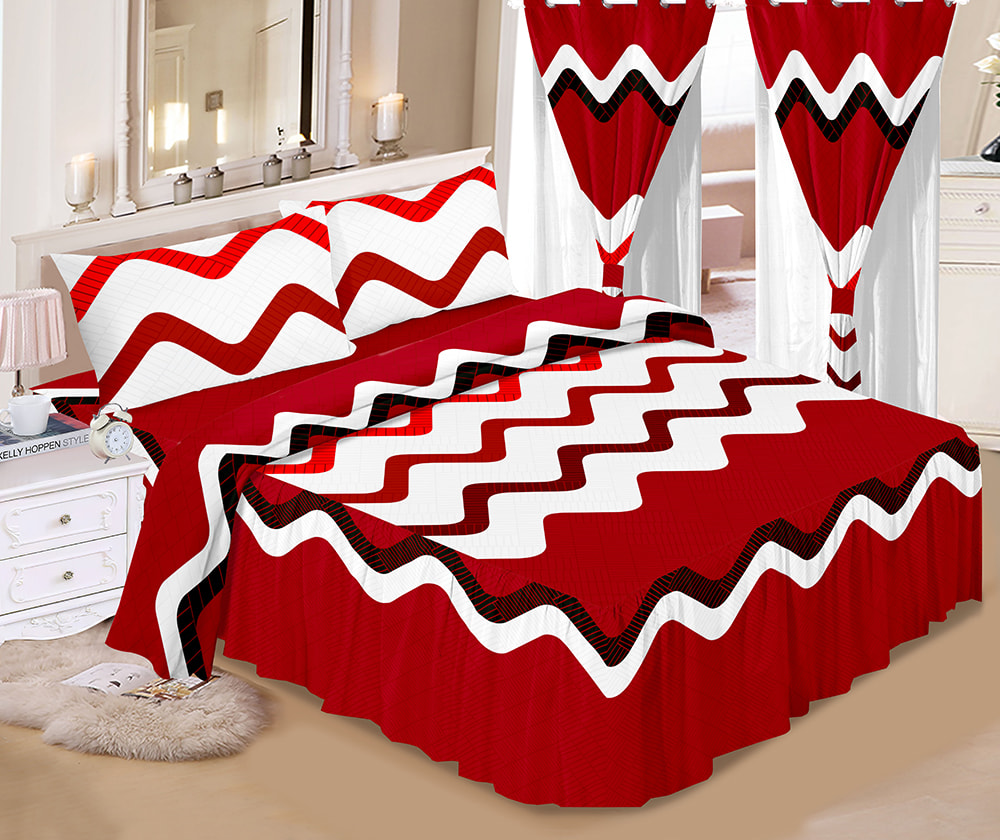
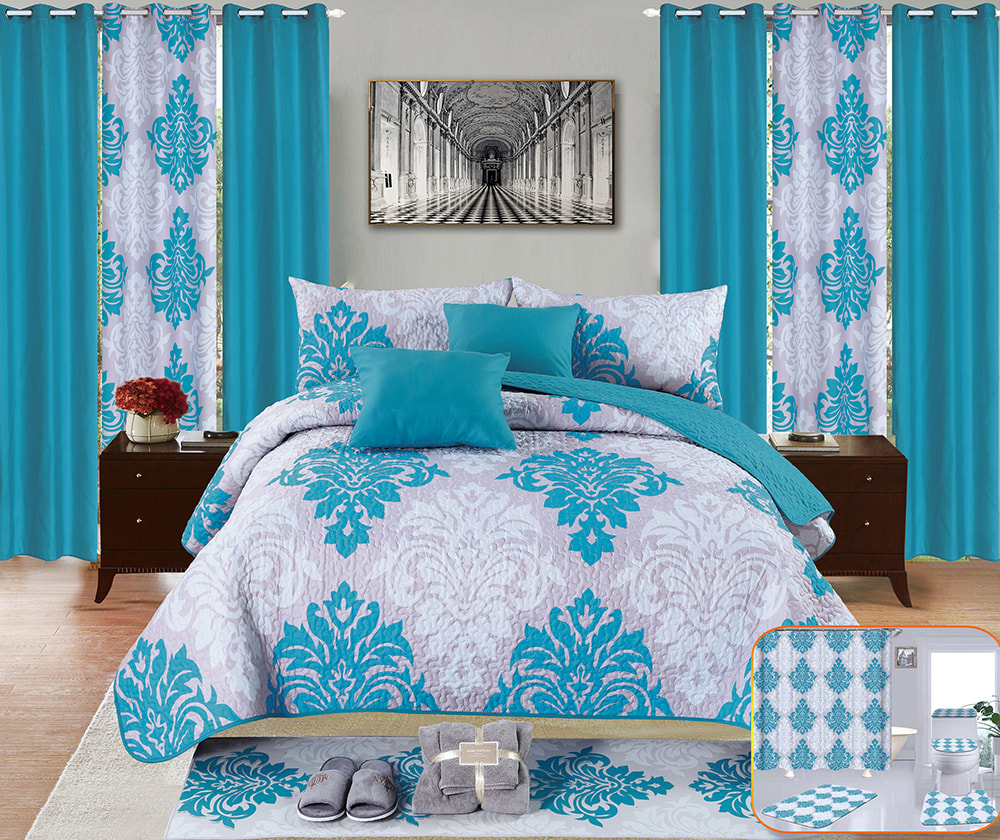
Printed 7-Piece Bedding Set with Double-Layer Curtains: A Complete Bedroom Textile Solution
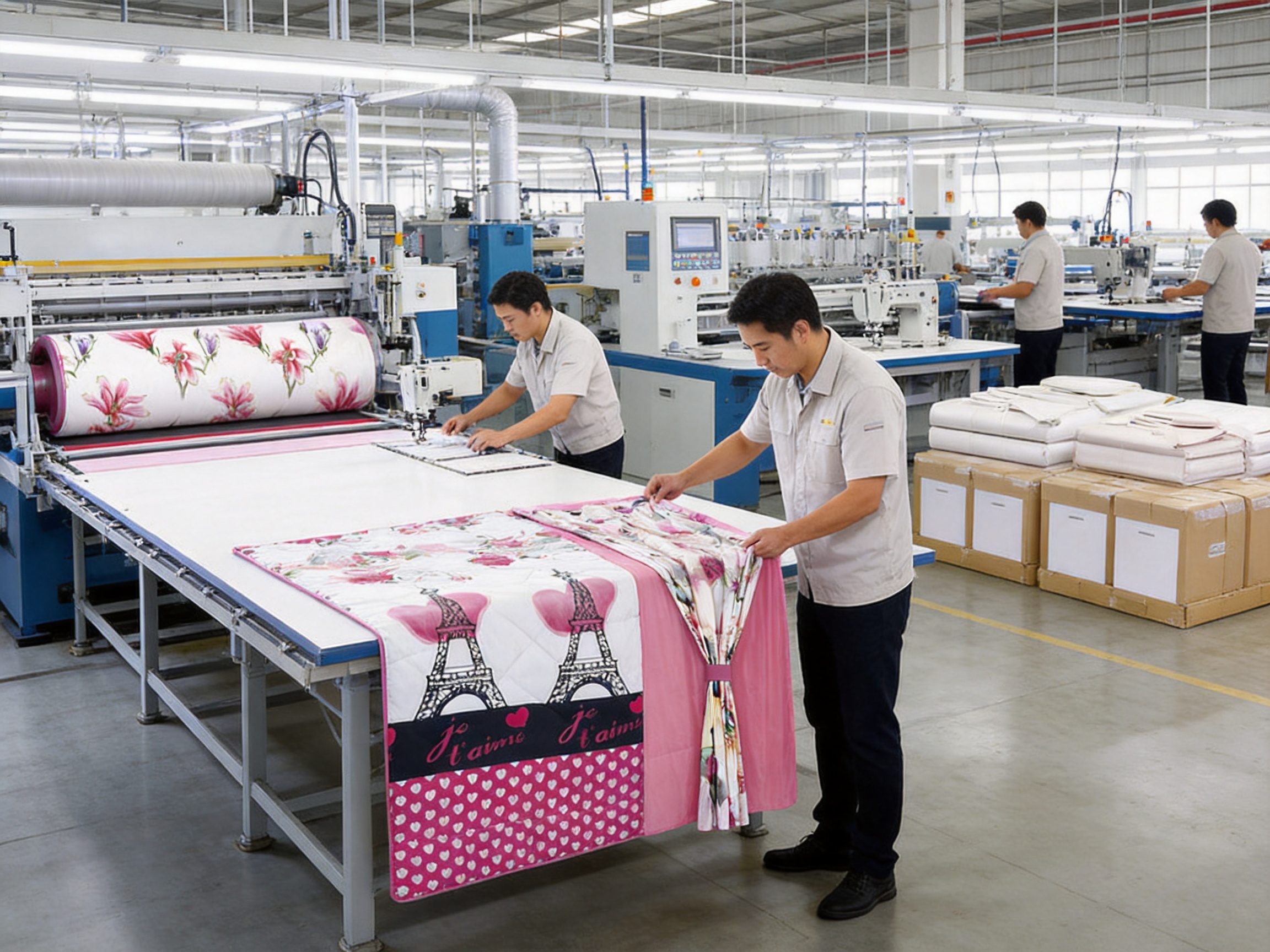
A coordinated bedroom can influence how a room looks, feels, and functions. When bedding, window treatments, and supporting textile accessories share a unified design, the result is often more attractive and more comfortable than a room assembled from unrelated pieces. The Printed 7-Piece Bedding Set with Double-Layer Curtains is designed around this idea. It combines essential bedding components with matching curtains, creating a practical and decorative solution for bedrooms, guest rooms, serviced apartments, hotels, and other residential or hospitality environments.
The set brings together a printed quilt, a bed sheet, a fitted sheet, two pillowcases, and two curtains. Rather than requiring purchasers to locate matching fabrics and patterns from several suppliers, it offers a coordinated collection in one package. This simplifies sourcing, reduces design inconsistencies, and provides a more complete bedroom presentation. The product is available in Queen Size and King Size specifications, making it suitable for a range of bed dimensions and room layouts.
Manufactured from 100% polyester, the set is designed for everyday use. Its microfiber-style textile construction offers a soft hand feel, practical durability, easy care, and reliable visual performance. The printed surface creates a decorative focal point, while the double-layer curtain design contributes to light management, privacy, sound reduction, and a warmer atmosphere. Together, these features make the set more than a basic bedding collection: it is a coordinated bedroom environment in textile form.
What Makes This Seven-Piece Set Different
Many bedding products are sold as separate components. A quilt may be purchased independently from a sheet, and curtains may need to be selected from another collection. Although this approach offers flexibility, it can also create several challenges. Colors may not match accurately, patterns may compete with each other, fabric weights may differ, and buyers may spend additional time comparing suppliers and specifications.
This seven-piece set addresses those challenges through coordinated product development. The bedding and curtains are designed to work together visually and functionally. The printed pattern extends across the bedroom textiles, allowing the bed and windows to form a unified composition. The coordinated design is especially valuable in rooms where a finished appearance is important, including guest accommodation, rental properties, model bedrooms, student residences, and hotel rooms.
The product also reduces the complexity of purchasing. Instead of managing multiple product codes, materials, color approvals, and delivery schedules, buyers can source the principal soft furnishings as one collection. This can improve purchasing efficiency for retailers, distributors, interior furnishing companies, and project buyers. It also supports a more consistent customer experience because the packaged components are designed to belong together.
Compared with a basic comforter-only product, the set provides more complete coverage of bedroom needs. Compared with a conventional bedding set without curtains, it adds a major decorative and functional element. Compared with individually sourced bedroom textiles, it offers greater coordination and potentially more efficient inventory planning. These advantages make the product attractive to both end users and professional buyers.
Complete Seven-Piece Configuration
The product is organized around seven principal pieces: one quilt, one bed sheet, one fitted sheet, two pillowcases, and two curtains. The combination covers the central sleeping surface, mattress support, pillows, and window area. Buyers can use the flat bed sheet and fitted sheet according to their preferred bed-making method, while the quilt provides the primary top layer for warmth and visual impact.
The curtains are supplied as two pieces. This paired format is suitable for common window arrangements in which two panels meet at the center. It allows the user to open one or both sides, adjust the amount of incoming light, and create a symmetrical appearance. The curtains can also contribute to privacy and help soften the visual transition between the window and the rest of the room.
The seven-piece configuration is practical for homes, guest bedrooms, and hospitality applications because it focuses on the components most visible and frequently used. It is not overloaded with unnecessary accessories, yet it provides more than a minimal sheet and quilt combination. This balance can help buyers maintain an attractive retail price while still offering a complete bedroom styling solution.
| Component | Quantity | Function |
| Printed quilt | 1 piece | Provides the principal top covering, warmth, and decorative pattern |
| Bed sheet | 1 piece | Provides a flat sleeping layer and coordinated bed styling |
| Fitted sheet | 1 piece | Fits over the mattress and helps keep the sleeping surface in place |
| Pillowcases | 2 pieces | Protect pillows and complete the coordinated bedding appearance |
| Curtains | 2 pieces | Dress the window while supporting light control and privacy |
Material Performance and Everyday Comfort
The set uses 100% polyester fabric, a material widely valued in home textiles for its combination of durability, manageability, and production versatility. Polyester fibers can be engineered into soft, smooth, and lightweight fabrics suitable for bedding and curtains. They also support detailed printing, helping manufacturers achieve clear patterns and repeatable color results across multiple components.
For everyday bedding, comfort depends on more than softness alone. A useful textile should also be breathable enough for normal household conditions, comfortable against the skin, stable after repeated use, and easy to maintain. The fabric selected for this set is intended to provide a pleasant hand feel while remaining practical for routine laundering and handling. Its lightweight construction can make bed making easier, while its resilient fiber structure supports long-term usability.
Polyester is also suitable for commercial environments where textiles may be washed frequently. Hotels, rental properties, and furnished apartments often need products that can tolerate regular turnover. A fabric that dries efficiently and maintains its general shape can help reduce the operational burden associated with cleaning and replacement. While care requirements should always follow the final product instructions, polyester bedding is generally recognized for its practical maintenance characteristics.
The material further supports consistency in production. Because the same base fiber can be used across the quilt, sheets, pillowcases, and curtains, the finished set can achieve a more harmonious appearance. This is particularly important for printed collections. Different fabric compositions can absorb dyes differently, leading to visible variations between bedding and window panels. A common polyester base helps limit such inconsistencies when the design is developed and controlled properly.
Printed Design with Coordinated Visual Appeal
The printed patterns are intended to be clear, delicate, and visually pleasing. A coordinated print can transform the bedroom without requiring extensive decorative accessories. The quilt becomes the central feature of the room, while the pillowcases and curtains reinforce the design through repetition. This creates a sense of order that can be difficult to achieve when individual products are selected separately.
Color selection is an important part of the product’s appeal. Natural and balanced colors can complement a variety of interior styles, from contemporary apartments to traditional family bedrooms. Softer tones may create a calm environment, while more expressive prints can add personality and visual energy. Because the bedding and curtains share the same design language, the room can appear intentionally furnished rather than simply equipped.
Print clarity also contributes to perceived quality. Fine pattern definition, clean edges, and controlled color placement help the product look finished and refined. A well-managed printing process can preserve the character of the original design across different fabric panels. This is particularly important when the curtains are displayed beside the bed, since differences in scale or color can become highly visible in a coordinated set.
Colorfastness is another important consideration. Bedding and curtains are exposed to light, handling, washing, and everyday environmental conditions. A print that fades quickly may reduce the product’s value and weaken the coordinated appearance. The product is developed with attention to color durability so that the design can remain attractive through normal use. Actual performance depends on washing methods, detergent selection, drying conditions, and exposure to direct sunlight, but careful textile processing provides a strong foundation.
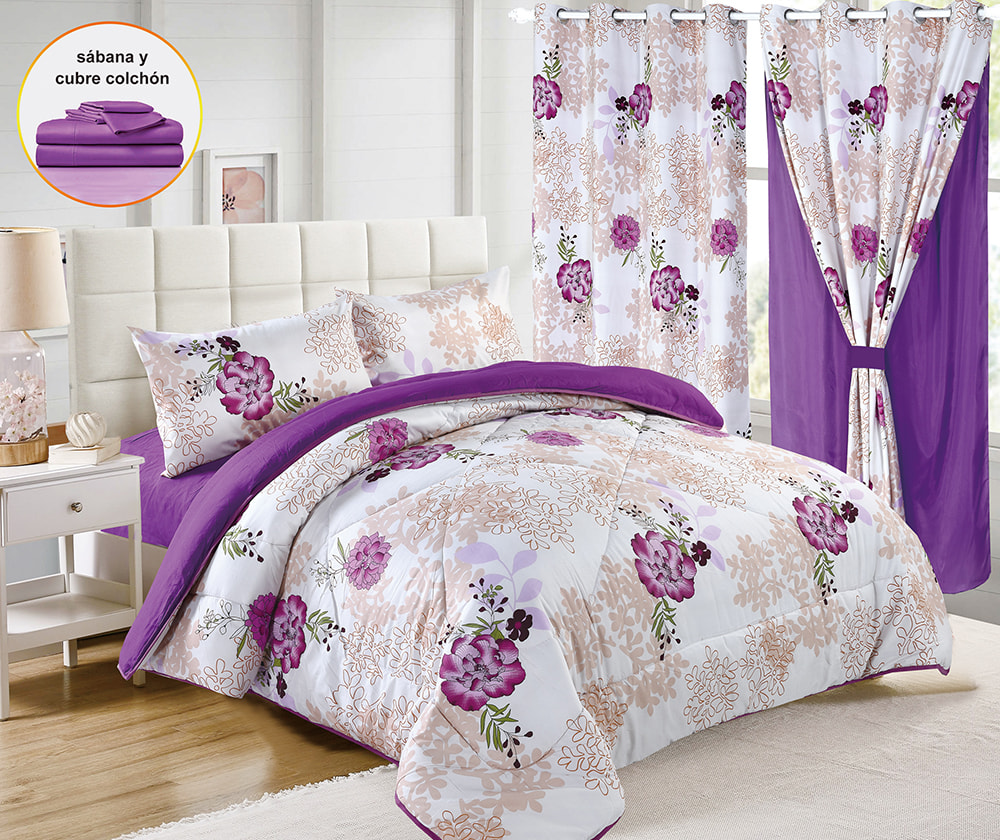
Printed 7-Piece Bedding Set With Double-Layer Curtains
The Functional Role of the Double-Layer Curtains
The double-layer curtains are one of the principal advantages of this product. A single thin curtain may provide decoration but offer limited control over light and privacy. A double-layer construction can create a more substantial window treatment, allowing the fabric layers to work together. This may help reduce incoming brightness, soften glare, and create a more enclosed sleeping environment.
Bedrooms benefit from effective light management. Early morning sunlight, street lighting, and changing daylight conditions can affect sleep quality and comfort. The curtains are designed to help block or reduce light, making the room feel calmer during rest periods. They may also be useful in rooms that face busy streets, shared courtyards, or bright neighboring buildings.
The layered structure can contribute to a quieter atmosphere as well. Textile curtains do not replace specialized acoustic materials, but additional fabric layers can help soften reflected sound and reduce the sense of exposure to outside activity. In combination with bedding and other soft furnishings, they may make the room feel warmer and more peaceful.
Privacy is another important benefit. Curtains allow occupants to control visibility from outside and create a greater sense of personal space. This is useful in urban homes, ground-floor rooms, hotels, and serviced apartments. Because the curtains are visually coordinated with the bed textiles, the practical privacy function does not need to conflict with the room’s decorative design.
The two-panel format provides flexible operation. Users can draw both panels completely, open them from the center, or move one side depending on the window position and desired light level. This flexibility is useful in bedrooms that are used at different times of day. The curtains can provide a bright, open appearance in daylight and a more private, enclosed atmosphere at night.
Queen Size Specifications
The Queen Size version is designed for bedrooms using a medium-sized bed configuration. It includes a quilt measuring 223 by 228 centimeters, a bed sheet measuring 210 by 230 centimeters, and a fitted sheet measuring 152 by 203 centimeters with a 30-centimeter depth allowance. Two pillowcases measuring 50 by 70 centimeters are included, together with two curtains measuring 120 by 220 centimeters each.
The fitted sheet depth is an important practical detail. The additional 30-centimeter allowance is intended to help accommodate mattress thickness and allow the sheet to tuck securely around the mattress. Mattress profiles can vary, so purchasers should compare the stated dimensions with their own mattress before ordering. A suitable fit helps reduce shifting and contributes to a smoother sleeping surface.
The Queen Size pillowcases use a 50 by 70-centimeter format, a common rectangular pillow size in many markets. Their coordinated print helps connect the upper sleeping area with the quilt and sheets. Even when decorative cushions are added, matching pillowcases can provide a consistent foundation for the overall design.
King Size Specifications
The King Size version provides additional width and length for larger beds. It includes a quilt measuring 226 by 260 centimeters, a bed sheet measuring 235 by 270 centimeters, and a fitted sheet measuring 198 by 203 centimeters with a 30-centimeter depth allowance. Two pillowcases measuring 50 by 100 centimeters are included, along with two curtains measuring 120 by 220 centimeters each.
The larger quilt and flat sheet provide more generous coverage across a King Size bed. This can be especially useful for couples who prefer greater drape on each side or for rooms where the bed is intended to be a major visual feature. The larger pillowcases also support the longer pillow format often associated with King Size bedding.
The curtains remain 120 by 220 centimeters per panel in both listed size configurations. This means the bed size and window treatment dimensions should be evaluated separately during room planning. Buyers should confirm window width, mounting height, and preferred fullness before installation. Additional curtain fullness or a different hanging arrangement may be needed depending on the desired appearance.
| Size | Quilt | Bed sheet | Fitted sheet | Pillowcases | Curtains |
| Queen Size | 223 × 228 cm, 1 piece | 210 × 230 cm, 1 piece | 152 × 203 + 30 cm, 1 piece | 50 × 70 cm, 2 pieces | 120 × 220 cm, 2 pieces |
| King Size | 226 × 260 cm, 1 piece | 235 × 270 cm, 1 piece | 198 × 203 + 30 cm, 1 piece | 50 × 100 cm, 2 pieces | 120 × 220 cm, 2 pieces |
Advantages Over Incomplete or Uncoordinated Alternatives
The product offers several advantages over a basic bedding package that includes only a quilt and pillowcases. First, it includes both a bed sheet and a fitted sheet, giving users more flexibility in preparing the bed. Second, it includes curtains, extending the coordinated design beyond the mattress. Third, it provides a complete visual system that can reduce the need for additional decorative purchases.
Compared with an unprinted or single-color set, the printed design provides stronger decorative value. Patterned textiles can create depth, interest, and a more distinctive room identity. They can also help conceal minor signs of everyday use more effectively than very light solid colors, although proper cleaning remains essential.
Compared with sets made from less durable or difficult-care materials, polyester offers practical advantages for frequent use. It is generally resistant to ordinary wrinkling, dries relatively efficiently, and maintains dimensional stability when handled according to care instructions. These qualities can be valuable for families, hospitality operators, and retailers seeking a product with manageable ownership requirements.
Compared with purchasing curtains and bedding independently, a unified set can help reduce mismatch risk. Buyers do not need to coordinate separate pattern collections, compare fabric shades under different lighting, or calculate whether the materials will look appropriate together. This can save time during product selection and reduce potential dissatisfaction after installation.
The set can also provide a stronger merchandising proposition. Retailers can present it as a room solution rather than as several unrelated textile products. Product photography, showroom displays, and online listings can demonstrate the complete bedroom effect. This makes it easier for customers to visualize the result and may support higher perceived value.
Manufacturing Expertise and Integrated Production
The manufacturer is Dongyangshi Menghui Textile Co., Ltd., an industrial and trade enterprise integrating research and development, production, sales, and export. Founded in 2015, the company focuses on home textile products including bed sheets, quilt covers, pillowcases, cushions, quilts, waterproof mattress protectors, curtains, and bedding sets.
This product range is relevant to the development of a seven-piece bedding set with curtains. Manufacturing bedding and curtains within the same broader textile operation can support better coordination between fabric selection, color development, cutting, sewing, and quality inspection. The manufacturer can approach the collection as a connected product family rather than as isolated articles.
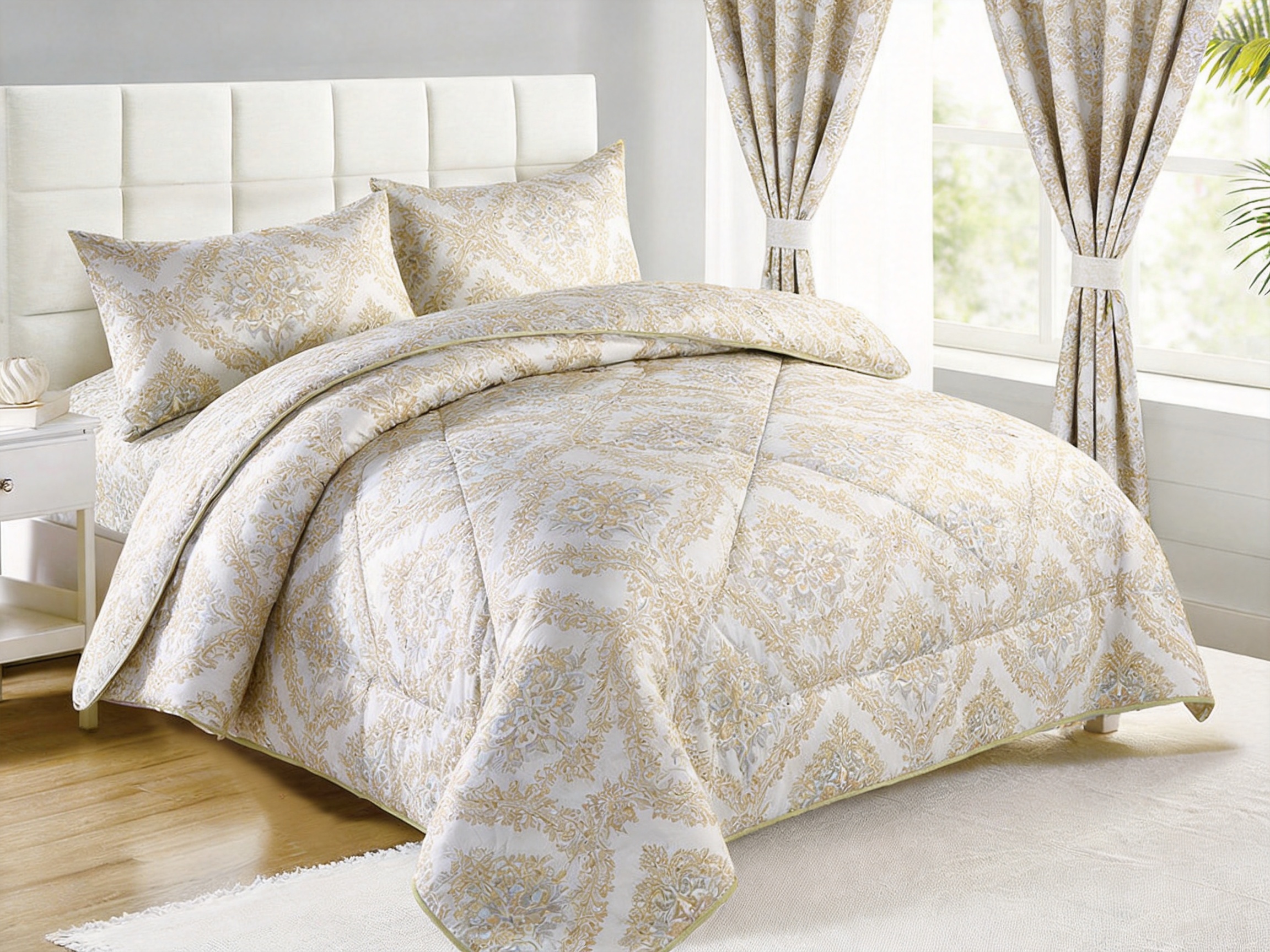
The company operates a factory covering more than 10,000 square meters and employs more than 100 people. A facility of this scale can support organized production planning, separate functional work areas, inventory control, and consistent workflow management. It also provides a foundation for handling both standard orders and customized home textile projects.
Intelligent production equipment is used to support manufacturing operations. Modern equipment can improve cutting accuracy, sewing consistency, production efficiency, and repeatability. In printed bedding, precise cutting is especially important because pattern alignment and panel dimensions influence the final appearance. In curtains, consistent panel sizing helps create a more balanced installation.
Equipment alone does not determine product quality. Effective results also depend on experienced operators, standardized procedures, material control, and inspection. The manufacturer’s combination of production equipment, trained personnel, standardized management, and foreign trade service experience helps create a more reliable supply structure for international customers.
From Design Development to Finished Product
The manufacturing process begins with product and design planning. For a coordinated seven-piece set, the design must be considered across several components with different functions. The quilt needs an attractive surface and suitable construction, the sheets need comfortable contact performance, and the curtains need enough body and coverage for window use. The pattern must remain visually coherent across all of these products.
Material selection follows the intended application. A 100% polyester base offers a practical foundation for printing and sewing. Fabric weight, surface texture, width, and handling characteristics are evaluated according to the requirements of bedding and curtains. The same collection may require careful balancing so that the finished components appear coordinated while still performing appropriately in their individual roles.
Printing is a key stage because the design is central to the product’s identity. Artwork must be prepared at suitable resolution and scale. Color samples may be reviewed before bulk production to confirm that the printed appearance corresponds with the approved design. Attention to print registration, color density, and repeat alignment helps preserve a clean visual result.
After fabric preparation, the material is inspected and cut according to the required size specifications. Accurate cutting is important for dimensions such as 223 by 228 centimeters for the Queen Size quilt or 226 by 260 centimeters for the King Size quilt. Sheet and pillowcase dimensions must also be controlled so the finished pieces fit the intended bed and pillow formats.
Sewing operations join the cut panels and create finished edges, hems, seams, and structural details. Skilled sewing helps reduce loose threads, uneven edges, seam puckering, and dimensional irregularities. The quilt, sheets, pillowcases, and curtains each require appropriate construction methods, even when they share the same printed fabric family.
Quality inspection is performed at appropriate stages of production. Inspection may include checking fabric appearance, print clarity, color consistency, measurements, stitching, accessories, packaging, and set completeness. By checking throughout the workflow instead of relying only on a final inspection, manufacturers can identify issues earlier and reduce avoidable rework.
Quality Control Considerations
Quality control for a coordinated bedding set must address both individual components and the relationship between them. A quilt may be well sewn but still fail to meet expectations if its color differs noticeably from the pillowcases or curtains. A fitted sheet may have attractive fabric but be unsuitable if its dimensions are inaccurate. Effective inspection therefore considers appearance, construction, function, and coordination.
Dimensional accuracy is one of the most important checks. The quilt, sheets, fitted sheet, pillowcases, and curtains should be measured against the approved specifications. Tolerances may be established according to the buyer’s requirements and the manufacturing characteristics of the fabric. Correct dimensions contribute to easier use, a better visual fit, and lower return risk.
Seam and edge quality also affect durability. Reinforced or securely finished seams can help the products withstand normal handling and laundering. Inspectors may look for skipped stitches, open seams, excessive thread ends, uneven hems, and puckering. Curtain edges deserve particular attention because they remain visible when the panels are hanging.
Print inspection can involve checking for stains, streaks, missing areas, color variation, blurred details, and pattern distortion. Since the bedding and curtains are displayed in the same room, maintaining consistent color and pattern quality across all pieces is especially important. Packaging should also protect the printed surfaces from contamination, moisture, and unnecessary creasing during transportation.
Set completeness is another practical control point. Each package should contain one quilt, one bed sheet, one fitted sheet, two pillowcases, and two curtains according to the ordered size and design. Accurate packing labels can help distinguish Queen Size and King Size versions and assist distributors with warehouse management.
Customization and OEM Capability
The manufacturer provides customized home textile services based on customer samples. This capability is important for buyers who need a specific pattern, color palette, logo arrangement, size, packaging format, or product combination. OEM services can allow retailers and importers to develop private-label collections that better match their market positioning.
Customization may begin with an existing sample or artwork supplied by the customer. The production team can evaluate the design for fabric suitability, print scale, repeat structure, color reproduction, and component compatibility. A clear approval process is beneficial because bedding and curtain materials may display the same color differently depending on surface texture, lighting, and fabric construction.
Buyers may also request modifications to the standard configuration. For example, a project may require different pillowcase dimensions, alternative bed sizes, a revised curtain length, extra decorative cushions, or a different packaging arrangement. The feasibility of each adjustment should be confirmed before sampling and quotation. Clear technical documentation helps prevent misunderstandings during bulk production.
OEM purchasing can offer commercial advantages. A distinctive print can help a retailer differentiate its assortment, while a coordinated product family can support seasonal campaigns or room-style collections. Hospitality buyers may use customized colors to reflect a property’s interior design. Distributors can also create region-specific products based on local bed sizes, color preferences, or packaging expectations.
Customization should remain connected to quality control. Each approved sample should identify the fabric composition, measurements, print design, construction details, packaging, and acceptable tolerances. Once the sample is confirmed, production should be compared against the approved reference. This disciplined process helps preserve consistency across repeat orders.
Applications in Different Markets
For household use, the set provides a convenient way to refresh a bedroom. It can be used in a master bedroom, guest room, teenager’s room, or vacation home. The coordinated curtains make it possible to change the visual character of the room without repainting walls or replacing large furniture pieces. A new bedding and curtain collection can function as a relatively efficient interior update.
For guesthouses and short-term rentals, the complete configuration supports fast room preparation. Operators can install matching bedding and window panels without spending time searching for compatible items. Consistent sets may also simplify replacement when individual rooms need to be refreshed or when inventory must be standardized across a property.
Hotels and serviced apartments may value the product as part of a broader room textile program. While commercial buyers should evaluate fire regulations, laundering protocols, durability requirements, and local compliance standards separately, the coordinated design can help create a more polished guest environment. The two curtain panels can support privacy and light control, while the printed bedding adds decorative identity.
Retailers can offer the set as a complete bedroom styling package. In physical stores, the product can be displayed on a made bed with the curtains installed nearby. In online commerce, multiple product images can show the print, component details, fabric surface, and size information. Clear specification tables are particularly helpful because customers need to understand the difference between Queen Size and King Size dimensions.
Interior furnishing companies and project contractors may also use coordinated sets for residential developments, furnished apartments, and model rooms. The ability to order bedding and curtains as a unified product can help align room presentation with project schedules. The manufacturer’s export experience and integrated service structure may support international sourcing requirements.
Care, Handling, and Long-Term Use
Proper care helps maintain the appearance and service life of any home textile product. Buyers should follow the care label and supplier instructions for washing, drying, ironing, and storage. Polyester fabrics are generally manageable, but excessive heat, unsuitable chemicals, rough mechanical treatment, or prolonged direct sunlight may affect color, surface texture, or dimensional stability.
Before washing, the bedding and curtains should be separated from items that may transfer color or create excessive abrasion. Similar colors are usually preferable, particularly for printed textiles. Curtains may require additional attention because their larger panels can become heavily creased or tangled in an overloaded washing machine.
Drying conditions can influence the finished appearance. Excessive heat may cause unnecessary stress on synthetic fibers, while proper airflow can help the textiles dry efficiently. If ironing is required, a suitable temperature should be used. Storage should be clean and dry, with the products protected from moisture, dust, and prolonged exposure to direct light.
In hospitality or rental environments, buyers should establish a repeatable textile care procedure. This may include approved detergents, washing temperatures, drying methods, inspection intervals, and replacement standards. Consistent handling can help preserve the coordinated appearance of the collection and make it easier to identify when a component needs replacement.
Purchasing Checklist for Professional Buyers
Professional buyers should confirm the intended bed dimensions before selecting Queen Size or King Size. Mattress width, length, and depth should be compared with the fitted sheet measurements. The 30-centimeter depth allowance should be evaluated against the actual mattress profile, including any topper or protective layer that may be used.
Window dimensions should be measured separately. Each curtain measures 120 by 220 centimeters, but the required fullness depends on window width, rod placement, mounting style, and desired visual effect. Buyers should confirm whether the two panels provide sufficient coverage for the intended window and whether additional hardware is needed.
Print and color approvals are important for bulk orders. Buyers should request samples where appropriate and review them under lighting conditions similar to the final sales or installation environment. A digital image can support initial selection but may not perfectly represent printed fabric color. Written approval of the design and color reference can reduce later disputes.
Packaging and labeling should also be discussed. Each set should be clearly identified by size, pattern, quantity, material, and care information. Export buyers may have additional requirements related to carton markings, barcode labels, language, folding method, or individual polybag packaging. These details should be finalized before production begins.
Finally, buyers should discuss lead times, minimum order quantities, inspection procedures, shipping terms, and after-sales communication with the supplier. A strong product is most valuable when it is supported by clear commercial coordination. The manufacturer’s integrated production and export service structure can help organize these requirements for international orders.
Why Integrated Supplier Capability Matters
Working with an integrated home textile manufacturer can offer advantages beyond the individual product. When research and development, production, sales, and export functions operate within one business structure, communication can be more direct. Product questions can move more efficiently between design, technical, manufacturing, and logistics teams.
An integrated supplier may also be better positioned to develop related products. Since the manufacturer produces sheets, quilt covers, pillowcases, cushions, quilts, waterproof mattress protectors, curtains, and other bedding sets, buyers can explore broader collections from a compatible source. This can support assortment expansion and reduce the need to manage many unrelated suppliers.
The factory’s more than 10,000-square-meter production area and workforce of over 100 employees provide a foundation for organized capacity. Intelligent equipment supports repeatability, while standardized management helps structure production and quality procedures. The experienced foreign trade service team can assist with communication, documentation, and export coordination.
These strengths are particularly useful for customers ordering customized or repeat products. A supplier that understands both manufacturing and international business requirements can help identify technical issues before they become production problems. It can also help buyers maintain continuity when a successful design is reordered or expanded into a larger product series.
Questions and Answers
What is included in the seven-piece bedding set?
The set includes one printed quilt, one bed sheet, one fitted sheet, two pillowcases, and two curtains. The two curtains are supplied as separate panels, creating a paired window treatment.
What material is used?
The stated material is 100% polyester. This material supports softness, practical durability, easy-care performance, and detailed printed designs when properly processed.
Is the product available in more than one size?
Yes. The listed specifications include Queen Size and King Size versions. The quilt, sheets, fitted sheet, and pillowcases have different dimensions for each size, while the listed curtain dimensions are 120 by 220 centimeters per panel.
What is the Queen Size quilt measurement?
The Queen Size quilt measures 223 by 228 centimeters and is supplied as one piece.
What is the King Size quilt measurement?
The King Size quilt measures 226 by 260 centimeters and is supplied as one piece.
What does the “+30 cm” specification on the fitted sheet mean?
The notation indicates a 30-centimeter depth allowance associated with the fitted sheet. Buyers should compare this measurement with the actual thickness of their mattress and any additional mattress topper.
Are the curtains single-layer or double-layer?
The product is described as having double-layer curtains. The layered construction is intended to improve light control, privacy, visual depth, and the sense of a quieter sleeping environment.
Can the curtains help block outside light?
They are designed to help block or reduce incoming light. The actual degree of light reduction depends on fabric construction, installation, window size, surrounding light conditions, and the gap around the curtain edges.
Are the curtains useful for privacy?
Yes. When closed, the curtain panels can reduce visibility from outside and create a more private room environment. This is useful for bedrooms, guest rooms, apartments, and hospitality spaces.
Can customers request customized designs?
The manufacturer provides customized home textile services based on customer samples. Buyers can discuss possible adjustments to pattern, color, dimensions, packaging, and product configuration before sampling and production.
Is the set suitable for hotels or rental properties?
It can be suitable for hotels, guesthouses, serviced apartments, and rental properties, provided that the buyer confirms applicable commercial textile, fire safety, laundering, and local compliance requirements. Its coordinated components can simplify room styling and replacement planning.
What should buyers check before ordering?
Buyers should confirm mattress dimensions, mattress depth, window measurements, desired curtain fullness, size selection, print approval, packaging requirements, care instructions, order quantity, and shipping arrangements.
How does the manufacturer support quality?
The manufacturer combines research and development, production, sales, and export operations. Its factory covers more than 10,000 square meters, uses intelligent production equipment, employs more than 100 people, and operates with standardized management and an experienced foreign trade service team.
Can the bedding and curtains be purchased as part of a larger collection?
Yes. The manufacturer produces a broad range of home textiles, including bed sheets, quilt covers, pillowcases, cushions, quilts, waterproof mattress protectors, curtains, and other bedding sets. Buyers can discuss related products for a more extensive coordinated assortment.
Conclusion
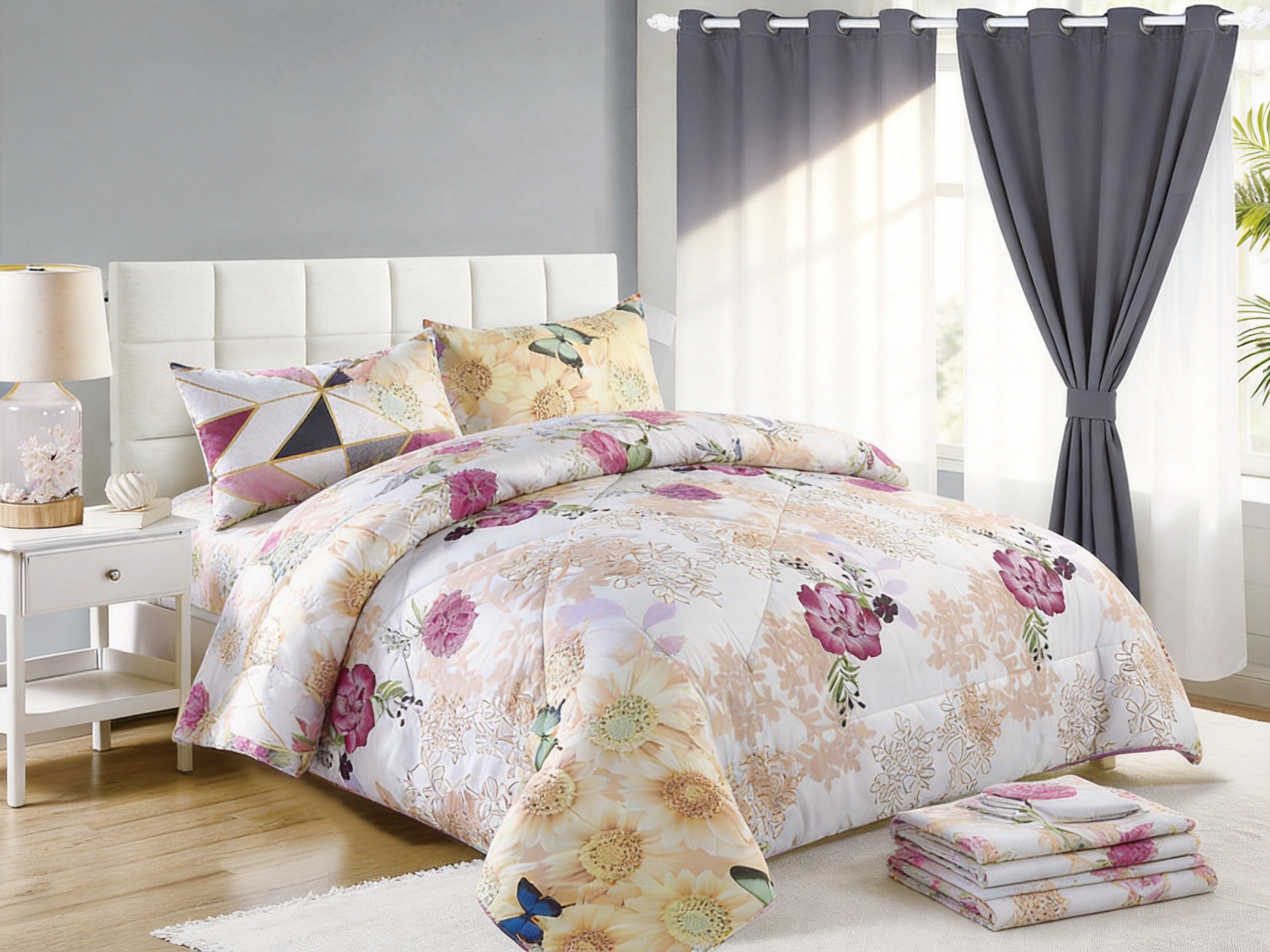
The Printed 7-Piece Bedding Set with Double-Layer Curtains combines bedding essentials and window treatment in one coordinated textile solution. Its principal strengths include a complete seven-piece configuration, 100% polyester construction, clear printed design, Queen Size and King Size options, fitted sheet flexibility, and double-layer curtains that support light management, privacy, and atmosphere.
For consumers, the set offers a convenient way to refresh a bedroom with matching textiles. For retailers and professional buyers, it provides a commercially attractive product that can be presented as a complete room solution. The coordinated design reduces sourcing complexity, while the practical material supports regular household and hospitality use.
The product is further supported by the manufacturer’s integrated capabilities. With experience in research and development, production, export, and customized home textile services, the company can support both standard products and OEM projects. Its factory scale, intelligent equipment, standardized management, and experienced workforce provide a foundation for consistent manufacturing and international supply.
When selecting the product, buyers should carefully confirm bed dimensions, mattress depth, window size, care requirements, packaging, and customization details. With appropriate specification review and quality coordination, this seven-piece collection can deliver a balanced combination of comfort, decorative appeal, practical performance, and supplier reliability.
References
1. Textile Exchange. Preferred Fiber and Materials Market Reports. General information on textile fibers, material selection, and responsible textile development.
2. International Organization for Standardization. ISO 3758: Textiles—Care Labelling Code Using Symbols. General reference for textile care labeling practices.
3. International Organization for Standardization. ISO 6330: Textiles—Domestic Washing and Drying Procedures for Textile Testing. General reference for textile washing and drying evaluation.
4. American Society for Testing and Materials. Standard Practices for Textile Testing and Quality Evaluation. General reference for dimensional, appearance, and performance inspection.
5. Home Textile Product Specification Sheet. Printed 7-Piece Bedding Set with Double-Layer Curtains, Queen Size and King Size dimensions.
6. Manufacturer Product and Company Information. Home textile production, OEM customization, factory capacity, product categories, and export services.
Product: Printed 7-Piece Bedding Set With Double-Layer Curtains


Contact Us for More Details
Don't hesitate to contact when you need us!
Contact Information
Add:
Building 1, East Area, Wanyang Zhongchuang City, Economic Development Zone, Dongyang City, Zhejiang Province, China
Phone:
Tel:
E-mail:
Quick Links
Product Category
QR Code


+86-13616899966
+86-579-86610966
