 English
 русский
 Español
 عربى


Printed Fitted Sheet Set: Comfort, Style, and Reliable Home Textile Manufacturing
A well-designed bedding set does more than cover a mattress. It influences the visual character of a bedroom, contributes to sleeping comfort, simplifies household care, and gives retailers an attractive product for customers who want coordinated home décor. The Printed Fitted Sheet Set is developed around these practical and aesthetic expectations. With a six-piece configuration, 100% ultra-fine microfiber polyester fabric, vibrant printed designs, and size options for twin, full, queen, and king beds, it offers a versatile solution for bedrooms in residential, hospitality, rental, and retail environments.
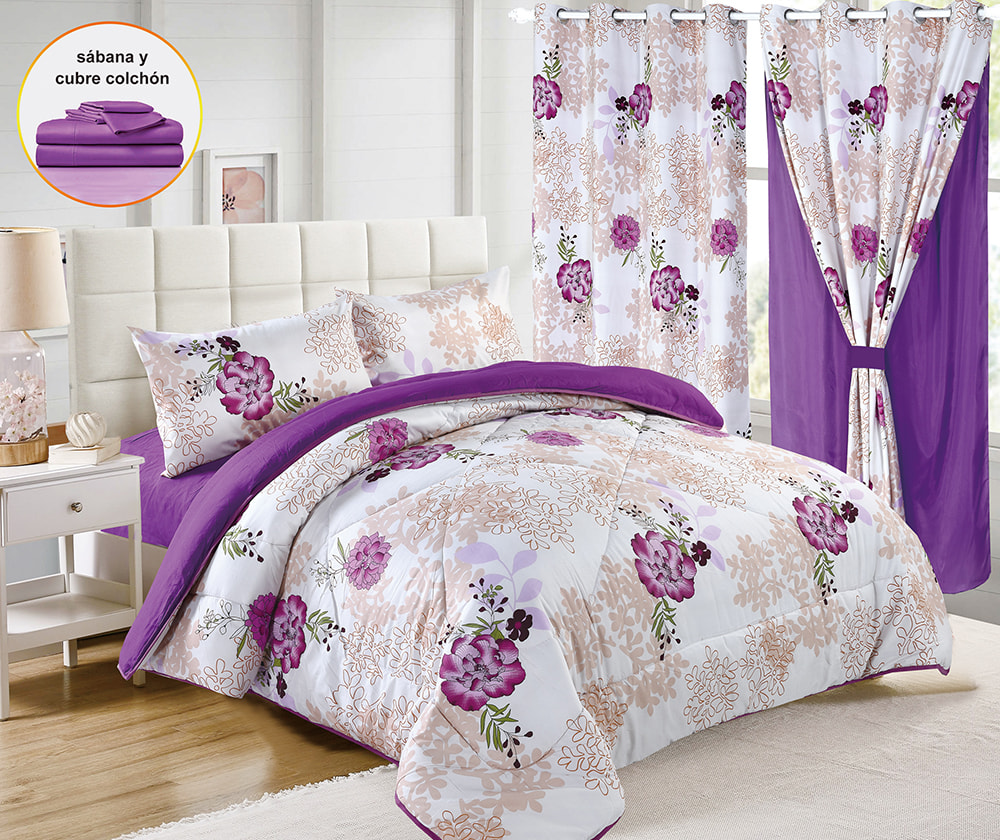
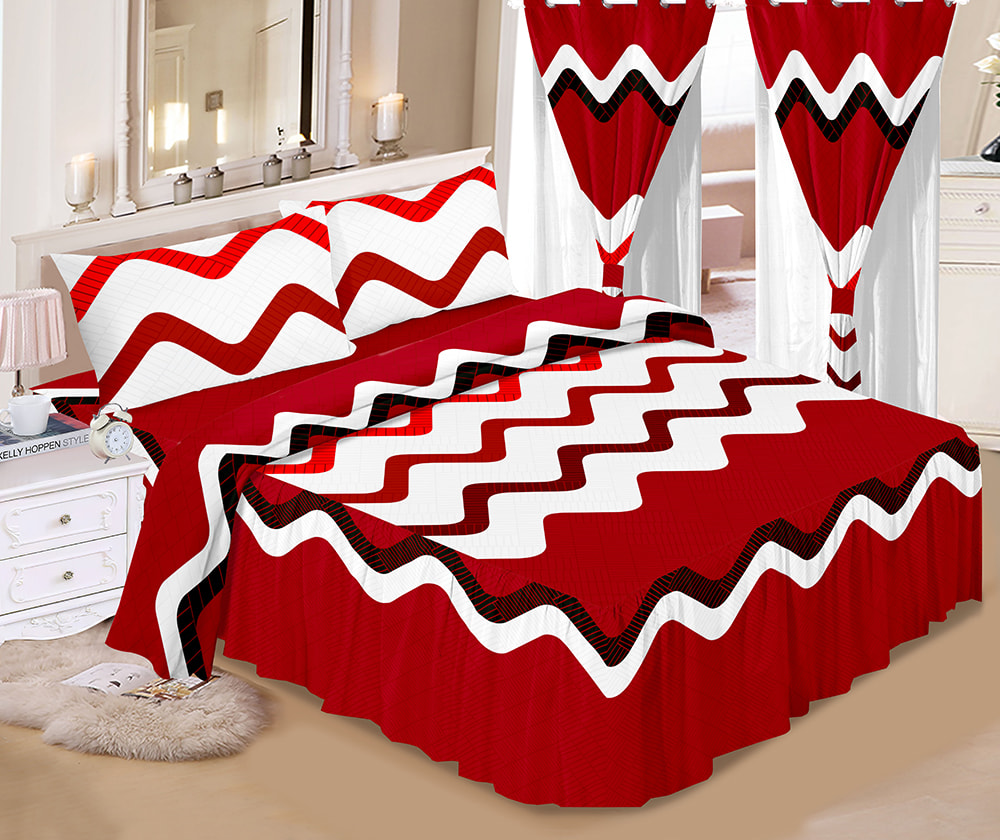
The product combines the secure fit of an elasticized fitted sheet with the decorative flexibility of coordinated bedding pieces. Depending on the selected configuration, the collection can include a fitted sheet or flat sheet, a duvet cover, and multiple pillowcases. The product information also identifies reversible printed sheet options, allowing users to change the visible style without purchasing a completely new bedding collection. This combination gives the set a practical advantage over basic single-sheet products and uncoordinated bedding items.
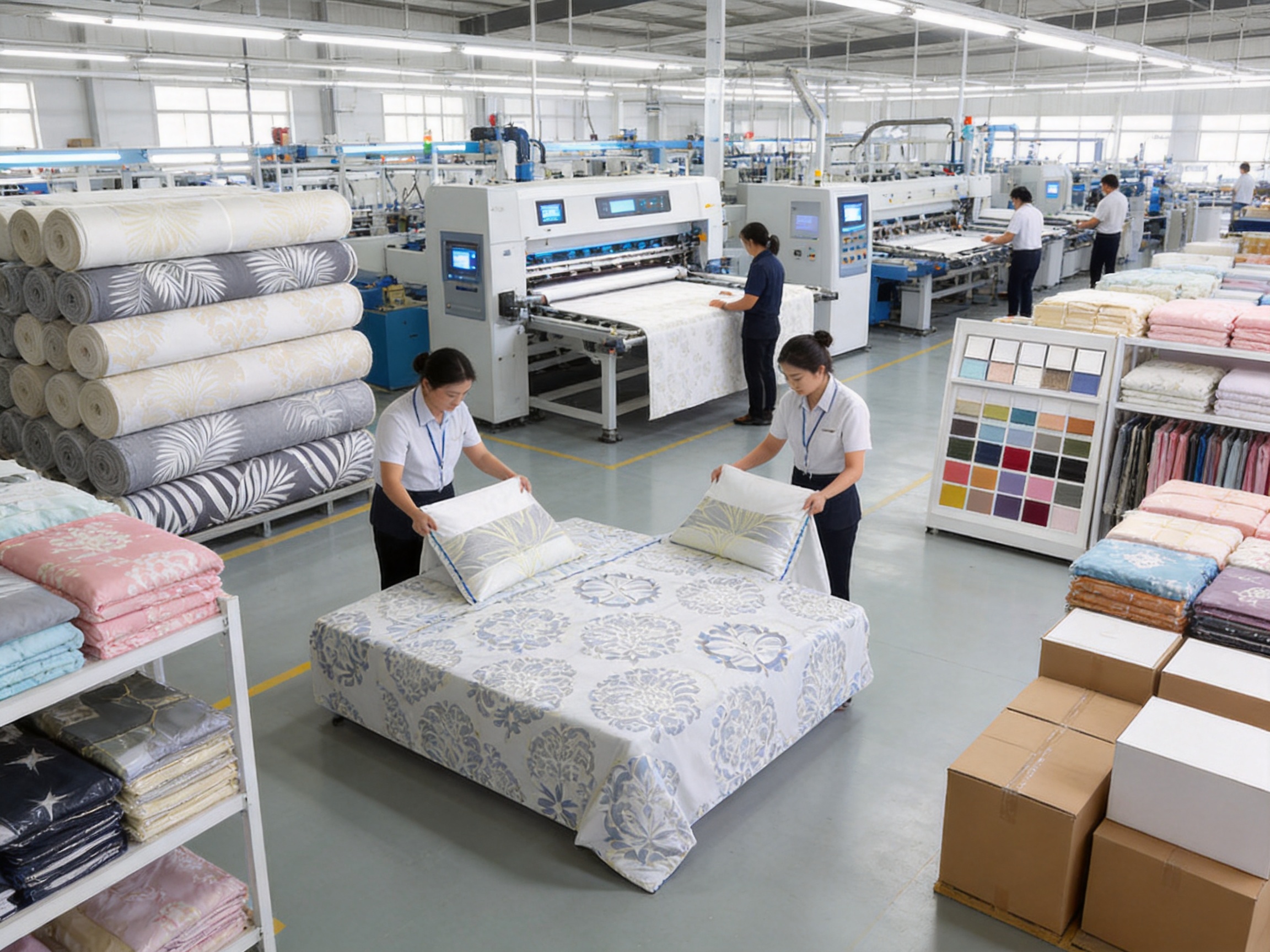
For buyers, distributors, wholesalers, and home textile retailers, the value of this product extends beyond its appearance. It is supported by an integrated manufacturing and export operation with experience in bedding, curtains, quilts, cushions, mattress protectors, pillowcases, and related home textile products. The manufacturer operates a factory of more than 10,000 square meters, uses intelligent production equipment, and employs more than 100 people across production, management, research and development, sales, and foreign trade services. These capabilities help create a stable foundation for product consistency, customized development, and international order fulfillment.
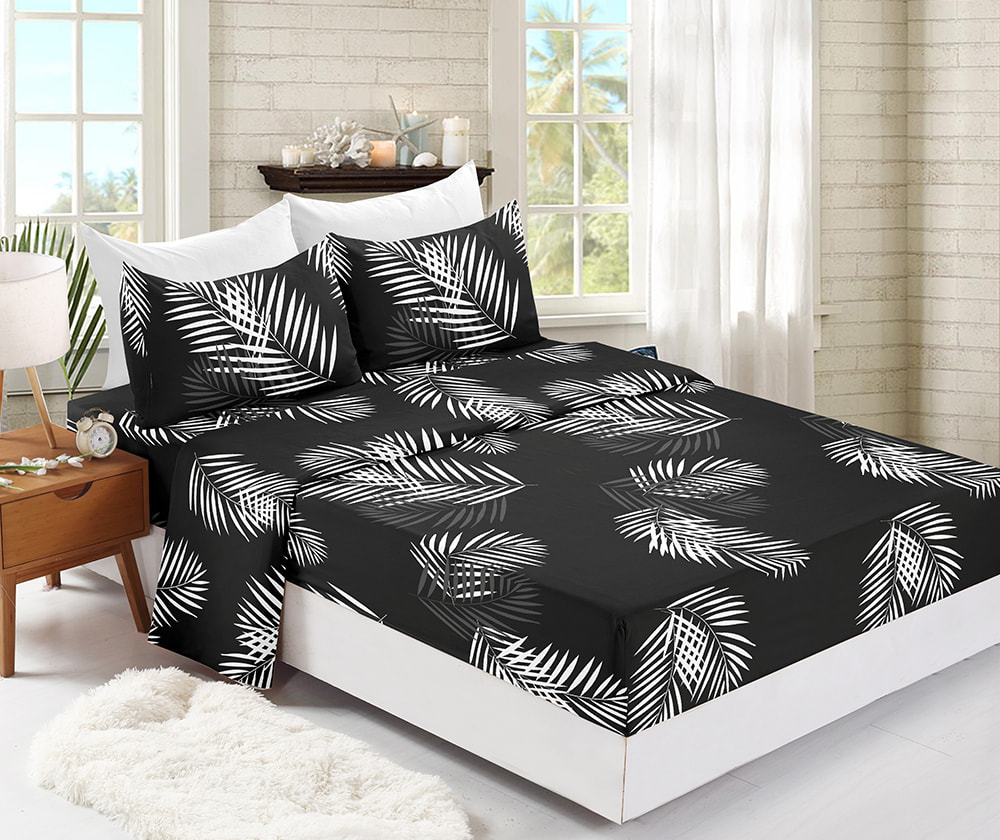
Printed Fitted Sheet Set (6 Pieces)
1. Product Overview and Design Concept
The Printed Fitted Sheet Set is designed as a coordinated bedding solution rather than an isolated sheet. A coordinated set makes it easier for consumers to create a finished bedroom appearance because the principal textile components share colors, motifs, and visual language. Instead of combining unrelated sheets and pillowcases, users can arrange a consistent bedding surface with less effort.
The six-piece concept is particularly suitable for customers who expect a more complete bedroom textile package. A typical arrangement may include a fitted sheet or flat sheet, a duvet cover, and pillowcases. The precise contents may depend on the selected size, market specification, and production configuration. The supplied size information lists bed sheet or fitted sheet dimensions and pillowcase quantities, while the product description also references duvet cover options. Buyers should confirm the final packing list and component dimensions before placing an order, especially when preparing retail packaging or private-label product information.
The product is offered in twin, full, queen, and king sizes. This broad size range allows retailers to serve different household requirements while keeping the visual identity of the collection consistent. A retailer can introduce one print in several bed sizes, build a coordinated product wall, or offer customers a choice based on mattress dimensions and room size.
The design concept is based on three central qualities: visual appeal, everyday comfort, and practical maintenance. The printed surface brings color and pattern into the bedroom. The microfiber polyester construction provides a lightweight and smooth hand feel. The quick-drying character of the material supports frequent washing and regular household use. Together, these features create a product that is suitable for consumers seeking decorative bedding without complicated care requirements.
Coordinated Appearance for Modern Bedrooms
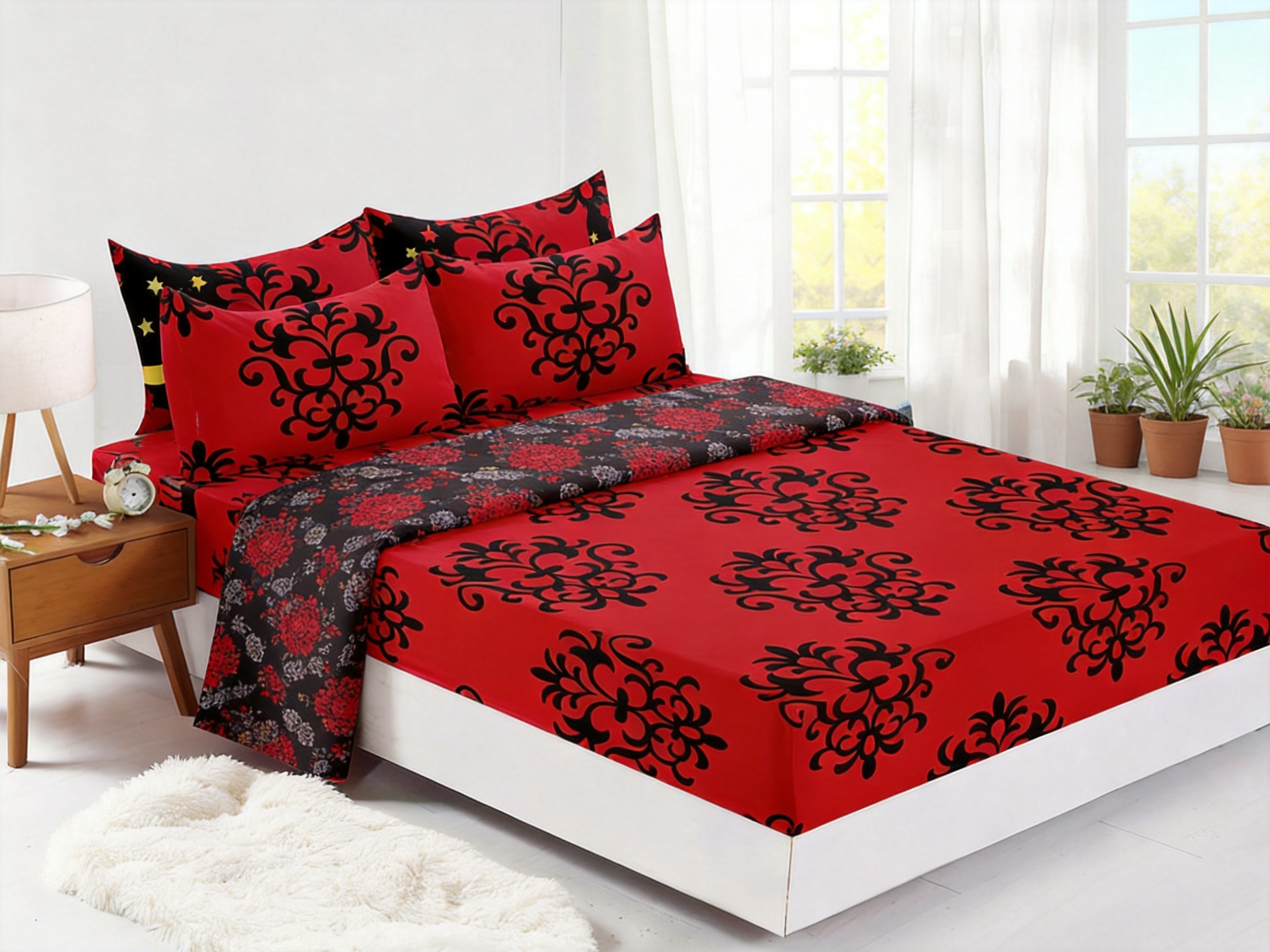
Printed bedding is often selected because it can change the atmosphere of a room more quickly than furniture or wall decoration. A patterned sheet set can introduce a fresh seasonal look, create a calm and coordinated palette, or provide a stronger decorative accent. The clear printing and vibrant colors of this collection are intended to remain attractive through prolonged use when the set is washed and handled according to suitable textile-care practices.
The coordinated design also has commercial benefits. Products with a complete visual story are easier to present in catalogues, online stores, showrooms, and retail displays. A buyer can understand the intended appearance from one product presentation rather than imagining how separate components might work together. This can reduce the decision-making effort for end users and support stronger merchandising for distributors.
Reversible Styling Flexibility
Reversible printed sheet options provide an additional styling feature. When two coordinated patterns or color arrangements are available on opposite sides, users can turn or fold the product to create a different visual effect. One side may offer a more expressive appearance, while the other may create a quieter or more balanced look.
This flexibility gives the product a useful advantage over single-sided bedding. Consumers can refresh a bedroom without purchasing another complete set, and hospitality or rental operators can create different room presentations with the same basic inventory. Reversibility also makes the product more adaptable to changing décor preferences, seasonal merchandising, and different customer tastes.
2. Fabric Construction and User Comfort
The bedding set is made from 100% polyester, specifically described as ultra-fine microfiber polyester. Microfiber is valued in bedding because its fine fibers can produce a smooth surface with a soft hand feel. The result is a fabric that feels comfortable against the skin while remaining lightweight and practical for regular use.
Softness is an important consideration for sheets and pillowcases because these products remain in direct contact with the sleeper for extended periods. A smooth textile surface can contribute to a more pleasant bedtime experience and can make the bedding feel refined without requiring a heavy or bulky construction. The fabric is described as skin-friendly, supporting its use in family bedrooms and other environments where comfort is a primary purchase factor.
The lightweight nature of microfiber polyester also makes the set easier to handle. It can be spread across a bed without the weight associated with some thicker natural or blended bedding constructions. Users can change the sheets with less effort, and laundries can process the material more efficiently than heavier textile products of comparable coverage.
Breathability and Lightweight Performance
Although bedding performance depends on fabric construction, room conditions, mattress materials, and personal preference, the product is designed to be lightweight and breathable. This makes it suitable for customers who prefer bedding that does not feel excessively heavy. The construction can also support comfortable use across different seasons when combined with appropriate blankets or duvets.
Microfiber polyester is often chosen by buyers who want a balance between softness and easy maintenance. It provides a smooth surface while remaining relatively light, which can be beneficial for everyday laundering and storage. Retailers can present the set as a practical option for households that value comfort but also need bedding that can be cleaned and dried efficiently.
Durability for Regular Household Use
Durability is another important product advantage. Bedding is repeatedly exposed to movement, washing, folding, and storage. A suitable sheet set must maintain its basic shape, surface appearance, and usability through ordinary household routines. The product is positioned as durable and suitable for prolonged use, making it relevant for families, guest rooms, rental properties, and other settings where sheets are changed frequently.
Durability does not mean that the product is maintenance-free. All printed bedding benefits from correct washing temperatures, suitable detergents, careful drying, and avoidance of unnecessary abrasion. However, the polyester microfiber base is selected to support practical daily use and to reduce the care burden associated with more demanding textile materials.
3. Printing Quality and Visual Retention
The appearance of printed bedding depends heavily on the clarity, evenness, and color stability of the print. This collection features vibrant colors and clear patterns intended to resist fading during prolonged use. Strong visual definition allows motifs to remain recognizable, while balanced color application helps the set retain its decorative value after repeated laundering.
Print clarity is especially important for bedding because the textile surface is viewed across a broad area. Uneven or blurred patterns can make a room look untidy, while a well-defined design can become a central element of the décor. A clear print also helps retailers display the product accurately in product photography, sample books, and physical showrooms.
Color retention supports both consumer satisfaction and commercial reliability. When a bedding set maintains its original visual impact, customers are more likely to feel that the product delivers lasting value. Retailers also benefit because products with consistent appearance are easier to reorder, photograph, and present as part of a stable collection.
Design Variety and Market Positioning
Printed bedding can be developed for many market positions. Soft colors and restrained patterns may appeal to customers seeking a calm bedroom environment. Brighter colors and more expressive designs can attract younger consumers or shoppers looking for a decorative statement. Neutral combinations can be suitable for rental apartments, guest rooms, and hospitality projects where broad customer acceptance is important.
The product category is also suitable for seasonal and promotional collections. A manufacturer with integrated research and development, production, and export capabilities can work with buyers on design direction, color selection, and customer-specific requirements. When a buyer supplies a reference sample or creative concept, customized home textile services can support the development of a more targeted product range.
Compared with plain bedding, printed designs offer a stronger visual point of difference. Compared with highly specialized luxury bedding, microfiber printed sets can provide a more accessible balance of appearance, comfort, and maintenance. This positioning makes the product relevant to mid-market retailers and buyers who want attractive bedding with broad consumer appeal.
4. Fitted Sheet Structure and Bed Stability
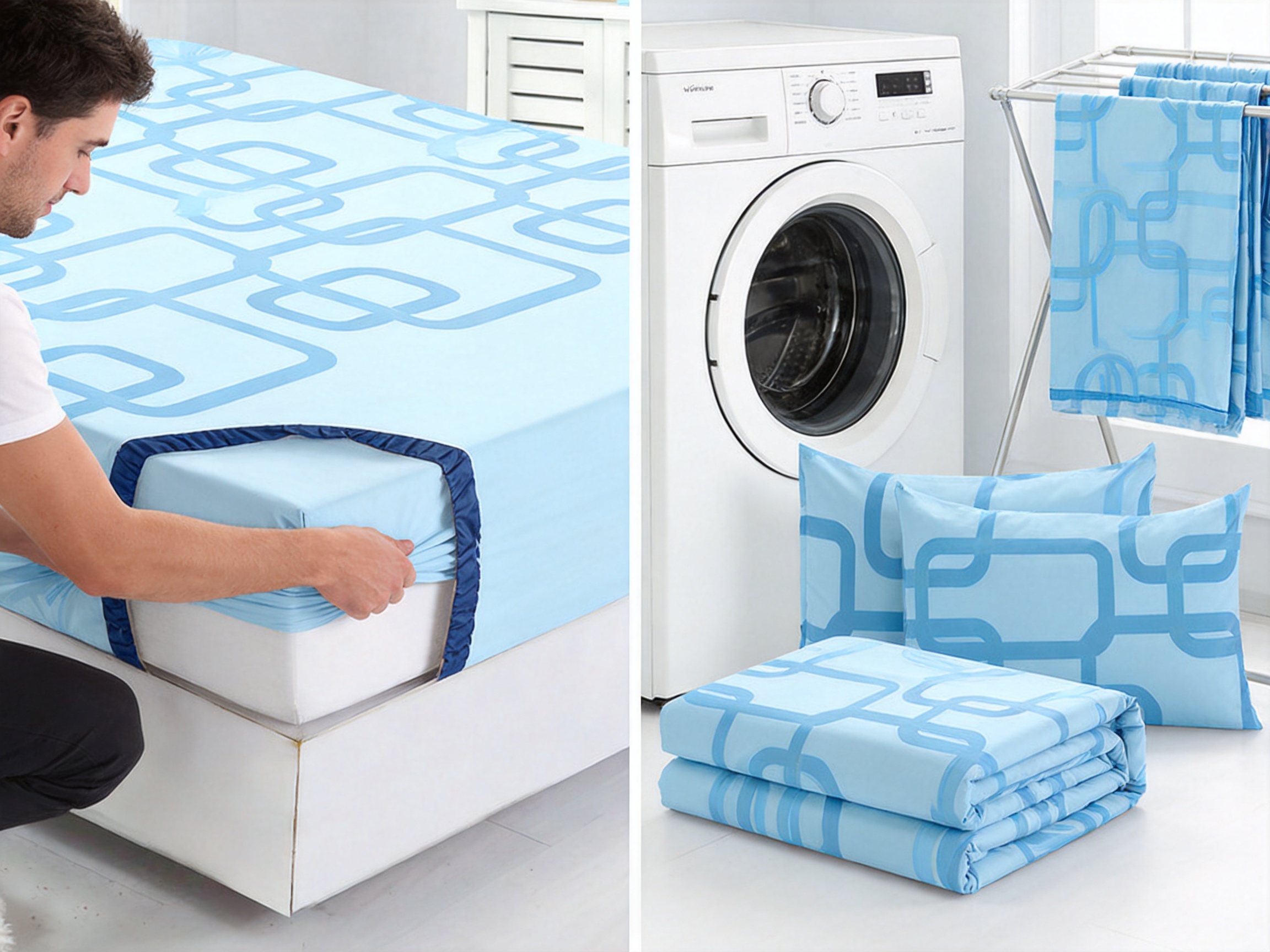
One of the principal advantages of the product is the fitted sheet format. A fitted sheet is designed to wrap around the mattress rather than simply rest on top of it. The supplied dimensions include mattress-facing measurements and depth allowances, such as 100 by 190 plus 19 centimeters for the twin fitted sheet, 140 by 190 plus 19 centimeters for the full size, 160 by 200 plus 25 centimeters for the queen size, and 200 by 200 plus 25 centimeters for the king size.
The additional depth allowance is important because mattresses differ in thickness. A fitted sheet must provide sufficient coverage around the sides and beneath the mattress to maintain a secure position. The correct fit helps prevent the sheet from bunching, sliding, or becoming detached during sleep. It also gives the bed a neater appearance after making.
Compared with a conventional flat sheet used alone, a fitted sheet can reduce the amount of daily adjustment required. This is particularly helpful for active sleepers, family bedrooms, children’s rooms, and hospitality environments where beds need to look orderly. It also makes the product attractive to consumers who prioritize convenience and a smooth sleeping surface.
Importance of Accurate Size Selection
Although the product is offered in standard size categories, mattress dimensions can vary between countries and manufacturers. Buyers should compare the listed length, width, and depth allowance with the target market’s mattress specifications. Correct matching is essential for a secure fit and helps avoid customer complaints related to loose corners or insufficient side coverage.
For wholesale and private-label orders, size labeling should be clear on packaging. The size name, fitted sheet dimensions, mattress depth allowance, and component count should be presented consistently. Retailers may also benefit from displaying an easy-to-read size guide because terms such as twin, full, queen, and king are not always identical across all markets.
Accurate size control is also a manufacturing priority. Cutting, sewing, elastic placement, and final inspection must work together to create a fitted sheet that corresponds to the stated dimensions. The company’s standardized management system and experienced production personnel provide a foundation for controlling these details across production batches.
5. Size Range and Component Information
The size range is designed to cover common residential bedding requirements. The following table summarizes the dimensions and quantities provided for the principal components. Since product configurations can vary, buyers should confirm the final component list, particularly where duvet covers or alternative flat-sheet arrangements are included.
| Size | Bed Sheet | Fitted Sheet | Pillowcase Information |
|---|---|---|---|
| Twin | 152 × 220 cm, 1 piece | 100 × 190 + 19 cm, 1 piece | 50 × 70 cm, 1 piece |
| Full | 200 × 225 cm, 1 piece | 140 × 190 + 19 cm, 1 piece | 50 × 70 cm, 2 pieces |
| Queen | 225 × 250 cm, 1 piece | 160 × 200 + 25 cm, 1 piece | 50 × 70 cm, 2 pieces |
| King | 250 × 270 cm, 1 piece | 200 × 200 + 25 cm, 1 piece | 50 × 100 cm, 2 pieces |
The supplied information identifies a minimum order quantity of 50 sets per color and size. This quantity can be practical for wholesalers, regional retailers, online sellers, hospitality suppliers, and importers testing a new bedding design. It allows buyers to create a commercially meaningful assortment without requiring the volume associated with very large mass-market programs.
Because colors and sizes may be ordered separately, buyers can build a collection around specific demand patterns. For example, a distributor may select larger quantities in queen and full sizes while maintaining smaller quantities in twin and king sizes. The final assortment can be discussed with the manufacturer according to market demand, packaging requirements, and production planning.
Packaging and Retail Presentation Considerations
A coordinated bedding set benefits from packaging that communicates the contents clearly. The package should identify the bed size, material, piece count, included sheet type, pillowcase dimensions, and care information. If a duvet cover is included in the selected version, its dimensions and quantity should also be stated. Clear information helps retailers reduce confusion and supports customer confidence at the point of purchase.
Printed bedding is visually suited to packaging that displays the pattern or includes a product image. This enables customers to understand the design before opening the package. For wholesale buyers, the manufacturer can discuss packaging formats and customized branding requirements as part of the broader home textile service.
6. Practical Care and Maintenance Benefits
One of the most attractive features of microfiber polyester bedding is its practical care profile. The material is lightweight, easy to clean, and quick-drying. These characteristics are valuable in busy households where bedding is washed frequently and must be ready for use without long drying times.
Quick drying can be especially beneficial in humid climates, apartments without large drying areas, student accommodation, guest rooms, and commercial laundry operations. A lighter textile load may also be easier to handle during washing, transferring, folding, and storage. These benefits can reduce the effort associated with changing bedding and help users maintain a regular cleaning routine.
As with all printed textiles, care instructions should be followed carefully. Appropriate water temperature, mild detergent, and controlled drying can help preserve the print and fabric surface. Excessive heat, harsh bleaching agents, or aggressive mechanical treatment may reduce color quality or affect the service life of the bedding. Retailers should include accurate care guidance with each product.
Everyday Convenience Compared with Heavier Bedding
Some bedding products are valued for substantial weight or dense construction, but heavier materials can require more storage space, longer drying time, and greater effort during laundering. The Printed Fitted Sheet Set takes a different approach by focusing on a light, soft, and manageable construction. This makes it a strong option for customers who prioritize convenience without giving up a coordinated appearance.
The fitted design adds another layer of convenience. Users can place the sheet over the mattress and secure it around the corners, creating a tidier surface with less repeated adjustment. The combination of simple care and stable fitting gives the set an advantage over basic bedding that requires frequent straightening.
7. Advantages Over Basic and Competing Bedding Options
The product competes in a broad home textile market that includes plain sheet sets, heavy cotton bedding, low-cost printed sheets, and premium decorative collections. Its competitive position is based on a combination of features rather than one isolated characteristic.
Compared with Plain Sheet Sets
Plain sheet sets can be versatile, but they may offer less visual impact. The printed design of this collection gives consumers an immediate way to refresh a bedroom. Coordinated pillowcases and sheet components make the overall presentation more complete than a single-color set that requires additional decorative items.
The reversible option adds further flexibility. Users can display one side for a stronger pattern and another side for a different mood. This creates more styling possibilities without requiring two separate purchases.
Compared with Uncoordinated Bedding
Buying individual bedding pieces can make it difficult to achieve consistent colors and proportions. A coordinated set reduces this problem by presenting related pieces as one product. This is convenient for consumers and can improve merchandising efficiency for retailers.
For property managers and hospitality buyers, coordinated sets also help standardize room appearance. A consistent pattern across multiple rooms can produce a more professional visual impression and simplify purchasing decisions.
Compared with Difficult-Care Materials
Some textile materials require more demanding washing, drying, ironing, or storage routines. The microfiber polyester construction is intended to offer a lower-maintenance alternative. Its lightweight and quick-drying properties can make everyday use more convenient, particularly for households without extensive laundry facilities.
The fabric is also less likely to create a heavy handling burden during bed changes. This matters in homes with multiple bedrooms as well as in commercial settings where staff must process a large number of textile items.
Compared with Low-Quality Printed Bedding
Low-cost printed products may provide attractive designs but can lose visual quality if printing is inconsistent or if colors fade quickly. This product emphasizes clear patterns, vibrant colors, and a durable microfiber base. These characteristics support a more reliable appearance and help distinguish the collection from bedding focused only on initial price.
For buyers, quality consistency is particularly important when ordering multiple sizes or repeat batches. A stable manufacturing system, standardized management, and experienced personnel help support more predictable production outcomes.
8. Manufacturing Strengths and Production Capability
The product is manufactured by Dongyangshi Menghui Textile Co., Ltd., an industrial and trade enterprise integrating research and development, production, sales, and export. This integrated structure is important because it connects product development with factory execution and international customer service.
The company was founded in 2015 and focuses on home textile products including bed sheets, quilt covers, pillowcases, cushions, quilts, waterproof mattress protectors, curtains, and bedding sets. This product breadth gives the manufacturer experience across multiple textile categories and supports the development of coordinated home furnishing programs.
The factory covers more than 10,000 square meters and is equipped with intelligent production equipment. Intelligent and standardized equipment can support repeatable manufacturing steps, improve workflow efficiency, and assist with the consistent handling of cutting, sewing, printing-related preparation, inspection, and packing operations. While every product still requires skilled supervision, equipment modernization can help create a more stable production environment.
More than 100 employees contribute to the company’s operations. A workforce of this scale supports the division of responsibilities among production, quality management, product development, order coordination, export documentation, and customer service. For international buyers, this organizational depth is valuable because successful supply depends on more than sewing capacity alone.
Research and Development Integration
Research and development is an important part of printed bedding production. The manufacturer’s integrated structure enables design ideas, material selection, size planning, and production considerations to be evaluated together. This can help reduce the gap between a visual concept and a manufacturable product.
For customized projects, buyers may provide customer samples or reference products. Customized home textile services can then be developed around the target market’s preferred dimensions, colors, patterns, packaging, and product combination. The final possibilities depend on technical review and order requirements, but the company’s product scope provides a useful starting point for customers seeking more than an off-the-shelf item.
Standardized Management
Standardized management supports consistency across departments and production stages. In bedding manufacturing, consistency may involve fabric handling, pattern alignment, measurement control, stitching quality, elastic placement, component counting, and packing accuracy. A standardized system helps ensure that specifications are communicated clearly from the order stage through final shipment.
This is especially important for a six-piece product because the customer expects a complete and coordinated package. If one pillowcase is missing, if a fitted sheet is packed with the wrong size, or if components differ in color tone, the perceived value of the entire set can be affected. Production coordination and final checking are therefore central to product reliability.
9. Quality Control Considerations for Printed Bedding
Quality control for a printed fitted sheet set should address both textile appearance and functional performance. Visual inspection can examine print clarity, color consistency, stains, weaving irregularities, and surface defects. Dimensional checks can verify the length and width of sheets and pillowcases, as well as the depth allowance of fitted sheets.
Construction checks should include seam security, corner formation, elastic attachment, hem quality, and the strength of areas exposed to repeated tension. Pillowcase openings should be cleanly finished, and all set components should correspond to the intended size and color. Final packing inspection should confirm the piece count and product labeling.
Color consistency is particularly important when a product includes multiple pieces. A fitted sheet and pillowcases should appear coordinated when placed together on the bed. Maintaining consistent printing across a batch supports a more professional result and makes replacement or repeat orders easier to manage.
Inspection Before Shipment
Before shipment, products should be reviewed against the purchase order, approved sample, packaging instructions, and size chart. The inspection process may include random sampling or full checks depending on buyer requirements and order size. Export-oriented manufacturers need to consider not only production quality but also documentation, carton marks, quantity accuracy, and loading coordination.
The manufacturer’s experienced foreign trade service team supports the communication required for international orders. Clear communication is essential when confirming colors, size ratios, component configurations, labels, packing methods, and delivery arrangements. Buyers should provide a written specification so that product expectations are aligned before bulk production begins.
10. Customization and OEM Opportunities
The product category offers strong opportunities for OEM and customized home textile programs. Retailers may want exclusive print designs, private labels, market-specific sizes, special packaging, or coordinated products that match curtains, quilts, cushions, and mattress protectors. Because the manufacturer produces multiple types of home textiles, a buyer can explore a broader collection rather than sourcing every category from a different supplier.
Customization may begin with a customer sample, a digital design, a color reference, a market trend, or an existing bedding concept. The development process should clarify the fabric specification, print method, dimensions, fitted sheet depth, elastic requirements, component list, packaging, labeling, and order quantity. Technical review is necessary before a sample is approved for bulk production.
A customized program can help retailers create a distinctive assortment. Instead of competing only on price, the buyer can offer an identifiable color story or design family. Coordinated patterns across sheet sets, curtains, cushions, and quilts can also support a complete room collection.
Private-Label Retail Programs
Private-label buyers typically require consistent specifications, recognizable packaging, and dependable communication. The manufacturer’s integrated production and export structure can support these requirements. The minimum order quantity of 50 sets per color and size may be suitable for smaller brands, regional chains, online retailers, and specialized distributors that need exclusivity but cannot commit to very large volumes.
For private-label projects, buyers should establish approval procedures for artwork, samples, labels, packaging, and final inspection. A documented approval process reduces misunderstandings and helps maintain consistency when the design is reordered. It also provides a reference for future seasonal updates or new sizes.
11. Suitable Applications and Target Markets
The Printed Fitted Sheet Set is suitable for a variety of end-use environments. In family bedrooms, it provides a comfortable and decorative bedding solution that is simple to wash and dry. In children’s or teenagers’ rooms, printed designs can make the bed a stronger part of the room’s visual identity. In guest rooms, the coordinated set creates a finished appearance with minimal styling effort.
Rental property operators can benefit from the practical fitted-sheet format and repeatable size selection. A standardized bedding program makes room preparation easier and can support a consistent appearance across apartments or holiday properties. However, commercial operators should select fabric care procedures and replacement schedules appropriate to their usage intensity.
Hospitality suppliers may consider the set for selected room concepts, seasonal packages, or decorative accommodation projects. The complete appearance and broad size range can simplify sourcing for properties that want a more expressive style than plain institutional bedding.
Retailers and e-commerce sellers can position the product around comfort, color, coordinated design, easy care, and size choice. Product listings should include accurate dimensions and clearly explain whether the selected version contains a fitted sheet, flat sheet, duvet cover, pillowcases, or a combination of these components.
Global Export Suitability
The company exports all products and has an experienced foreign trade service team. This export orientation is valuable for international customers because overseas sourcing involves more than manufacturing. It requires timely communication, specification confirmation, packaging coordination, shipping documentation, and follow-up service.
International buyers should still verify country-specific requirements, textile labeling rules, packaging regulations, and import documentation for their destination market. The manufacturer can discuss product and order details, while the buyer remains responsible for confirming the compliance requirements applicable to its own sales territory.
12. How to Evaluate the Product Before Ordering
Buyers should begin by defining the target market and intended use. A household retail program may prioritize fashionable prints and consumer-friendly packaging. A hospitality program may focus more on repeatability, wash frequency, replacement availability, and standardized sizing. A private-label project may require exclusive patterns and customized labels.
The next step is to confirm the exact product configuration. The supplied description refers to a six-piece set and mentions a fitted sheet or flat sheet, a duvet cover, and pillowcases, while the size table lists bed sheet, fitted sheet, and pillowcase information. Buyers should request a final component breakdown for each size. This should state the number of pieces, dimensions, fabric composition, closure type if applicable, and packing method.
Samples should be reviewed for softness, print definition, color, stitching, fitted-sheet depth, elastic performance, and washing behavior. If the product is intended for a private-label program, the approved sample should become the quality reference for bulk production.
Buyers should also clarify the minimum order quantity, color and size allocation, lead time, packaging requirements, payment terms, inspection arrangements, and shipping terms. Early confirmation helps the manufacturer plan material procurement and production scheduling.
Questions About Size Compatibility
Mattress dimensions should be measured rather than estimated. The mattress width, length, and thickness should be compared with the fitted sheet dimensions and depth allowance. Mattress toppers and protectors can increase the total height, so buyers should consider the complete sleeping surface when selecting a fitted sheet.
Retailers should explain that standard size names can vary by market. A queen size in one region may not have the same dimensions as a queen size in another. Displaying measurements alongside the size name is one of the simplest ways to help consumers choose correctly.
13. Product Merchandising Recommendations
The product should be presented as a combination of decorative value and practical performance. Marketing content can emphasize the soft microfiber construction, fitted design, coordinated pieces, vibrant print, reversible styling where applicable, and easy-care characteristics.
Product photography should show the set on a properly sized mattress so that the fitted corners and overall pattern are visible. Close-up images can communicate the surface texture and print clarity, while room-scene images can demonstrate how the colors influence the bedroom atmosphere. Packaging images should identify the available sizes and component count.
Retail descriptions should avoid vague claims and provide concrete information. Customers should be able to find the material, dimensions, included components, care guidance, and fit details without needing to contact customer service. Clear descriptions reduce returns and help establish trust.
Cross-Selling Opportunities
Because the manufacturer produces curtains, cushions, quilts, duvet covers, waterproof mattress protectors, and other bedding products, the sheet set can be included in a broader home textile collection. A retailer might pair printed bedding with matching or complementary curtains, decorative cushions, or mattress protection products.
Cross-selling can increase the value of each customer order and help create a more complete room concept. It also allows buyers to work with one experienced supplier for several related categories. Product coordination should be planned carefully so that colors, motifs, and fabric textures complement one another.
14. Sustainability and Responsible Product Use
Responsible textile use includes selecting products that can remain functional over time, caring for them properly, and avoiding unnecessary replacement. The product’s durable construction and color-retention focus support a longer useful life when the bedding is washed and stored correctly.
Consumers can extend service life by following the care label, washing similar colors together, avoiding excessive heat, and storing the bedding in a dry, clean environment. Retailers can contribute by providing clear care information and helping customers understand the importance of correct size selection.
Manufacturing responsibility also depends on organized production and efficient material planning. Standardized processes can reduce avoidable errors, while integrated product development can help align material use with the intended design. Specific environmental performance should be evaluated according to the actual materials, processes, packaging, and certifications associated with each order.
15. Frequently Asked Questions
Q1: What material is used for the Printed Fitted Sheet Set?
The set is made from 100% polyester, described as ultra-fine microfiber polyester. The material is soft, skin-friendly, lightweight, breathable, durable, easy to clean, and quick-drying.
Q2: How many pieces are included?
The product is presented as a six-piece home textile bedding set. The exact combination may vary by selected configuration. The description references a fitted sheet or flat sheet, a duvet cover, and multiple pillowcases, while the supplied size table lists bed sheet, fitted sheet, and pillowcase specifications. Buyers should confirm the final packing list for each order.
Q3: What bed sizes are available?
The available sizes are twin, full, queen, and king. Each size has specified bed sheet, fitted sheet, and pillowcase dimensions.
Q4: Does the fitted sheet stay in place?
The fitted sheet is designed to provide a secure fit around the mattress. Correct performance depends on matching the sheet dimensions and depth allowance with the mattress size and thickness, including any mattress topper or protector.
Q5: Are reversible designs available?
The product description includes options with reversible printed sheets. Reversible designs can provide two visual arrangements and allow users to change the bedroom appearance more easily.
Q6: Will the print fade quickly?
The print is designed with vibrant colors and clear patterns that resist fading during prolonged use. Proper washing and drying practices are still important for preserving color quality.
Q7: Is the bedding easy to wash?
Yes. The microfiber polyester construction is described as easy to clean and quick-drying. Users should follow the specific care instructions supplied with the finished product.
Q8: What is the minimum order quantity?
The stated minimum order quantity is 50 sets per color and size. Final order conditions should be confirmed with the manufacturer because packaging, customization, and production requirements may affect the commercial arrangement.
Q9: Can the product be customized?
Customized home textile services are available based on customer samples. Buyers can discuss designs, colors, sizes, product combinations, packaging, labels, and other requirements with the manufacturer.
Q10: What other products does the manufacturer produce?
The company produces bed sheets, quilt covers, pillowcases, cushions, quilts, waterproof mattress protectors, curtains, and other bedding sets. This range supports coordinated sourcing across several home textile categories.
Q11: Is the manufacturer suitable for export orders?
The company exports all products and has an experienced foreign trade service team. International buyers should confirm destination-market labeling, packaging, documentation, and import requirements before shipment.
Q12: What should buyers confirm before placing a bulk order?
Buyers should confirm the exact piece count, component dimensions, material, print design, color, size ratio, fitted sheet depth, packaging, labels, minimum order quantity, sample approval, inspection process, production schedule, and shipping terms.
16. Conclusion
The Printed Fitted Sheet Set is a practical and visually appealing bedding solution built around the needs of modern households and professional buyers. Its 100% ultra-fine microfiber polyester fabric offers a soft, lightweight, and easy-care experience. The printed surface provides strong decorative value, while the fitted sheet design supports mattress stability and a neater bed presentation. Reversible options add styling flexibility, and the range of twin, full, queen, and king sizes broadens its market suitability.
Compared with basic sheets, uncoordinated bedding, and difficult-care alternatives, the set offers a balanced combination of appearance, comfort, convenience, and durability. Its six-piece concept is suitable for consumers who want a more complete bedroom look, while its color and size options provide useful merchandising opportunities for retailers, distributors, hospitality suppliers, and private-label brands.
The manufacturing foundation further strengthens the product’s commercial potential. An integrated research, production, sales, and export enterprise, a factory covering more than 10,000 square meters, intelligent production equipment, more than 100 employees, standardized management, and experienced foreign trade support provide the capabilities needed for repeatable home textile production. The company’s wider product range and customized service options also make it possible to develop coordinated bedding and home furnishing programs.
For buyers seeking printed bedding that combines decorative appeal with practical daily performance, this collection offers a dependable starting point. Careful specification confirmation, sample approval, correct size matching, and clear packaging information will help ensure that the final product meets the expectations of both commercial customers and end users.
References
1. Product specification information for the Printed Fitted Sheet Set, including material, size, dimensions, and minimum order quantity.
2. Manufacturer-provided company information concerning production capacity, product categories, factory scale, personnel, research and development, export operations, and customized home textile services.
3. General textile product-development principles concerning microfiber construction, printed fabric performance, fitted-sheet sizing, laundering, and quality inspection.
4. General home textile merchandising principles concerning coordinated bedding, product presentation, private-label development, and consumer size guidance.
Product: Printed Fitted Sheet Set (6 Pieces)



Contact Us for More Details
Don't hesitate to contact when you need us!
Contact Information
Add:
Building 1, East Area, Wanyang Zhongchuang City, Economic Development Zone, Dongyang City, Zhejiang Province, China
Phone:
Tel:
E-mail:
Quick Links
Product Category
QR Code


+86-13616899966
+86-579-86610966
