 English
 русский
 Español
 عربى


Reversible Printed Four-Piece Bedding Set: Manufacturing Quality, Everyday Comfort, and Flexible Bedroom Styling

A bedding set is more than a collection of fabric pieces placed on a bed. It contributes to the visual character of a bedroom, influences sleeping comfort, affects laundering convenience, and can determine how efficiently retailers and hospitality buyers manage their product ranges. The reversible printed four-piece bedding set described in this article is designed to address all of these requirements in one coordinated product. Its double-sided construction provides two visual options, while its ultra-fine microfiber polyester fabric offers softness, breathability, color performance, and practical durability for regular household use.
The set belongs to the sheet and fitted sheet set category and is available in Twin, Full, Queen, and King sizes. Its specifications are organized around a fitted sheet, a printed bedding cover or bed sheet component, and pillowcases. Depending on the size, the pillowcase quantity and dimensions vary. This approach enables the product to serve different bed sizes while preserving a consistent design concept across a collection.
For wholesalers, importers, retailers, accommodation providers, and private-label buyers, the product offers a useful combination of consumer appeal and manufacturing practicality. The reversible pattern creates a stronger merchandising story than a standard single-side printed set, and the fitted sheet helps the finished bed look orderly with less effort. At the same time, the manufacturer’s integrated research, production, sales, and export capabilities support customized home textile programs and consistent supply.
Product Overview and Design Concept
The central feature of this bedding set is its AB-side printed design. Rather than presenting only one visible pattern, the set is developed with two coordinated sides. This gives users the ability to change the appearance of the bed without purchasing a second set. One side may be used as the dominant surface, while the reverse side can be displayed when a different color balance or visual mood is desired.
This two-sided concept is especially valuable in bedrooms where the bed is the largest visible piece of furniture. A change from one side to the other can make the space appear brighter, calmer, more decorative, or more layered. It can also help consumers adapt the bedroom to different seasons, occasions, or interior arrangements. A more expressive side may be selected for daily decoration, while the quieter or more balanced side may be preferred for a minimalist appearance.
The design also creates opportunities for retailers. A reversible product can be presented as offering two coordinated styles in one purchase, making it easier to communicate value. Instead of competing only on fabric weight or price, the product can be positioned around versatility, convenience, and visual variety. This distinction is important in crowded bedding markets where many conventional printed sets offer only one fixed appearance.
The set is made from 100% polyester, specifically described as ultra-fine microfiber polyester fabric. Microfiber construction uses very fine synthetic fibers to create a smooth surface and a soft hand feel. In bedding applications, this type of fabric is commonly selected because it can provide a comfortable touch while remaining lightweight, easy to handle, and suitable for efficient production.
The printed colors are intended to remain vibrant and fade-resistant under frequent washing. While actual wash performance depends on laundering conditions, detergent, water temperature, drying method, and production quality, the use of suitable printing and finishing procedures helps maintain the decorative value of the product. This is important for families and commercial buyers who expect bed linens to be cleaned regularly.
The fitted sheet is another major feature. Its elasticated, mattress-conforming design allows it to sit more securely on the bed than a conventional flat sheet. This reduces loose fabric, improves the appearance of the made bed, and makes installation more convenient. When correctly matched to the mattress dimensions, the fitted sheet can help maintain a smooth sleeping surface and reduce the need for repeated adjustment.
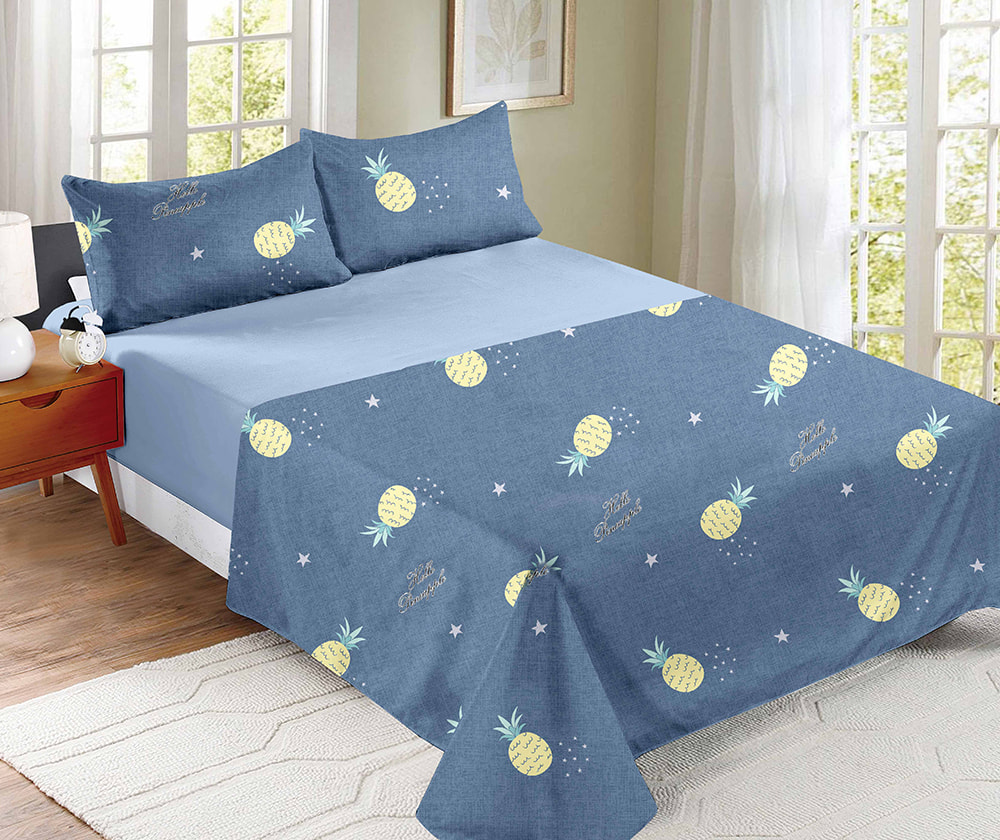
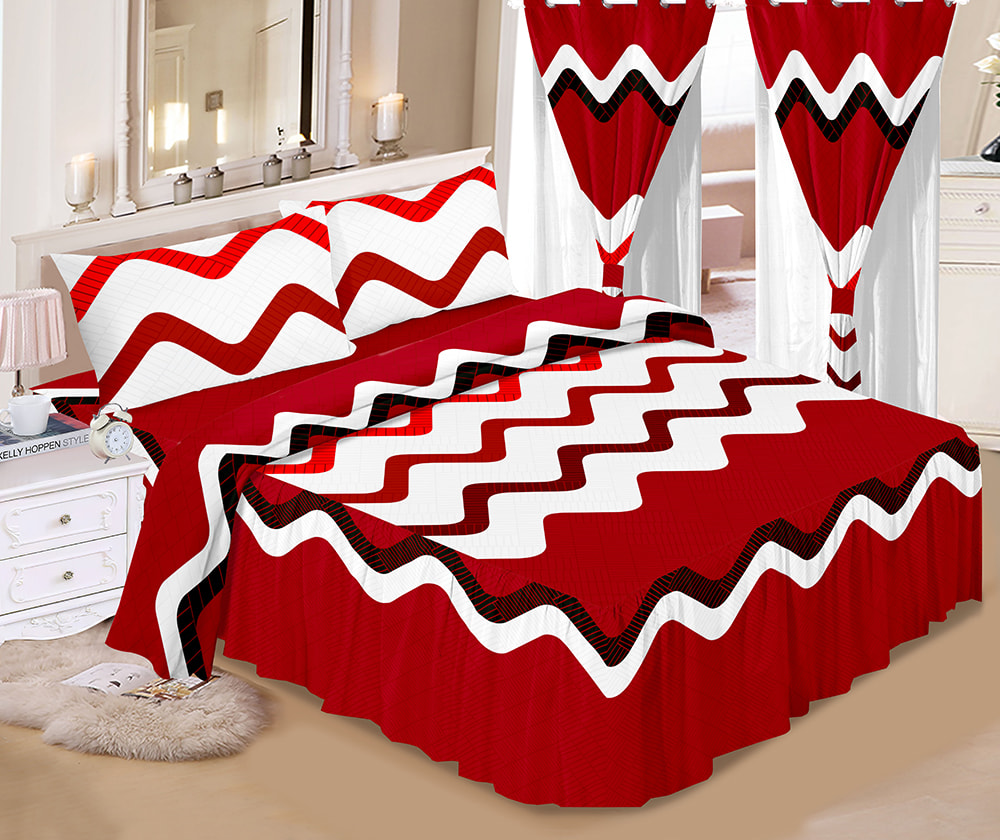
AB Side Printed Bed Sheet Set (4 Pieces)
Material Advantages of Ultra-Fine Microfiber Polyester
Material selection has a direct effect on the comfort, appearance, handling, and service life of bedding. The use of 100% ultra-fine microfiber polyester gives this set several practical advantages over many ordinary bedding products made with coarser fibers or less carefully finished fabrics.
Soft Hand Feel
Fine microfiber yarns create a closely constructed surface with a delicate touch. This smoothness is one of the first characteristics consumers notice when they handle or sleep on the product. A soft surface can make the bed feel more inviting and may improve the perceived quality of the set, especially when the product is displayed in a retail environment where touch influences purchasing decisions.
The fabric’s softness also supports the product’s positioning as an everyday comfort item. It is suitable for bedrooms used by adults, children, guests, and families who want a pleasant sleeping environment without selecting a heavy or difficult-to-maintain textile.
Breathability and Lightweight Comfort
Although polyester is a synthetic fiber, a fine microfiber construction can be engineered to feel light and comfortable in normal indoor conditions. The fabric can support air movement through its structure and avoid the dense, heavy sensation associated with some thicker bedding materials. This makes the set practical for year-round use, especially when combined with an appropriate duvet or blanket according to local climate.
Lightweight bedding is also easier to fold, pack, ship, store, and wash. For commercial customers, these handling benefits can reduce the difficulty of inventory management. Retail staff can package and display the sets more efficiently, while consumers can place them in household washing machines with less bulk than many heavyweight alternatives.
Color and Print Performance
The product uses an exquisite printed design with vibrant colors. The visual effect is supported by controlled printing, fabric preparation, drying, and finishing. A clear and balanced print is essential for a reversible set because both sides are intended to contribute to the appearance. Uneven color, blurred details, or weak contrast would reduce the value of the two-sided concept.
Fade resistance is particularly important for bedding because sheets and covers are frequently exposed to washing, drying, body oils, light, and friction. A well-developed production process helps the print retain its clarity over repeated use. Buyers should still follow the supplier’s care recommendations, but the product is intended for consumers who require attractive bedding that can be cleaned regularly.
Easy Care and Practical Use
Polyester microfiber is widely valued for its practical care characteristics. It dries relatively quickly compared with many heavier or more absorbent textile constructions, and it can be folded compactly after laundering. These properties are useful for households with frequent laundry demands as well as hotels, serviced apartments, dormitories, and other accommodation settings.
Easy-care performance does not mean that all washing practices are equally suitable. Excessive heat, harsh chemicals, overloading, or aggressive drying can affect any printed textile. Proper care instructions should therefore accompany the product. When handled appropriately, the microfiber construction can support repeated daily use while retaining a neat appearance.
Two Styles in One Bedding Set
The reversible AB-side format is a major competitive advantage because it combines decorative flexibility with purchase efficiency. Consumers often want to refresh their bedroom without replacing every textile item. Reversing the set provides an immediate visual change, allowing the room to appear renewed with minimal effort.
This feature can be used in several ways. A consumer may use one side during ordinary weekdays and turn the bedding over before guests arrive. A family may select one pattern for a child’s preferred style and use the other side when a more coordinated room design is desired. Interior-conscious users can switch between the two sides to complement different curtains, rugs, cushions, or wall colors.
For retailers, reversible bedding can support a stronger product presentation. Product photography can show both sides, while in-store displays can demonstrate how a single set creates two distinct arrangements. This provides more content for catalogs, online listings, seasonal campaigns, and room-style collections.
The two-sided structure also helps reduce the feeling of repetition. A single printed design may become visually familiar after extended use, but the reverse side gives the user another arrangement without requiring additional storage. This is especially useful in smaller homes where consumers may not have space for numerous bedding sets.
From a product development perspective, coordinated AB-side printing offers room for a broad collection strategy. A manufacturer can develop botanical patterns, geometric compositions, abstract colors, children’s themes, seasonal motifs, or restrained neutral designs while preserving the same basic construction and size range. Buyers can therefore request different visual directions for different markets without changing the entire product category.
Fitted Sheet Construction and Bed Appearance
The fitted sheet is designed to cover the mattress and remain in position through elasticated edges and a mattress-compatible cut. Compared with an ordinary flat sheet, a fitted sheet reduces excess movement and helps create a cleaner overall appearance. This is particularly beneficial for modern bedrooms where smooth, well-arranged bedding is an important part of the interior style.
The fitted design also simplifies bed making. A user can place the corners over the mattress and secure the sheet without repeatedly tucking large quantities of fabric underneath. This saves time in private homes and can improve operating efficiency in hospitality environments where many beds must be prepared each day.
The listed fitted sheet depths vary by size. The Twin specification is 100 by 190 plus 19 centimeters, the Full specification is 140 by 190 plus 19 centimeters, the Queen specification is 160 by 200 plus 25 centimeters, and the King specification is 200 by 200 plus 25 centimeters. The added depth allowance is intended to accommodate mattress thickness and provide a more secure fit.
Buyers should compare these measurements with the mattress standards in their target market before placing an order. Mattress thickness can differ between regions and product types, especially when pillow-top, memory foam, or mattress-topper layers are used. Accurate size matching is essential to ensure that the fitted sheet remains secure and does not create excessive tension or loose corners.
A secure fitted sheet can also help preserve the appearance of the upper bedding layers. When the bottom layer remains smooth, the duvet cover and pillows can be arranged more effectively. The result is a more polished product presentation for showrooms, online photography, rental properties, hotels, and private bedrooms.
Set Components and Size Options
The product is offered in four principal size categories: Twin, Full, Queen, and King. This selection covers a broad range of common residential and commercial bed formats. The specifications supplied for the product are summarized below.
| Size | Bed Sheet or Bedding Cover | Fitted Sheet | Pillowcases |
|---|---|---|---|
| Twin | 152 × 220 cm, 1 piece | 100 × 190 + 19 cm, 1 piece | 50 × 70 cm, 1 piece |
| Full | 200 × 225 cm, 1 piece | 140 × 190 + 19 cm, 1 piece | 50 × 70 cm, 2 pieces |
| Queen | 225 × 250 cm, 1 piece | 160 × 200 + 25 cm, 1 piece | 50 × 70 cm, 2 pieces |
| King | 250 × 270 cm, 1 piece | 200 × 200 + 25 cm, 1 piece | 50 × 100 cm, 2 pieces |
The product description identifies the set as including a fitted sheet, duvet cover, and pillowcases. The supplied specification table labels the large cover component as “bed sheet.” Buyers should confirm the final terminology, construction, opening style, closure method, and packaging details with the manufacturer before production. This is especially important when the product is prepared for a market that distinguishes strictly between a flat bed sheet and a duvet cover.
The Twin specification lists one pillowcase, while Full, Queen, and King list two pillowcases. This arrangement may reflect the intended bed format or a market-specific packaging standard. Importers and retailers should verify the final set count on the packaging, product label, carton markings, and commercial documents to ensure that all sales channels present the same information.
Manufacturing Strengths of the Supplier
The product is manufactured and supplied by Dongyangshi Menghui Textile Co., Ltd., an industrial and trade enterprise integrating research and development, production, sales, and export. This integrated structure is valuable because bedding quality depends on coordination between design, material selection, sewing, printing, inspection, packaging, and international logistics.
The company was founded in 2015 and specializes in home textile products including bed sheets, quilt covers, pillowcases, cushions, quilts, waterproof mattress protectors, curtains, and other bedding sets. This product range gives the manufacturer experience across related textile constructions. Knowledge gained from producing multiple categories can support better coordination of fabric behavior, sewing methods, dimensions, finishing, and packaging requirements.
The factory covers more than 10,000 square meters and operates with intelligent production equipment. Modern equipment can improve production consistency by supporting more accurate cutting, stable sewing, controlled fabric handling, and repeatable output. Automation and semi-automation are particularly useful for larger orders where small dimensional differences can become significant across hundreds or thousands of sets.
The company employs more than 100 people and operates a standardized management system. A standardized system can help define production responsibilities, inspection points, material records, process instructions, and order traceability. These controls are important for buyers who need reliable repeat orders and consistent product performance across different colors, sizes, and production batches.
An experienced foreign trade service team provides additional value for international customers. Export-oriented buyers often require assistance with specifications, packaging, labeling, sampling, production schedules, documentation, and shipment coordination. A supplier familiar with these processes can reduce communication delays and help convert a product concept into a clear manufacturing order.
Research and Development Support
Research and development is important in printed bedding because consumer preferences change quickly. An integrated supplier can develop new patterns, coordinate color combinations, adjust dimensions, and refine product details according to market needs. The reversible format is particularly suitable for design development because the two sides can be planned as complementary patterns rather than unrelated prints.
R&D support can also be used to modify practical details. Buyers may request different fabric weights, packaging forms, closure solutions, elastic specifications, pillowcase sizes, or care labels. Any such modification should be confirmed through samples and technical documentation before mass production.
Production Coordination
Bedding production involves several linked operations. Fabric must be prepared and printed, then inspected, cut, sewn, finished, folded, packed, and checked again. If one stage is poorly coordinated, the final product may show mismatched patterns, uneven seams, incorrect sizes, weak elastic, or packaging errors.
A factory that manages multiple stages within an organized production structure can improve communication between departments. Production planning can align fabric availability with printing schedules, cutting requirements, sewing capacity, and shipment deadlines. This is particularly important for customized orders where materials and artwork may be unique to one customer.
Export Experience
The company states that all products are exported and that customized home textile services are provided based on customer samples. Export experience may benefit buyers through better familiarity with overseas market expectations, carton packing, product labeling, inspection procedures, and commercial documentation.
Customer-sample development is also useful for private-label programs. A buyer may provide a reference item, artwork, color standard, packaging idea, or dimensional requirement. The manufacturer can then work toward a sample for review. The exact scope of customization, minimum order, sample charges, lead time, and production tolerances should be agreed in writing.
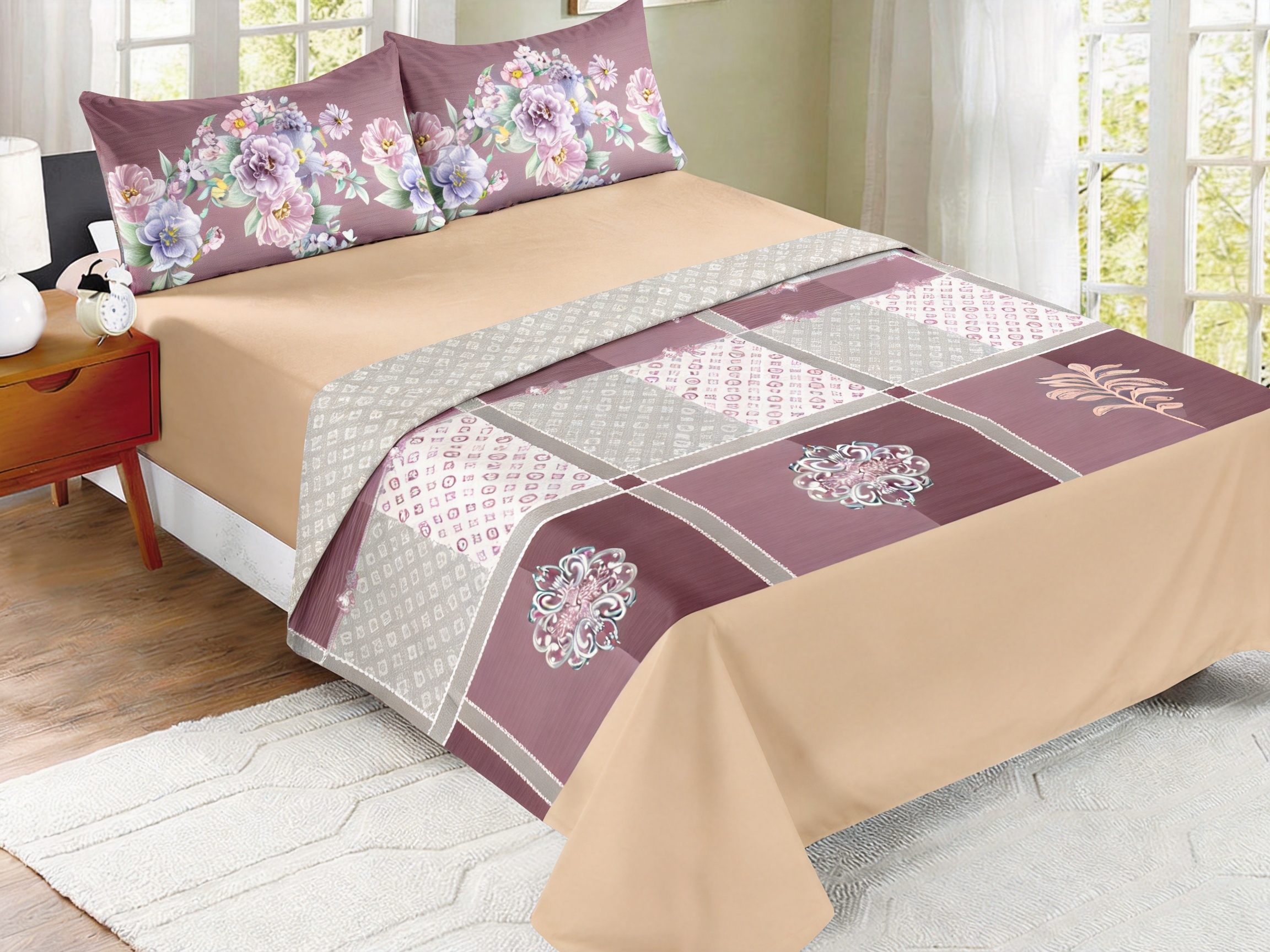
How the Product Compares with Conventional Bedding Sets
Many conventional bedding sets offer a single printed face and a basic flat sheet. The reversible set can stand apart in several ways. First, it provides visual flexibility through the AB-side construction. Second, its fitted sheet is designed to create a more secure and orderly mattress covering. Third, its microfiber fabric combines a soft hand feel with lightweight handling and practical care characteristics.
A single-sided set may be suitable for consumers who prioritize a fixed design, but it provides fewer styling options. The reversible design has a stronger value proposition for customers who enjoy refreshing their surroundings or who want one product to serve multiple decorative purposes.
Compared with sets made from heavier fabrics, the microfiber construction may be easier to handle and quicker to dry. This can be an advantage for households with limited laundry space and for commercial users managing frequent turnover. However, fabric weight and hand feel should always be evaluated through physical samples because consumer preferences differ by climate and market.
Compared with loose flat-sheet arrangements, the fitted sheet can save time during bed making and reduce movement during use. A better fit can also improve the perceived quality of the whole bed. This practical advantage is important because consumers often judge bedding not only by softness but also by how easily it can be installed and maintained.
Compared with products from suppliers with limited export experience, an integrated manufacturer may offer a more complete service. The ability to support design development, production, inspection, customization, and shipment coordination can reduce the need for buyers to manage several separate vendors.
Quality Control Considerations
Quality control should begin before cutting and continue through packing. For this type of product, the first inspection area is the fabric. The material should be checked for composition, width, surface consistency, shade, print alignment, stains, holes, weaving defects, and other irregularities. A fabric inspection system helps prevent large quantities of defective material from entering later production stages.
Print inspection is particularly important for an AB-side design. The two sides should match the approved artwork and color standards. Pattern direction, repeat size, edge alignment, and color balance should be reviewed. If multiple pieces are intended to coordinate, the print should remain visually consistent across the duvet cover, fitted sheet, and pillowcases.
Cutting accuracy affects final dimensions and pattern placement. Incorrect cutting can cause the fitted sheet to sit poorly or produce an unbalanced visual effect. Pattern pieces should be organized carefully so that the finished set presents the intended orientation when assembled.
Sewing inspection should include seam strength, stitch density, thread trimming, corner construction, elastic attachment, closures, and overall workmanship. The fitted sheet requires special attention because the elasticated edge is exposed to repeated stretching during installation and removal. Strong, consistent sewing helps preserve the fit over time.
Finished products should be measured against the approved size chart. Measurements should be taken at appropriate points and with the correct allowances. Dimensional checks are especially important because bedding may shrink or relax slightly after production, washing, or finishing. The buyer and supplier should agree on acceptable tolerances before mass production.
Final inspection should review the complete set rather than individual pieces only. Inspectors should confirm that the correct number of components is included, that the size labels are accurate, that pillowcase quantities correspond to the order, and that the design sides are correctly presented. Packaging should also be checked for folding quality, barcode or label accuracy, carton quantities, and protection against moisture or contamination.
Customization and Private-Label Opportunities
The manufacturer provides customized home textile services based on customer samples. This opens opportunities for retailers and distributors that want exclusive designs or private-label collections. Customization may include fabric selection, print artwork, colorways, size combinations, labels, packaging, and assortment planning.
Artwork should be submitted in a suitable format with clear color references. Buyers should identify which side is the primary face and how the reverse side should coordinate with it. If the design contains directional motifs, text, borders, or large-scale images, the layout should be approved carefully before cutting.
Color approval is another important stage. Digital images can vary between screens, while printed fabric may appear different under different lighting conditions. A physical strike-off or pre-production sample is therefore recommended for important orders. The buyer should confirm the acceptable color range and whether the approved sample will serve as the production reference.
Labels and packaging can be developed for different sales channels. A retail package may require product photography, size information, fiber content, care instructions, country-of-origin information, and a barcode. A wholesale carton may require outer-carton markings, quantity information, purchase-order numbers, and handling instructions. These details should be finalized before production to avoid relabeling or repacking.
Customization can also extend to product combinations. A buyer may choose selected sizes, coordinate the bedding with curtains or cushions, or create seasonal collections. Because the manufacturer produces a broad range of home textiles, coordinated product programs may be easier to manage through one supply partner than through multiple factories.
Commercial Value for Different Buyers
Retailers
Retailers can position the set as a practical decorative upgrade. The reversible design gives sales staff and product descriptions a clear benefit to communicate. The fitted sheet makes the product accessible to consumers who want a neat bed without complicated arrangement, while the microfiber fabric supports an affordable comfort proposition.
For online retail, the product can be shown from both sides, installed on the bed, and presented with close-up images of the fabric and stitching. Size charts should be prominent, and the distinction between the bedding cover and fitted sheet should be explained clearly. Accurate information helps reduce returns caused by misunderstanding.
Wholesalers and Distributors
Wholesalers can benefit from a multi-size product line with a consistent manufacturing concept. Twin, Full, Queen, and King options make it possible to serve different retailers or regional markets. A standard product structure also makes assortment planning and replenishment easier.
The minimum order quantity is listed as 50 sets per color and size. This requirement allows buyers to plan orders by specific color-size combinations. Buyers should calculate their expected sales, warehouse capacity, and launch requirements before confirming quantities. For custom artwork or packaging, the effective minimum may differ and should be confirmed with the supplier.
Hotels and Accommodation Providers
Hotels, guesthouses, serviced apartments, and rental properties require bedding that presents well, can be washed regularly, and is manageable for housekeeping teams. The fitted sheet can help standardize bed preparation, while the lightweight microfiber fabric can simplify laundry handling.
Commercial users should conduct their own trials before adopting the set across a property. Testing should include repeated laundering, drying, fitting, ironing or steaming requirements, print appearance, seam performance, and staff handling time. Commercial laundry conditions may be more demanding than household washing, so evaluation under actual operating conditions is advisable.
Private-Label Brands
Private-label brands can use the product as a foundation for a differentiated collection. The reversible concept provides a clear identity, while custom designs, packaging, and color stories can make the finished item exclusive to the brand. The supplier’s research, production, and export capabilities can support development from sample approval to finished shipment.
Recommended Ordering and Development Process
A successful order begins with a complete product brief. The brief should state the required size range, fabric composition, fabric feel, print design, preferred colors, component list, packaging format, labeling requirements, delivery destination, and target quantity.
The next stage is sample development. The buyer should review the physical sample for softness, print clarity, color, fitted-sheet depth, elastic recovery, sewing quality, pillowcase construction, and overall appearance. The sample should be measured and photographed for internal approval.
After sample approval, the buyer and supplier should create a written specification sheet. It should identify the approved fabric, dimensions, tolerances, print reference, sewing details, component quantities, packaging, and inspection requirements. Written specifications reduce the risk of misunderstandings during mass production.
A pre-production meeting or confirmation is useful before cutting begins. This is the point to verify fabric availability, artwork status, production timing, packaging materials, and any testing requirements. Buyers should also confirm whether the product will be produced exactly as the sample or whether approved modifications are included.
During production, progress updates can help buyers manage inventory planning. For larger orders, an inspection may be arranged during or after production. The inspection scope can include quantity, measurements, workmanship, packaging, and random set opening to verify component completeness.
Before shipment, the final commercial documents and carton information should be checked. The product name, size, quantity, carton count, labels, and shipping marks should correspond with the purchase order. This disciplined process supports smoother receiving and reduces errors in distribution.
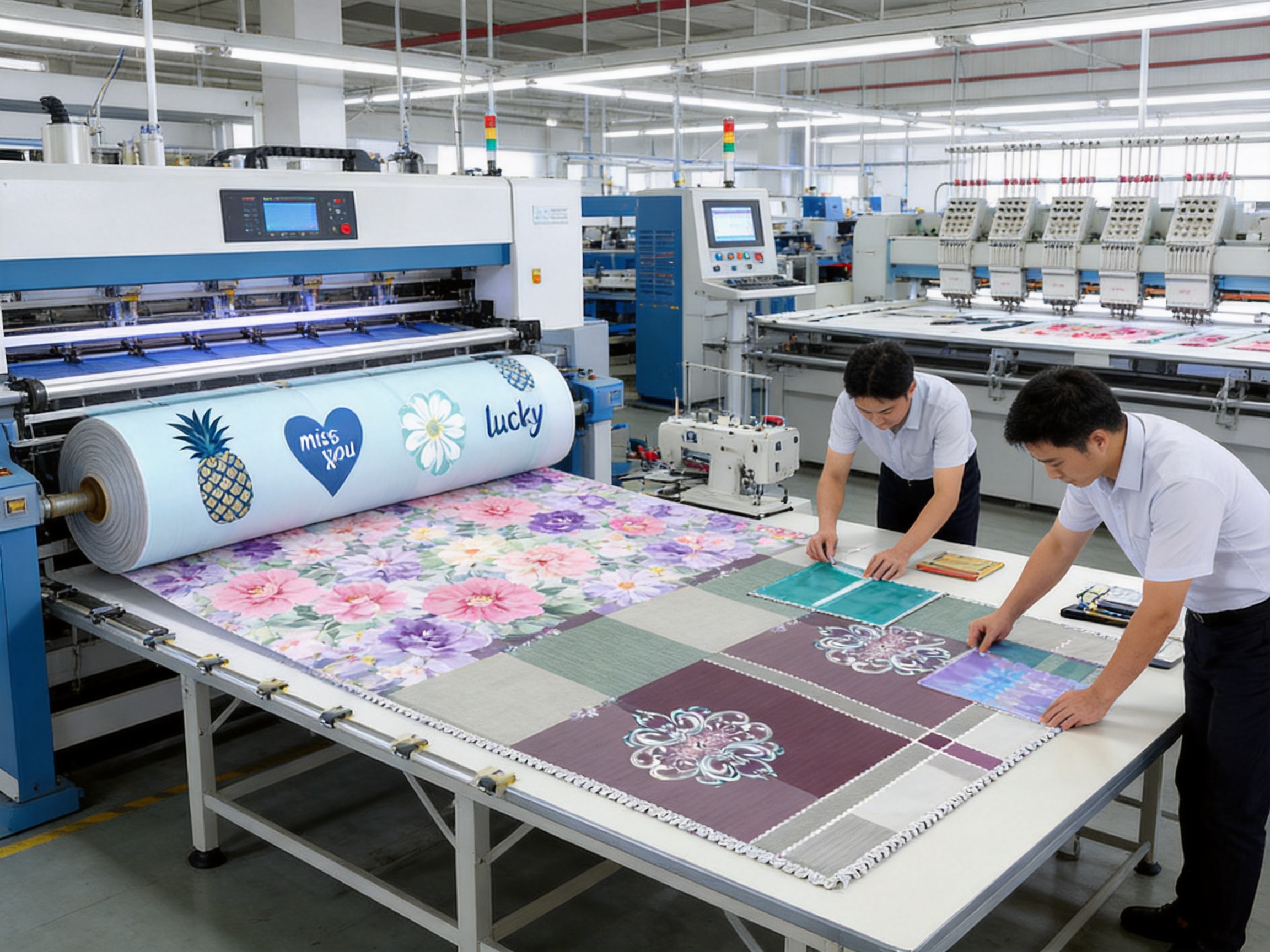
Care, Handling, and Consumer Guidance
Consumers should follow the care label supplied with the final product. In general, printed microfiber bedding should be washed with similar colors and with a suitable detergent. Excessively high temperatures, strong bleaching agents, and rough handling may reduce the life of the print or affect the fabric surface.
Overloading a washing machine can prevent proper cleaning and increase friction between textile pieces. Washing the set with sufficient room for movement can help preserve the smooth appearance. The fitted sheet and cover should be checked for trapped items or tangled elastic before laundering.
Drying instructions should also be followed carefully. Microfiber generally offers practical drying performance, but excessive heat can affect synthetic fibers, elastic, and printed finishes. A moderate drying setting or line drying in a suitable environment may help maintain the product’s appearance.
When storing the set, all pieces should be completely dry. Folding the fitted sheet neatly and placing the components together can make future use easier. The reversible construction means that both sides may be displayed, so users should avoid storing the set in conditions that could cause color transfer, dampness, or prolonged exposure to direct sunlight.
Retailers should include clear care information in the product listing and on the packaging. Simple explanations of the fitted sheet dimensions, pillowcase quantity, and reversible design can improve customer satisfaction. The product should not be described as suitable for a mattress depth that exceeds the approved fitted-sheet allowance.
Environmental and Operational Considerations
Polyester microfiber is a synthetic textile, and responsible product management should consider the full life cycle of the item. Efficient cutting can help reduce fabric waste, while accurate production planning can reduce excess inventory. Durable color and construction may extend the useful life of the set, reducing the frequency of replacement.
Packaging can also be reviewed. Buyers may request compact packaging that protects the product while limiting unnecessary materials. Carton efficiency affects warehouse storage and shipping utilization. The best packaging solution depends on the sales channel, destination, handling conditions, and retail presentation requirements.
Manufacturing efficiency is another important consideration. Intelligent equipment, standardized management, and coordinated production can help reduce avoidable defects and rework. Better first-pass quality supports more efficient use of fabric, labor, energy, packaging, and transportation resources.
Buyers seeking specific environmental certifications or restricted-substance testing should discuss these requirements before placing an order. The supplier should confirm what testing, documentation, and certification support are available for the intended market. Environmental claims should be based on verifiable product and production information.
Why the Product Has Strong Market Potential
The bedding market continues to reward products that combine attractive design with practical daily performance. Consumers want comfortable fabrics, simple maintenance, easy bed making, and the ability to personalize their living spaces. This set addresses each of these preferences through a coordinated design and functional construction.
The reversible feature gives the product a clear point of difference. A consumer receives two visual arrangements without purchasing two complete sets. This can improve perceived value and make the product more attractive as a gift, seasonal purchase, bedroom refresh, or first-home essential.
The microfiber fabric supports a broad market position. It can be presented as soft and lightweight for everyday residential use, practical for frequent washing, and manageable for commercial operations. The wide size range further increases its potential across different bedroom formats.
The manufacturer’s capabilities strengthen the commercial proposition. An established factory, more than 10,000 square meters of production space, intelligent equipment, over 100 employees, export experience, and sample-based customization provide a foundation for both standard and customized orders.
Most importantly, the product is not limited to visual appeal. The fitted sheet, coordinated components, size range, and practical polyester construction make it a complete bedding solution. When supported by proper quality control and accurate specifications, it can compete effectively against ordinary single-sided sets and less specialized suppliers.
Q&A
What is the main feature of this bedding set?
The main feature is the AB-side reversible printed design. The set offers two coordinated visual styles, allowing users to change the appearance of the bed by turning the bedding over.
What material is used?
The listed material is 100% polyester, described as ultra-fine microfiber polyester fabric. It is selected for its soft hand feel, lightweight character, breathability, practical care properties, and suitability for printed designs.
What does the four-piece set include?
The product description identifies the set as including a fitted sheet, a duvet cover or large bedding cover, and pillowcases. The supplied specifications list one large cover component, one fitted sheet, and pillowcases. The Twin size lists one pillowcase, while Full, Queen, and King list two pillowcases.
Which sizes are available?
The available sizes are Twin, Full, Queen, and King. Each size has its own fitted-sheet dimensions, large cover dimensions, and pillowcase specifications.
Are the dimensions suitable for every mattress?
The dimensions are intended for the stated bed-size categories, but mattress thickness and regional standards can vary. Buyers should compare the fitted-sheet measurements with their target mattresses before ordering, especially when pillow-top mattresses or mattress toppers are used.
Why is a fitted sheet useful?
A fitted sheet is designed to grip the mattress more securely than a flat sheet. It can reduce shifting, simplify bed making, and create a smoother, more orderly appearance.
Is the print suitable for frequent washing?
The product description states that the print is vibrant and fade-resistant and is suitable for frequent washing. Actual performance depends on production quality and care conditions. Consumers should follow the final care label and avoid unsuitable heat or harsh chemicals.
Can the product be customized?
Yes. The company provides customized home textile services based on customer samples. Possible customization areas may include designs, colors, sizes, labels, packaging, and related product details, subject to confirmation with the supplier.
What is the minimum order quantity?
The listed minimum order quantity is 50 sets per color and size. Custom products or special packaging may have additional requirements, so buyers should confirm the final commercial terms before placing an order.
What manufacturing resources does the supplier have?
The supplier operates a factory covering more than 10,000 square meters, uses intelligent production equipment, employs more than 100 people, and maintains an integrated research, production, sales, and export operation.
Is the product suitable for hotels or other commercial users?
It may be suitable for accommodation and other commercial applications because the fitted sheet supports efficient bed preparation and the microfiber construction is practical to handle. Commercial buyers should conduct laundering and durability trials under their actual operating conditions before large-scale adoption.
What should buyers confirm before production?
Buyers should confirm the final component list, terminology for the large cover, dimensions, tolerances, fabric details, artwork, color references, elastic specifications, packaging, labels, inspection standards, production schedule, and shipment documentation.
Conclusion
The reversible printed four-piece bedding set combines decorative flexibility with practical bedroom performance. Its AB-side design gives consumers two coordinated styles in one product, while the ultra-fine microfiber polyester fabric provides a soft touch, lightweight comfort, breathability, and convenient handling. The fitted sheet supports a more secure mattress fit and a cleaner finished bed appearance.
Available in Twin, Full, Queen, and King sizes, the set can serve a wide range of residential, retail, private-label, and commercial applications. Its print-focused design, coordinated components, and easy-care characteristics give it clear advantages over many basic single-sided bedding products.
The supplier’s integrated structure further strengthens the product. Research and development, production, export, customized sample services, intelligent equipment, standardized management, a large factory, and an experienced team provide the resources needed to support consistent orders and market-specific programs.
For buyers seeking bedding that combines style, versatility, comfort, and manufacturing support, this product offers a well-balanced solution. Careful confirmation of dimensions, component quantities, packaging, and quality requirements will help ensure that the final order meets the expectations of both distributors and end users.
References
1. Product specification information supplied for the reversible printed four-piece bedding set.
2. Company profile and manufacturing information supplied for Dongyangshi Menghui Textile Co., Ltd.
3. General textile quality-control principles for printed bedding, fitted sheets, sewing workmanship, and dimensional inspection.
4. General home-textile care guidance for polyester microfiber bedding products.
5. General product-development practices for customized bedding, private-label packaging, and export-oriented textile manufacturing.
Product: AB Side Printed Bed Sheet Set (4 Pieces)



Contact Us for More Details
Don't hesitate to contact when you need us!
Contact Information
Add:
Building 1, East Area, Wanyang Zhongchuang City, Economic Development Zone, Dongyang City, Zhejiang Province, China
Phone:
Tel:
E-mail:
Quick Links
Product Category
QR Code


+86-13616899966
+86-579-86610966
