 English
 русский
 Español
 عربى


Double-Sided Fitted Sheet 10-Piece Set: A Practical Guide to Versatile Bedding, Quality Manufacturing, and OEM Supply
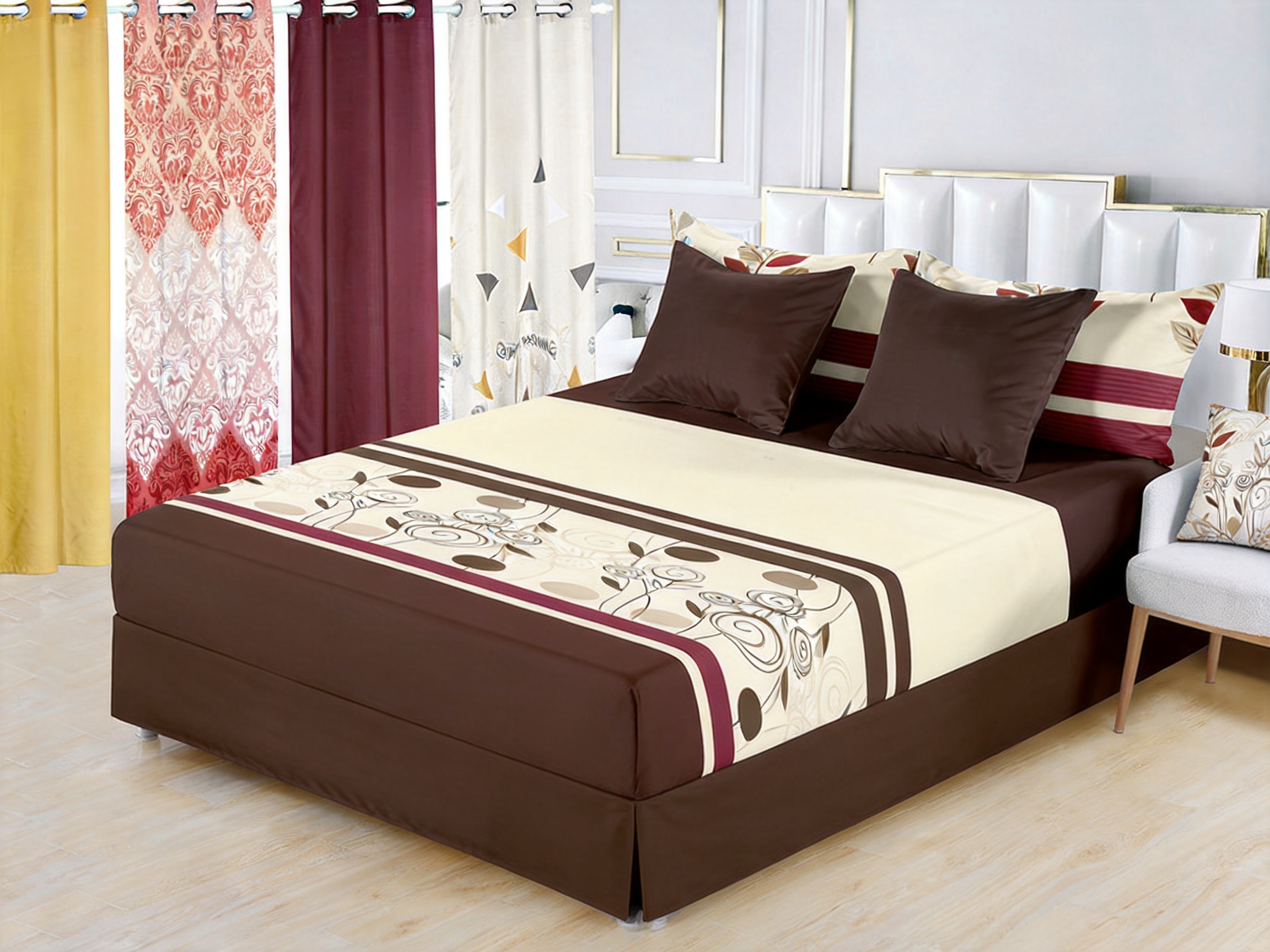
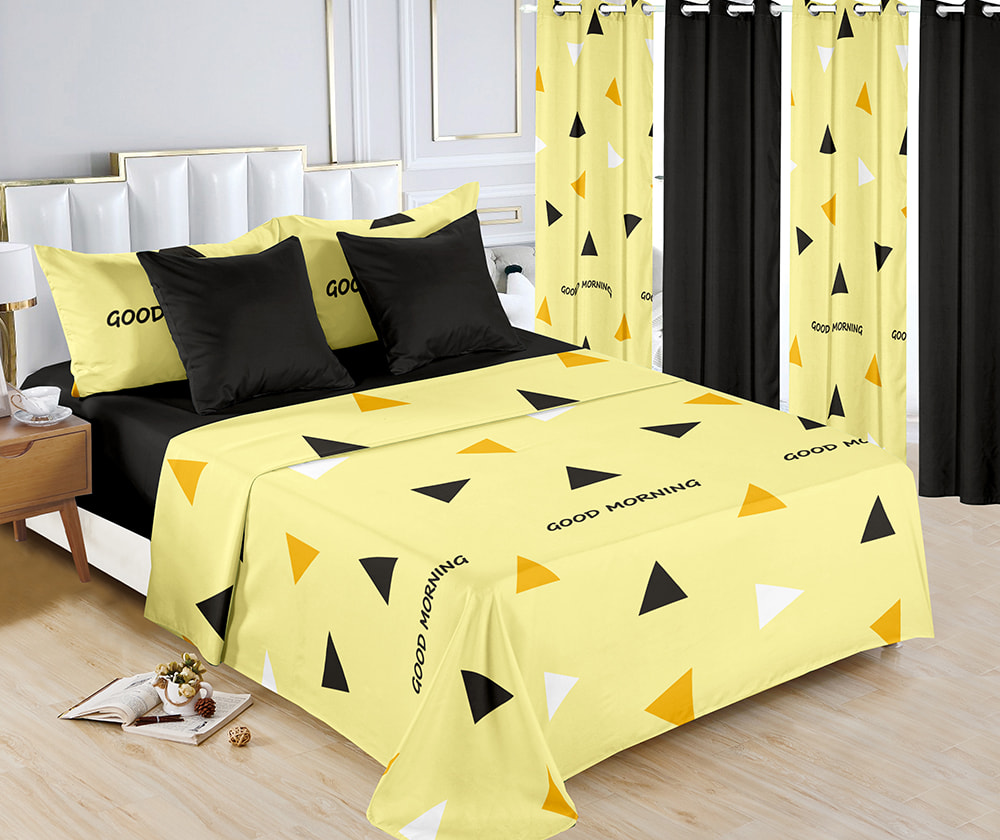
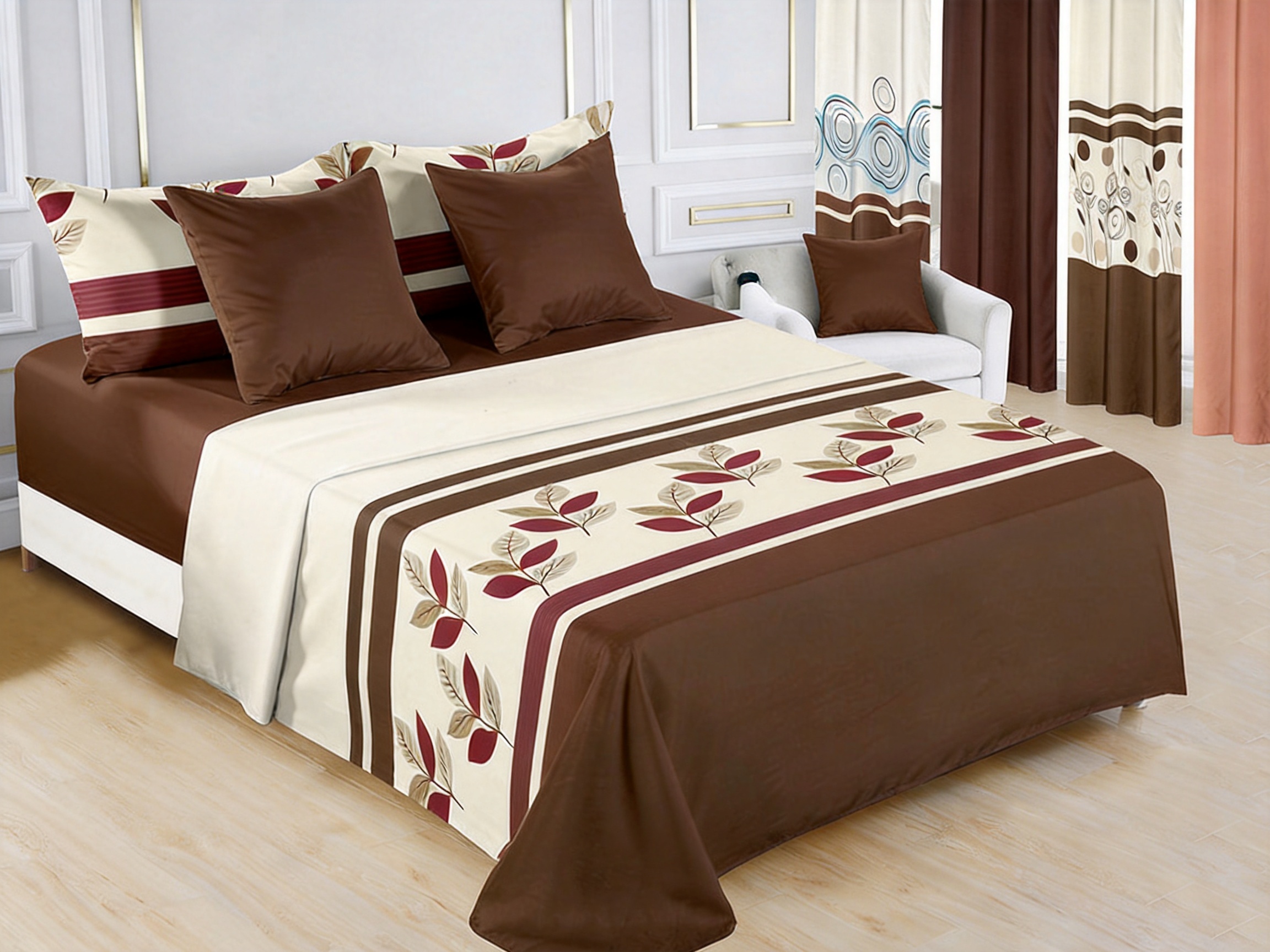
Modern bedding must do more than cover a mattress. It should provide a comfortable sleeping surface, remain securely fitted during use, coordinate with the wider bedroom, and offer practical value for households, retailers, hospitality businesses, and distributors. The Double-Sided Fitted Sheet 10-Piece Set is designed around these needs. It combines a reversible printed bed sheet, a fitted sheet, pillowcases, curtains, and cushion covers in one coordinated package, creating a complete textile solution rather than a single bedding item.
The set is made from 100% polyester microfiber, a material selected for its soft touch, manageable care requirements, light weight, and suitability for printed designs. Its double-sided design allows users to change the visible pattern without purchasing another full set. This creates a useful combination of visual variety and everyday convenience. The fitted sheet is also constructed to sit securely around the mattress, helping reduce shifting, bunching, and the need for repeated adjustment.
For professional buyers, the product offers additional value. It can be produced for different markets, supplied in Queen and King sizes, and adapted through OEM home textile services. The manufacturer integrates product development, fabric handling, printing coordination, sewing, quality control, packaging, export preparation, and customer service. This integrated structure helps buyers manage product consistency and sourcing efficiency from one supply partner.
This article examines the product’s construction, component details, functional advantages, manufacturing strengths, customization potential, purchasing considerations, and suitability for international home textile markets.
1. Product Overview
The Double-Sided Fitted Sheet 10-Piece Set is a coordinated home textile collection intended for bedrooms and adjacent living spaces. The core concept is a color and pattern combination known as a Print Color AB Side Bed Sheet design. In practical terms, the bed sheet features two visual sides, allowing the user to display one side and later reverse or change the arrangement for a different appearance.
The complete set contains ten pieces:
| Component | Quantity | Purpose |
|---|---|---|
| Printed bed sheet | 1 piece | Provides the main decorative and sleeping surface |
| Printed fitted sheet | 1 piece | Fits around the mattress and helps keep the bedding in position |
| Pillowcases | 2 pieces | Coordinate pillows with the bedding design |
| Curtains | 4 pieces | Extend the visual theme from the bed to the surrounding room |
| Cushion covers | 2 pieces | Add decorative coordination to chairs, sofas, or the bed |
| Total | 10 pieces | Complete coordinated textile package |
Unlike a conventional sheet-only package, this product links the bed area with the broader interior. Matching curtains and cushion covers can help retailers present the set as a room styling solution. For consumers, the coordinated design reduces the need to search for matching accessories from different suppliers.
The product is offered in Queen and King sizes. The dimensions are designed for commonly used mattress and bed formats, while the 30-centimeter fitted-sheet depth provides coverage for the mattress side and allows the elasticized edge to hold the sheet in place.
2. Materials and Surface Performance
The set uses 100% polyester microfiber fabric. Microfiber is composed of very fine synthetic fibers that can be woven or knitted into a smooth, lightweight textile. In bedding applications, this material is valued for its soft hand feel, efficient color uptake, easy-care characteristics, and relatively stable performance during normal household use.
One of the primary advantages of microfiber polyester is its delicate surface feel. The fabric can be processed to provide a smooth touch that is comfortable against the skin. While softness depends on yarn specification, construction, finishing, and printing treatment, a well-produced microfiber sheet can offer a pleasant sleeping surface without the heavier weight associated with some natural-fiber alternatives.
Polyester also supports detailed printed designs. Its fiber structure is compatible with a wide range of color and pattern treatments, making it suitable for floral, geometric, abstract, traditional, seasonal, and contemporary designs. This is especially important for a double-sided product, because the value of the design depends on the clarity and coordination of both visual surfaces.
Another benefit is ease of maintenance. Polyester microfiber generally dries faster than heavier bedding materials and can be convenient for regular washing routines. It is a practical option for families, rental properties, guest rooms, and hospitality environments where bedding may need frequent cleaning. Buyers should always follow the final care label supplied with the specific production batch, because washing temperature, drying method, and finishing treatments can affect the recommended care instructions.
Material Benefits for Different Users
For household users, the material offers a balance between comfort and convenient maintenance. For retailers, it allows a broad range of colors and patterns while keeping the product lightweight for packaging and transportation. For distributors, the fabric is suitable for multiple seasonal collections and can support standardized product lines with different surface designs.
For hospitality and furnished accommodation, microfiber polyester can be useful where quick turnaround is important. The fabric’s relatively light weight may reduce handling difficulty during laundering and folding. The product’s complete matching format can also help accommodation operators create a consistent room appearance.
It is important to distinguish practical performance from absolute performance claims. No bedding material is suitable for every climate, washing system, or personal preference. The product’s strongest position is its combination of soft touch, printed appearance, easy care, and coordinated functionality.
3. The Double-Sided Design Advantage
The defining feature of this bedding set is its double-sided presentation. A conventional single-design bed sheet may provide only one visual arrangement. By contrast, an AB-side design gives users two coordinated surfaces or color treatments. The bed can therefore be refreshed by changing the visible side rather than replacing the entire textile arrangement.
This feature provides several advantages over basic single-sided bedding products.
Visual Variety Without a Second Full Set
Consumers often want to change the appearance of a room according to mood, season, or interior decoration. Purchasing two complete bedding sets can require more storage space and a higher budget. A reversible or double-sided bed sheet offers an alternative by placing two visual options in one product.
The design can also support different styling preferences. One side may provide a stronger printed effect, while the other may offer a more restrained color balance. Users can choose the side that best suits the room, furniture, or occasion.
More Efficient Rotation
Changing the visible side can extend the practical rotation of the bedding arrangement. When one appearance has been used for several days, the user can create a refreshed look by reversing the bed sheet while maintaining the same coordinated pillowcases, curtains, cushion covers, and fitted sheet.
This does not replace regular cleaning. Reversibility is a styling and rotation feature, not a substitute for washing. Nevertheless, it can make the room feel renewed between full decorative changes.
Improved Product Value
From a purchasing perspective, the double-sided format adds perceived value. A buyer receives a larger visual proposition than with a simple one-pattern sheet. Retailers can present the item as a versatile room set rather than a standard bedding bundle.
This value is particularly relevant in markets where customers seek practical products that offer multiple uses. The product can be positioned around convenience, coordinated decoration, storage efficiency, and flexible bedroom styling.
Reduced Design Monotony
Bedrooms can appear repetitive when the same design remains visible for long periods. A two-sided bed sheet helps reduce this monotony. Different sides can be selected for daily use, guest accommodation, holidays, or seasonal merchandising displays.
For retailers, the same set can also be photographed or displayed in more than one arrangement. This can make product presentation more flexible while keeping inventory concentrated in one SKU or a controlled range of SKUs.
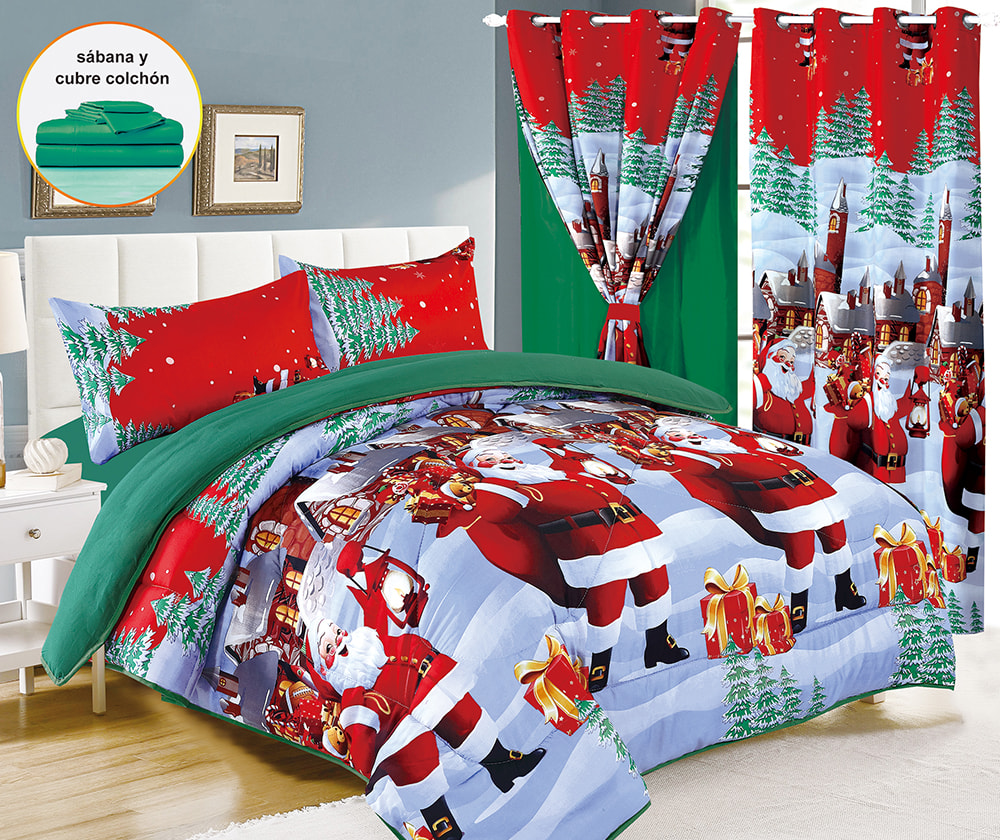
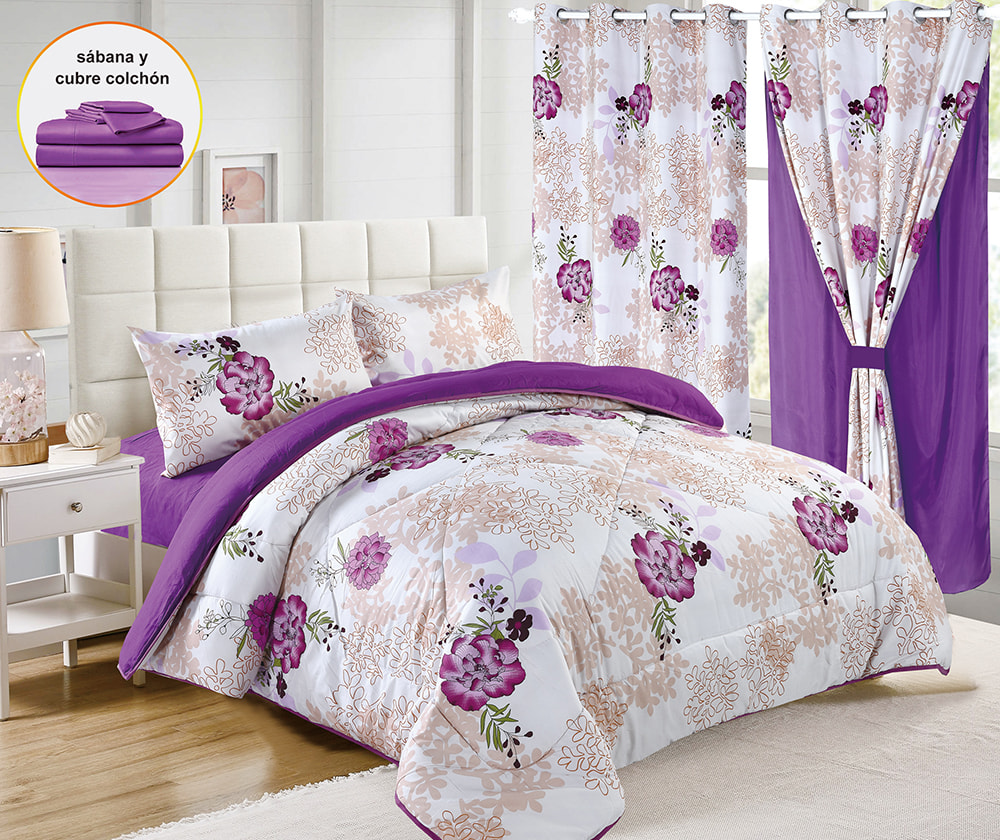
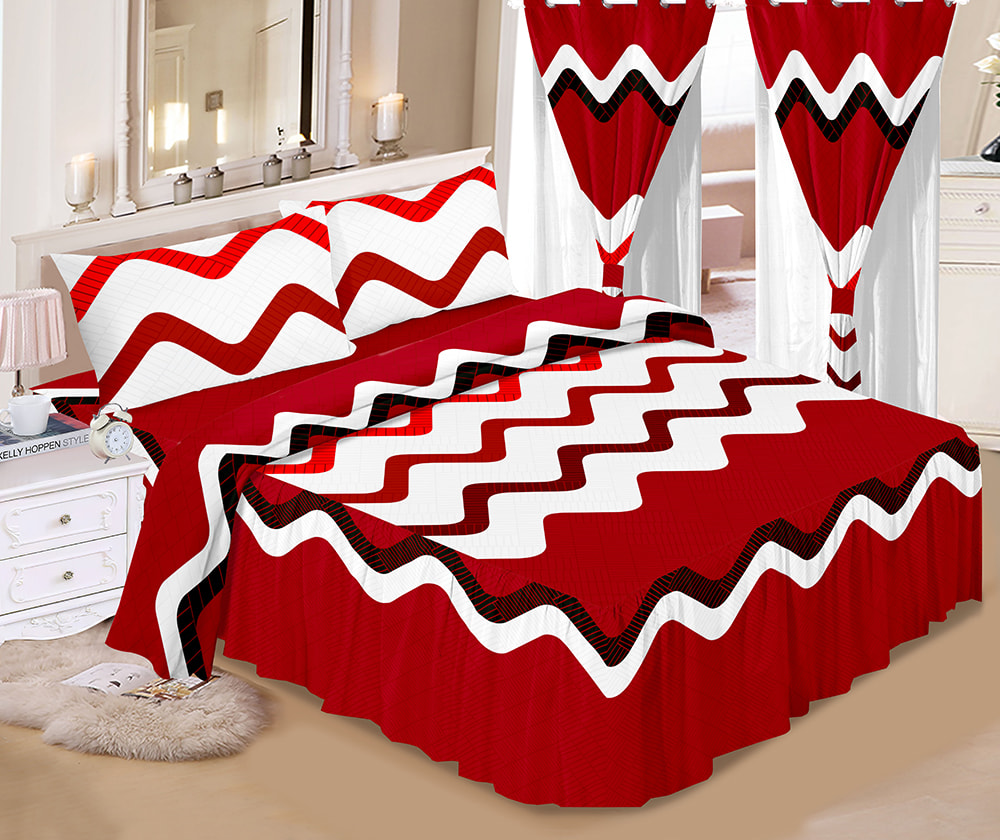
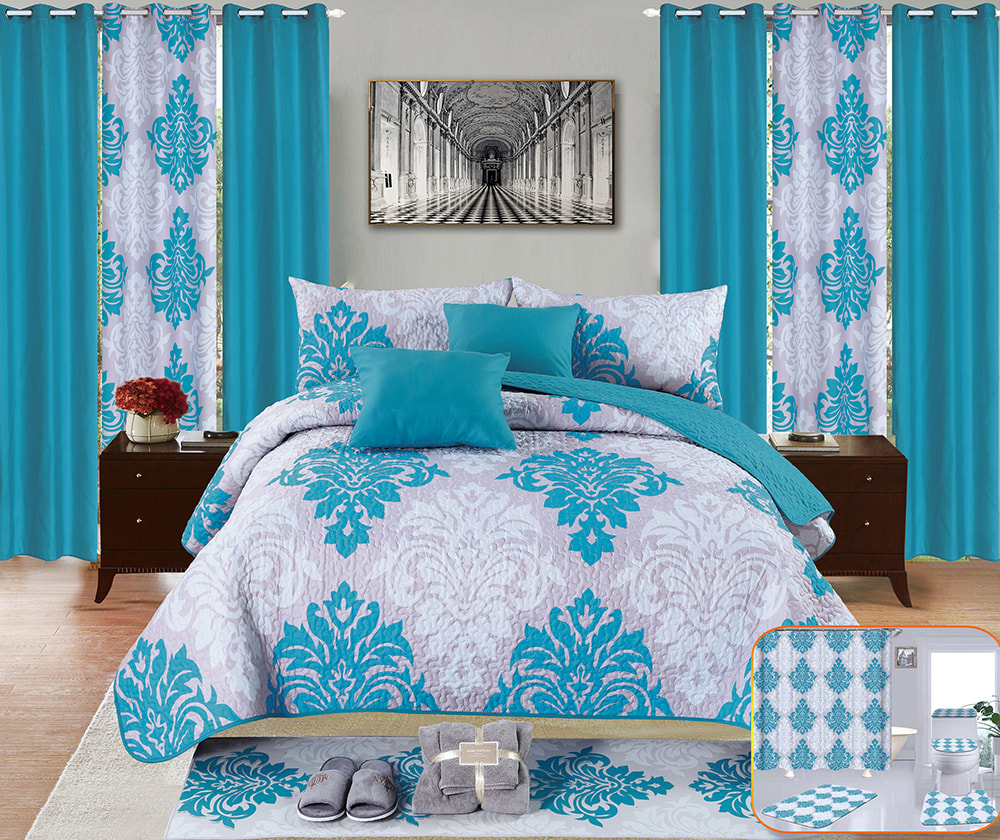
Double-Sided Fitted Sheet 10-Piece Set
4. Fitted Sheet Construction and Mattress Stability
The fitted sheet is one of the most functional components in the set. It is designed to cover the mattress and extend down the sides, with a stated depth allowance of 30 centimeters. This construction helps the sheet sit closer to the mattress than a loose flat sheet.
A fitted sheet can offer several practical benefits:
- It helps reduce movement during sleep.
- It creates a smoother sleeping surface.
- It reduces the need to tuck excess fabric beneath the mattress.
- It supports quicker bed making.
- It gives the finished bed a cleaner, more structured appearance.
These advantages are particularly useful for active sleepers, children’s rooms, guest rooms, and commercial accommodation. A loose sheet may pull free more easily during use, while a fitted construction is designed to remain attached to the mattress corners and sides.
Correct sizing remains important. The Queen fitted sheet measures 152 by 203 centimeters plus a 30-centimeter depth. The King fitted sheet measures 198 by 203 centimeters plus a 30-centimeter depth. Actual mattress thickness, corner shape, elastic performance, and manufacturing tolerance should be considered when confirming compatibility.
Queen Size Specifications
| Item | Quantity | Dimensions |
|---|---|---|
| Bed sheet | 1 piece | 210 × 230 centimeters |
| Fitted sheet | 1 piece | 152 × 203 centimeters plus 30 centimeters |
| Pillowcases | 2 pieces | 50 × 70 centimeters |
| Curtains | 4 pieces | 95 × 220 centimeters |
| Cushion covers | 2 pieces | 45 × 45 centimeters |
King Size Specifications
| Item | Quantity | Dimensions |
|---|---|---|
| Bed sheet | 1 piece | 235 × 270 centimeters |
| Fitted sheet | 1 piece | 198 × 203 centimeters plus 30 centimeters |
| Pillowcases | 2 pieces | 50 × 100 centimeters |
| Curtains | 4 pieces | 95 × 220 centimeters |
| Cushion covers | 2 pieces | 45 × 45 centimeters |
The dimensions should be communicated clearly in product listings and packaging. International markets may use different naming conventions for Queen and King beds, so buyers should confirm local mattress standards before placing large orders. A professional supplier can assist with size adjustments and private-label specification development through OEM production.
5. A Complete Bedroom Coordination Solution
The inclusion of curtains and cushion covers distinguishes this product from many standard bedding packages. A typical sheet set focuses only on the mattress and pillows. This 10-piece design extends into the surrounding room, helping create a unified interior concept.
The four curtains measure 95 by 220 centimeters each. These pieces may be used individually, in pairs, or according to the buyer’s local window arrangement. Since window sizes vary considerably, professional buyers should evaluate the curtain dimensions against the intended market. The standard dimensions offer a foundation, while OEM adjustment may be considered for different room configurations.
The two 45 by 45-centimeter cushion covers provide a flexible decorative element. They can be placed on the bed, a lounge chair, a sofa, or a window seat. Cushion covers are also useful for retail presentation because they help customers visualize how the pattern may appear beyond the bed.
A coordinated set can improve the visual consistency of a bedroom. Matching colors and patterns can make a room feel more deliberate and complete. This is valuable not only for private homes but also for serviced apartments, rental properties, dormitories, vacation homes, and budget-conscious hotel environments.
Advantages for Retail Merchandising
Retailers can present the product as a room makeover package rather than a bedding basic. The ten-piece configuration creates opportunities for display themes, promotional bundles, and seasonal collections. It may also support gift-oriented positioning, particularly when the product is packed attractively and the designs are selected for broad consumer appeal.
Because the set includes multiple home textile categories, one product can serve customers who want convenience. Instead of comparing separate sheets, curtains, and cushion covers, shoppers can choose a coordinated package with a simpler purchasing process.
For online sellers, the complete set can support clear visual merchandising. Images can show the bed sheet, fitted sheet, curtains, and cushions together. Detailed dimension charts, care instructions, and component lists should accompany the product to reduce customer uncertainty.
6. Comparison with Conventional Bedding Products
The product’s advantages become clearer when compared with common alternatives. A basic flat-sheet set may be less expensive in some cases, but it does not necessarily provide the same mattress stability or room coordination. A single-sided printed set may offer attractive decoration, but it lacks the visual flexibility of an AB-side design. A bedding-only package may cover the bed but leave the buyer to source matching curtains and cushion covers separately.
| Feature | Double-Sided Fitted Sheet 10-Piece Set | Basic Single-Sided Sheet Set | Separate Bedding and Décor Purchases |
|---|---|---|---|
| Visual options | Two-sided bed sheet design | Usually one primary design | Depends on separate selections |
| Mattress coverage | Includes fitted sheet with 30-centimeter depth | May include only a flat sheet | Varies by product |
| Room coordination | Includes curtains and cushion covers | Usually limited to bed textiles | Requires additional matching purchases |
| Material | 100% polyester microfiber | Varies widely | May differ between products |
| OEM potential | Suitable for coordinated customization | Depends on supplier | Often requires multiple suppliers |
| Inventory convenience | One complete package | Smaller package, fewer functions | Multiple product lines and purchase orders |
It is not accurate to describe one bedding format as universally superior. Some customers prefer natural fibers, minimalist sheets, or individually selected décor. However, the 10-piece set has a strong competitive position for buyers who prioritize convenience, coordinated appearance, practical care, and multi-function value.
Its competitive advantage is also connected to supply-side efficiency. A buyer seeking one design across bed linens, curtains, and cushion covers may benefit from working with an integrated home textile manufacturer rather than coordinating several independent vendors.
7. Manufacturing Strengths and Integrated Production
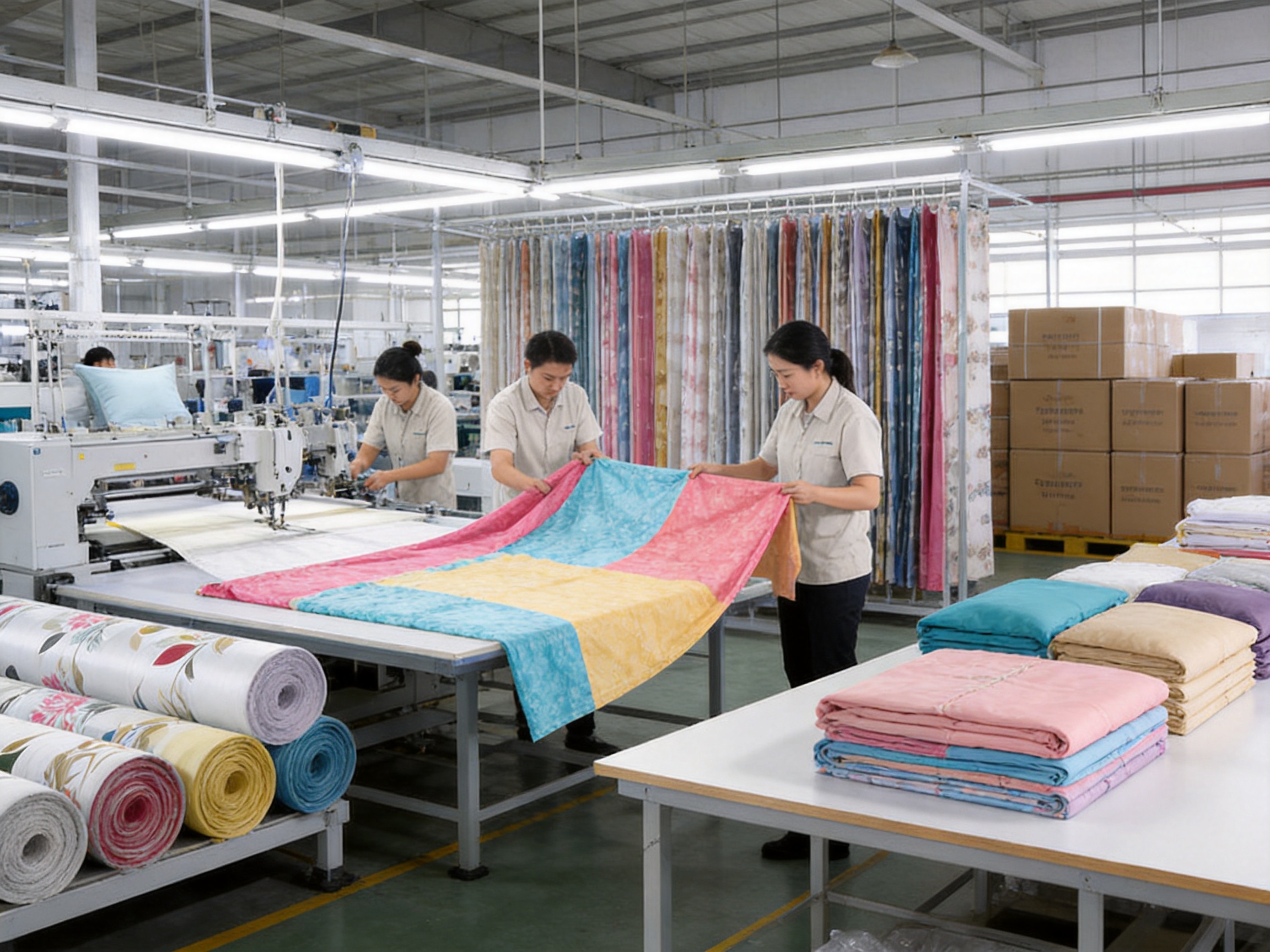
The manufacturer, Dongyangshi Menghui Textile Co., Ltd., operates as an industrial and trade enterprise integrating research and development, production, sales, and export. This structure is important for buyers who require more than a ready-made item. It creates a foundation for product development, production communication, order management, and international supply.
The company was founded in 2015 and operates a factory covering more than 10,000 square meters. Its workforce includes more than 100 employees, supported by intelligent production equipment, standardized management procedures, and an experienced foreign trade service team.
An integrated manufacturing model can provide several benefits:
- More direct communication between design and production personnel.
- Improved coordination of fabric, cutting, sewing, inspection, and packaging.
- Greater control over the consistency of multi-piece sets.
- More efficient handling of OEM samples and customer specifications.
- Reduced dependence on disconnected outside suppliers.
- Better support for export documentation and international order requirements.
For a product containing ten coordinated pieces, manufacturing coordination is especially significant. The bed sheet, fitted sheet, pillowcases, curtains, and cushion covers must maintain compatible colors, pattern placement, fabric hand feel, and finishing quality. An integrated production system can help reduce the risk that components from different sources will appear inconsistent.
Research and Development Support
Home textile preferences change according to region, season, housing style, and consumer demographics. Research and development capability allows a manufacturer to explore new printed patterns, size combinations, construction details, and packaging formats.
For OEM buyers, research and development support may include adapting a customer’s sample, adjusting dimensions, selecting a suitable fabric specification, developing coordinated accessories, or preparing a market-specific color range. Product development should be confirmed through samples and written specifications before bulk production begins.
Intelligent Production Equipment
Intelligent production equipment can support more consistent cutting, sewing, and workflow management. Automation does not replace skilled personnel, but it can improve repeatability in high-volume production. When multiple components are made under one order, repeatable processes are valuable for maintaining size accuracy and appearance.
Equipment capability should always be considered alongside inspection procedures, operator experience, and production planning. The strongest result comes from combining machinery with trained personnel and standardized operating methods.
Standardized Management
Standardized management helps define how materials are received, how work orders are issued, how samples are approved, how production is monitored, and how finished goods are inspected. These procedures are particularly important for export products, where the buyer may be located far from the factory and cannot inspect every production stage in person.
Clear documentation can cover fabric composition, color references, finished measurements, component quantities, packaging requirements, labeling, carton information, and inspection standards. This reduces ambiguity between the buyer and supplier.
Foreign Trade Service
The company maintains an experienced foreign trade service team to support international customers. Export-oriented service may include quotation preparation, sample coordination, order confirmation, production updates, packing details, shipping communication, and documentation support.
For overseas buyers, communication quality can be as important as manufacturing capability. Timely responses and accurate records help reduce misunderstandings regarding size, artwork, packaging, minimum order quantities, and delivery schedules.
8. OEM and Customization Opportunities
The product supports OEM home textile customization. This makes it suitable for distributors, importers, retail chains, online brands, hotel suppliers, and regional home furnishing businesses seeking a private-label or market-specific product.
Customization may be considered in several areas:
Pattern and Color
Buyers may request patterns aligned with local market preferences, brand identity, seasonal campaigns, or existing home décor collections. Double-sided designs offer additional creative space because each side can be developed as a coordinated surface rather than a duplicate print.
Dimensions
Queen and King sizes are provided as standard options, but different markets may use other mattress dimensions. OEM production can be discussed for alternate bed sizes, fitted-sheet depths, pillowcase formats, and curtain dimensions. Accurate technical drawings and approved samples are essential when dimensions change.
Branding and Packaging
Private-label buyers may require woven labels, printed labels, care labels, inserts, polybags, boxes, belly bands, or customized cartons. Packaging should communicate the full ten-piece contents clearly so consumers understand what is included.
Component Configuration
Some markets may require a different mix of accessories. Depending on production feasibility, buyers may discuss changes to the number of cushion covers, curtain panels, pillowcases, or other components. Any variation should be confirmed in a formal quotation and product specification.
Market-Specific Compliance
Different countries may apply specific requirements to fiber labeling, care instructions, packaging, chemicals, flammability, or product safety. Buyers should identify applicable regulations early in the development process. The supplier and buyer can then review the required labels, testing, documentation, and packaging information before bulk production.
9. Production Process for a Coordinated Bedding Set
A coordinated ten-piece set requires a controlled production sequence. Although exact factory procedures may differ according to order requirements, the general process includes product development, raw material preparation, printing or fabric selection, cutting, sewing, inspection, finishing, packing, and export handling.
Step 1: Product Specification
The process begins with confirmation of the product name, fabric composition, size, component list, dimensions, colors, pattern requirements, packaging, and labeling. For OEM orders, the buyer may provide artwork, reference samples, color standards, or brand guidelines.
Step 2: Material Preparation
Polyester microfiber fabric is prepared according to the approved specification. Material inspection may address width, weight, color, surface defects, contamination, and general uniformity. Proper material preparation is important because differences in fabric lots can affect printing and finished appearance.
Step 3: Printing and Design Control
The printed design is developed or selected for the intended product. For an AB-side bed sheet, both sides require attention to color balance, pattern scale, registration, and overall coordination. Printed fabric should be checked for color consistency, visible defects, smudging, and alignment issues.
Step 4: Cutting
Fabric is cut according to approved patterns and dimensions. Cutting accuracy affects the final size, seam alignment, fitted-sheet performance, and appearance of the complete set. Efficient cutting plans can also help reduce material waste.
Step 5: Sewing
Individual components are sewn according to their construction requirements. The fitted sheet requires careful attention to corner formation, edge finishing, and elastic placement. Pillowcases, curtains, and cushion covers require consistent seam allowances and clean hems.
Step 6: In-Process Inspection
Inspection during production can identify issues before the complete set is assembled. Inspectors may check seam quality, dimensions, pattern direction, component counts, and visible fabric defects. Early correction is generally more efficient than discovering problems after packing.
Step 7: Final Inspection
Finished sets should be reviewed against the approved sample and written specification. Checks may include fabric appearance, color, measurements, sewing quality, accessory count, labels, folding, and packaging. Buyers may also appoint an independent inspection service when appropriate.
Step 8: Packing and Export Preparation
The ten components are folded and packed as a complete unit. Carton packing should protect the product from moisture, dust, crushing, and handling damage during transportation. Export documentation and shipping marks should correspond with the purchase order and packing list.
10. Quality Considerations for Buyers
Buyers should evaluate the product through a structured quality checklist. Since the set contains several product types, inspection should cover each component individually as well as the complete package.
| Quality Area | Recommended Check |
|---|---|
| Fabric | Confirm fiber composition, hand feel, width, weight, and visible surface quality |
| Printing | Review color consistency, pattern clarity, registration, and side-to-side coordination |
| Bed sheet | Check finished dimensions, hems, seams, and overall appearance |
| Fitted sheet | Confirm mattress dimensions, depth, corner construction, and elastic performance |
| Pillowcases | Check opening construction, size, seam quality, and pattern placement |
| Curtains | Verify panel dimensions, hems, hanging construction, and quantity |
| Cushion covers | Confirm size, closure, seam quality, and design consistency |
| Packaging | Verify labels, component count, folding, carton marks, and protection |
Sampling should be completed before a bulk order is finalized. A pre-production sample can confirm the fabric, pattern, dimensions, construction, and packaging direction. If the order is customized, the approved sample should be retained as a reference for production inspection.
11. Care and Use Guidance
Care instructions should be supplied according to the final fabric and finishing specification. In general, microfiber polyester bedding is designed for practical household maintenance, but users should follow the product label rather than assume that all polyester products have identical requirements.
Helpful care principles may include washing with similar colors, avoiding excessive heat, using an appropriate detergent, and ensuring the product is fully dry before storage. High heat can affect some synthetic fabrics, elastic components, printing, or decorative finishes. Curtain and cushion cover care may differ from bed linen care depending on their construction and accessories.
Users should also measure the mattress before fitting the sheet. The fitted sheet is designed for the listed Queen and King dimensions, but mattress thickness, toppers, pads, and regional size differences may affect compatibility. A mattress protector or thick topper can increase the total depth that the fitted sheet must cover.
When storing the set, all ten pieces should be kept together in a dry, ventilated area. The complete package format makes it convenient to organize, but proper folding and protection can help reduce creasing, discoloration, and misplaced components.
12. Applications Across Different Markets
The set is suitable for a wide range of sales and usage environments.
Household Retail
In household retail, the product can be positioned as a practical room coordination package. Its two-sided design and ten-piece configuration provide clear selling points for consumers seeking variety and convenience.
Online Commerce
Online retailers can emphasize the full component list, size information, material, fitted-sheet depth, and reversible appearance. Product photography should show the set from multiple angles and clearly distinguish the two sides. Accurate listings are essential because customers cannot physically inspect the fabric before purchase.
Home Furnishing Stores
Furniture and home furnishing stores may use the set to create complete room displays. The curtains and cushion covers help demonstrate how the design can extend across the bedroom.
Hospitality and Furnished Accommodation
Guest rooms, serviced apartments, vacation rentals, dormitories, and other furnished spaces may benefit from coordinated textiles. Standardized sets can support consistent visual presentation across multiple rooms, subject to the buyer’s laundering and durability requirements.
Wholesale and Distribution
Wholesalers can select designs and sizes suited to their regional customer base. OEM customization allows a distributor to develop a house collection rather than relying only on generic catalog designs.
Promotional and Seasonal Collections
Double-sided designs can be adapted for seasonal merchandising, including spring patterns, festive colorways, neutral collections, or modern geometric themes. Since the same basic product structure can support many surface designs, buyers can develop a broader collection without changing the complete construction concept.
13. Why Manufacturing Location and Experience Matter
China has a long-established home textile manufacturing base, with extensive supply chains for synthetic fabrics, printing, sewing, packaging, and export logistics. A manufacturer located within this environment may access established material resources and production expertise.
The company’s base in Dongyang City, Zhejiang Province, places its operations within a region known for manufacturing and trade activity. More than a geographic location, the important consideration is how the supplier organizes its factory, communicates with buyers, controls quality, and fulfills export orders.
Experience since 2015 provides a foundation for understanding product development, customer requirements, and international trade processes. The company’s combination of factory operations and trade services is relevant for buyers who need both manufacturing execution and export communication.
A supplier’s value should ultimately be assessed through samples, documentation, production performance, responsiveness, and order references. Factory size and years in business are useful indicators, but they should be considered alongside product-specific capability.
14. Purchasing Recommendations for Importers and Distributors
Before ordering, buyers should prepare a detailed product brief. The brief should identify the required size, fabric, colors, artwork, component quantities, dimensions, packaging, labels, inspection requirements, and delivery expectations.
Buyers should also clarify the following points:
- Whether the order will use standard designs or custom artwork.
- Whether Queen and King dimensions match the target market.
- Whether the curtains require additional hanging features.
- Whether packaging must meet retailer or marketplace standards.
- Whether care labels need multiple languages.
- Whether color approval must be based on physical samples.
- Whether a minimum order quantity applies to each design or size.
- Whether testing or compliance documents are required.
- How production tolerances will be managed.
- What inspection procedure will apply before shipment.
It is advisable to approve a complete sample rather than reviewing only one component. A full sample allows the buyer to assess whether the bed sheet, fitted sheet, pillowcases, curtains, and cushion covers look consistent together.
Packaging should also be inspected before mass production. A ten-piece set must be folded and arranged so that the package remains attractive and compact. Incorrect packing can create customer complaints even when the individual textiles meet the required quality level.
15. Sustainability and Responsible Product Planning
Polyester microfiber products can be planned responsibly through efficient material use, durable construction, appropriate packaging, and realistic product care. Although the product is synthetic, its useful life and practical maintenance requirements should be considered as part of the overall value proposition.
Efficient cutting plans may reduce fabric waste. Standardized packaging can reduce unnecessary material use, while durable seams and stable printing can help extend product usability. Buyers may also discuss packaging alternatives, recycled polyester options, or other environmental specifications where available and commercially appropriate.
Responsible claims should be supported by documentation. Terms such as recycled, certified, low-impact, or environmentally friendly should only be used when the relevant material, process, or certification has been verified. Clear communication protects both the supplier and the buyer from inaccurate marketing.
16. Frequently Asked Questions
What is included in the 10-piece set?
The set includes one printed bed sheet, one printed fitted sheet, two pillowcases, four curtains, and two cushion covers. Together, these components create a ten-piece coordinated home textile package.
What material is used?
The product is made from 100% polyester microfiber. The material is selected for its soft hand feel, lightweight construction, print suitability, and practical care characteristics.
What does double-sided or AB-side design mean?
It refers to a bed sheet designed with different or coordinated printed appearances on its two sides. Users can change the visible look by reversing the sheet, creating more styling flexibility within one set.
Does the set include a fitted sheet?
Yes. The set includes a printed fitted sheet with a stated 30-centimeter depth allowance. The Queen and King fitted-sheet dimensions are different and should be matched with the intended mattress size.
What are the available sizes?
The listed sizes are Queen and King. Queen includes a 210 by 230-centimeter bed sheet and a 152 by 203-centimeter fitted sheet plus 30 centimeters. King includes a 235 by 270-centimeter bed sheet and a 198 by 203-centimeter fitted sheet plus 30 centimeters.
Are the curtains included in the price?
The product specification identifies four curtains as part of the ten-piece set. Buyers should confirm the final quotation, packaging, and component list with the supplier before placing an order.
Can the product be customized?
Yes. The manufacturer provides OEM home textile customization. Possible areas include colors, patterns, dimensions, labels, packaging, and component configurations, subject to production feasibility and order requirements.
Is the product suitable for wholesale?
Yes. The complete configuration, standard Queen and King options, and OEM capability make it suitable for wholesalers, distributors, online brands, retail chains, and other professional buyers.
Can the fitted sheet be used with every mattress?
Compatibility depends on mattress length, width, thickness, and any additional mattress topper or pad. Buyers should compare the stated dimensions with the target mattress specification before purchasing.
How should the product be washed?
Users should follow the care label supplied with the final product. Polyester microfiber is generally considered easy to maintain, but washing temperature, drying method, and detergent recommendations may vary according to the specific construction and finishing process.
Why choose a complete set instead of buying separate items?
A complete set provides coordinated colors and patterns across the bed, windows, and decorative cushions. It can simplify purchasing, reduce the need to match products from several suppliers, and provide stronger visual consistency in the room.
How can buyers verify product quality before bulk production?
Buyers should request a complete pre-production sample and confirm fabric, dimensions, printing, sewing, component quantities, labels, and packaging. A written specification and approved sample should guide bulk production and final inspection.
17. Conclusion
The Double-Sided Fitted Sheet 10-Piece Set is designed for buyers who want more than a basic sheet package. Its combination of a double-sided printed bed sheet, secure fitted sheet, pillowcases, curtains, and cushion covers creates a complete bedroom coordination solution.
The use of 100% polyester microfiber provides a soft and practical textile base that supports printed designs and manageable care. Queen and King sizes address common bedding requirements, while the fitted-sheet depth helps improve mattress coverage and stability. The double-sided construction adds visual flexibility, enabling users to change the room’s appearance without storing a second complete bedding set.
From a commercial perspective, the product offers several advantages over conventional single-sided or bedding-only products. It provides broader room coverage, stronger decorative value, a more complete retail proposition, and potential inventory efficiency. Its OEM suitability further allows professional buyers to adjust designs, dimensions, packaging, and branding for different markets.
The manufacturer’s integrated structure, factory capacity, intelligent production equipment, standardized management, research and development capability, and foreign trade service team support the requirements of international home textile customers. For importers and distributors, the most important next step is to confirm a detailed specification, approve a complete sample, establish inspection standards, and verify that the selected dimensions and packaging match the target market.
With appropriate quality control and market-specific customization, this ten-piece set can serve household retail, online commerce, hospitality, furnished accommodation, wholesale distribution, and private-label home textile programs.
References
1. Product specification for the Double-Sided Fitted Sheet 10-Piece Set, including material, component list, dimensions, and size information.
2. Manufacturer-provided company profile describing integrated research and development, production, sales, export, factory operations, and OEM home textile services.
3. General textile manufacturing principles relating to microfiber polyester fabric, printed bedding, fitted-sheet construction, sewing quality, and finished-goods inspection.
4. General home textile purchasing practices covering product sampling, measurement verification, packaging review, quality control, and export preparation.
5. General bedding product-care guidance for polyester microfiber fabrics and coordinated household textile products.
6. General principles of OEM product development, private-label packaging, market-specific sizing, and international home textile distribution.
Product: Double-Sided Fitted Sheet 10-Piece Set

Contact Us for More Details
Don't hesitate to contact when you need us!
Contact Information
Add:
Building 1, East Area, Wanyang Zhongchuang City, Economic Development Zone, Dongyang City, Zhejiang Province, China
Phone:
Tel:
E-mail:
Quick Links
Product Category
QR Code


+86-13616899966
+86-579-86610966
