 English
 русский
 Español
 عربى


13-Piece Printed Fitted Sheet Set for Coordinated Bedroom Comfort
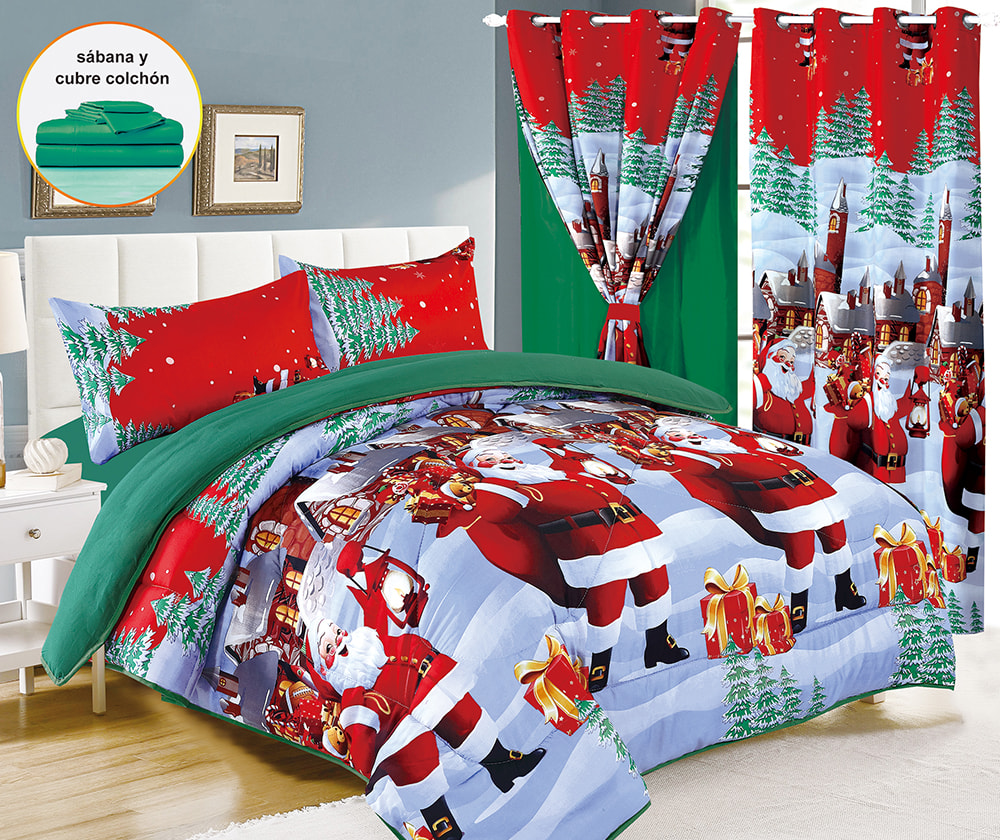
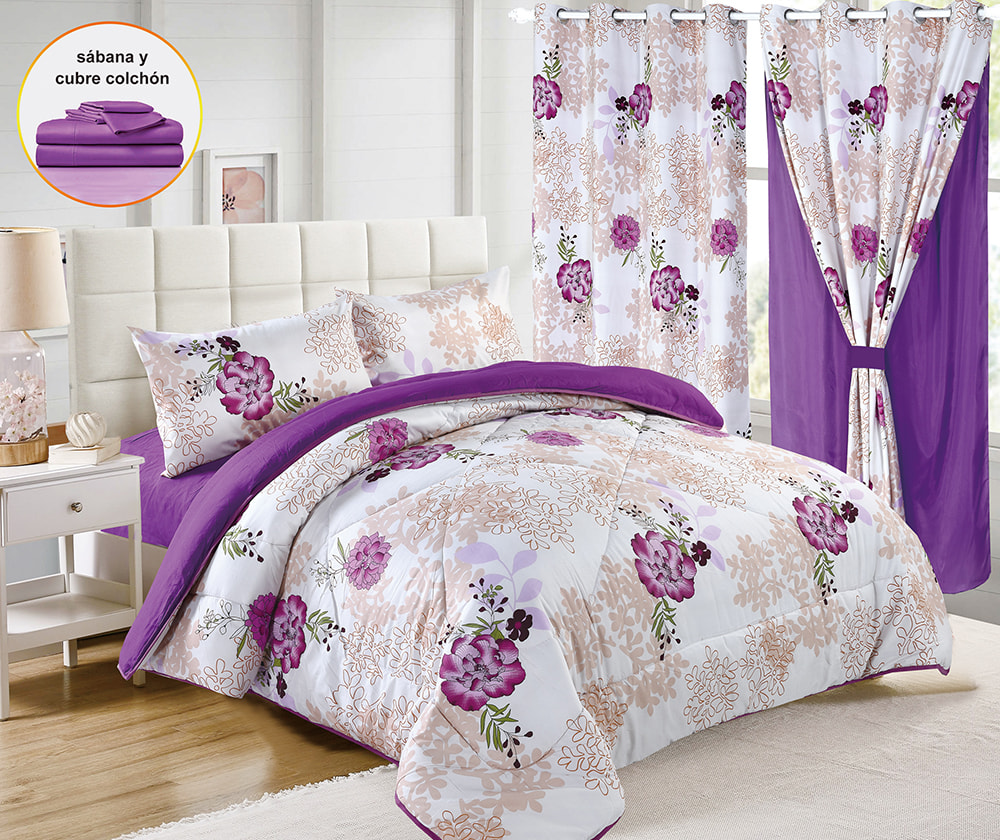
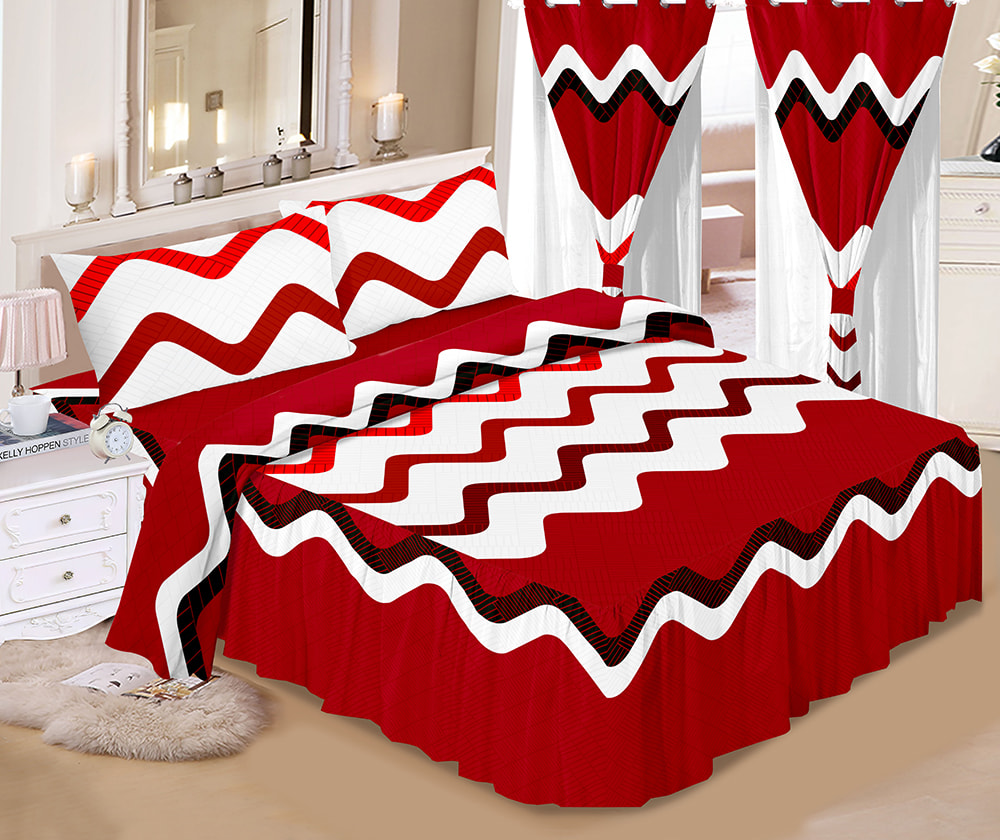
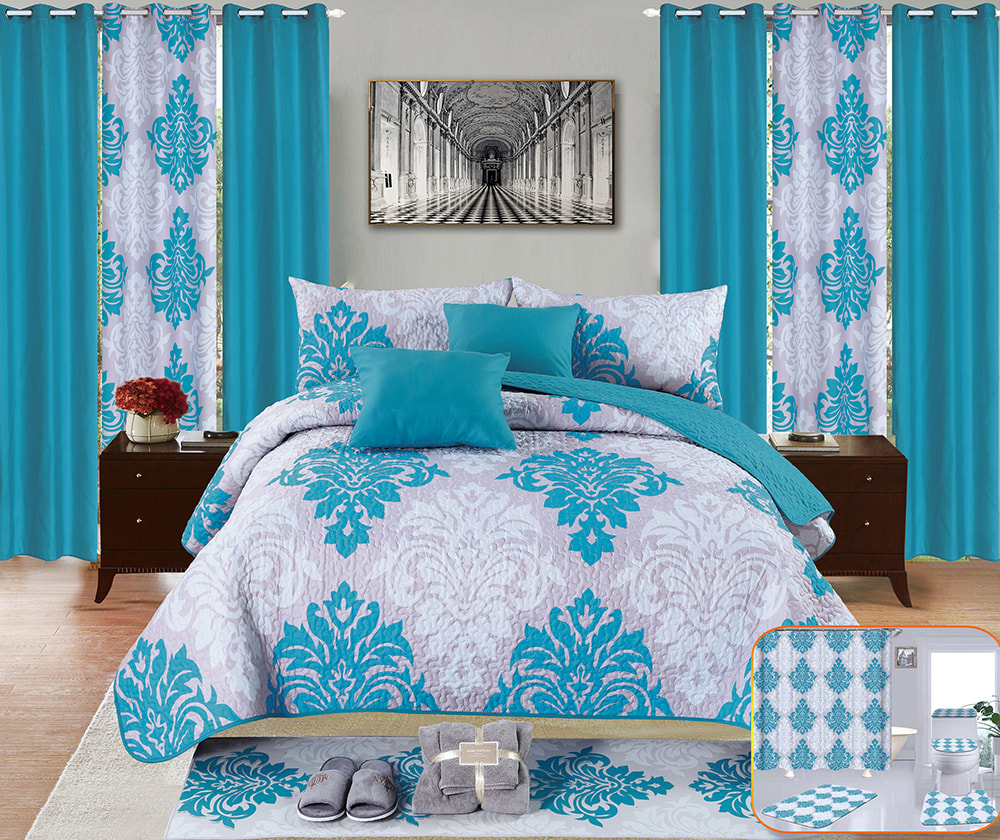
A coordinated bedroom can change the atmosphere of an entire home. When the bed, windows, cushions, and floor area share a consistent design language, the room feels more intentional, comfortable, and complete. The 13-Piece Printed Fitted Sheet Set is designed for this purpose, combining essential bedding with matching curtains, cushion covers, and a floor mat in one practical home textile collection.
More than a conventional sheet set, this product offers a complete decorative solution for bedrooms, guest rooms, apartments, hotels, dormitories, and other residential interiors. Its printed design introduces fresh and natural colors, while the coordinated accessories help create a unified visual effect without requiring customers to source separate products from different suppliers.
The set is manufactured from 100% polyester microfiber fabric. This material is widely valued in the bedding industry for its soft hand feel, lightweight construction, breathability, easy care, and suitability for colorful printing. The fabric is developed to provide a comfortable sleeping surface while remaining practical for everyday use. Fine stitching and careful production support durability, shape retention, and resistance to premature fading when the products are properly washed and maintained.
Available in Queen Size and King Size, the collection provides a fitted sheet with elasticized depth, a flat bed sheet, pillow cases, six curtain panels, cushion covers, and a floor mat. The arrangement is especially useful for buyers seeking a complete bedroom furnishing package rather than a single bedding component.
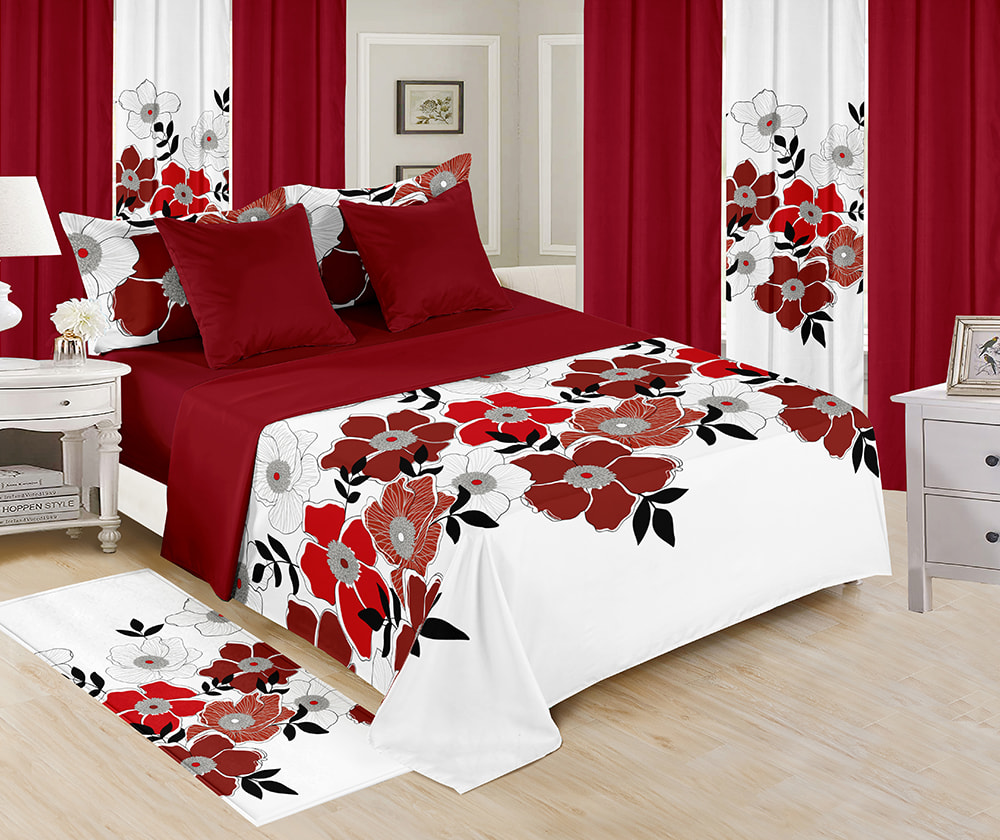
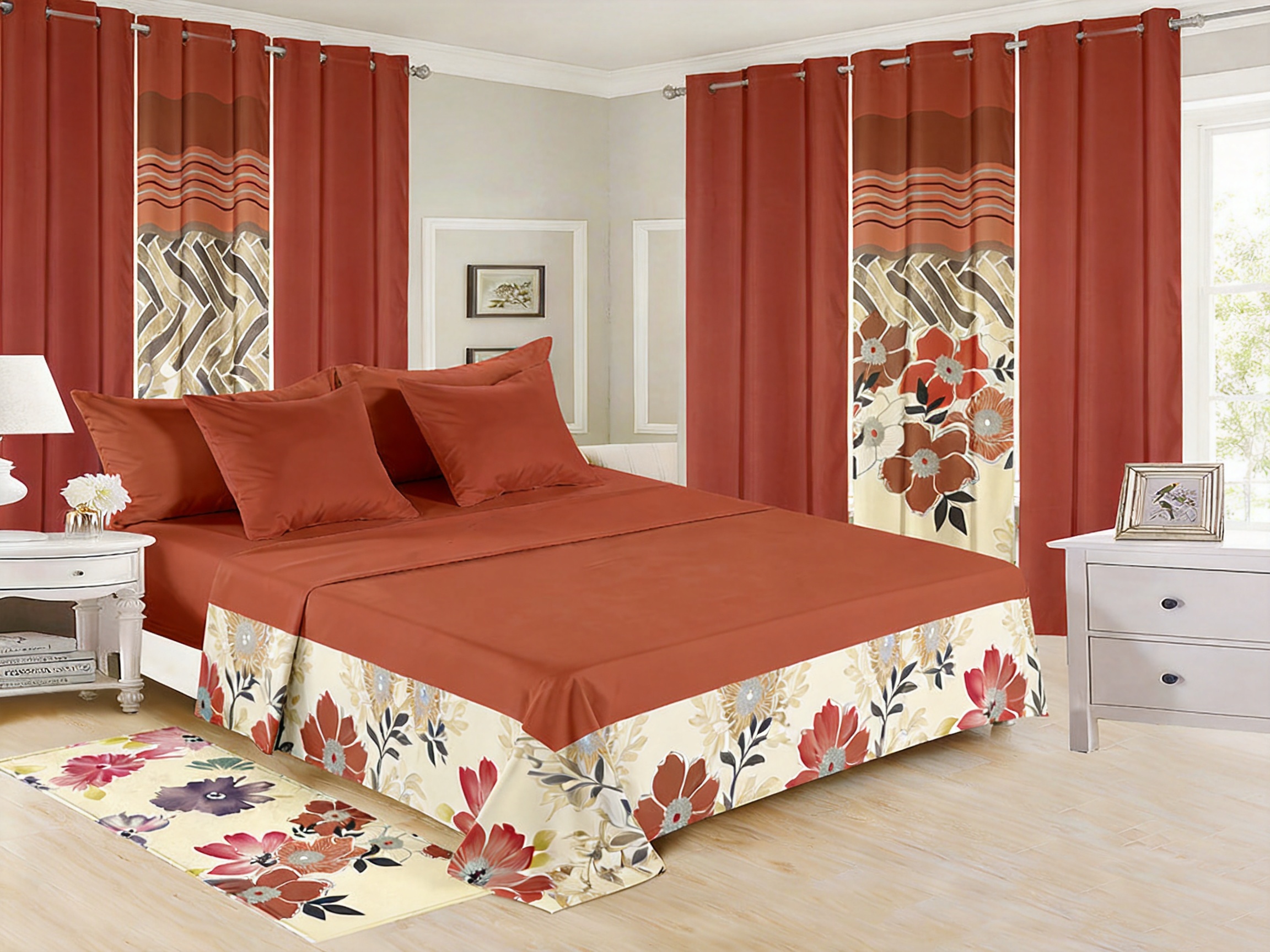
Home Textile Printed Fitted Sheet 13-Piece Set
A Complete Textile Solution Rather Than a Single Bedding Item
Many bedding products focus only on the sleeping surface. A customer may purchase a fitted sheet from one supplier, curtains from another, and decorative cushions from a third source. This approach can create differences in color, pattern, fabric weight, and finishing. It also increases purchasing time, packaging complexity, quality-control work, and the possibility of mismatched products.
The 13-Piece Printed Fitted Sheet Set addresses these challenges by bringing the major textile elements of a bedroom together in one coordinated package. The flat sheet and fitted sheet establish the foundation of the bed. Pillow cases complete the sleeping arrangement. Curtains extend the pattern into the surrounding room, while cushion covers and a floor mat add supporting decorative details.
This complete arrangement offers several commercial and practical advantages:
First, the customer can obtain a visually unified bedroom collection in a single order. The printed design is intended to coordinate across the included pieces, producing a more polished appearance than individually selected items may provide.
Second, the set can simplify procurement for wholesalers, retailers, hospitality buyers, property managers, and interior furnishing businesses. One product specification covers multiple bedroom requirements, reducing the need to manage several separate product lines.
Third, the package is suitable for customers who value convenience. Instead of measuring, comparing, and matching a variety of individual products, users can select a size and receive a ready-to-use assortment.
Fourth, the product creates opportunities for retailers to offer a higher-value bedding solution. A conventional sheet set may satisfy a basic functional need, but a 13-piece package can be positioned as a coordinated bedroom makeover product, a household textile bundle, or a practical gift option.
Printed Design with a Fresh and Natural Visual Character
The appearance of bedding has a direct effect on the feeling of a room. A design that is too heavy may make a small bedroom feel crowded, while a design that is too plain may appear unfinished. This collection uses a printed pattern with fresh and natural colors to create a warm, welcoming atmosphere.
The design is suitable for a variety of interior styles. It can complement contemporary bedrooms, casual family rooms, guest accommodations, rental properties, and relaxed hospitality environments. The printed surface provides visual interest while remaining practical enough for regular household use.
Because the same design concept is carried across the different components, the bedding and room accessories can work together as a complete interior composition. The curtains frame the windows, the cushion covers reinforce the central bed design, and the floor mat adds a finishing detail around the bed area. This coordinated approach can help a room look more carefully planned without requiring expensive decoration.
Printed microfiber polyester is also suitable for production in a broad range of color combinations and patterns. This flexibility is valuable for importers and retailers who may wish to develop collections for different markets, seasonal ranges, or customer preferences. The supplied product is presented as a finished printed set, while the manufacturer also provides customized home textile services based on customer samples.
Color performance is an important consideration in printed bedding. The product description emphasizes fade resistance as one of its intended qualities. In practical terms, this means that the fabric is designed to retain its visual appeal through normal use and appropriate care. As with all printed textiles, washing instructions, detergent selection, water temperature, drying methods, and exposure to direct sunlight can influence long-term color retention.
Soft Microfiber Polyester for Everyday Comfort
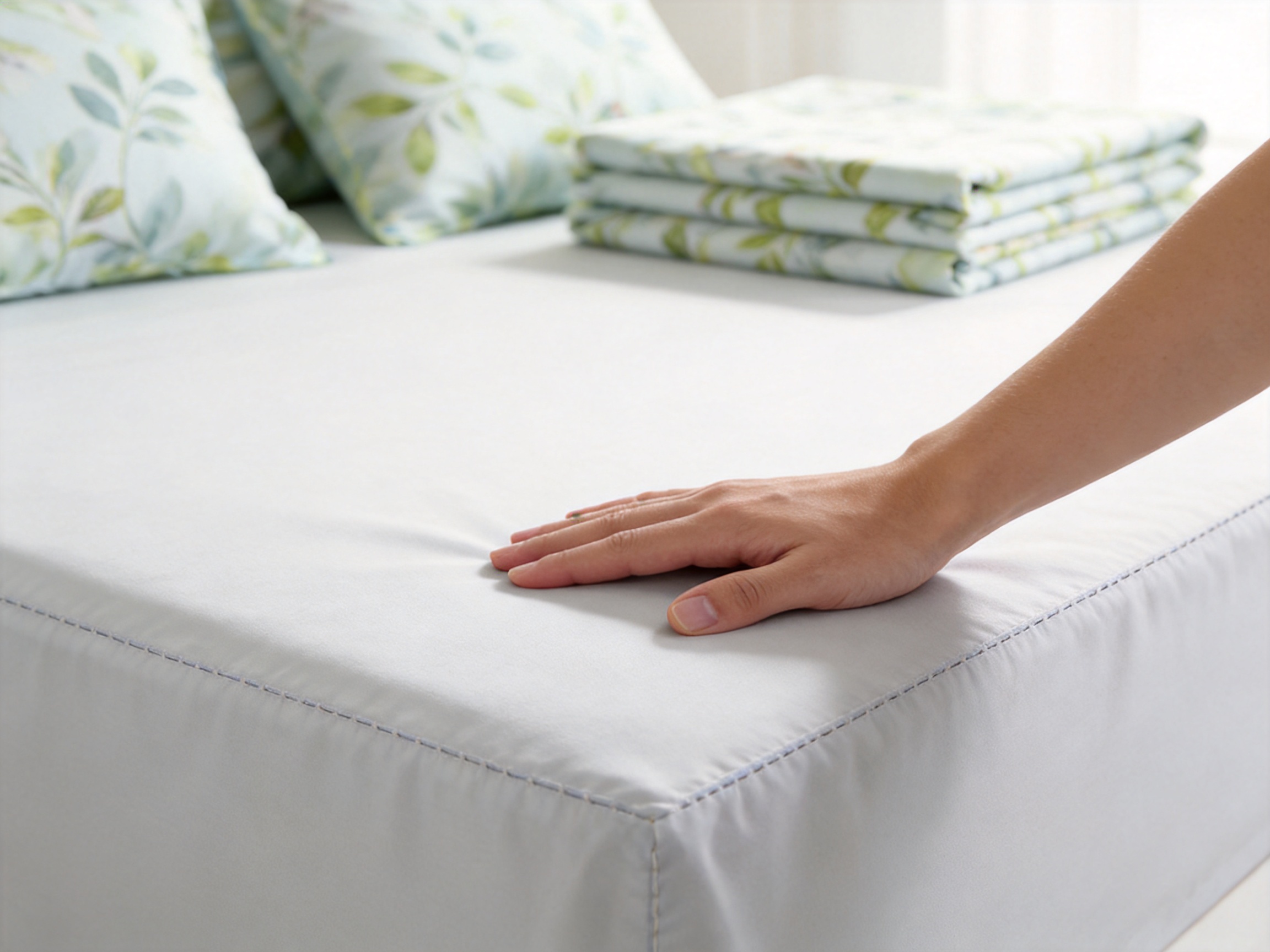
The set uses 100% polyester, identified in the product information as microfiber polyester. Microfiber is made from very fine synthetic fibers that can be woven or processed into a smooth, soft textile surface. In bedding applications, microfiber is valued for its comfortable touch, light weight, and ability to support detailed printed designs.
The fabric is described as soft, breathable, and gentle on the skin. These qualities are important because bedding remains in direct contact with the user for many hours each day. A comfortable fabric surface can help create a more pleasant sleeping environment, particularly when combined with suitable room temperature, mattress support, and personal bedding preferences.
Compared with some heavier or more demanding textile options, polyester microfiber can offer practical advantages in day-to-day handling. It is generally lightweight, easy to fold, convenient to package, and relatively simple to launder. These features can benefit both households and commercial users who need bedding that can be changed, washed, stored, and transported efficiently.
The material also supports consistent production across a full collection. Using a coordinated synthetic textile base helps the bed linen, curtains, cushion covers, and floor mat maintain a related appearance and handling characteristic. This is especially important in a package designed to be used as a unified bedroom solution.
For buyers comparing this product with lower-cost alternatives, fabric composition alone should not be the only consideration. Surface softness, print quality, stitching, edge finishing, elastic performance, dimensional accuracy, and packaging all influence the total value of a bedding set. The manufacturing description for this collection places emphasis on high-quality fabric, meticulous craftsmanship, fine stitching, durability, and resistance to deformation.
Secure Fitted Sheet Construction
The fitted sheet is one of the most important components in the set. Unlike a conventional flat sheet, a fitted sheet is shaped to cover the mattress and is designed to remain in position during sleep. The supplied dimensions include an additional 30 centimeters in the fitted-sheet specification, indicating a mattress depth allowance for the applicable size.
The Queen Size fitted sheet measures 152 by 203 plus 30 centimeters. The King Size fitted sheet measures 198 by 203 plus 30 centimeters. These dimensions are intended to provide coverage for standard mattress proportions within the stated size categories. Buyers should always compare the measurements with their own mattress dimensions before ordering, particularly when the mattress includes a thick topper or additional protective layer.
A secure fitted sheet can improve the overall sleeping experience in several ways. It helps reduce loose fabric movement, minimizes the need for repeated adjustment, and creates a neater appearance after the bed is made. It can also make routine housekeeping more efficient because the sheet is easier to position consistently.
Proper fit depends on more than the nominal size. Mattress length, width, thickness, corner construction, elastic recovery, and the amount of fabric tucked beneath the mattress all play a role. The stated product design focuses on coverage and a secure fit to help prevent slipping. Correct installation remains important: the corners should be placed fully over the mattress, and the sheet should not be forced onto a mattress that exceeds the recommended dimensions.
This fitted construction is a major advantage over generic flat-sheet-only packages. A flat sheet may be versatile, but it can shift more easily during sleep and may require frequent adjustment. By including both a fitted sheet and a bed sheet, the collection provides flexibility while giving users the stability associated with fitted bedding.
Queen Size and King Size Options
The product is offered in two principal size configurations. The Queen Size version includes a 210 by 230 centimeter bed sheet and a 152 by 203 plus 30 centimeter fitted sheet. The King Size version includes a 235 by 270 centimeter bed sheet and a 198 by 203 plus 30 centimeter fitted sheet.
The pillow cases are also adapted to the selected size. Queen Size includes two pillow cases measuring 50 by 70 centimeters, while King Size includes two pillow cases measuring 50 by 100 centimeters. This size differentiation allows the set to maintain a more suitable relationship between the bed, sheet dimensions, and pillow arrangement.
The curtains, cushion covers, and floor mat remain specified at the same dimensions in both size options. Each version includes six curtain pieces measuring 95 by 220 centimeters, two cushion covers measuring 45 by 45 centimeters, and one floor mat measuring 50 by 150 centimeters.
| Component | Queen Size | King Size | Quantity |
|---|---|---|---|
| Bed sheet | 210 × 230 cm | 235 × 270 cm | 1 piece |
| Fitted sheet | 152 × 203 + 30 cm | 198 × 203 + 30 cm | 1 piece |
| Pillow case | 50 × 70 cm | 50 × 100 cm | 2 pieces |
| Curtain | 95 × 220 cm | 95 × 220 cm | 6 pieces |
| Cushion cover | 45 × 45 cm | 45 × 45 cm | 2 pieces |
| Floor mat | 50 × 150 cm | 50 × 150 cm | 1 piece |
| Total set quantity | 13 pieces | 13 pieces | 13 pieces |
The table makes the assortment clear for both end users and commercial purchasers. It also supports more efficient product listing, quotation preparation, order confirmation, and quality inspection. Buyers can verify the size-specific bedding components while confirming that the decorative accessories are included in the full package.
Why the 13-Piece Format Can Outperform Basic Sheet Sets
Competition in the bedding market often centers on price, but price alone does not define product value. A lower-priced sheet set may include fewer pieces, use lighter construction, offer limited size choices, or require customers to purchase matching accessories separately. The 13-Piece Printed Fitted Sheet Set differentiates itself through completeness, coordinated design, and practical functionality.
One advantage is the number of usable components. The package covers the main bed surface, pillow area, window area, decorative seating area, and floor area. This provides more visible value than a two-piece or four-piece sheet package.
A second advantage is design consistency. When separate accessories are purchased from unrelated sources, patterns may be similar but not identical. The coordinated set reduces this risk and allows the room to present a consistent color story.
A third advantage is convenience for the distribution channel. Retailers can market one complete solution instead of creating a complicated bundle from separate stock-keeping units. Wholesalers can present the package to customers who are furnishing multiple rooms and want a repeatable appearance.
A fourth advantage is the balance between decorative appeal and daily practicality. The product is not merely an ornamental collection. It includes a fitted sheet designed to stay in place, washable textile components, pillow cases for normal use, and accessories that support room decoration.
A fifth advantage is manufacturing flexibility. The company identifies itself as an OEM home textile supplier and states that customized services can be provided based on customer samples. This is important for buyers who require private-label packaging, market-specific designs, adjusted specifications, or a coordinated product program.
These advantages make the collection relevant to different customer groups. Family households may appreciate the complete room arrangement. Property operators may value standardized sets for guest rooms. Retailers may benefit from a product with a strong visual presentation. Importers may seek a supplier capable of producing related bedding and curtain categories under one manufacturing relationship.
Manufacturing Process and Quality-Oriented Production
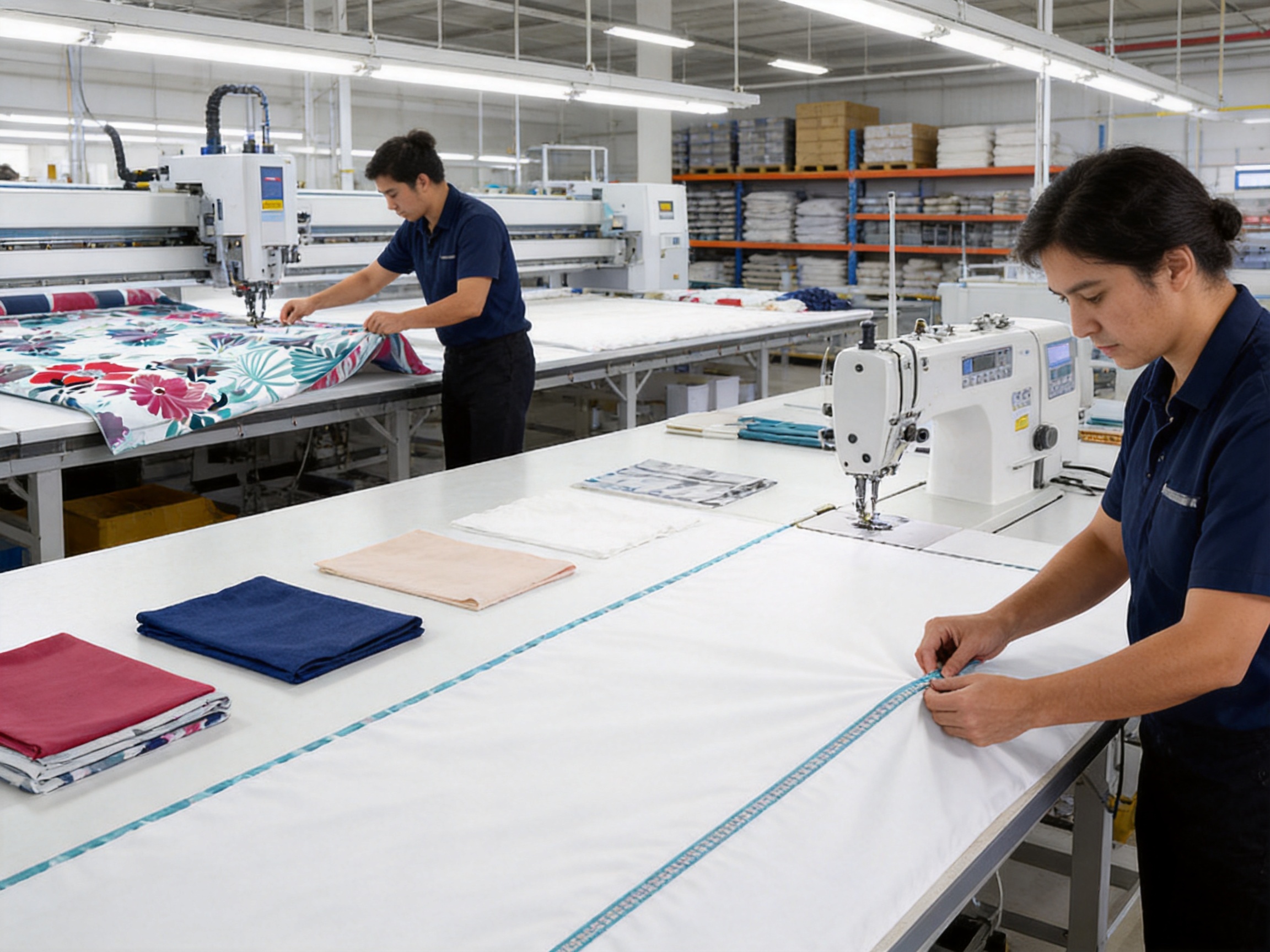
The quality of a bedding set is determined by the entire production chain, not only by the fabric selected. A well-designed product must move through accurate material preparation, pattern layout, printing or printed-fabric handling, cutting, sewing, elastic installation, inspection, finishing, folding, and packaging. Each stage contributes to the final result.
Product Development and Sample Evaluation
Production begins with product development. A design is assessed for its dimensions, component structure, fabric suitability, color arrangement, and intended market. For an OEM customer, the development stage may begin with a reference sample or a requested specification. The manufacturer’s stated ability to provide customized services based on customer samples supports a more collaborative development process.
Sample evaluation is important because a complete set contains several different product forms. The flat sheet, fitted sheet, pillow cases, curtains, cushion covers, and floor mat must be reviewed not only as individual items but also as a coordinated collection. The sample stage can be used to check dimensions, print placement, construction details, seam appearance, and overall presentation.
Fabric Preparation and Cutting
Once the material and design are approved, fabric preparation and cutting must be carefully controlled. Accurate cutting helps each component meet its specified dimensions and supports more consistent sewing. It is particularly important for fitted sheets because incorrect panel dimensions can affect mattress coverage and corner fit.
Cutting efficiency also influences material utilization. A professional production operation plans pattern placement to reduce unnecessary waste while maintaining the required direction and continuity of the printed design. For curtains and larger bed sheets, pattern alignment can have a visible effect on the final appearance.
Sewing and Edge Finishing
Sewing is central to the durability of the set. Fine stitching helps create clean seams and supports resistance to fraying or separation during repeated use. Different components require different construction approaches. Pillow cases and cushion covers need neat openings and stable edges. Curtains require reliable hems and appropriate finishing for hanging. Floor mats need a construction that can maintain its shape during handling and use.
The fitted sheet requires additional attention because it must accommodate mattress corners and elasticized edges. Stitching around corners and elastic channels should be consistent so that the sheet can stretch and recover without excessive strain. A well-finished fitted sheet is more likely to remain stable and retain its original form.
Inspection and Defect Control
Quality inspection should take place throughout production rather than only at the final packing stage. Fabric inspection can identify visible flaws, uneven printing, stains, or irregularities before cutting. In-process inspection can verify seam construction, component dimensions, elastic placement, and edge finishing. Final inspection can confirm set completeness and packaging accuracy.
For a 13-piece product, piece counting is especially important. A complete set must contain one bed sheet, one fitted sheet, two pillow cases, six curtain pieces, two cushion covers, and one floor mat. Missing or incorrectly sized pieces can create customer dissatisfaction even when the individual items are well made.
The company describes its production as supported by intelligent production equipment, a standardized management system, and an experienced foreign trade service team. These capabilities can contribute to more organized production planning, more consistent processing, and clearer communication with international customers.
Finishing, Folding, and Packaging
After inspection, textile products are finished, folded, counted, and packed. Good packaging protects printed surfaces from dirt, moisture, and handling damage. It also helps maintain the presentation expected by retail customers. For export orders, packaging must be considered alongside carton strength, product labeling, dimensional efficiency, and shipping requirements.
Because the product includes many different pieces, organized folding and internal arrangement are essential. A clear packing method helps warehouse staff confirm the contents and allows customers to identify the components more easily after opening the package.
Production Strengths of an Established Home Textile Supplier
The manufacturer, Dongyangshi Menghui Textile Co., Ltd., presents itself as an industrial and trade enterprise integrating research and development, production, sales, and export. This integrated structure is significant for buyers seeking more than a basic trading relationship.
The company was founded in 2015 and specializes in bed sheets, quilt covers, pillow cases, cushions, quilts, waterproof mattress protectors, curtains, and other bedding sets. This product coverage aligns closely with the components of the 13-piece collection and indicates experience across multiple household textile categories.
The company states that its factory covers more than 10,000 square meters and employs more than 100 people. A production site of this scale can support separate areas for material preparation, sewing, inspection, warehousing, and order handling. More than a numerical indicator, factory organization matters because coordinated operations can help reduce communication gaps between product development, manufacturing, and export service.
The stated use of intelligent production equipment is another strength. Modern equipment can assist with production consistency, cutting accuracy, sewing efficiency, and process repeatability. Equipment does not replace skilled supervision, but it can help a manufacturer manage larger orders and maintain stable product standards.
A standardized management system supports documentation and accountability. In international home textile purchasing, buyers commonly need clear specifications, size confirmation, color approval, packaging information, production updates, and shipment coordination. A structured system can make these steps easier to manage.
The company also identifies an experienced foreign trade service team. This is valuable for overseas buyers because successful export purchasing requires more than manufacturing capability. It involves communication across languages and time zones, specification review, order confirmation, packaging coordination, document preparation, and after-sales communication.
As an industrial and trade enterprise, the company can connect production capabilities with market-facing services. This structure may be particularly useful for customers who are developing a private-label bedding collection, sourcing coordinated products for a retail program, or expanding a home textile catalog.
OEM and Customization Potential
Customization is increasingly important in the home textile market. Retailers and distributors often seek product designs that distinguish their collections from standard catalog items. Hospitality companies may require specific room themes. Property developers may want coordinated textile packages. Brand owners may need custom labels, packaging, colors, or printed patterns.
The manufacturer states that customized home textile services are available based on customer samples. This creates a starting point for a development conversation. A customer can provide a physical sample, reference image, fabric requirement, target dimensions, color direction, or packaging concept for evaluation.
Customization may involve several areas:
Pattern and color development can be adjusted to suit a particular market or customer profile. Floral, geometric, botanical, abstract, seasonal, and children’s themes may be considered according to the intended collection.
Size and component configuration can be reviewed for regional mattress standards or commercial applications. Buyers may ask about alternative bed dimensions, additional pillow cases, different curtain proportions, or other coordinated accessories.
Packaging can be adapted for wholesale cartons, retail presentation, private-label branding, or multi-set shipment. Packaging requirements should be confirmed early because they affect folding, labeling, carton dimensions, and production planning.
Material and finishing options may also be discussed. Although the featured product uses 100% polyester microfiber, customers with different market requirements may ask about fabric weight, hand feel, finishing treatment, or alternative textile constructions.
Customization should always be confirmed through an approved sample and a written specification. Printed color, final dimensions, shrinkage behavior, elastic performance, accessory quantities, and packaging details should be agreed upon before mass production.
Applications Across Residential and Commercial Markets
The product is naturally suited to family bedrooms. Its broad assortment allows homeowners to refresh the appearance of a room without purchasing multiple unrelated textile products. The printed design can create a warm environment, while the fitted sheet and pillow cases provide the practical foundation for everyday sleeping.
Guest rooms are another suitable application. A coordinated set can help guest spaces appear prepared and welcoming. The curtains, cushion covers, and floor mat extend the design beyond the bed, creating a more complete furnishing effect.
Rental apartments and serviced accommodations may also benefit from a standardized textile package. When several rooms need a consistent appearance, a complete set can simplify purchasing and replacement. The availability of Queen Size and King Size versions allows operators to select the appropriate bedding format for different room types.
Hotels, inns, and hospitality businesses may evaluate the product as part of a decorative room program. Commercial users should confirm laundering requirements, replacement schedules, fire-safety expectations, and applicable local regulations before placing an order. The suitability of any textile product for intensive hospitality use depends on the specific operating environment.
Retailers can present the collection as a complete bedroom transformation set. The visual impact of a 13-piece assortment may be stronger in store displays or product photography than that of a basic sheet-only package. The multiple components also provide opportunities for merchandising around seasonal home decoration, wedding gifts, moving-home products, and bedroom refresh campaigns.
Care, Handling, and Long-Term Use
Proper care helps preserve the softness, print appearance, shape, and stitching of the set. Before first use, customers should review the care label and any instructions supplied with the product. Bedding and accessories should be washed according to the recommended water temperature and cycle.
Separating strongly colored items from light-colored textiles during the first washes can help reduce the risk of color transfer. Mild detergent is generally appropriate for printed synthetic bedding, while excessive bleach or harsh chemical treatment may affect color and fabric performance.
Overloading the washing machine can prevent effective cleaning and place unnecessary stress on seams and elastic. The fitted sheet should be washed with enough space for water and detergent to circulate. Curtains, cushion covers, and the floor mat should be checked for any special care requirements related to their construction.
Thorough drying is important because stored moisture can create odor or affect textile freshness. Where possible, products should be dried in a clean, well-ventilated area. Prolonged exposure to intense direct sunlight may influence printed color over time, so balanced drying practices are recommended.
When not in use, the set should be stored clean and completely dry. Folding the components neatly helps reduce unnecessary creasing and makes it easier to identify the pieces when the set is needed again. Commercial users should maintain an organized rotation system to support consistent room presentation and efficient replacement.
Quality Considerations for Buyers
Buyers evaluating this product should consider the full specification rather than relying only on photographs. Important questions include whether the selected bed size matches the mattress, whether the mattress thickness fits the fitted-sheet depth, and whether the pillow case dimensions suit the intended pillows.
Print consistency should be reviewed across all components. A coordinated set should maintain a visually consistent pattern and color direction. Buyers may request a pre-production sample or approved color standard, particularly for larger orders and private-label programs.
Stitching and edge finishing should be inspected for uniformity. Loose threads, irregular seams, weak hems, and uneven elastic can affect user satisfaction. The floor mat and curtains should be checked as carefully as the bed linen because these accessories contribute strongly to the visible quality of the complete collection.
Set completeness is another essential inspection point. Each full package should contain thirteen pieces according to the specified configuration. Packaging labels should identify the size and contents clearly to reduce warehouse and retail errors.
For international procurement, buyers should also discuss carton dimensions, gross and net weight, loading quantities, shipping marks, production lead times, payment conditions, and export documentation. These details are not merely administrative; they influence landed cost, inventory planning, and delivery performance.
Comparison with Common Bedding Alternatives
Compared with a basic flat sheet set, this product offers improved mattress coverage through the fitted sheet. The fitted design can reduce movement and create a cleaner bed surface. It also adds matching curtains, cushions, and a floor mat, which a basic package usually does not include.
Compared with a bedding-only set that includes a duvet cover, the 13-piece collection emphasizes a broader room arrangement. It may be more suitable for buyers who want to decorate the entire bedroom rather than focus on the duvet alone.
Compared with individually sourced home textiles, the set offers coordinated design and consolidated purchasing. Individual sourcing may provide more freedom to mix patterns, but it can require additional time and may produce inconsistent shades or fabric textures.
Compared with very low-cost textile bundles, the product is positioned around soft microfiber fabric, careful stitching, secure fitted-sheet coverage, printed design, and a more complete assortment. Buyers should assess these characteristics together with supplier service, quality control, customization capability, and export experience.
How to Present the Product in Retail and Wholesale Channels
Retail presentation should emphasize the product’s complete-room concept. Images and displays can show the fitted sheet on the bed, the curtains in the background, and the cushion covers and floor mat used as coordinated accents. Clear labeling should explain that the set includes thirteen pieces and that the available size affects the bed sheet, fitted sheet, and pillow case dimensions.
For online listings, the most important information should appear near the beginning of the product description. This includes the material, size options, total quantity, fitted-sheet depth, and accessory list. A detailed measurement chart can reduce customer uncertainty and lower the chance of incorrect orders.
Wholesale buyers may be more interested in collection development, packaging, repeatability, and customization. Product presentations should therefore include manufacturing capabilities, sample approval procedures, available design directions, and the supplier’s experience with export orders.
Because the set is visually driven, high-quality product photography is valuable. Photographs should present the print from a realistic distance and show the relationship between the bedding and room accessories. Additional images can focus on the fitted-sheet edge, stitching, fabric surface, curtain construction, and packaging.
Retailers may also create product bundles around bedroom refresh projects. The set can be grouped with mattress protectors, decorative pillows, storage products, or seasonal home accessories, provided the merchandising strategy remains clear and does not obscure the core thirteen-piece value.
Responsible Product Planning and Supply Coordination
Efficient production planning can support more responsible use of materials and labor. Accurate cutting reduces unnecessary fabric waste, while standardized patterns and coordinated production can improve manufacturing efficiency. A complete set also allows multiple products to be planned together rather than manufactured as unrelated items.
Durability is relevant to responsible consumption because products that retain their appearance and function for longer may not need to be replaced as frequently. The stated resistance to fading and deformation, together with fine stitching, supports the goal of creating a more durable household textile product.
Buyers can contribute to responsible supply coordination by providing accurate forecasts, confirming specifications early, approving samples promptly, and consolidating related orders where practical. Clear communication reduces remakes, specification errors, unnecessary packaging changes, and shipment delays.
For customers developing a wider home textile program, cooperation with a supplier experienced in sheets, quilt covers, pillow cases, cushions, quilts, waterproof mattress protectors, curtains, and bedding sets can simplify product expansion. A broader supplier relationship may help maintain consistent quality expectations across multiple categories.
Frequently Asked Questions
What is included in the 13-Piece Printed Fitted Sheet Set?
Each set includes one bed sheet, one fitted sheet, two pillow cases, six curtain pieces, two cushion covers, and one floor mat. Together, these components total thirteen pieces.
What material is used for the set?
The product information specifies 100% polyester, described as microfiber polyester. The fabric is intended to provide a soft hand feel, comfortable use, breathability, and suitability for printed home textile designs.
What sizes are available?
The collection is available in Queen Size and King Size. The bed sheet, fitted sheet, and pillow case dimensions differ between the two options, while the curtains, cushion covers, and floor mat are listed with the same dimensions.
What are the Queen Size bed linen dimensions?
The Queen Size bed sheet measures 210 by 230 centimeters. The fitted sheet measures 152 by 203 plus 30 centimeters. Two pillow cases are included, each measuring 50 by 70 centimeters.
What are the King Size bed linen dimensions?
The King Size bed sheet measures 235 by 270 centimeters. The fitted sheet measures 198 by 203 plus 30 centimeters. Two pillow cases are included, each measuring 50 by 100 centimeters.
What are the dimensions of the curtains?
Both size options include six curtain pieces measuring 95 by 220 centimeters each.
What are the dimensions of the cushion covers and floor mat?
The set includes two cushion covers measuring 45 by 45 centimeters each and one floor mat measuring 50 by 150 centimeters.
Is the fitted sheet suitable for every mattress?
The fitted sheet is designed for the mattress dimensions indicated in the product specification. Customers should compare the length, width, and thickness of their mattress with the stated dimensions before ordering. A thick mattress topper may affect the final fit.
Does the fitted sheet help prevent slipping?
The fitted-sheet construction is intended to provide secure coverage and reduce slipping compared with a flat sheet alone. Correct sizing and proper placement over all mattress corners are necessary for the best result.
Is the printed design suitable for different bedroom styles?
The fresh and natural color direction is suitable for many relaxed, contemporary, and family-oriented bedroom environments. Final suitability depends on the customer’s existing furniture, wall colors, lighting, and decorative preferences.
Is the product designed for commercial use?
The set may be considered for guest rooms, rental properties, retail programs, and hospitality projects. Commercial buyers should confirm laundering conditions, local regulations, durability expectations, and any special performance requirements before purchase.
Can the manufacturer provide customized products?
The company states that customized home textile services are available based on customer samples. Customization requirements should be discussed in detail and confirmed through approved samples and written specifications before mass production.
What manufacturing capabilities does the company report?
The company describes itself as an industrial and trade enterprise integrating research and development, production, sales, and export. It reports a factory covering more than 10,000 square meters, more than 100 employees, intelligent production equipment, standardized management, and an experienced foreign trade service team.
How should the set be cared for?
Customers should follow the care label and supplier instructions. In general, printed synthetic bedding should be washed with suitable detergent, protected from harsh chemicals, dried thoroughly, and stored only when clean and fully dry.
Why might this set be more useful than buying separate items?
The set combines the principal bedding and room accessories in one coordinated design. This can save purchasing time, reduce the risk of mismatched colors, simplify inventory, and provide a more complete bedroom appearance.
Conclusion
The 13-Piece Printed Fitted Sheet Set is a practical and decorative home textile solution for customers seeking more than a standard sheet package. Its combination of a fitted sheet, bed sheet, pillow cases, curtains, cushion covers, and floor mat allows one coordinated design to continue throughout the bedroom.
The use of 100% polyester microfiber supports a soft and comfortable surface, lightweight handling, breathable use, and effective printed presentation. The fitted-sheet design provides mattress coverage and helps reduce movement, while fine stitching and careful craftsmanship are intended to support durability, fade resistance, and resistance to deformation.
Queen Size and King Size options make the collection suitable for different bedroom configurations. The clear component dimensions support more accurate ordering, while the complete thirteen-piece format creates value for households, retailers, wholesalers, property operators, and hospitality buyers.
Its competitive distinction also comes from the manufacturer’s broader capabilities. Dongyangshi Menghui Textile Co., Ltd. reports integrated research and development, production, sales, and export operations, along with a factory exceeding 10,000 square meters, intelligent equipment, standardized management, more than 100 employees, and an experienced foreign trade team. Its wider product range and stated OEM customization service can support buyers developing complete or private-label home textile programs.
For customers who value coordinated design, practical maintenance, manufacturing support, and a complete bedroom furnishing concept, this collection offers a strong alternative to basic bedding sets and separately purchased accessories.
References
1. Product specification sheet for the 13-Piece Printed Bedding Set, including material, size, dimensions, and component quantities.
2. Manufacturer-provided company information concerning research and development, production, sales, export operations, factory capacity, personnel, and customization services.
3. General textile manufacturing principles covering fabric preparation, cutting, sewing, edge finishing, inspection, folding, and packaging.
4. General bedding care principles for printed polyester microfiber textiles, including washing, drying, storage, and color preservation.
5. General home textile merchandising practices for coordinated bedding, curtain, cushion, and floor-accessory collections.
Product: Home Textile Printed Fitted Sheet 13-Piece Set
Contact Us for More Details
Don't hesitate to contact when you need us!
Contact Information
Add:
Building 1, East Area, Wanyang Zhongchuang City, Economic Development Zone, Dongyang City, Zhejiang Province, China
Phone:
Tel:
E-mail:
Quick Links
Product Category
QR Code


+86-13616899966
+86-579-86610966
