 English
 русский
 Español
 عربى


Microfiber Bedspread 9-Piece Set: A Complete Solution for Coordinated Bedroom Styling
A well-designed bedroom depends on more than a comfortable mattress. The visual relationship between the bed, surrounding furniture, windows, and decorative accents determines whether a room feels unfinished or thoughtfully coordinated. The Microfiber Bedspread 9-Piece Set addresses this need by combining a solid bed skirt with matching pillowcases, cushion covers, and curtains in one practical textile collection. Instead of sourcing separate pieces from different suppliers, retailers and hospitality buyers can obtain a coordinated bedroom ensemble with consistent materials, sizing, and appearance.
This set is designed for buyers seeking a simple, versatile, and commercially practical home textile solution. Its solid-color styling can support contemporary, classic, minimalist, rental, guestroom, and everyday family interiors. The use of 100% microfiber polyester provides a soft hand feel, convenient care, and dependable suitability for regular household use. The set is available in Queen and King sizes, with a minimum order quantity of 50 sets per color and size, making it appropriate for distributors, online sellers, home furnishing stores, project buyers, and private-label customers.
In addition to the product itself, the manufacturing partner behind this collection offers a broader supply capability. The company integrates product development, production, sales, and export operations, allowing buyers to discuss design, sampling, customization, production, and shipment with one experienced textile organization. Its product range includes bed sheets, quilt covers, pillowcases, cushions, quilts, waterproof mattress protectors, curtains, and complete bedding sets. This wider capability is valuable for customers who want to expand from one successful product into a coordinated home textile assortment.

Microfiber Bedspread 9-Piece Set
1. Product Overview and Core Configuration
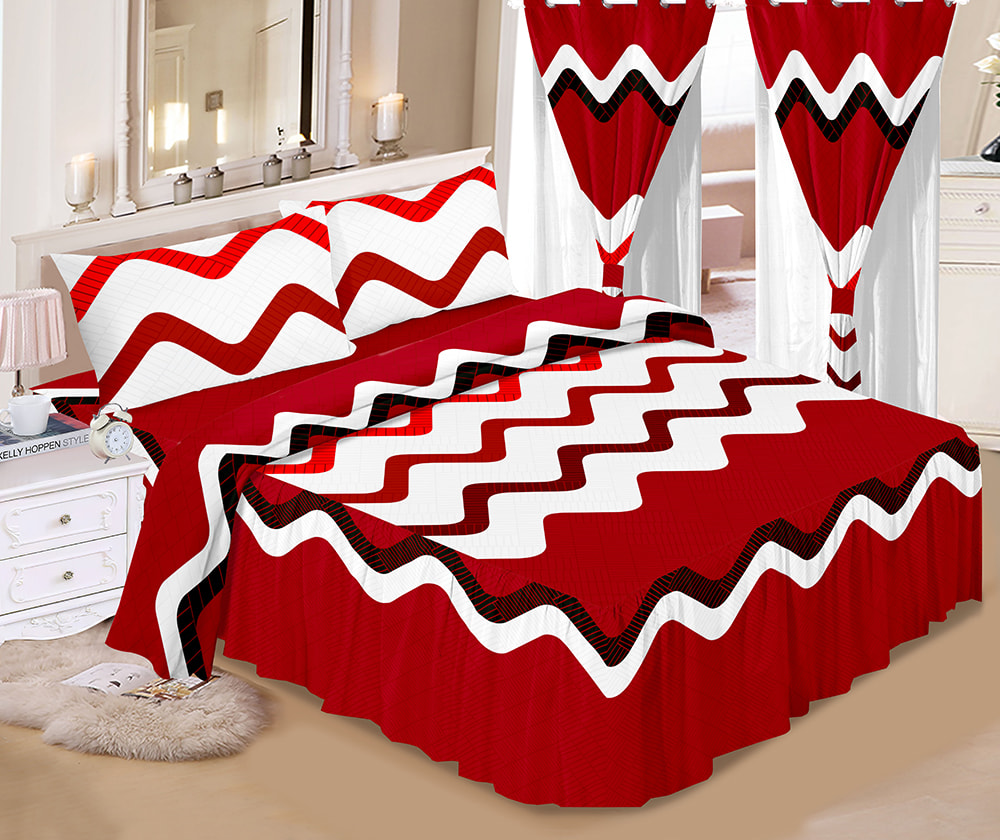
The Microfiber Bedspread 9-Piece Set is categorized as a bed skirt ensemble, although its configuration extends beyond a single skirt. The complete set contains nine coordinated pieces: one bed skirt, two pillowcases, two cushion covers, and four curtains. This combination gives the buyer a practical foundation for styling the principal bedroom surfaces and nearby windows.
The bed skirt is the central piece of the collection. It is intended to cover the sides of the bed base and create a neat visual transition from the mattress area to the floor. In addition to concealing the lower bed structure and stored items, a bed skirt can make the overall bed presentation appear more complete. The solid design avoids visual clutter and allows the collection to work with a wide range of wall colors, flooring, furniture finishes, and decorative accessories.
Two matching pillowcases extend the coordinated appearance across the sleeping area. The Queen configuration includes pillowcases measuring 50 by 70 centimeters, while the King configuration includes pillowcases measuring 50 by 100 centimeters. These dimensions are suited to the respective size categories and allow the pillow area to visually connect with the bed skirt.
Two cushion covers, each measuring 45 by 45 centimeters, add flexibility to the arrangement. They can be used on accent cushions placed on the bed, a bedroom chair, a window seat, or another nearby furnishing. Because the covers are coordinated with the bed skirt and curtains, they can be used to create a repeated color relationship throughout the room without requiring elaborate patterns.
Four curtains complete the nine-piece configuration. Each curtain panel measures 95 by 220 centimeters. The four-panel format can be used for a paired-window arrangement or divided across two windows, depending on the room layout and installation method. Retailers can present the curtains as a valuable addition to the bed-focused product because they enable consumers to coordinate the sleeping area and window treatment in one purchase.
Supplied Set Components
| Component | Queen Size | King Size | Quantity |
|---|---|---|---|
| Bed skirt | 152 × 198 + 30 + 40 cm | 198 × 203 + 30 + 40 cm | 1 piece |
| Pillowcase | 50 × 70 cm | 50 × 100 cm | 2 pieces |
| Cushion cover | 45 × 45 cm | 45 × 45 cm | 2 pieces |
| Curtain | 95 × 220 cm | 95 × 220 cm | 4 pieces |
| Total set quantity | Nine coordinated pieces | 9 pieces | |
The bed skirt dimensions are presented in the supplied format, including the main bed dimensions and additional measurements. Buyers should confirm the intended mattress, foundation, drop, and installation requirements during sampling, especially when preparing product listings for a specific regional market. This step helps retailers communicate sizing accurately and reduces the possibility of returns caused by differences in bed construction or consumer expectations.
2. Why Microfiber Polyester Is a Practical Choice
The set is made from 100% microfiber polyester. Microfiber is produced from very fine synthetic fibers, creating a fabric structure that can feel smooth and soft while remaining suitable for efficient large-scale production. For bedding and coordinating household textiles, this material offers a balance between comfort, appearance, care convenience, and cost control.
One of the most important benefits is the soft touch. Consumers generally expect bedding textiles to feel pleasant against the skin and comfortable in everyday use. A well-finished microfiber surface can provide a smooth hand feel that supports this expectation. The material is also appropriate for decorative applications, where a clean surface and consistent color contribute to the perceived quality of the finished set.
Microfiber polyester is also easy to care for compared with many delicate natural fabrics. In ordinary household conditions, buyers often prefer products that do not require complicated maintenance. Easy-care characteristics can reduce the time needed for washing, drying, folding, and storage. This is particularly useful for family bedrooms, rental properties, guest accommodations, and retail products positioned as practical daily-use textiles.
Another advantage is dimensional and visual consistency. Polyester fibers can support stable production across repeated orders when the manufacturing process is properly controlled. Consistency matters for a nine-piece set because the bed skirt, pillowcases, cushion covers, and curtains need to appear related. If each component had a noticeably different shade, texture, or finish, the value of the coordinated concept would be weakened. Integrated production and quality inspection help reduce this risk.
The fabric is also suitable for solid-color design. Solid textiles place strong emphasis on color accuracy, surface uniformity, stitching, and finishing. Microfiber polyester can be dyed and processed for a clean, modern appearance, making it suitable for collections that rely on coordinated color rather than printed motifs. This gives distributors room to target different market preferences through color selection while maintaining the same basic product architecture.
Advantages for Daily Household Use
For consumers, the key material advantages can be summarized as softness, manageable care, adaptable styling, and practical durability. For commercial buyers, the same features translate into a product that is easier to describe, package, merchandise, and replenish. A set that combines attractive appearance with straightforward maintenance can appeal to a wider audience than a highly specialized textile requiring careful handling.
Microfiber can also support lightweight product construction. This may help make the set easier to fold, store, display, and prepare for shipment than a heavier ensemble made with substantially denser materials. Actual packed weight will depend on fabric weight, sewing details, packaging, and final specifications, so buyers should confirm those figures before calculating freight or shelf requirements.
Because the product uses synthetic polyester, buyers should still provide appropriate care instructions based on the final tested construction. Washing temperature, drying method, ironing guidance, color care, and any restrictions should be confirmed through production samples and labeling review. Clear care communication protects both the consumer experience and the retailer’s reputation.
3. Competitive Advantages of the Nine-Piece Format
The strongest commercial advantage of this product is the coordinated nine-piece format. Many consumers purchase bedroom textiles one item at a time. This approach can lead to mismatched colors, different fabric textures, inconsistent sizing, and repeated shopping decisions. A complete set simplifies the purchase by presenting a unified design solution from the beginning.
Compared with a single bed skirt, this set offers a broader visual transformation. The bed skirt improves the appearance of the bed base, pillowcases coordinate the sleeping surface, cushion covers add decorative depth, and curtains extend the design toward the windows. The result is not merely a replacement bed accessory but a room-coordination package.
Compared with a basic bedding bundle containing only a few pieces, the four curtains create additional value. Window treatments are often purchased separately, and finding a close color match can be difficult. Including four matching curtain panels allows the customer to complete a larger part of the bedroom design without depending on separate suppliers or uncertain color comparisons.
The solid styling is another competitive strength. Patterns can be attractive, but they may limit compatibility with existing furniture and decorative themes. A solid bed skirt and coordinated accessories can be marketed as flexible basics. Consumers may use them in modern apartments, traditional homes, dormitory-style rooms, guest bedrooms, serviced accommodations, or seasonal refresh projects.
The collection can also serve multiple sales channels. In physical stores, the complete set can be displayed as a room concept. In online retail, the nine-piece count and component list create a clear value proposition. For distributors, the Queen and King options provide a manageable core assortment. For private-label customers, the set can be adapted through color, packaging, labeling, and other approved specifications.
Value Beyond Piece Count
A nine-piece set should not be judged only by the number of components. Its deeper value comes from coordination and reduced purchasing effort. The consumer does not need to identify separate curtains, cushion covers, pillowcases, and bed skirts that will work together. The buyer receives a ready-made design direction with practical components for both functional and decorative use.
For hospitality and property furnishing projects, coordinated sets may also simplify room preparation. A consistent textile presentation helps create a repeatable visual standard across multiple rooms. When products are purchased in the same color and size specification, procurement teams can reduce the number of separate product codes and simplify replenishment planning. The stated minimum order quantity of 50 sets per color and size can support organized wholesale purchasing while remaining accessible to many growing businesses.
For online sellers, the product can be positioned through several customer benefits: complete room coordination, soft microfiber fabric, easy-care construction, two size choices, and a broad set of matching components. These benefits can be adapted to different sales messages without changing the basic product. For example, one retailer may emphasize affordable bedroom renovation, while another may focus on rental-property furnishing or coordinated home styling.
4. Design Flexibility for Different Interior Styles
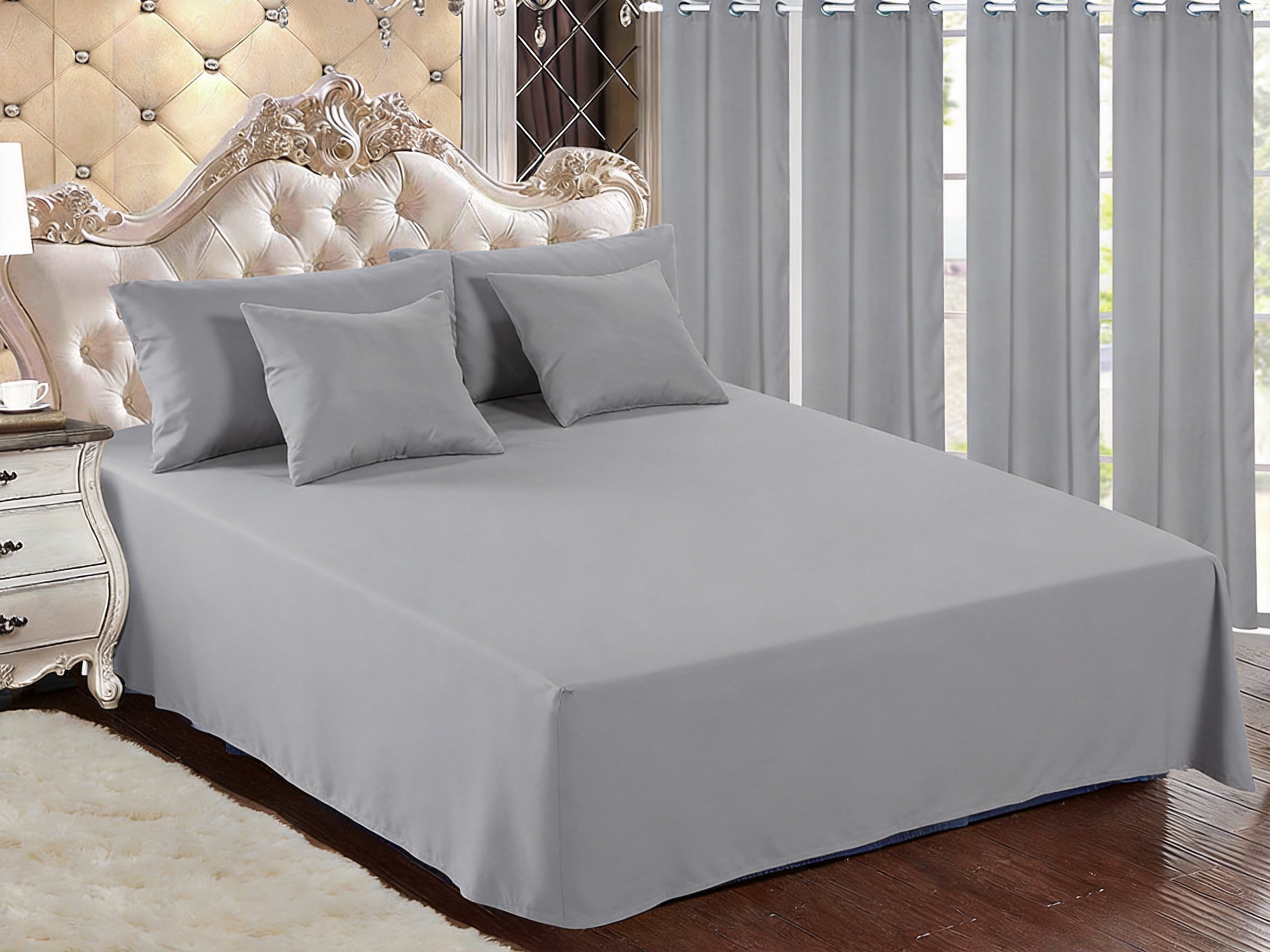
The simple solid design gives this collection a wide decorative range. Minimalist interiors can use the set as a calm, uncluttered foundation. Contemporary rooms can combine it with metallic fixtures, clean-lined furniture, and neutral walls. Traditional bedrooms can use the coordinated bed skirt and curtains to create a more finished, layered appearance. The same product architecture can therefore serve different market segments through color choice and merchandising.
A solid color also makes it easier to introduce additional decorative elements. Patterned cushions, textured throws, framed artwork, rugs, and lamps can be added without creating excessive visual competition. Alternatively, customers who prefer a quieter room can use the set with similarly toned accessories for a restrained, unified effect.
The bed skirt may be particularly useful in rooms where the lower bed frame or under-bed storage needs to be concealed. When the bed base is visible, the bedroom can appear visually fragmented. A coordinated skirt creates a more continuous fabric line around the lower perimeter of the bed. This may be attractive to consumers who want a polished appearance without replacing the existing frame.
The curtains help repeat the bedroom palette at a different height. This creates a visual link between the lower, central, and upper portions of the room. The pillowcases and cushion covers can then reinforce the same palette in smaller areas. Such repetition is a basic interior styling principle and does not require complex patterns or professional decoration services.
Merchandising Possibilities
Retailers can present the set folded in a compact package, displayed on a made bed, or shown through lifestyle photography that includes the curtains. The latter approach is especially useful because it communicates the full purpose of the collection. Product images should clearly identify the nine included pieces and show the Queen or King configuration being presented.
Color-based merchandising may be effective for this product. Since the design is solid, stores can display several shades together to demonstrate the breadth of the collection. Online sellers can create color swatches, room-style categories, or coordinated collections that help shoppers choose according to existing furniture and wall colors.
For wholesale buyers, the product can be included in seasonal bedroom refresh programs. It may be suitable for spring furnishing, rental property turnover, back-to-school room updates, guestroom preparation, or promotional bedding campaigns. The broad size and styling appeal makes it possible to use the same basic product in different calendar periods.
5. Manufacturing Capability and Integrated Production
The manufacturer is an industrial and trade enterprise integrating research and development, production, sales, and export. This integrated structure can provide meaningful advantages to buyers who require more than a standard catalog item. Rather than separating design communication, factory production, and export coordination among unrelated parties, an integrated supplier can manage these stages through a connected organization.
The company was founded in 2015 and operates a factory covering more than 10,000 square meters. It has more than 100 employees, intelligent production equipment, a standardized management system, and an experienced foreign trade service team. These resources support the production of bedding sets and related home textile products at a scale suitable for international wholesale business.
Manufacturing scale is particularly important for a coordinated set. The product contains multiple components that need to maintain consistent material, color, workmanship, and packaging standards. A supplier experienced in bed sheets, quilt covers, pillowcases, cushions, quilts, curtains, and waterproof mattress protectors is familiar with the different construction requirements of bedroom textiles. This broader product knowledge can support more effective coordination when developing a multi-component collection.
Research and Development Support
Research and development is relevant even for a simple solid-color set. Product development may involve selecting fabric construction, refining dimensions, adjusting sewing methods, evaluating color options, improving packaging, and preparing samples for customer approval. A supplier with in-house development capability can help buyers turn a general concept into a repeatable production specification.
Customization based on customer samples is also available. This is valuable for private-label buyers, chain stores, project suppliers, and importers with established product standards. A customer may wish to discuss a different color palette, packaging format, label placement, size variation, or coordinated article. All changes should be reviewed through samples and documented specifications before bulk production.
OEM home textile services can support different channels and market applications. A buyer may require neutral packaging for wholesale distribution, branded packaging for direct-to-consumer sales, or project-specific labeling for hospitality use. The exact scope of customization depends on the order, approved artwork, material availability, testing requirements, and production schedule.
Equipment and Standardized Management
Intelligent production equipment can assist with process consistency, production efficiency, and repeatability. Equipment alone does not guarantee quality, but it can support a standardized workflow when combined with trained personnel and inspection procedures. For a multi-piece set, repeatability is essential because each component must meet its own dimensional and sewing requirements while remaining visually compatible with the other pieces.
A standardized management system can help organize raw material purchasing, cutting, sewing, inspection, packing, and shipment. It may also support production scheduling and order tracking. Buyers should request the specific quality-control procedures, tolerances, testing documents, and approval process applicable to their order. Clear communication at the beginning of production is one of the most effective ways to prevent misunderstandings.
6. Production Process for a Coordinated Bedding Set
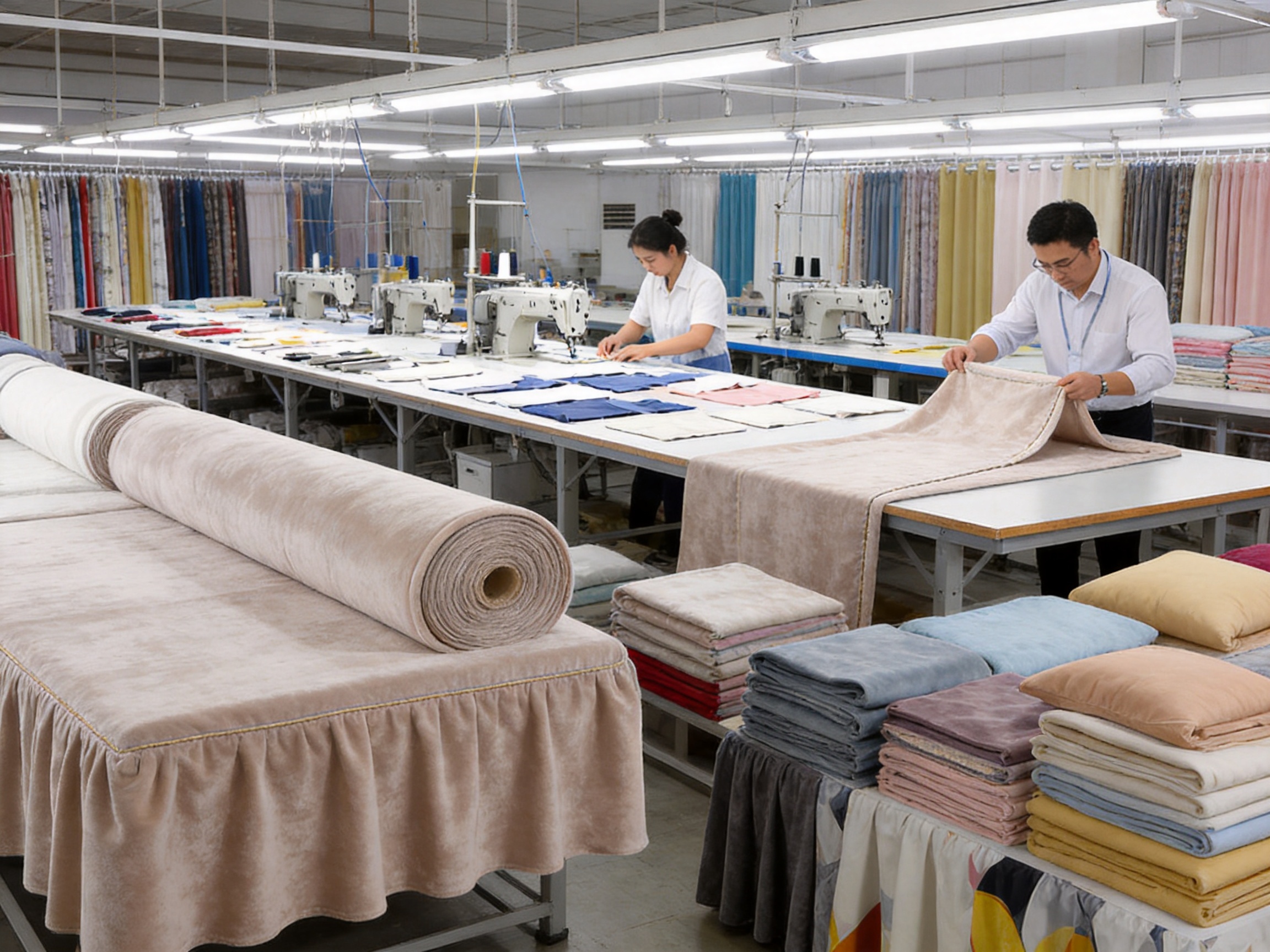
The exact factory workflow may vary according to final specifications, but a professional production process for this type of collection generally includes several connected stages. Each stage affects the final appearance and performance of the set.
Material Selection and Incoming Inspection
Production begins with the selection of 100% microfiber polyester fabric and related sewing materials. Fabric should be reviewed for color, width, surface appearance, hand feel, defects, and consistency with the approved sample. Thread, labels, packaging materials, and any accessories should also be checked against the order requirements.
Incoming inspection is important because the fabric is used across several different products. If a problem is discovered after cutting, it may affect bed skirts, pillowcases, cushion covers, and curtains at the same time. Early inspection helps isolate potential issues before they become costly production problems.
Color Approval and Batch Consistency
Solid-color products require careful color management. Buyers should approve a physical color standard or production sample rather than relying only on a digital image. Screen settings and lighting conditions can change the appearance of colors. The factory and buyer should also clarify acceptable color tolerances between production batches.
Maintaining a consistent color relationship across nine pieces is central to the product’s appeal. Curtains may be viewed under different lighting from the bed skirt, while pillowcases and cushion covers may be placed close to other room accessories. Consistency therefore needs to be considered across the entire set, not only within individual components.
Pattern Making and Cutting
Once the material and dimensions are confirmed, pattern planning and cutting can begin. Efficient cutting helps control fabric consumption while preserving the required dimensions. The bed skirt, pillowcases, cushion covers, and curtains each require different cutting layouts and seam allowances.
Accurate cutting is particularly important for the Queen and King versions because the bed skirt dimensions differ while the pillowcase dimensions also change. The curtains and cushion covers remain the same according to the supplied specification, but they still require consistent cutting to ensure a uniform appearance within each set.
Sewing and Assembly
Sewing methods should be selected according to the function of each item. The bed skirt requires stable seams and an orderly finish because it must maintain its shape around the bed. Pillowcases and cushion covers need clean openings and appropriately finished edges. Curtain panels require consistent hems and a neat overall appearance, particularly along the visible lower and side edges.
During assembly, operators and inspectors should verify dimensions, seam alignment, thread quality, edge finishing, and visible defects. Coordinated sets benefit from an organized component-tracking system so that each package contains one bed skirt, two pillowcases, two cushion covers, and four curtains in the correct size configuration.
Finishing, Inspection, and Packing
Finished pieces may be checked for loose threads, stains, sewing irregularities, incorrect labels, and dimensional deviations. The set should then be folded and packed in a way that protects the fabric and preserves the product’s presentation. Packaging should clearly identify the style, size, color, quantity, and any care instructions required for the target market.
Final inspection is not only a quality step but also a completeness check. Because the product includes nine individual components, a missing item can create a serious customer-service issue even when the remaining pieces are well made. A systematic packing checklist can reduce this risk.
7. Quality Considerations for Buyers
Wholesale customers should evaluate the product through a structured approval process. The first step is to review a physical sample of the complete set rather than only a single bed skirt. The sample should include the Queen or King size being considered, because dimensional and proportion differences can affect the final presentation.
Material evaluation should include hand feel, surface appearance, color, fabric density, and recovery after washing if testing is available. Buyers may also wish to assess shrinkage, colorfastness, seam strength, pilling resistance, and dimensional stability according to the requirements of their target market. Testing needs depend on the sales channel, country, customer expectations, and applicable regulations.
Dimensional inspection should compare each component with the approved specification. The bed skirt should be checked using the agreed measurement method, including any additional drop or construction measurements represented by the supplied “+30+40 cm” notation. Pillowcases, cushion covers, and curtains should also be measured after finishing, since sewing and laundering can influence final dimensions.
Visual inspection should consider whether all nine pieces match in color and surface character. The curtains should be compared with the bed skirt under consistent lighting. Buyers should also review the appearance of seams, hems, openings, labels, folding, and packaging. A product intended for online sales should be inspected particularly carefully because photographs create strong consumer expectations.
Documentation and Order Confirmation
Before bulk production, buyers should confirm the product name, component list, size, color, fabric composition, packaging, labeling, care instructions, minimum order quantity, production lead time, and inspection requirements. Any approved sample should be identified and retained as a reference.
The stated minimum order quantity is 50 sets per color and size. This means buyers should plan Queen and King quantities separately and consider whether each color will meet the required volume. Confirming this point early helps avoid confusion when preparing a purchase order or assortment plan.
8. Advantages for Wholesale and Private-Label Customers
The collection offers a useful starting point for companies building or expanding a home textile range. Because the design is simple and the material is familiar to consumers, buyers can place it within several price and style segments. The complete set can function as a core product, while future variations may be developed through color, packaging, or related articles.
Private-label customers can use OEM services to create a more distinctive market identity. Brand identity may be expressed through packaging, woven or printed labels, inserts, color names, collection organization, and photography. The underlying product can remain practical and accessible while the presentation is adapted to the retailer’s target customer.
Importers may also benefit from product-line expansion. The same manufacturing organization produces pillowcases, cushions, quilt covers, sheets, quilts, waterproof mattress protectors, curtains, and other bedding sets. This creates an opportunity to source complementary products from one supplier, subject to individual specifications and order requirements.
A broader supplier relationship can simplify communication about fabric, color, packaging, inspection, and shipment. It may also help buyers develop a consistent visual collection across several product categories. For example, the solid color used in the nine-piece set could potentially be coordinated with separate waterproof fitted sheets, duvet covers, or additional cushion designs after technical review.
Applications Across Sales Channels
Home furnishing stores can use the set as a complete bedroom display product. Online retailers can sell it as a room refresh package or value-oriented coordinated ensemble. Hospitality suppliers can review it for guestroom or serviced-apartment applications where a consistent decorative presentation is desired. Property managers may consider it for furnished rentals, subject to their durability, laundering, and compliance requirements.
Department stores and regional distributors can use the Queen and King options to establish a focused assortment without introducing too many size variations. Specialty bedding retailers may present the set alongside mattress protectors, quilts, and additional sheet products to encourage complete-room purchases.
The product may also be suitable for promotional programs because its benefits are easy to communicate. “Nine coordinated pieces,” “100% microfiber polyester,” “soft and easy care,” and “Queen and King sizes” are clear product messages. Retailers should ensure that all claims match the final approved specifications and applicable advertising rules.
9. Sustainability and Responsible Product Communication
Polyester microfiber is a synthetic textile, and responsible product communication should present its benefits without overstating environmental performance. The material is practical, durable, and easy to care for, but buyers should evaluate the complete product life cycle when developing sustainability claims. Relevant factors may include fabric production, dyeing, packaging, shipping, washing, product longevity, and end-of-life handling.
Longer use can improve the practical value of a textile product because replacement is delayed. Appropriate care instructions can help consumers maintain appearance and performance. Buyers may also discuss packaging reduction, recycled polyester options, production waste management, and other sustainability initiatives with the manufacturer if these are required for a specific program.
Any recycled-content, certification, low-impact dye, or environmental claim should be supported by appropriate documentation before appearing on packaging or marketing materials. Clear and accurate communication builds trust and reduces regulatory risk.
10. How to Present the Product to End Consumers
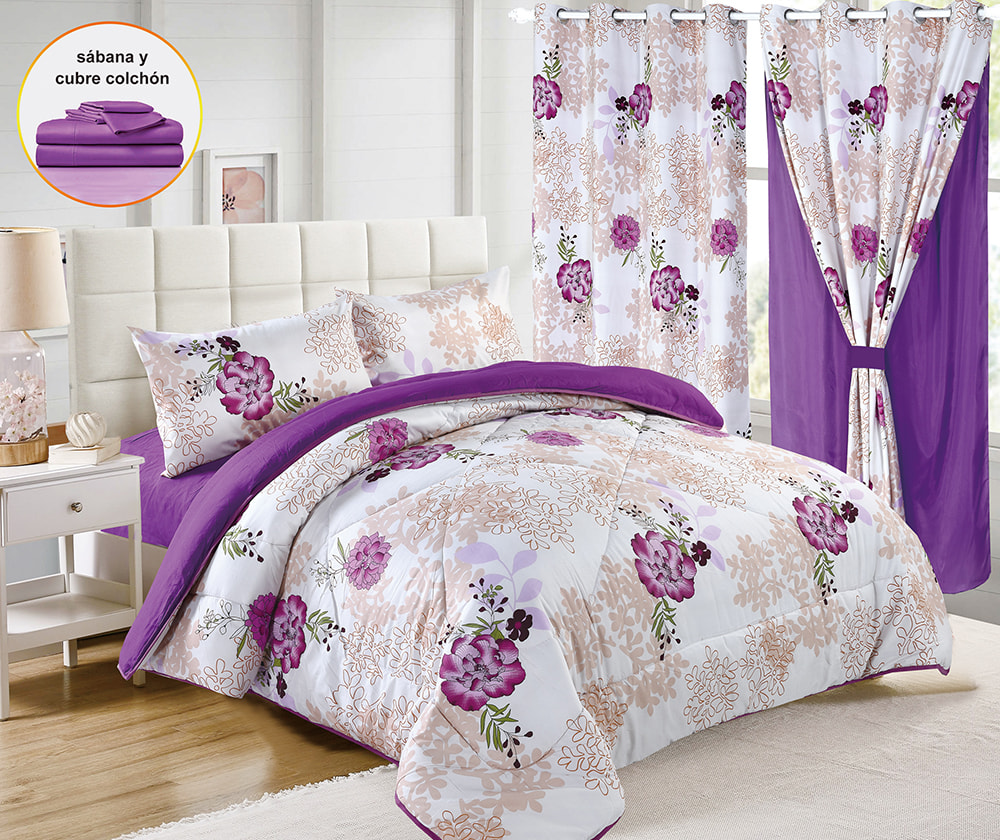
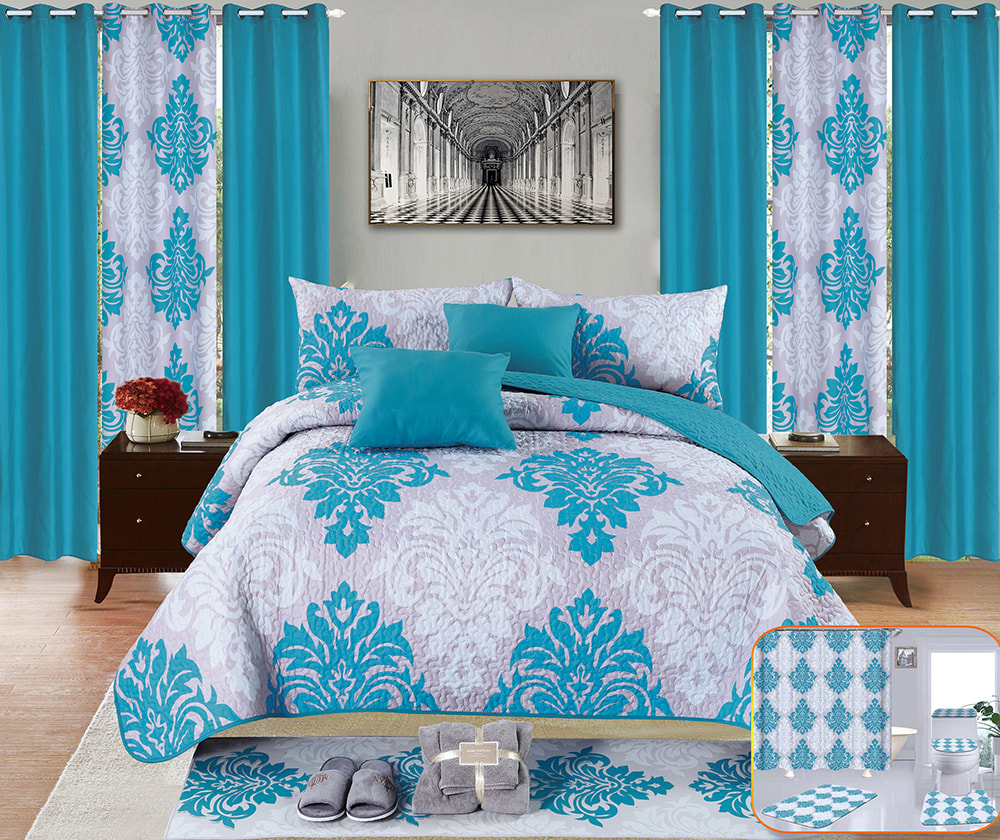
Successful product presentation should explain both what the customer receives and how the pieces work together. The first image or product panel should identify the complete nine-piece configuration. Supporting images can show the bed skirt on a made bed, the pillowcases and cushion covers in use, and the curtains installed in a coordinated room.
Product descriptions should list the components individually. Customers should not have to guess whether the package includes a comforter, duvet, sheet, curtain, or cushion. Since this product is categorized as a bed skirt set, retailers should explain that the nine pieces consist of one bed skirt, two pillowcases, two cushion covers, and four curtains according to the supplied configuration.
Size information should be displayed in a clear table. Queen and King bed skirt dimensions should be separated, while the shared cushion cover and curtain dimensions can be shown in a common row if appropriate. The pillowcase dimensions should also be stated by size. Retailers should explain that mattress, bed-frame, and curtain-installation conditions can vary, and consumers should measure their space where necessary.
Care information should be easy to find. The final approved label should provide washing and drying guidance based on testing and production specifications. A simple care message can improve satisfaction, but it must not replace the detailed instructions required for the final product.
Suggested Commercial Positioning
The product can be positioned as a practical bedroom coordination solution rather than only as a decorative bed skirt. This wording emphasizes its broader function and distinguishes it from single-item alternatives. The set may also be presented as a convenient option for consumers who want a refreshed room appearance without purchasing multiple unrelated textiles.
For value-conscious customers, the nine-piece format communicates purchasing efficiency. For style-conscious customers, the solid design communicates versatility. For busy households, microfiber polyester and easy-care characteristics communicate convenience. For trade customers, OEM support and integrated manufacturing communicate supply flexibility.
11. Company Strengths Supporting the Product
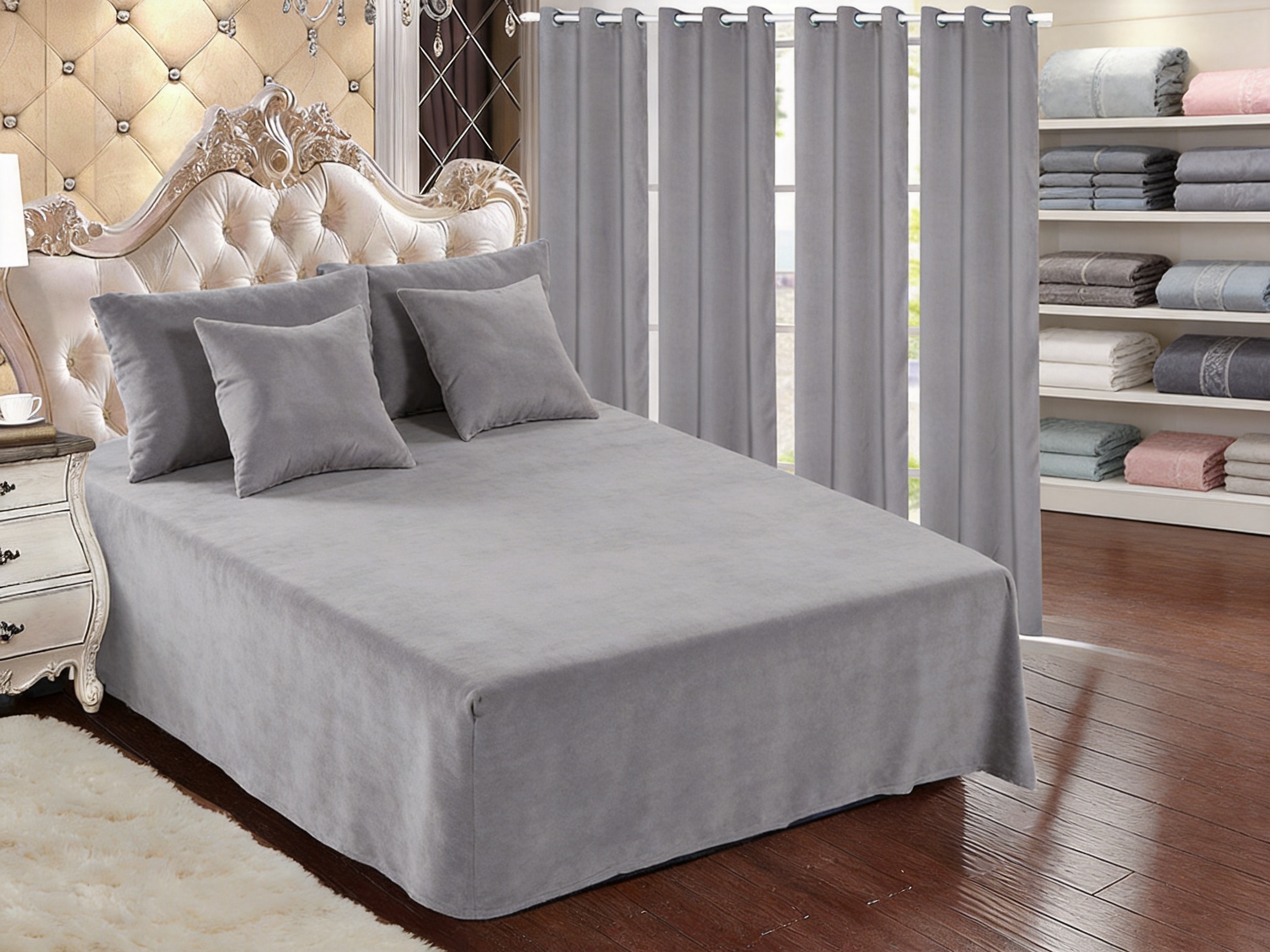
The manufacturer’s strength lies in the combination of product breadth, production resources, customization capability, and export experience. As an industrial and trade enterprise, it can connect factory operations with commercial and international customer service requirements.
The factory’s more than 10,000-square-meter footprint provides space for organized production, material handling, equipment placement, inspection, and packing. More than 100 employees contribute to the company’s ability to manage multiple processes and product categories. Intelligent equipment and standardized management support repeatability, while the foreign trade service team helps coordinate communication with overseas buyers.
The company’s product experience extends across several important home textile categories. Its portfolio includes bed sheets, quilt covers, pillowcases, cushions, quilts, waterproof mattress protectors, curtains, and bedding sets. This variety is relevant to the Microfiber Bedspread 9-Piece Set because the collection itself combines bedding-related and window-treatment components.
Customer-sample-based customization provides a path for buyers who have established designs or market requirements. A buyer can discuss the desired specification, submit a reference sample where appropriate, review development samples, and confirm the details for mass production. This process should always include written approval of material, dimensions, colors, packaging, and any testing or labeling requirements.
Export experience is another important consideration. International home textile sales may require different packaging, documentation, labeling, communication, and shipping coordination than domestic sales. An experienced foreign trade team can help buyers organize these details, although the importer remains responsible for confirming the legal and compliance requirements of the destination market.
12. Ordering and Customization Recommendations
Businesses interested in this product should begin by identifying their target market and preferred assortment. The primary decisions are size, color, order quantity, packaging format, labeling, and whether any OEM modifications are necessary. Since the MOQ is 50 sets per color and size, assortment planning should be completed before final quotation and production scheduling.
A practical development sequence is to request a product sample, review the full nine-piece configuration, confirm dimensions, approve color, evaluate construction, and determine whether the standard packaging meets the sales channel’s needs. If changes are required, the buyer should request a revised sample and compare it against a written specification.
Buyers should also clarify whether the term “bedspread” in a product title could create confusion, since the supplied configuration is a bed skirt-centered set and does not list a separate filled comforter or duvet. Accurate naming protects the end consumer and helps online marketplaces categorize the product correctly. The final product title should reflect the actual contents.
For a private-label program, artwork should be reviewed for size, color, language, barcode placement, care information, country-of-origin requirements, and packaging durability. Retailers should provide final approved artwork in the requested format and confirm whether the factory requires a production sample before bulk printing.
13. Frequently Asked Questions
What is included in the Microfiber Bedspread 9-Piece Set?
The set includes one bed skirt, two pillowcases, two cushion covers, and four curtains, for a total of nine pieces. The exact pillowcase and bed skirt dimensions depend on whether the Queen or King size is selected.
Is the set made from microfiber?
Yes. The supplied material specification identifies the fabric as 100% polyester, and the product description identifies it as microfiber polyester. Buyers should confirm the final fabric details and labeling information during sample approval.
Does the set include a comforter or duvet?
The supplied component list does not include a filled comforter, quilt, or duvet. It lists a bed skirt, pillowcases, cushion covers, and curtains. Retailers should describe the contents accurately to avoid confusion.
What are the Queen bed skirt dimensions?
The supplied Queen specification is 152 × 198 + 30 + 40 centimeters for one bed skirt. Buyers should confirm the measurement method and construction interpretation with the manufacturer before publishing the final consumer size chart.
What are the King bed skirt dimensions?
The supplied King specification is 198 × 203 + 30 + 40 centimeters for one bed skirt. As with the Queen version, the additional measurements should be clarified during technical confirmation and sample review.
What are the pillowcase sizes?
The Queen configuration includes two pillowcases measuring 50 × 70 centimeters. The King configuration includes two pillowcases measuring 50 × 100 centimeters.
Are the cushion covers the same size in both configurations?
Yes. The supplied specification lists two cushion covers measuring 45 × 45 centimeters for both Queen and King sets.
How large are the curtains?
The set includes four curtain panels measuring 95 × 220 centimeters each, according to the supplied product information. Installation requirements and finished appearance may vary depending on the curtain rod, track, fullness, and window dimensions.
What is the minimum order quantity?
The stated minimum order quantity is 50 sets per color and size. Queen and King quantities should therefore be planned separately, and buyers should confirm the MOQ for any customized specification.
Can the product be customized?
Yes. OEM home textile customization services are available. Possible customization topics may include color, packaging, labels, dimensions, and related design requirements, subject to technical evaluation, sampling, order quantity, and final agreement.
What makes this set different from a single bed skirt?
A single bed skirt addresses only the lower bed area. This nine-piece collection also includes matching pillowcases, cushion covers, and curtains, allowing the customer to coordinate several parts of the bedroom through one purchase.
Why is solid styling useful for retailers?
Solid styling is compatible with many interior themes and can be offered in different colorways without changing the basic construction. It is also easy to display, photograph, and combine with additional home accessories.
Is microfiber polyester easy to care for?
Microfiber polyester is generally regarded as a practical, easy-care textile. However, the final washing, drying, and ironing instructions should be based on the approved product construction and confirmed through the manufacturer’s care-label information.
Can the manufacturer supply other home textile products?
Yes. The company’s product range includes bed sheets, quilt covers, pillowcases, cushions, quilts, waterproof mattress protectors, curtains, and other bedding sets. Buyers can discuss related products for broader assortment development.
How should buyers evaluate the product before placing a bulk order?
Buyers should review a complete physical sample, verify every component and dimension, assess fabric hand feel and appearance, confirm color consistency, inspect sewing and finishing, review packaging, and document all approved specifications before bulk production.
14. Conclusion
The Microfiber Bedspread 9-Piece Set is a practical coordinated home textile solution built around a solid bed skirt and supported by matching pillowcases, cushion covers, and curtains. Its value comes from the relationship among the pieces: the bed skirt organizes the lower bed area, the pillowcases reinforce the sleeping surface, the cushion covers add decorative flexibility, and the curtains extend the design across the room.
Made from 100% microfiber polyester, the set offers a soft touch, manageable care, adaptable styling, and suitability for regular household use. Queen and King options provide a clear starting assortment, while the minimum order quantity of 50 sets per color and size supports organized wholesale planning. The simple solid design makes the collection accessible to a wide range of interior styles and sales channels.
The manufacturing partner adds value through integrated research and development, production, sales, and export operations. A factory exceeding 10,000 square meters, a workforce of more than 100 employees, intelligent production equipment, standardized management, and experienced foreign trade support provide a foundation for repeatable supply. The company’s broader product range and OEM customization services also make it a potential long-term partner for buyers developing complete home textile collections.
For the best commercial outcome, buyers should confirm the complete component list, dimensions, color standard, fabric details, packaging, care instructions, testing expectations, and customization requirements before production. With accurate communication and appropriate quality control, this nine-piece set can serve as a versatile product for bedroom refresh programs, retail collections, private-label ranges, furnishing projects, and coordinated home living environments.
References
1. Product specification supplied for the Microfiber Bedspread 9-Piece Set, including component quantities, dimensions, material, size options, and minimum order information.
2. Company information supplied for the manufacturer, including production history, factory scale, employee count, equipment, product categories, customization services, and export capabilities.
3. Textile manufacturing principles concerning fabric inspection, color approval, cutting, sewing, finishing, packing, and quality-control procedures.
4. General home textile merchandising practices for coordinated bedding, curtains, cushion covers, and bedroom accessories.
5. General consumer guidance for evaluating textile dimensions, care labeling, packaging, and product-content accuracy.
Product: Microfiber Bedspread 9-Piece Set

Contact Us for More Details
Don't hesitate to contact when you need us!
Contact Information
Add:
Building 1, East Area, Wanyang Zhongchuang City, Economic Development Zone, Dongyang City, Zhejiang Province, China
Phone:
Tel:
E-mail:
Quick Links
Product Category
QR Code


+86-13616899966
+86-579-86610966
