 English
 русский
 Español
 عربى


Plain-Colored Two-Tone Comforter Set: A Complete Guide to Modern Seven-Piece Bedding

Choosing the right bedding set involves more than selecting an attractive color. Modern buyers also consider fabric performance, size compatibility, coordinated design, durability, maintenance, comfort, and overall value. The Plain-Colored Two-Tone Comforter Set addresses these expectations with a practical seven-piece configuration that combines a quilt, bed sheet, fitted sheet, pillowcases, and curtains in one coordinated package.
Designed around a minimalist two-tone concept, this bedding set uses two solid colors to create visual depth without relying on complicated patterns. The result is a calm and contemporary appearance that can complement modern, classic, transitional, and understated interior styles. Its coordinated components make it easier to create a complete bedroom arrangement while reducing the need to purchase matching items separately.
Made from 100% polyester, the set is developed for a balance of softness, easy care, durability, and everyday usability. The fabric is described as smooth and comfortable, while the quilt construction is intended to provide warmth without sacrificing breathability. With queen and king size options, the product can serve a variety of residential, hospitality, furnishing, and wholesale requirements.
Beyond the product itself, the set is supported by the manufacturing capabilities of Dongyangshi Menghui Textile Co., Ltd., an industrial and trade enterprise specializing in bedding and home textile production. The company integrates research and development, manufacturing, sales, and export services, allowing customers to work with one supplier for product development, production, customization, and international delivery coordination.
1. Product Overview
The Plain-Colored Two-Tone Comforter Set is a seven-piece home textile collection intended to provide a coordinated solution for the bedroom. Its principal components are a comforter or quilt, a flat bed sheet, a fitted sheet, two pillowcases, and two curtains. This combination serves both functional and decorative purposes.
The quilt acts as the central sleeping layer, offering coverage and warmth. The flat sheet provides a flexible layer between the sleeper and the quilt or mattress, depending on personal preference. The fitted sheet is designed to cover the mattress securely, while the pillowcases coordinate the sleeping surface with the rest of the set. The two curtains extend the same color concept into the surrounding room, creating a more unified interior appearance.
Rather than presenting a busy print, the product relies on the contrast between two plain colors. This approach gives buyers greater freedom when combining the set with walls, furniture, rugs, lighting, and decorative accessories. Solid colors are also less likely to conflict with existing bedroom furnishings, which makes this style suitable for rental properties, guest rooms, apartments, family bedrooms, and hospitality environments.
| Product Feature | Specification or Benefit |
| Product type | Seven-piece comforter and coordinated bedding set |
| Design | Plain-colored two-tone patchwork appearance |
| Main material | 100% polyester |
| Available sizes | Queen size and king size |
| Queen quilt size | 223 × 228 cm |
| King quilt size | 226 × 260 cm |
| Included bedding | Quilt, flat sheet, fitted sheet, and two pillowcases |
| Additional coordinated items | Two curtains |
| Primary positioning | Comfort, coordinated styling, practical maintenance, and efficient sourcing |
The set is especially suitable for buyers seeking a ready-made bedroom solution instead of sourcing each component individually. A complete package can simplify procurement, reduce the risk of mismatched shades, and help retailers present a more compelling product selection to consumers.
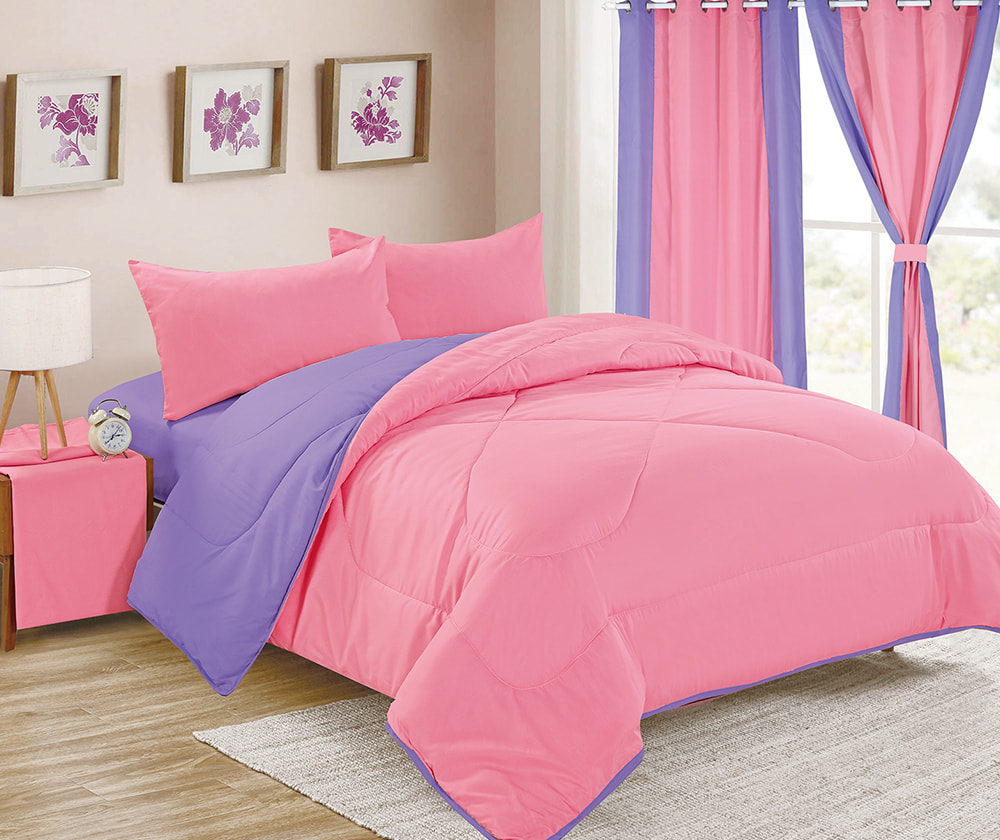
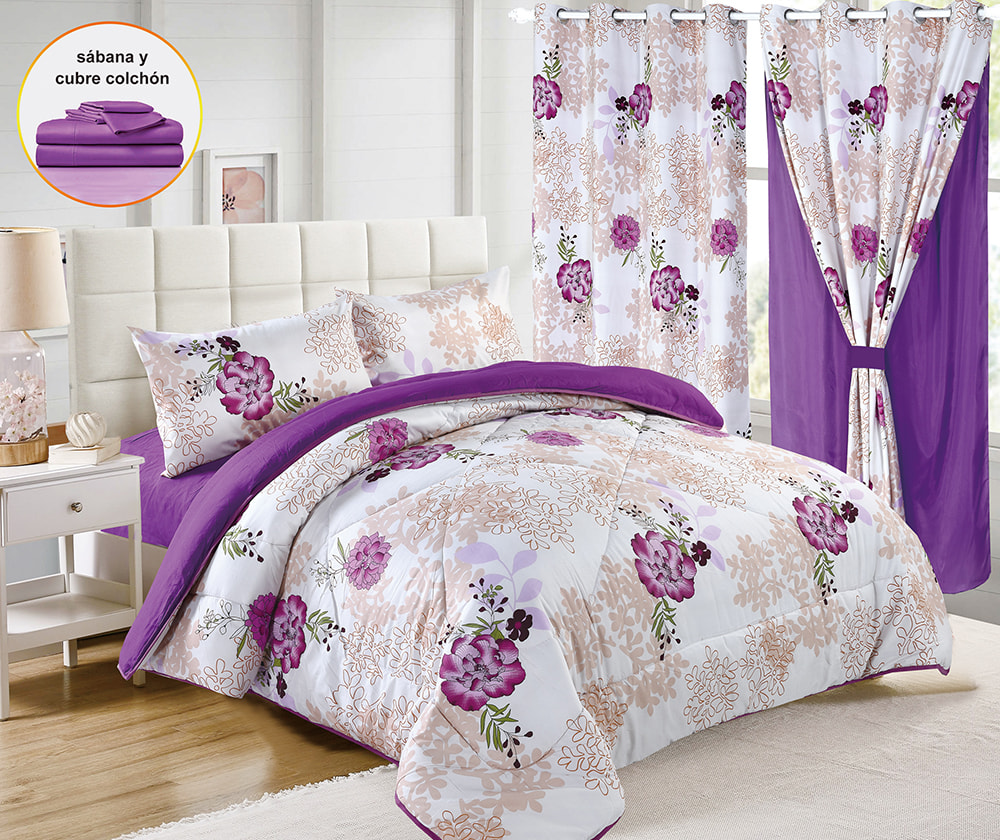
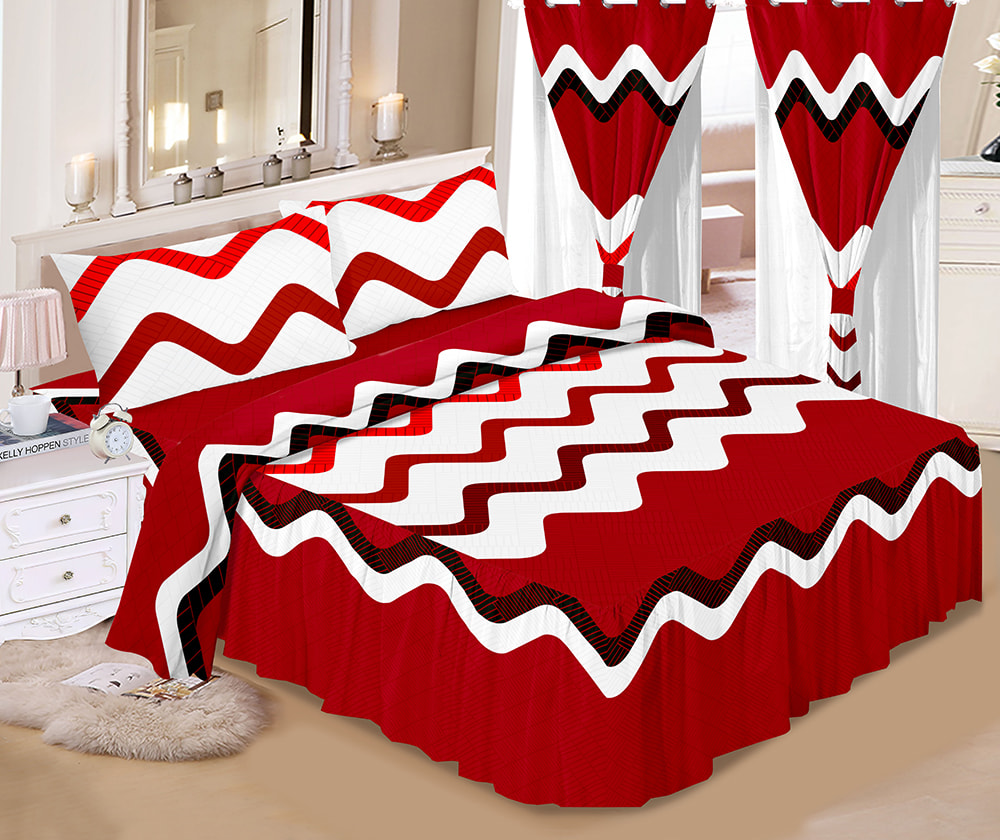
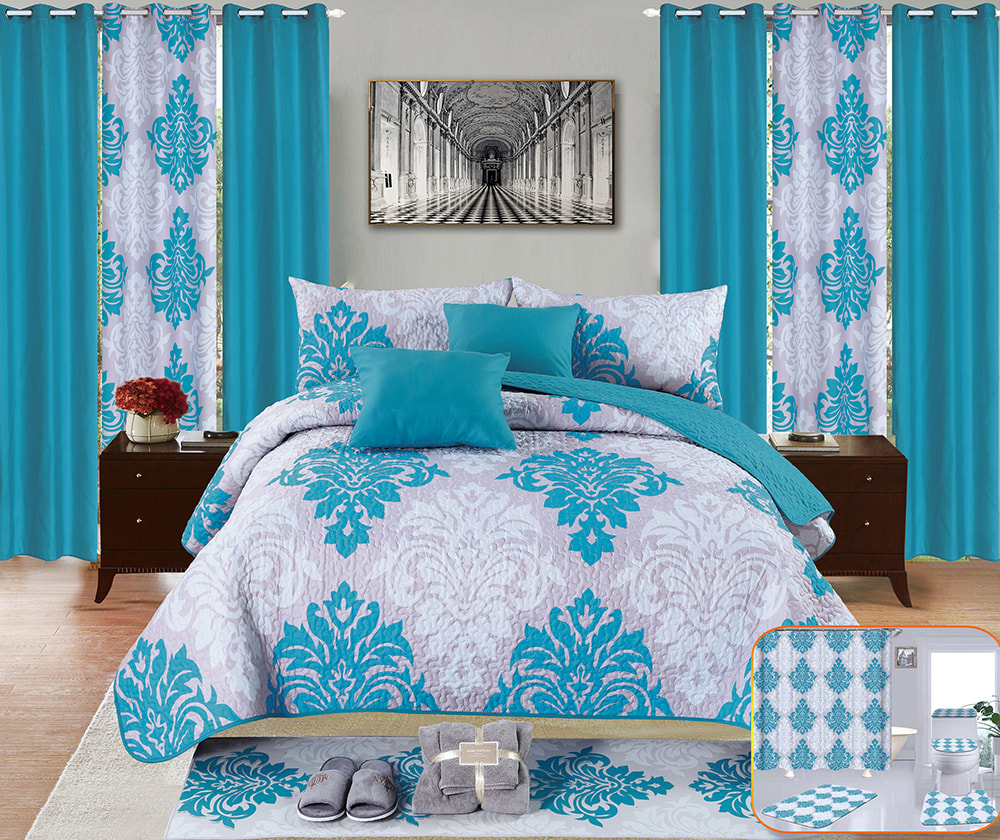
Plain-Colored Two-Tone Comforter Set (7 Pieces)
2. The Design Philosophy Behind the Two-Tone Style
The visual identity of the set is based on restraint. Instead of using elaborate floral motifs, geometric prints, or highly seasonal graphics, it combines two solid colors in a patchwork-style arrangement. This design method creates contrast and layering while retaining the flexibility associated with plain bedding.
A two-tone composition can make bedding appear more dimensional than a single-color set. Different panels or sections can create a subtle visual rhythm across the quilt and related pieces. At the same time, the absence of complex printed imagery gives the product a more timeless character. This is an important advantage for buyers who want bedding that remains suitable after changes to bedroom furniture or wall decoration.
The minimalist style can also support different retail market positions. In a budget-conscious collection, it can provide a clean and attractive alternative to basic single-color bedding. In a mid-range or design-oriented collection, it can be presented as a modern layered textile product. For hospitality buyers, the restrained appearance can help create rooms that feel neat, coordinated, and broadly appealing to different guests.
Adaptability Across Interior Styles
Neutral or calm two-tone bedding can be used in many interior settings. In a modern room, it can reinforce a simple furniture arrangement and clean lines. In a Scandinavian-inspired room, the understated color blocking can support a light and uncluttered atmosphere. In a contemporary hotel room, it can create a composed visual foundation without drawing attention away from the overall design.
The set can also work in more traditional spaces when paired with wooden furniture, upholstered headboards, or classic lighting. Since the color treatment is not tied to a specific decorative theme, buyers can change accent pillows, throws, or curtains in the future without necessarily replacing the complete bedding set.
Practical Benefits of Coordinated Color
Matching textiles is often more difficult than expected. Slight differences in tone between separately purchased sheets, pillowcases, and curtains can make a bedroom look disjointed. By supplying the main pieces together, the seven-piece set provides a more consistent visual result from the beginning.
This coordination is useful for individual consumers as well as commercial buyers. Retailers can display the set as a complete lifestyle solution. Property managers can furnish multiple bedrooms with a consistent look. Hotels, guesthouses, serviced apartments, and dormitory projects can use coordinated textile packages to simplify room preparation and replacement planning.
3. Material Characteristics and Everyday Comfort
The product uses 100% polyester fabric. Polyester is widely used in household textiles because it can offer a practical combination of resilience, color retention, dimensional stability, and ease of care. These qualities are important for bedding that may be washed regularly and used throughout the year.
The supplied product description emphasizes a smooth and soft touch. Fabric comfort depends on multiple factors, including yarn characteristics, fabric construction, finishing, filling, stitching, and final processing. A well-developed polyester bedding product can provide a comfortable surface while remaining easier to maintain than some more demanding natural-fiber alternatives.
Softness and Surface Feel
A smooth surface can contribute to a more pleasant sleeping environment, especially when the bedding is used directly against the body. The quilt, sheets, and pillowcases are designed as parts of a unified product family, helping the user experience a consistent textile hand across the bed.
For buyers evaluating samples, surface feel should be assessed together with fabric weight, seam quality, filling distribution, and finishing. These details influence how a product feels in actual use. The manufacturer’s product-development and sample-based customization capabilities can allow buyers to discuss these factors before placing larger orders.
Warmth and Breathability
The comforter is intended to balance warmth and breathability. This balance is important because excessive heat can interfere with sleep, while insufficient insulation may make the product unsuitable for cooler conditions. The appropriate result depends on the quilt filling, construction, room temperature, and user preference.
As a general-purpose bedding solution, the set can be positioned for everyday residential use rather than being limited to one specific season. Buyers serving different climate markets may discuss filling weight, quilting configuration, fabric finish, and packaging requirements with the manufacturer to develop a version appropriate for local conditions.
Durability for Regular Use
Polyester fibers are commonly selected for their ability to withstand repeated handling and laundering. The product description also highlights meticulous workmanship and durable stitching. Strong, consistent stitching is important because quilted bedding experiences repeated movement, folding, washing, and storage.
Durability is not determined by fabric composition alone. It also depends on seam allowance, thread selection, stitching density, edge finishing, quilting control, and inspection procedures. These manufacturing details are therefore central to the long-term value of a bedding set.
4. What Is Included in the Seven-Piece Set?
The set contains seven coordinated pieces. The specific configuration is designed to cover both the essential sleeping surface and selected room-decorating needs.
Quilt or Comforter
The quilt is the principal top layer and the largest textile component in the set. It provides coverage across the bed and contributes most strongly to the product’s warmth and visual presentation. The queen-size quilt measures 223 × 228 cm, while the king-size quilt measures 226 × 260 cm.
The difference between the queen and king dimensions reflects the need to cover larger mattresses and provide appropriate side and end drop. Buyers should compare these measurements with their mattress size, bed frame design, and preferred drape before selecting an option.
Flat Bed Sheet
The flat bed sheet offers a versatile layer for everyday sleeping arrangements. It can be placed over the mattress, used beneath the quilt, or folded as an additional light cover depending on the user’s habits and climate.
The queen flat sheet measures 210 × 230 cm, and the king flat sheet measures 235 × 270 cm. These dimensions should be considered alongside the mattress depth and the desired amount of side coverage.
Fitted Sheet
The fitted sheet is designed to sit around the mattress and help maintain a neat sleeping surface. The queen fitted sheet measures 152 × 203 + 30 cm, while the king fitted sheet measures 198 × 203 + 30 cm. The additional 30 cm indicates the stated depth allowance for the mattress profile.
Mattress construction can vary, particularly when mattress toppers or protective pads are used. Buyers should measure the complete mattress height, including any additional layers, to confirm that the fitted sheet is suitable for their application.
Pillowcases
The queen set includes two pillowcases measuring 50 × 70 cm. The king set includes two pillowcases measuring 50 × 100 cm. These dimensions are intended to correspond with the relevant bed size and provide a coordinated appearance at the head of the bed.
Curtains
Two curtains measuring 120 × 220 cm are included in both the queen and king configurations. Their inclusion distinguishes this package from many conventional bedding sets that only contain sleeping textiles.
The curtains can help extend the two-tone color story into the surrounding room. Their suitability will depend on the buyer’s window dimensions, hanging system, desired fullness, and installation method. For retail or project buyers, the curtain component can provide an additional selling point by presenting the set as a bedroom styling package rather than a simple comforter-and-sheet combination.
5. Size Selection and Measurement Guidance
Correct size selection is essential for both comfort and appearance. Buyers should not rely solely on general labels such as queen or king because mattress dimensions can vary between countries, manufacturers, and market standards.
| Component | Queen Size | King Size |
| Quilt | 223 × 228 cm | 226 × 260 cm |
| Flat bed sheet | 210 × 230 cm | 235 × 270 cm |
| Fitted sheet | 152 × 203 + 30 cm | 198 × 203 + 30 cm |
| Pillowcases | 50 × 70 cm, 2 pieces | 50 × 100 cm, 2 pieces |
| Curtains | 120 × 220 cm, 2 pieces | 120 × 220 cm, 2 pieces |
Measuring the Mattress
Measure the mattress width, length, and height. If a mattress protector, topper, or other layer will remain underneath the fitted sheet, include its thickness in the height measurement. The fitted sheet must have sufficient depth to cover the mattress without excessive tension.
A fitted sheet that is too small may pull away from the corners during use. One that is significantly too large may wrinkle or shift. Confirming the dimensions before purchase can improve both sleeping comfort and the visual appearance of the bed.
Considering Quilt Drop
The quilt dimensions should be evaluated according to the height of the mattress and the structure of the bed frame. Some users prefer a generous side drop that covers the mattress and part of the bed base. Others prefer a shorter drop that allows decorative bed frames or layered blankets to remain visible.
Room layout also matters. A quilt with an appropriate drop can make the bed appear balanced, while an unsuitable size may look either undersized or excessively bulky. The stated measurements provide a clear starting point for this decision.
Checking Curtain Requirements
The included curtains measure 120 × 220 cm each. Buyers should measure the window or intended installation area before use. Curtain width may need to exceed the window width to provide fullness, and the required drop may vary according to the rod position and desired floor clearance.
For buyers purchasing the product as a coordinated bedroom package, the curtains can be used as decorative panels, side panels, or window coverings depending on the room configuration. Their final application should be determined by the installation environment.
6. Advantages Compared with Conventional Bedding Purchases
The main competitive advantage of this product is the combination of coordinated design and functional completeness. Many bedding purchases require consumers to find a comforter, sheets, pillowcases, and window textiles separately. This creates additional decisions and increases the possibility of color or dimension mismatches.
Complete Seven-Piece Configuration
A seven-piece package gives the buyer a more comprehensive starting point. The quilt and sheets address the primary sleeping requirements, while the pillowcases and curtains support visual coordination. This can reduce sourcing time for individual customers and simplify stock planning for retailers.
Minimalist Style with Broader Market Appeal
Highly decorative patterns can be attractive but may appeal to a narrower group of customers. The two-tone solid-color design offers a more adaptable alternative. It can be marketed to buyers who prefer understated interiors, modern bedrooms, neutral decoration, and long-term usability.
Potentially Simpler Inventory Management
For retailers and distributors, a coordinated set may be easier to present and manage than multiple unrelated components. Product photography, shelf presentation, online merchandising, and promotional campaigns can all focus on one complete bedroom concept.
Bulk buyers may also benefit from standardized packaging, size options, and repeat ordering. Since the manufacturer provides export and OEM services, commercial customers can discuss packaging, labels, specifications, and other requirements according to their sales channels.
Practical Polyester Construction
Compared with fabrics that require more specialized care, polyester bedding is often selected for its practical maintenance profile. It can be suitable for consumers who prioritize easy washing, regular use, and resistance to ordinary household handling.
It is important to note that performance depends on the specific construction and care process. Buyers should follow the care instructions supplied with the final product and may request samples or technical details when evaluating the set for commercial use.
7. Manufacturing Strengths and Production Capabilities
The product is supplied by Dongyangshi Menghui Textile Co., Ltd., an industrial and trade enterprise founded in 2015. The company focuses on home textiles, including bed sheets, quilt covers, pillowcases, cushions, quilts, waterproof mattress protectors, curtains, and bedding sets.
The company operates a factory covering more than 10,000 square meters and employs more than 100 people. Its production environment is supported by intelligent production equipment, a standardized management system, and an experienced foreign trade service team.
Integrated Research and Development
Research and development is important in home textile manufacturing because successful products must combine design, material selection, dimensional accuracy, production efficiency, and market suitability. The company’s integrated structure allows product concepts to be reviewed from both technical and commercial perspectives.
For the two-tone comforter set, development considerations may include color combinations, panel arrangement, fabric hand, quilt dimensions, filling distribution, stitch layout, fitted-sheet depth, curtain dimensions, packaging, and target-market requirements.
The company also provides customized home textile services based on customer samples. This can be valuable for buyers who have a reference product, brand standard, physical sample, design drawing, or particular market specification. Sample-based development can help bridge the gap between a general product concept and a customer’s exact commercial needs.
Intelligent Production Equipment
Modern textile production benefits from equipment that supports repeatability and process control. Intelligent production equipment can contribute to more consistent cutting, stitching, quilting, assembly, and finishing, although the exact process depends on the product and order requirements.
For a multi-component set, consistency is particularly important. The quilt, sheets, pillowcases, and curtains must work together in terms of color, dimensions, and overall finish. A structured production system can support smoother coordination among these stages.
Standardized Management
A standardized management system helps organize purchasing, production scheduling, quality control, packaging, and shipment preparation. This is especially important for export orders, where documentation, product consistency, packing requirements, and delivery coordination may involve several parties.
Standardization can also support repeat orders. When customers reorder a successful design, stable records and controlled production procedures can help reduce unnecessary variation between batches. Final buyers should still confirm color, material, size, and packaging expectations for each order.
Foreign Trade Service Experience
International sourcing involves more than manufacturing. Customers may need assistance with specifications, quotations, sampling, order confirmation, packaging, export documents, shipment coordination, and communication across time zones and languages.
The company’s experienced foreign trade service team provides a commercial support structure for overseas buyers. This is a meaningful strength for distributors and brands that want to communicate directly with a supplier capable of handling both production and export-related cooperation.
8. Manufacturing Process Considerations for the Comforter Set
Although the exact factory workflow may vary according to order specifications, a coordinated bedding set generally requires a sequence of carefully managed stages. Each stage affects the final appearance, comfort, and service life of the product.
Material Preparation
Production begins with the preparation and inspection of fabric, filling, thread, labels, packaging materials, and other components. Since the set contains multiple pieces, material preparation must account for the required quantity of each item and the need for visual consistency.
Color control is particularly important for a two-tone product. The two solid colors should maintain the intended relationship across the quilt, sheets, pillowcases, and curtains. Proper material identification and batch organization help reduce the risk of accidental substitution or mismatch.
Pattern Planning and Cutting
Accurate pattern planning supports efficient material use and dimensional consistency. Quilt panels, sheet sections, pillowcase pieces, and curtain panels must be cut according to their designated sizes, seam allowances, and construction methods.
Cutting accuracy is important for fitted sheets because the width, length, corner shaping, and depth allowance all affect how the sheet fits the mattress. It is also important for curtains, where uneven panels can become visible after installation.
Sewing and Assembly
After cutting, components are assembled through sewing operations. The process may include joining two-tone panels, forming hems, attaching elastic to fitted sheets, closing pillowcase seams, and finishing curtain edges.
Seam quality contributes to both durability and appearance. Straight stitching, secure thread ends, consistent seam width, and clean edge treatment help create a professional finished product. The quilt also requires attention to edge binding or finishing so that repeated handling does not place excessive stress on the outer seams.
Quilting and Filling Control
The quilt’s comfort and appearance depend on how the filling is distributed and secured. Quilting helps hold the filling in place and can create an even surface. Consistent quilting also contributes to the visual character of the product, especially when the design includes two-tone panels.
Filling weight and construction can be adjusted for different climate markets or customer requirements. Buyers interested in a particular warmth level should discuss specifications with the manufacturer during the sampling stage.
Inspection and Finishing
Finished products are generally reviewed for dimensions, stitching, color appearance, cleanliness, component completeness, and packaging readiness. Inspection is especially important for a seven-piece set because an order may be considered incomplete if one pillowcase, curtain, or sheet is missing even when the quilt itself is acceptable.
Finishing may include thread trimming, pressing, folding, labeling, and packing. These steps influence how the product appears when opened by a retailer or end customer.
9. Quality Priorities for Buyers and Retailers
When evaluating the set, buyers should assess more than the photographs. A professional purchasing review should consider material feel, stitching, dimensions, filling distribution, color consistency, fitted-sheet elasticity, curtain construction, and packaging.
Visual Inspection
Look for even color areas, clean panel joins, symmetrical construction, and a neat overall appearance. Two-tone products should have clearly defined color boundaries and consistent placement according to the approved sample.
Seam and Stitch Inspection
Inspect the quilt edges, sheet hems, pillowcase openings, fitted-sheet corners, and curtain hems. Stitches should appear secure and reasonably uniform. Loose threads should be controlled during finishing, and stress points should receive appropriate reinforcement for the intended use.
Dimensional Inspection
Measure the quilt, flat sheet, fitted sheet, pillowcases, and curtains against the agreed specifications. Small tolerances may be normal in textile production, but commercial buyers should define acceptable ranges before mass production.
Set Completeness
Each package should contain one quilt, one flat sheet, one fitted sheet, two pillowcases, and two curtains unless a different configuration has been agreed. A packing checklist can help prevent shortages and simplify receiving inspections.
Packaging Review
Packaging should protect the textiles from dust, moisture, compression damage, and handling during transportation. Buyers may also request customized labels, carton markings, folding methods, inserts, or retail packaging according to their distribution model.
10. Applications in Different Market Segments
Residential Retail
For household consumers, the set offers a convenient way to refresh a bedroom with one coordinated purchase. The two-tone design can appeal to buyers who want a modern appearance but prefer something less visually demanding than a bold print.
Online Home Textile Sales
The complete package is suitable for online merchandising because the product can be presented as a full bedroom solution. Retailers can emphasize the number of included pieces, available sizes, dimensions, material, and coordinated curtains in product listings.
Clear measurement charts are especially important for online customers. Showing both centimeter dimensions and relevant mattress guidance can reduce confusion and support more confident purchasing decisions.
Hotels and Guesthouses
Hospitality properties often seek bedding that creates a consistent appearance across rooms. The solid-color two-tone style can provide a clean visual identity, while the coordinated configuration may simplify furnishing and replacement orders.
Commercial buyers should evaluate laundering procedures, expected usage frequency, replacement cycles, fire or safety requirements applicable to their market, and any required testing before selecting the product for hospitality use.
Serviced Apartments and Rental Properties
Serviced apartments and rental units benefit from practical, attractive bedding that can be replaced or replenished efficiently. A complete set helps operators maintain a consistent room standard, especially when furnishing multiple units.
Wholesale and OEM Programs
Wholesale customers and private-label brands can use the product concept as a starting point for an OEM program. Possible areas for discussion include color selection, label design, packaging, filling weight, fabric finishing, size adaptation, and component configuration.
11. Customization and OEM Cooperation
Customization is an important advantage for buyers whose requirements differ from the standard product information. The company provides home textile customization based on customer samples, allowing commercial partners to develop products for specific markets or brand identities.
Potential Customization Areas
Depending on order requirements and technical feasibility, customization may involve fabric composition, color combinations, quilt dimensions, fitted-sheet depth, pillowcase dimensions, curtain sizes, filling weight, quilting pattern, labels, packaging, and carton information.
Customers should provide clear technical details at the beginning of the project. Reference samples, drawings, color standards, size charts, packaging artwork, and intended usage information can all help improve communication.
Sample Approval
Sample approval is a key stage before bulk production. Buyers should review the sample for appearance, dimensions, hand feel, color, stitching, construction, and package contents. Any corrections should be recorded in writing so that the approved version becomes the production reference.
For two-tone bedding, sample approval should also confirm the placement and proportion of the two colors. For the curtain component, buyers should verify the finished panel dimensions and edge treatment in addition to the color relationship.
Repeat-Order Planning
Brands and distributors should retain approved specifications for future orders. A repeat-order file may include fabric details, color references, measurements, tolerances, labels, folding method, carton marks, and inspection standards. This supports more efficient communication and helps maintain continuity as the product moves through different production cycles.
12. Care and Maintenance Guidance
Care instructions should always follow the final product label because washing and drying recommendations may vary according to fabric finish, filling, quilting, and packaging requirements. In general, bedding should be washed according to the specified temperature and cycle, with suitable detergent and adequate drying.
Overloading a washing machine can place unnecessary stress on seams and prevent the quilt from cleaning evenly. The quilt should have enough space to move during washing. After laundering, it should be dried thoroughly before storage or use to help prevent unpleasant odors and moisture-related problems.
Regular airing can help maintain freshness between washes. When storing the set, fold it clean and dry, and keep it in a ventilated area away from excessive moisture. Avoid placing heavy objects on top of the quilt for extended periods if maintaining loft and shape is a priority.
The curtains should be cared for according to their final finishing and construction. Buyers should check whether they are suitable for machine washing, hand washing, or professional cleaning. Proper care can help preserve color, shape, and edge finishing.
13. Why the Set Offers a Strong Value Proposition
The value of this product comes from the relationship among design, completeness, materials, manufacturing support, and sourcing convenience. It is not merely a quilt; it is a coordinated bedroom package that addresses several purchasing needs at once.
Its two-tone plain-color design creates a modern appearance with broad decorative flexibility. Its 100% polyester construction supports practical everyday use. Its queen and king dimensions cover two important bed-size categories. Its seven-piece configuration includes both sleeping and room-decorating components.
For business buyers, the value proposition also includes access to an established home textile manufacturer with integrated production and export capabilities. The company’s factory resources, intelligent equipment, standardized management, and foreign trade team can support cooperation from product development through shipment preparation.
Compared with purchasing unrelated bedding pieces from multiple suppliers, a coordinated set can simplify communication, improve color consistency, and reduce the workload associated with product matching. These advantages may be particularly important for retailers, hospitality operators, importers, and private-label brands.
14. Purchasing Checklist
Before ordering the Plain-Colored Two-Tone Comforter Set, buyers should confirm the following points:
1. Confirm whether the required size is queen or king.
2. Compare the stated quilt, sheet, fitted-sheet, pillowcase, and curtain dimensions with the target market’s expectations.
3. Measure the mattress, including any topper or mattress protector that will remain under the fitted sheet.
4. Confirm the 100% polyester material specification and discuss any requested fabric alternatives.
5. Review the two-tone color combination and panel arrangement through an approved sample.
6. Check the quilt filling weight and intended seasonal application.
7. Confirm the number of components in each package.
8. Review stitching, hems, fitted-sheet elastic, curtain finishing, and quilt edge construction.
9. Agree on packaging, labels, carton markings, and folding requirements.
10. Establish inspection standards and acceptable dimensional tolerances before mass production.
11. Discuss sample approval, production lead time, order quantity, and shipment terms with the supplier.
12. Confirm care labeling and any market-specific product requirements.
15. Frequently Asked Questions
Q1: How many pieces are included in the set?
The set contains seven pieces: one quilt or comforter, one flat bed sheet, one fitted sheet, two pillowcases, and two curtains.
Q2: What material is used?
The stated material is 100% polyester. The product is designed to provide a smooth, soft touch with practical durability and easy-care characteristics commonly associated with polyester home textiles.
Q3: Which sizes are available?
The listed options are queen size and king size. The quilt, sheets, fitted sheet, and pillowcases have different dimensions for each size, while the listed curtains measure 120 × 220 cm in both configurations.
Q4: What is the queen-size quilt dimension?
The queen-size quilt measures 223 × 228 cm.
Q5: What is the king-size quilt dimension?
The king-size quilt measures 226 × 260 cm.
Q6: What does the “+30 cm” specification mean for the fitted sheet?
The “+30 cm” indicates the stated mattress-depth allowance for the fitted sheet. Buyers should still measure the complete mattress height, including any topper or protector, to confirm compatibility.
Q7: Are the curtains part of the seven-piece set?
Yes. The two curtains are included as part of the seven-piece configuration. Each curtain is listed as measuring 120 × 220 cm.
Q8: Is the design suitable for different bedroom styles?
The plain-colored two-tone design is intended to be versatile. Its restrained appearance can work with modern, minimalist, contemporary, transitional, and many classic bedroom settings.
Q9: Can the product be customized?
The manufacturer provides customized home textile services based on customer samples. Commercial buyers can discuss colors, dimensions, packaging, labels, materials, filling specifications, and other requirements according to the project.
Q10: Is the product suitable for wholesale or OEM orders?
Yes. The company operates as an industrial and trade enterprise with manufacturing and export capabilities. The product concept can be considered for wholesale, private-label, hospitality, furnishing, and OEM programs, subject to order and technical requirements.
Q11: What should retailers highlight when marketing the set?
Retailers can emphasize the seven-piece configuration, coordinated two-tone design, 100% polyester material, queen and king options, included curtains, complete bedroom styling, and the convenience of purchasing multiple matching items together.
Q12: How should buyers evaluate a sample?
Buyers should examine color consistency, fabric hand, quilt filling distribution, stitching, dimensions, fitted-sheet construction, pillowcase finishing, curtain hems, package contents, and labeling. The approved sample should become the reference for mass production.
16. Conclusion
The Plain-Colored Two-Tone Comforter Set is a practical and visually adaptable bedding solution for customers who want more than a basic quilt. Its seven-piece configuration combines essential sleeping textiles with coordinated curtains, creating a complete bedroom package in a minimalist two-tone style.
The use of 100% polyester supports a balance of comfort, durability, and practical care. The quilt, flat sheet, fitted sheet, pillowcases, and curtains are organized into queen and king size options, giving buyers a clear structure for household, retail, hospitality, and wholesale applications.
Its advantages over conventional separated purchases include coordinated color, simplified sourcing, broader interior compatibility, and the convenience of obtaining several matching products in one package. The design can appeal to consumers who prefer calm, modern bedding and to commercial buyers who need a consistent product concept for multiple rooms or sales channels.
The manufacturing support behind the product further strengthens its commercial potential. Dongyangshi Menghui Textile Co., Ltd. combines research and development, production, sales, and export services. With a factory of more than 10,000 square meters, more than 100 employees, intelligent production equipment, standardized management, and an experienced foreign trade team, the company is positioned to support both standard orders and customized home textile programs.
For buyers, the best results will come from careful size confirmation, sample approval, clear technical specifications, and agreement on packaging and inspection requirements. When these steps are handled systematically, the two-tone comforter set can provide a dependable foundation for attractive, coordinated, and commercially practical bedroom textile programs.
References
1. Product specification sheet for the Plain-Colored Two-Tone Comforter Set, including component dimensions and material information.
2. Manufacturer-provided company information concerning factory facilities, employee structure, product categories, customization services, and export operations.
3. General textile product-development principles concerning fabric selection, cutting, sewing, quilting, inspection, packaging, and repeat-order control.
4. General home-textile purchasing practices concerning mattress measurement, fitted-sheet depth, quilt dimensions, care instructions, and commercial quality review.
5. General interior-design principles concerning coordinated color schemes, minimalist bedding, bedroom styling, and adaptable solid-color textile products.
Product: Plain-Colored Two-Tone Comforter Set (7 Pieces)

Contact Us for More Details
Don't hesitate to contact when you need us!
Contact Information
Add:
Building 1, East Area, Wanyang Zhongchuang City, Economic Development Zone, Dongyang City, Zhejiang Province, China
Phone:
Tel:
E-mail:
Quick Links
Product Category
QR Code


+86-13616899966
+86-579-86610966
