 English
 русский
 Español
 عربى


Printed Colored Fitted Sheet Set: Comfort, Secure Fit, and Reliable Bedding Production
A well-designed fitted sheet set can transform the appearance, comfort, and practicality of a bedroom. The Printed Colored Fitted Sheet Set is developed for buyers who want more than a basic layer of fabric on the mattress. It combines a lively printed appearance with soft microfiber polyester, coordinated bedding components, and a fitted construction intended to remain securely in place. The result is a practical home textile solution for households, retailers, hospitality suppliers, and private-label bedding programs seeking colorful products with broad consumer appeal.
This bedding collection is designed around the idea that comfort and visual character should work together. Many conventional sheet products are offered in limited solid colors, while some printed products sacrifice softness, durability, or fitting performance. This set addresses those common weaknesses by combining 100% ultra-fine microfiber polyester with a coordinated design and mattress-wrapping fitted sheet construction. The material is soft against the skin, easy to maintain, resistant to wrinkles, and suitable for regular household use.
The product is available in Twin, Full, Queen, and King sizes. Depending on the selected size, the set includes a fitted sheet, pillowcase or pillowcases, and a coordinating bed sheet configuration as listed in the supplied specifications. The dimensions are organized for common mattress and bedding requirements, making the product suitable for multiple sales markets and distribution channels.
For importers and wholesale buyers, the product also offers the advantage of a clearly defined minimum order quantity: 50 sets per color and size. This structure allows buyers to organize purchasing by market demand, retail assortment, and seasonal color planning. It also provides a manageable starting point for distributors that want to test a new printed bedding collection without committing to excessively large quantities.
Product Overview and Design Purpose
The Printed Colored Fitted Sheet Set is created for modern bedrooms that benefit from color, pattern, and coordinated textile styling. Rather than treating the fitted sheet as a purely functional item, the product uses printed fabric to create a more complete visual environment. The coordinated components help the bed appear organized and intentionally styled, whether the product is used in a family bedroom, guest room, student accommodation, rental property, or hospitality setting.
The printed design is described as vibrant and colorful, with delicate yet rich color expression. This makes the product suitable for consumers who prefer youthful, warm, and energetic interiors. Colorful bedding can add visual depth without requiring major furniture changes. It can also be used to refresh a bedroom seasonally, complement neutral walls, or create a more welcoming atmosphere in a guest room.
The design is especially appropriate for households that do not want bedding to look plain or overly formal. A printed set can help children’s rooms, teenagers’ rooms, and casual family bedrooms feel more personalized. At the same time, the microfiber construction and coordinated format give the product a practical quality that supports everyday use rather than occasional decoration only.
The fitted sheet is one of the key functional elements. Its construction is intended to wrap securely around the mattress, helping reduce movement during sleep and keeping the bed surface neater. A fitted sheet that shifts easily can create folds, expose the mattress, and require frequent adjustment. By contrast, a properly sized fitted design provides a smoother sleeping surface and a more orderly appearance after the bed is made.
The set is also intended to offer a coordinated purchasing solution. Instead of sourcing a fitted sheet and pillowcases separately, buyers can offer a matching group of products in one package. Coordinated bedding generally creates a stronger retail presentation and makes the purchasing decision easier for consumers who want a complete look.
Material Advantages of Ultra-Fine Microfiber Polyester
The product is made from 100% polyester, specifically described as ultra-fine microfiber polyester. Microfiber is formed from very fine synthetic fibers that can create a smooth, dense, and soft textile surface. In bedding applications, this type of construction is valued for its comfortable hand feel, efficient production characteristics, and practical maintenance performance.
One major advantage is softness. The fine fibers create a gentle surface that feels comfortable against the skin. This is important for products used directly during sleep, when roughness or excessive stiffness can reduce perceived quality. A soft sheet surface can also contribute to a more pleasant sleeping environment for children, adults, and frequent-use guest rooms.
The material is described as skin-friendly and comfortable. While individual preferences vary, the smooth surface of microfiber polyester is commonly selected for bedding because it does not have the coarse sensation associated with some lower-grade fabrics. The fabric can provide a soft, enveloping feel while remaining lightweight and easy to handle.
Another benefit is color presentation. The dense fiber structure can support clear printed patterns and rich color expression. This is particularly valuable for a product whose primary appeal includes vibrant visual design. Strong color clarity helps printed motifs appear more attractive at the point of sale and supports a more coordinated bedroom appearance after installation.
Microfiber polyester is also recognized for its practical durability. The product is described as wear-resistant, which means it is intended to withstand repeated use and regular household laundering better than fragile decorative textiles. For wholesale customers, durability is important because returns, complaints, and early product replacement can affect the total cost of ownership and brand reputation.
Wrinkle resistance is another useful feature. Bedding that becomes heavily creased after washing can require ironing or extensive smoothing before use. A wrinkle-resistant textile reduces this maintenance burden. Consumers can remove the set from the wash, dry it, fold it, and place it on the bed with less preparation. This convenience is especially useful in busy households, rental accommodations, hotels, dormitories, and healthcare-related environments where bedding must be processed efficiently.
The fabric is also described as easy to clean. Polyester microfiber generally dries efficiently and can be practical for routine washing. Buyers should still follow the final care instructions provided with the production order, including recommended washing temperature, drying method, and avoidance of unsuitable chemicals. Proper care helps preserve both the printed surface and the structural performance of the set.
Compared with many basic sheet offerings, the combination of softness, color retention, easy care, and durability gives this product a balanced value proposition. It is not positioned only as a decorative textile or only as a functional mattress covering. Instead, it brings visual appeal and everyday usability together in a single product format.
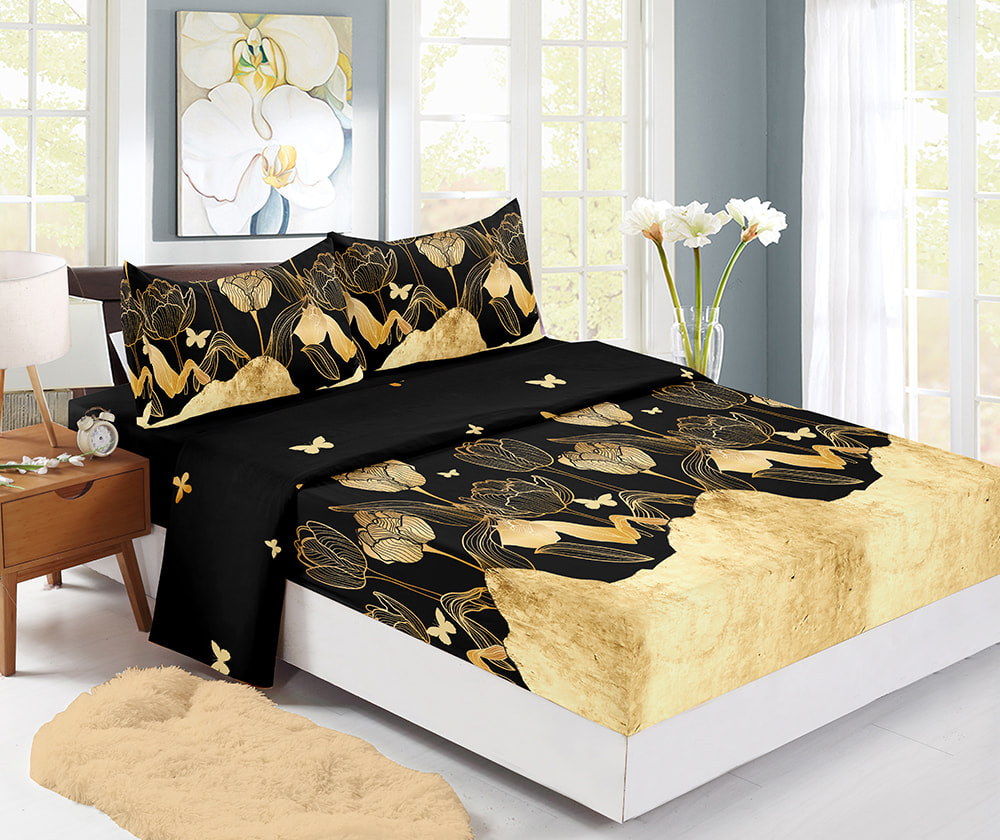
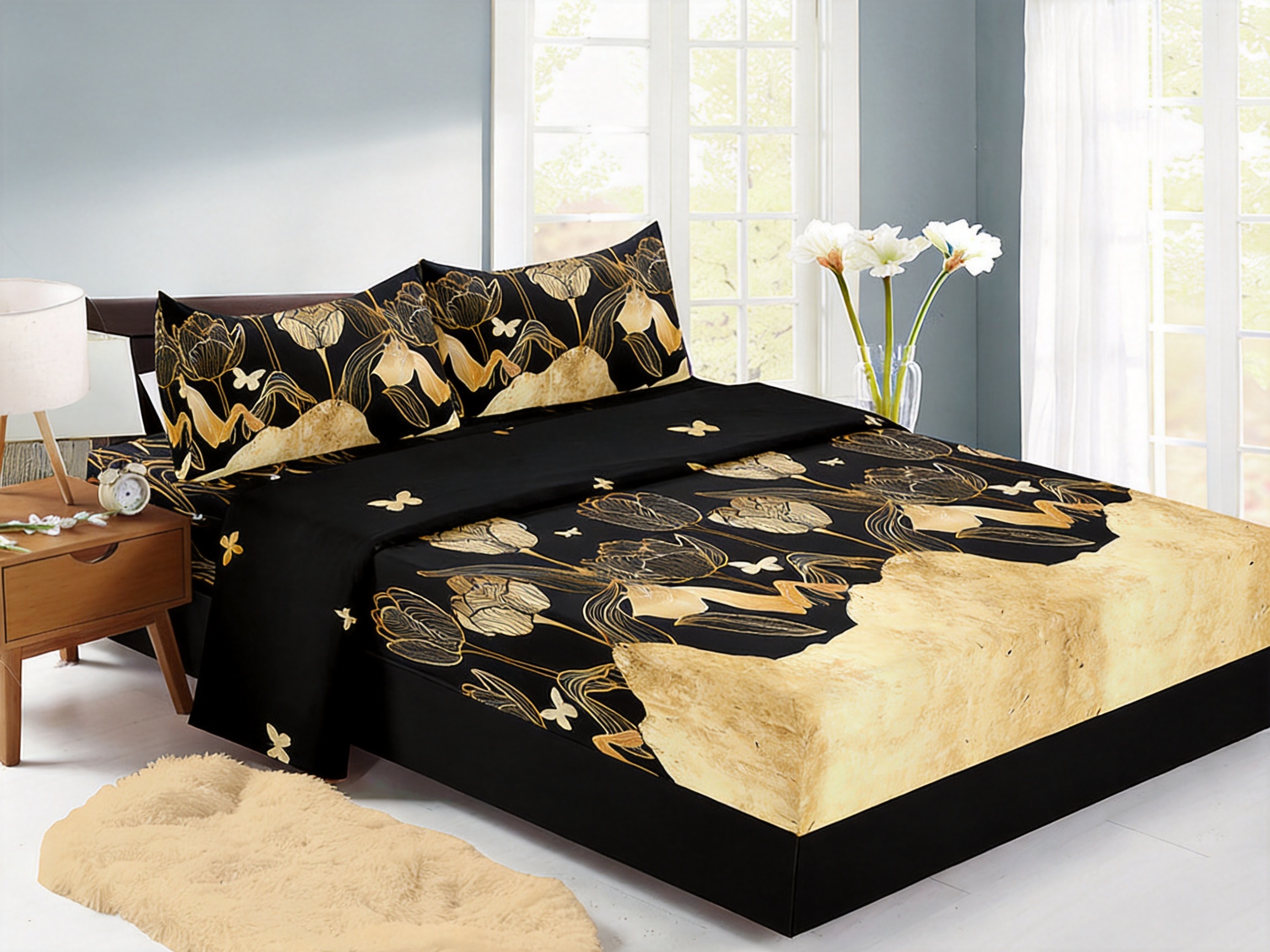
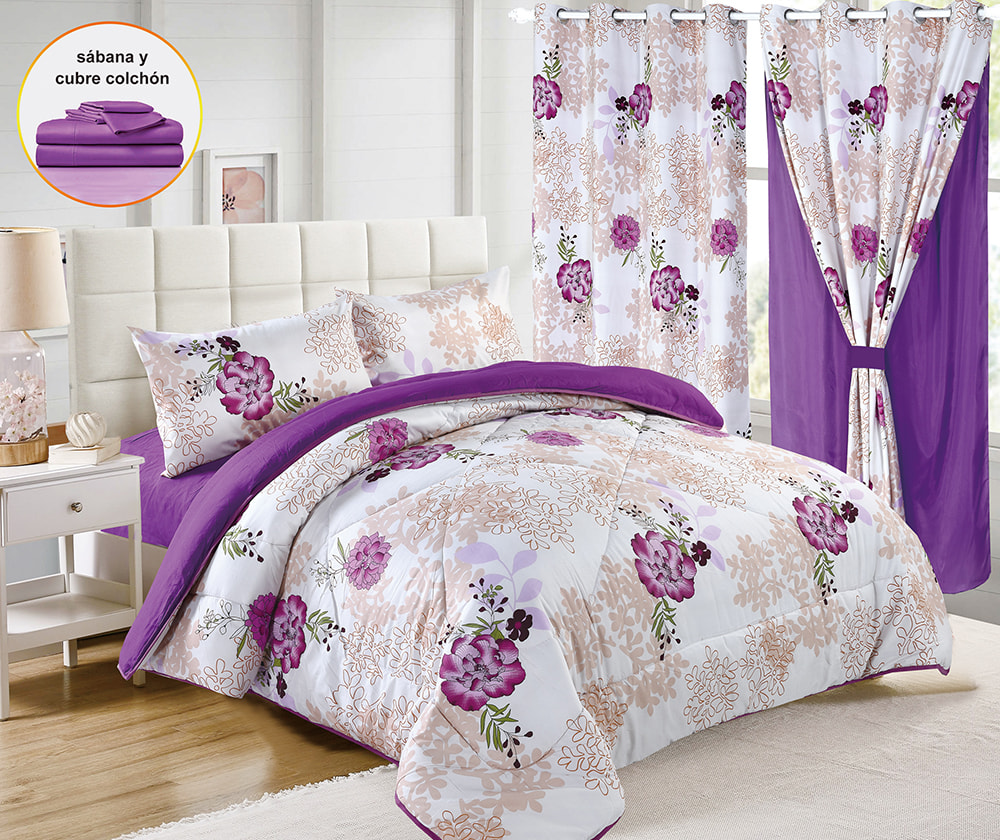
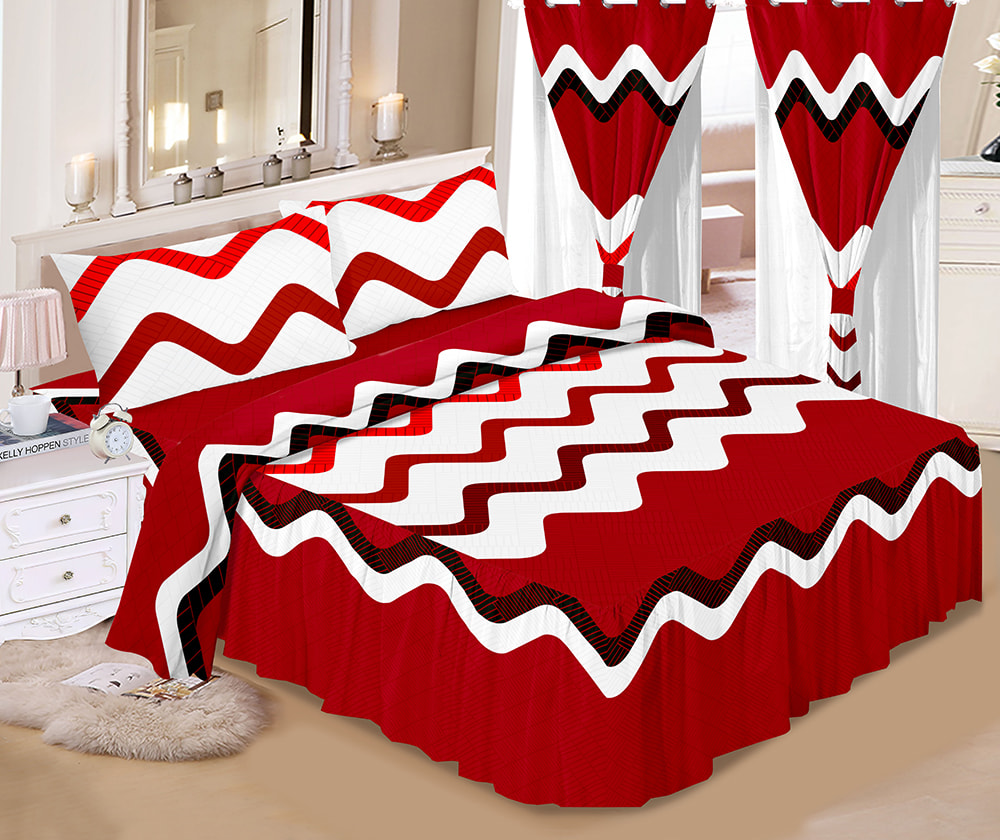
Printed Colored Fitted Sheet Set (4 Pieces)
Fitted Sheet Construction and Mattress Security
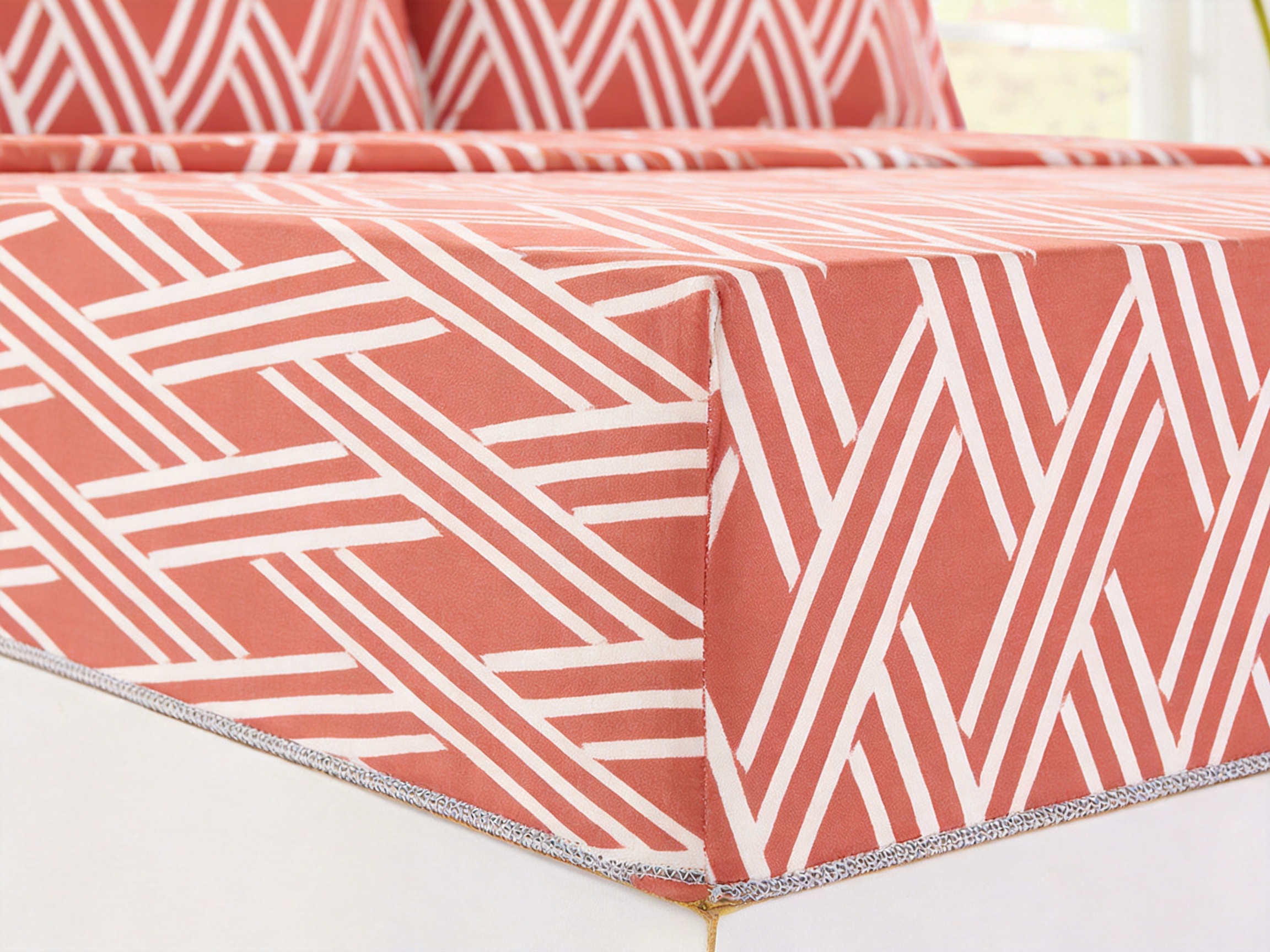
The fitted sheet design is central to the product’s competitive value. A flat sheet can shift during the night, especially when the sleeper moves frequently or when the mattress surface is smooth. A fitted sheet is shaped to cover the mattress and extend around its edges, creating a more stable arrangement. This helps the bed remain neat and reduces the need for repeated adjustment.
The listed dimensions include mattress depth allowances, expressed through measurements such as 100*190+19CM, 160*200+25CM, and 200*200+25CM. These additional measurements indicate the intended side or depth coverage of the fitted sheet. Correct depth selection is essential because an undersized sheet may pull away from the mattress corners, while an excessively loose sheet may create unnecessary folds.
For buyers, the availability of several size options makes the product easier to position across different market segments. Twin size can serve single beds, children’s rooms, compact apartments, dormitories, and guest rooms. Full size can suit larger single beds or smaller double beds. Queen size is commonly selected for household master bedrooms, while King size provides coverage for wider mattresses.
The secure-wrap concept also improves bed presentation. Retail customers often judge bedding quality by how smoothly it lies on the mattress and how well it retains its shape after use. A fitted construction can make daily bed-making faster and help maintain a cleaner visual appearance. For hospitality and property-management buyers, this can reduce the time required to prepare rooms.
A fitted sheet must be matched to the correct mattress dimensions to deliver its best performance. Mattress thickness, corner structure, and local sizing conventions can vary by market. Buyers should confirm the dimensions before placing a bulk order and may request production samples for fitting evaluation. This is particularly important when the product will be sold under a private label or distributed in a market with nonstandard mattress depths.
Coordinated Components and Set Value
The product is marketed as a four-piece fitted sheet set. The supplied specification lists the components according to size. Twin size is listed with one fitted sheet and one pillowcase. Full size is listed with one bed sheet, one fitted sheet, and two pillowcases. Queen size is listed with one bed sheet, one fitted sheet, and two pillowcases. King size is listed with one bed sheet, one fitted sheet, and two pillowcases.
Because the specification uses different component descriptions for Twin and the larger sizes, buyers should confirm the exact final pack composition, labeling, and packaging artwork before production. This type of confirmation is a normal part of professional bedding procurement and helps ensure that product pages, cartons, care labels, and customer expectations all match the actual shipment.
For the larger sizes, the listed bed sheet dimensions are 200*225 centimeters for Full, 225*250 centimeters for Queen, and 250*270 centimeters for King. These dimensions provide a generous surface for covering the bed and creating a coordinated appearance. The matching pillowcase dimensions are 50*70 centimeters for Full and Queen, and 50*100 centimeters for King.
A complete coordinated set can be more attractive to consumers than individual components sold separately. It reduces the effort required to match colors and patterns and gives the bedroom a unified appearance. It can also improve shelf presentation and online merchandising because the product can be shown as a complete solution rather than a single piece of bedding.
For retailers, set packaging may create opportunities for stronger average order value. A customer who initially intends to buy only a fitted sheet may choose a coordinated set when the additional pillowcases and matching sheet are presented as a convenient package. For wholesalers, a set format can simplify inventory planning, carton calculation, and product classification.
The coordinated format also supports gifting and seasonal promotions. Colorful bedding can be included in dormitory preparation packages, home refresh campaigns, new-home promotions, and holiday retail assortments. A set is easier to present as a meaningful household product than a single plain sheet.
Printed Color Performance and Bedroom Styling
Color is one of the most visible characteristics of this bedding collection. The printed design is intended to remain bright and attractive during continued use. Rich colors can create a focal point in an otherwise neutral bedroom, while softer combinations can contribute to a warmer and more relaxed atmosphere.
The product can be positioned for several interior styles. In a youthful bedroom, colorful patterns can complement bright accessories and playful furniture. In a modern apartment, printed bedding can add personality to simple white, gray, beige, or wood-tone interiors. In a guest room, the set can provide a welcoming appearance without requiring expensive decorative changes.
Printed bedding also gives buyers more assortment flexibility. A supplier may offer multiple colorways under one basic construction, allowing retailers to develop a collection with a unified quality standard. Different patterns can target different age groups, regions, or seasonal promotions while using the same core manufacturing platform.
For commercial buyers, color consistency is an important consideration. When multiple sets are sold under one collection, customers expect the printed appearance to remain consistent across production batches. A professional manufacturing process should therefore include attention to fabric inspection, printing quality, shade control, cutting accuracy, and finished-product review.
The product description emphasizes that the fabric can maintain bright colors over long-term use. Actual performance depends on printing technology, dye or pigment selection, curing conditions, washing behavior, and care instructions. Buyers can protect the intended appearance by confirming colorfastness requirements, requesting laboratory or internal test reports when necessary, and approving preproduction samples before bulk manufacturing.
Manufacturing Strengths and Production Capability
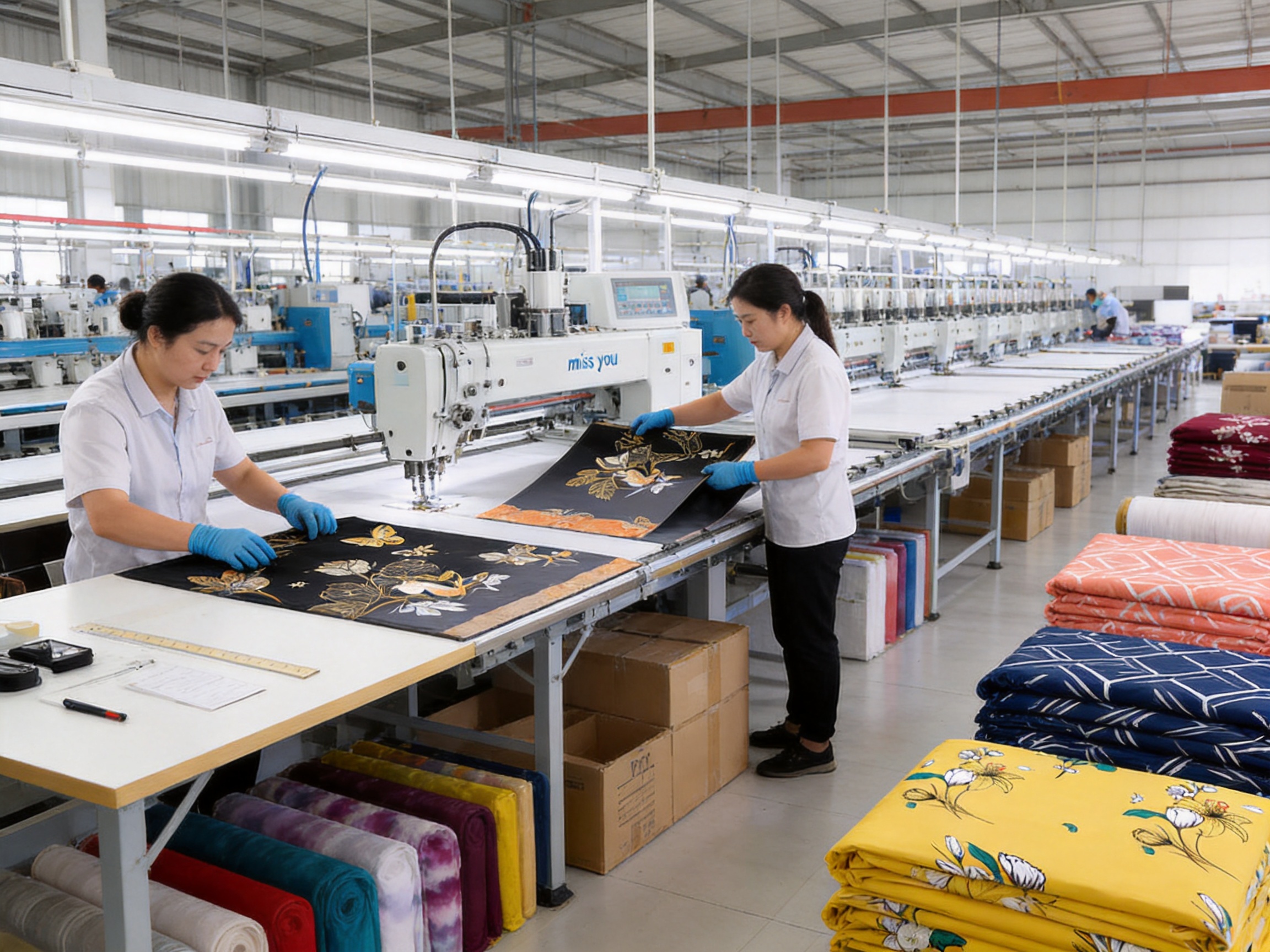
The supplier is an industrial and trade enterprise integrating research and development, production, sales, and export. This integrated structure is valuable because product development and production are managed within one broader organization rather than being separated entirely between unrelated parties. It can support faster communication from sample development to manufacturing, packaging, and export coordination.
The company was founded in 2015 and specializes in home textile products, including bed sheets, quilt covers, pillowcases, cushions, quilts, waterproof mattress protectors, curtains, and bedding sets. This category experience provides a useful manufacturing foundation for the Printed Colored Fitted Sheet Set. Knowledge gained from related bedding products can support fabric selection, sewing construction, size grading, quality inspection, and packaging development.
The factory covers more than 10,000 square meters and is equipped with intelligent production equipment. A substantial production area can support organized material handling, cutting, sewing, inspection, packing, and finished-goods storage. Intelligent equipment may also improve process consistency, reduce manual variation, and support more efficient production planning when orders involve several colors and sizes.
The company has more than 100 employees, a standardized management system, and an experienced foreign trade service team. These resources are important for international buyers because successful export supply involves more than sewing the product. It also requires document preparation, order confirmation, sample management, packaging coordination, production scheduling, inspection communication, and shipment support.
A standardized management system helps create repeatable procedures. In bedding manufacturing, repeatability matters because the product contains many dimensions and construction details. The fitted sheet must be cut and sewn accurately, the corner depth must remain consistent, pillowcases must be correctly sized, and the final set must contain the agreed components. Standard operating procedures can help reduce variation between production batches.
The company’s research and development capability can support design adaptation. Buyers may need changes to print layouts, color combinations, labels, packaging, fabric weight, component dimensions, or set configurations. The supplier states that customized home textile services are available based on customer samples. This is particularly useful for importers and private-label businesses that already have a market-tested design or want to develop an exclusive collection.
Export experience also provides advantages in communication and order execution. International customers often require specific carton marks, barcode labels, care instructions, language requirements, packing ratios, and documentation. An experienced foreign trade team can help coordinate these details and reduce misunderstandings between the buyer’s purchasing department, design team, logistics provider, and factory.
Production Process from Fabric to Finished Set
A reliable bedding product begins with appropriate fabric preparation. The manufacturing process can include incoming material inspection, width and weight verification, surface evaluation, color review, and confirmation that the fabric meets the agreed technical requirements. Checking the material before cutting helps prevent large quantities of defective fabric from entering later production stages.
For a printed product, the design file and color specifications must be reviewed before printing. The pattern scale should be assessed against the finished product size so that the printed image appears balanced on the fitted sheet, bed sheet, and pillowcases. Placement is also important because seams and corners can affect how the pattern is viewed after sewing.
Printing control may involve checking color density, pattern alignment, clarity, repeat accuracy, and surface uniformity. If a design contains multiple colors, the registration between colors must be controlled to prevent blurred edges or obvious misalignment. Production teams may compare bulk fabric against an approved standard or sample panel.
After printing and any required finishing, the fabric is prepared for cutting. Cutting accuracy is essential for bedding because small errors can influence the final dimensions, corner fit, and component matching. Large-format cutting equipment or carefully controlled manual cutting can be used according to the order and production method.
The fitted sheet requires particular attention during cutting and sewing. The corners must be formed correctly, the side sections must provide the intended mattress depth, and the elastic or securing construction must be applied consistently where included in the final design. Proper alignment helps the sheet sit smoothly on the mattress instead of twisting or pulling unevenly.
Sewing operations are organized according to the product’s construction. Workers or automated equipment may join panels, finish seams, form corners, attach elastic elements, and complete hems. The sewing thread, stitch density, seam allowance, and edge finishing should be appropriate for repeated use and laundering.
Pillowcases and bed sheets are produced according to the specified dimensions and design requirements. The components should be checked for correct size, clean seams, and matching print appearance. For a coordinated set, the relationship between the fitted sheet, bed sheet, and pillowcases is important because mismatched color or pattern can reduce the perceived value of the finished product.
After sewing, the finished goods can pass through inspection, thread trimming, folding, labeling, and packing. Quality personnel may examine dimensions, stains, holes, loose threads, sewing defects, print variation, component quantity, and general appearance. The set is then folded in a way that supports efficient packing and attractive retail presentation.
Packaging requirements should be confirmed during order development. Buyers may require individual polybags, reusable fabric bags, printed boxes, belly bands, inserts, barcode stickers, or export cartons. Packaging can be adapted for retail shelves, e-commerce fulfillment, wholesale distribution, or hospitality supply.
Finished-carton verification is also important. Carton quantity, size, gross weight, net weight, shipping marks, and product assortment should be checked before shipment. These details influence warehouse handling, freight planning, and customs documentation.
Quality Control Considerations
Quality control for this product should address both textile performance and finished-product accuracy. The first level is raw material control. Fabric composition, width, weight, color, surface quality, and print appearance should be compared with the approved specifications.
The second level is in-process inspection. Cutting and sewing should be monitored so that dimensional errors are identified before the complete set is assembled. Checking work during production is more efficient than discovering a problem after all components have been packed.
The third level is finished-product inspection. The final set should be reviewed for correct component quantity, proper folding, matching colors, accurate labels, and visible workmanship. The fitted sheet should be checked for shape and dimensions, while pillowcases and bed sheets should be measured according to the agreed tolerances.
Potential tests may include colorfastness to washing, rubbing, and perspiration; dimensional stability after washing; seam strength; fabric pilling resistance; and general wash durability. The exact testing plan depends on the buyer’s market, legal requirements, retailer standards, and intended application.
Buyers can establish an inspection plan before bulk production begins. This may include preproduction sample approval, first-piece inspection, mid-production checks, final random inspection, and carton inspection. Written acceptance standards are helpful because they provide an objective basis for resolving questions about color, size, workmanship, and packing.
The company’s standardized management system and experienced production team can support these procedures. However, buyers should still confirm the specific inspection methods and tolerances for each order. Clear communication improves the probability that the delivered product will meet the commercial requirements of the destination market.
Competitive Advantages Compared with Basic Bedding Products
The first competitive advantage is the combination of printed design and practical performance. Many basic sheets focus on low-cost construction and limited solid colors. This product adds a stronger visual identity while retaining features such as softness, easy care, wrinkle resistance, and a secure fitted format.
The second advantage is the use of ultra-fine microfiber polyester. Consumers often look for bedding that feels soft immediately and remains manageable after laundering. Microfiber can provide this combination without the higher price or maintenance requirements associated with some premium natural fibers. For value-oriented retailers, this can create an attractive balance between perceived quality and accessible pricing.
The third advantage is coordinated set merchandising. A set containing matching components is easier to present, promote, and purchase than unrelated individual items. Retailers can create complete bed displays, while consumers can refresh the bedroom with one coordinated purchase.
The fourth advantage is size coverage. Twin, Full, Queen, and King options allow a buyer to address multiple household requirements. A broader size range can help retailers serve more consumers under one product family and simplify seasonal assortment planning.
The fifth advantage is customization potential. The supplier can provide home textile services based on customer samples. This may allow buyers to develop exclusive colors, patterns, labels, packaging, or dimensional combinations. Customization helps private-label customers differentiate their offerings instead of competing only on price.
The sixth advantage is manufacturing scale and category experience. A factory larger than 10,000 square meters, more than 100 employees, intelligent production equipment, and a specialized foreign trade team provide a stronger foundation than a small workshop with limited process control. Scale does not replace quality management, but it can improve production organization, capacity planning, and order coordination.
The seventh advantage is product category breadth. Since the supplier also produces quilt covers, pillowcases, cushions, quilts, waterproof mattress protectors, curtains, and other bedding products, buyers may be able to develop a broader home textile range through one manufacturing relationship. This can reduce supplier fragmentation and support coordinated product development.
Wholesale, Retail, and Private-Label Applications
The minimum order quantity is 50 sets per color and size. This quantity is suitable for wholesalers and retailers that need a commercial volume but may not want to begin with a very large commitment. Buyers can select colors and sizes according to market research, store capacity, online demand, and seasonal sales expectations.
For brick-and-mortar retailers, the product can be displayed folded in packaging or presented on a made bed. A visual display can show the printed design and demonstrate how the fitted sheet and coordinated components work together. Color grouping can make the collection easier to shop and encourage customers to compare patterns.
For e-commerce businesses, the product offers several merchandising themes. Listings can emphasize softness, colorful design, secure fit, easy care, wrinkle resistance, and the availability of multiple sizes. Product photography should clearly show the overall set, fitted sheet construction, fabric surface, and packaging. Accurate dimensional information is essential for reducing returns.
Private-label buyers can use the product as a foundation for an exclusive bedding program. The supplier’s ability to develop products according to customer samples may support branded collections, seasonal prints, children’s ranges, apartment-living assortments, and hospitality-specific packaging.
Hospitality buyers may consider the product for guest rooms, serviced apartments, dormitories, and rental properties where easy-care bedding is valuable. Before use in commercial environments, buyers should confirm laundering requirements, replacement cycles, color standards, and performance testing appropriate to the application.
Home textile distributors may also combine this fitted sheet set with related products from the same supplier. Matching curtains, pillowcases, quilts, waterproof mattress protectors, or duvet covers could create broader bedroom packages. A coordinated supplier portfolio can help distributors build themed collections for different customer groups.
Size and Specification Table
| Size | Listed Components | Dimensions | Recommended Commercial Focus |
|---|---|---|---|
| Twin | Fitted sheet and pillowcase | Fitted sheet: 100*190+19 cm; pillowcase: 50*70 cm | Single beds, children’s rooms, dormitories, compact rooms |
| Full | Bed sheet, fitted sheet, and two pillowcases | Bed sheet: 200*225 cm; fitted sheet: 140*190+19 cm; pillowcases: 50*70 cm | Small double beds, guest rooms, apartments |
| Queen | Bed sheet, fitted sheet, and two pillowcases | Bed sheet: 225*250 cm; fitted sheet: 160*200+25 cm; pillowcases: 50*70 cm | Master bedrooms and mainstream household retail |
| King | Bed sheet, fitted sheet, and two pillowcases | Bed sheet: 250*270 cm; fitted sheet: 200*200+25 cm; pillowcases: 50*100 cm | Large bedrooms, premium household ranges, hospitality use |
| Material | 100% polyester | Ultra-fine microfiber polyester fabric | Softness, easy care, color presentation, and regular-use durability |
| Minimum order | 50 sets per color and size | Order quantity applies by color and size | Wholesale, retail testing, and private-label purchasing |
The table summarizes the dimensions supplied for the product. Since mattress conventions differ between countries and manufacturers, buyers should compare the listed measurements with the target market’s standard mattress sizes. A preproduction sample or fitting confirmation is recommended before a large commercial launch.
Care, Handling, and Consumer Communication
Clear care information helps consumers maintain the appearance and performance of the bedding. The final care label should be confirmed according to the actual production fabric, finishing process, printing method, and test results. It should communicate washing, drying, ironing, and bleaching guidance in language appropriate for the destination market.
Consumers should generally avoid using care methods that are harsher than necessary. Excessive heat, unsuitable bleach, or aggressive chemical treatment can affect printed colors, fabric hand feel, and dimensional stability. Following the approved care instructions can help the product retain its soft surface and bright appearance.
Correct storage is also useful for retailers and distributors. Products should be kept in a clean, dry environment away from excessive moisture, direct sunlight, dust, and sharp objects. Cartons should not be compressed beyond their intended stacking limits, as excessive pressure can damage packaging and create unnecessary creasing.
Product descriptions should be accurate and complete. Retail listings should identify the available size, fitted sheet dimensions, pillowcase quantity, bed sheet inclusion where applicable, material, color or pattern, and care instructions. Because the supplied specifications describe Twin differently from the larger sizes, the final commercial listing should be reviewed carefully to avoid confusion.
Accurate consumer communication is not only a compliance issue; it also strengthens customer satisfaction. When buyers understand the product dimensions and included components before purchase, they are more likely to select the correct option and less likely to return the product because of an avoidable expectation mismatch.
Customization and Product Development Opportunities
Customization is an important advantage for buyers who want to create a distinct collection. A customer may provide a reference sample, artwork, color card, packaging concept, or target-market requirement. The factory can then evaluate the proposal and determine the appropriate fabric, printing method, construction, and production plan.
Potential customization areas include print pattern, color palette, fabric weight, fitted sheet depth, pillowcase dimensions, component quantity, labels, packaging, carton marks, and assortment structure. Not every request will be suitable for every order quantity, so buyers should discuss feasibility and sampling requirements at the beginning of development.
Custom patterns can help retailers build seasonal collections. Floral, geometric, abstract, children’s, nature-inspired, and culturally specific designs can be developed for different customer groups. A buyer may also choose a smaller number of core colors for permanent stock and introduce limited-edition designs for seasonal campaigns.
Packaging customization can reinforce the customer’s brand identity. Printed bands, boxes, inserts, and labels may communicate material information, size selection, care instructions, and lifestyle positioning. Good packaging should protect the product while making the set easy to identify in a warehouse or retail environment.
Sampling is essential before bulk production. A sample allows the buyer to evaluate the actual fabric softness, print appearance, color balance, fitted sheet dimensions, corner fit, sewing quality, component quantity, and packaging. Sample approval should be documented so that production teams have a clear reference.
For repeat programs, a technical file can record the approved fabric, color standard, measurements, sewing details, labels, packing method, and inspection requirements. This improves continuity when the buyer places additional orders or expands the product family into related bedding categories.
Why an Integrated Home Textile Supplier Matters
Working with an integrated manufacturer can simplify procurement. Instead of coordinating separate companies for fabric development, sewing, packaging, export handling, and related bedding products, the buyer can communicate with one experienced home textile organization. This can reduce the number of handoffs and make it easier to manage changes.
An integrated supplier can also support broader product planning. A retailer interested in the Printed Colored Fitted Sheet Set may later require matching quilt covers, curtains, pillowcases, cushions, or waterproof mattress protectors. A supplier with experience in these categories can help maintain a consistent color direction and product positioning across the collection.
Research and development resources are useful when market needs change. Consumers may request deeper fitted sheets, different pillowcase sizes, new print scales, softer hand feel, lower packaging volume, or alternative product combinations. A supplier that combines development and manufacturing can assess these requirements more directly.
Production and export coordination are especially important for overseas customers. Orders may involve multiple colors, multiple sizes, different labels, and separate delivery instructions. An experienced foreign trade service team can help coordinate these details with the factory and prepare the required commercial documentation.
The supplier’s history since 2015, factory infrastructure, employee base, category specialization, and export focus provide a foundation for international cooperation. Buyers should still evaluate each project through samples, specifications, quality requirements, and agreed commercial terms, but the available organizational structure is suitable for professional home textile sourcing.
Environmental and Operational Considerations
Polyester microfiber is a synthetic textile that offers practical durability and efficient care. Its ability to dry relatively quickly and resist wrinkles may help reduce ironing and shorten handling time. Longer product use can also reduce the frequency with which consumers need to replace bedding, although actual environmental performance depends on product lifespan, laundering habits, packaging, and end-of-life treatment.
Buyers increasingly consider packaging reduction, responsible material use, and efficient logistics. The product’s packaging can be reviewed to balance protection with material efficiency. Compact folding and suitable carton planning may improve shipping utilization, but the finished product should not be compressed in a way that causes permanent damage.
Operational efficiency is also influenced by accurate production planning. Grouping orders by color, size, and print design can reduce unnecessary changeovers. Clear forecasts allow the factory to organize fabric purchasing, cutting schedules, sewing lines, inspection, and packing more effectively.
Buyers who have specific environmental requirements should communicate them in measurable terms. These may include recycled polyester content, restricted substances compliance, packaging material limits, certification expectations, wastewater controls, or social compliance standards. The exact requirements should be confirmed before sampling and included in the purchase agreement where applicable.
Ordering Process for International Buyers
A professional ordering process usually begins with a product inquiry that identifies the desired size, color, quantity, target market, packaging, and delivery requirements. The buyer should provide artwork or reference samples when customization is required.
The next step is specification confirmation. This should include material composition, fabric characteristics, print design, component list, finished dimensions, fitted sheet depth, pillowcase measurements, sewing details, labels, care instructions, packaging, minimum order quantity, and inspection standards.
Sampling follows specification confirmation. The buyer should examine the physical sample and provide written comments. If changes are needed, the revised sample should be approved before bulk production. Digital images can support communication, but they cannot fully replace physical evaluation of hand feel, color, construction, and fit.
After sample approval, the buyer and supplier can confirm the purchase order, production schedule, packaging artwork, payment terms, shipping arrangements, and inspection plan. The factory then organizes material preparation and production according to the approved documents.
Before shipment, the buyer may arrange final inspection or request production photographs, measurement records, packing details, and carton information. Once the shipment is approved, the export team can coordinate the required documents and logistics with the buyer’s nominated freight partner or the agreed shipping provider.
This structured process is valuable because bedding products involve many details that may not be visible in a short product title. A clear technical and commercial record helps ensure that the finished order matches the buyer’s expectations.
Q&A
What material is used for the Printed Colored Fitted Sheet Set?
The set is made from 100% polyester, described as ultra-fine microfiber polyester fabric. The material is intended to provide a soft, skin-friendly surface with practical wear resistance, wrinkle resistance, and easy-care performance.
What makes the product different from a basic flat sheet?
The fitted sheet is designed to wrap around the mattress and help prevent slipping. This can keep the bed surface smoother and reduce the need for frequent adjustment during use. The set also adds printed color and coordinated components rather than offering only a plain, single-purpose sheet.
Which sizes are available?
The listed sizes are Twin, Full, Queen, and King. Each size has its own fitted sheet measurements and component configuration. Buyers should review the dimension table and compare it with the mattress standards used in their target market.
How many pieces are included?
The product is titled a four-piece set. The supplied specifications list Twin with one fitted sheet and one pillowcase, while Full, Queen, and King are listed with one bed sheet, one fitted sheet, and two pillowcases. Buyers should confirm the final Twin configuration and all packaging details before placing an order.
What is the minimum order quantity?
The minimum order quantity is 50 sets per color and size. This allows buyers to organize their purchase according to the selected pattern, color, and dimensional option.
Can the design be customized?
Customized home textile services are available based on customer samples. Buyers may discuss custom prints, colorways, dimensions, labels, packaging, and set configurations with the supplier. Sampling and feasibility confirmation are recommended before bulk production.
Is the set suitable for everyday household use?
Yes. The product is designed for regular use and emphasizes softness, easy cleaning, wrinkle resistance, wear resistance, and color retention. Consumers should follow the approved care instructions to preserve the fabric and printed appearance.
Can the product be used for hotels or rental properties?
It may be suitable for guest rooms, serviced apartments, dormitories, and rental properties, especially where easy-care bedding is useful. Commercial buyers should confirm washing frequency, durability requirements, color standards, replacement schedules, and applicable testing before ordering.
Why is mattress depth important when selecting the fitted sheet?
Mattress depth determines whether the fitted sheet can fully cover the sides and remain secure at the corners. An incorrect depth may cause the sheet to pull away, fit loosely, or create folds. Buyers should compare the listed depth allowance with the mattresses used by their customers.
What manufacturing capabilities does the supplier provide?
The supplier operates an industrial and trade enterprise with research and development, production, sales, and export functions. Its factory covers more than 10,000 square meters, uses intelligent production equipment, employs more than 100 people, and has an experienced foreign trade service team.
What other products can be sourced from the same supplier?
The supplier produces bed sheets, quilt covers, pillowcases, cushions, quilts, waterproof mattress protectors, curtains, and other bedding sets. This may allow buyers to develop a broader coordinated home textile assortment.
What should buyers confirm before mass production?
Buyers should confirm the material, print, color standard, dimensions, mattress depth, set contents, labels, care instructions, packaging, carton information, quality tolerances, inspection method, and delivery requirements. A physical sample should be approved before bulk production.
Conclusion
The Printed Colored Fitted Sheet Set combines colorful design with practical bedding performance. Its ultra-fine microfiber polyester fabric is intended to provide softness, a comfortable hand feel, easy maintenance, wrinkle resistance, and durable everyday use. The fitted sheet construction helps keep the mattress covered and the bed surface neat, while the coordinated components create a stronger visual and commercial proposition than an isolated sheet.
The product’s availability in Twin, Full, Queen, and King sizes supports broad market coverage. A minimum order quantity of 50 sets per color and size provides a workable starting point for wholesalers, retailers, e-commerce sellers, hospitality purchasers, and private-label customers. Buyers can also explore custom designs, labels, packaging, and product configurations based on their market requirements.
The supplier’s integrated structure, factory area of more than 10,000 square meters, intelligent production equipment, workforce of more than 100 employees, standardized management system, product development experience, and export service capabilities provide a solid foundation for international sourcing. Its broader home textile range can further support coordinated bedroom and household collections.
For the best commercial result, buyers should confirm the component configuration, especially for Twin size, and verify all measurements against local mattress standards. Sample approval, written specifications, quality inspection, and packaging confirmation should form part of the procurement process. With these controls in place, the Printed Colored Fitted Sheet Set can offer a compelling combination of comfort, color, convenience, and scalable manufacturing support.
References
1. Product specification information supplied for the Printed Colored Fitted Sheet Set, including material, dimensions, available sizes, component details, and minimum order quantity.
2. Company information supplied for the home textile manufacturer, including production history, factory area, employee base, product categories, customization services, and export capabilities.
3. General textile manufacturing principles concerning microfiber construction, bedding dimensional control, fitted sheet sewing, fabric inspection, printing quality, and finished-product inspection.
4. General home textile merchandising practices concerning coordinated bedding sets, retail assortment planning, private-label development, packaging, and international purchasing.
Product: Printed Colored Fitted Sheet Set (4 Pieces)



Contact Us for More Details
Don't hesitate to contact when you need us!
Contact Information
Add:
Building 1, East Area, Wanyang Zhongchuang City, Economic Development Zone, Dongyang City, Zhejiang Province, China
Phone:
Tel:
E-mail:
Quick Links
Product Category
QR Code


+86-13616899966
+86-579-86610966
