 English
 русский
 Español
 عربى


Printed Six-Piece Bedspread Set with Double-Layer Curtains: Coordinated Comfort, Practical Design, and Reliable Textile Manufacturing
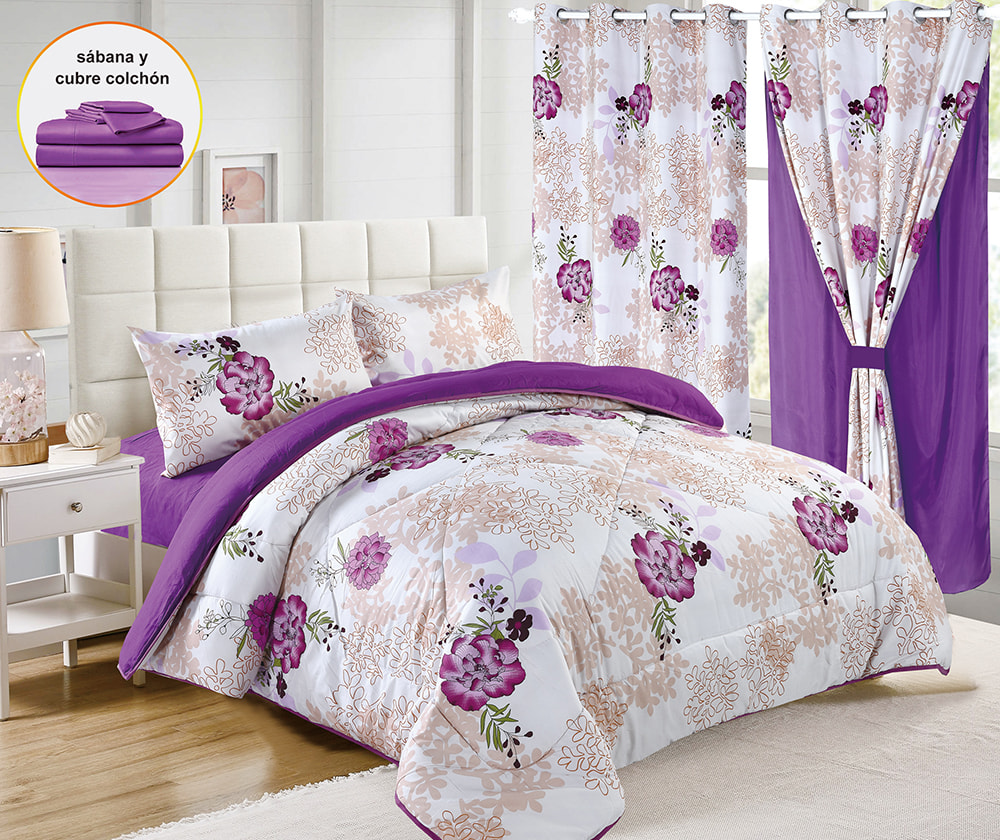
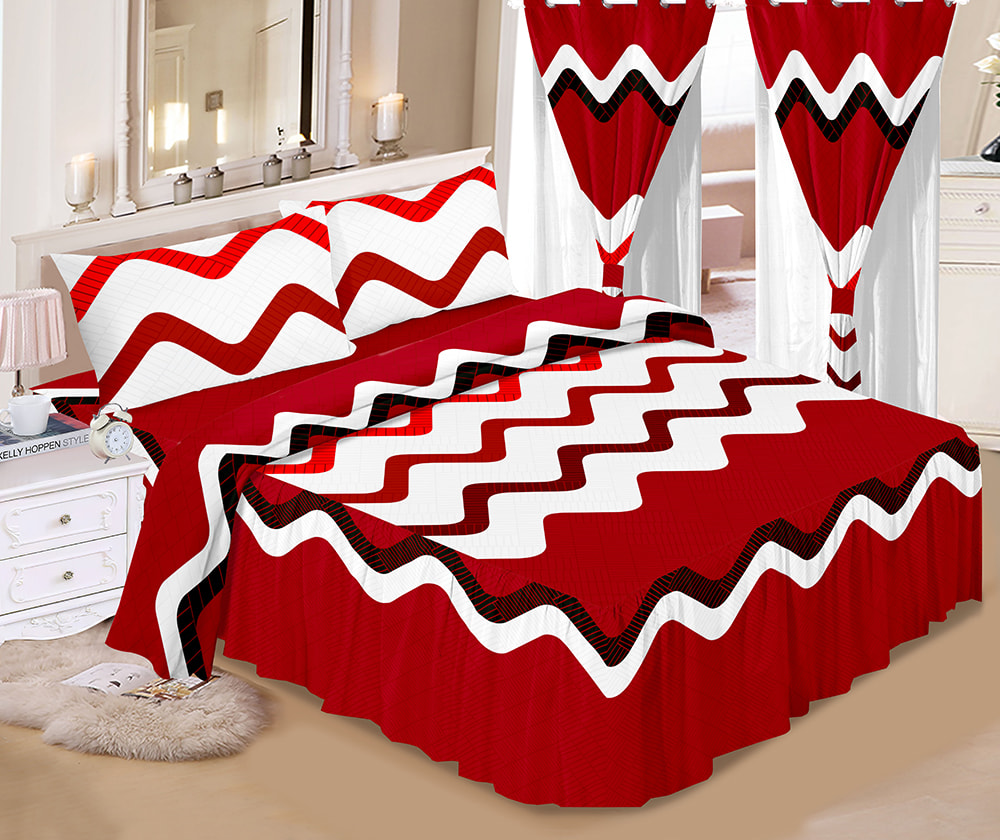
Choosing a complete bedroom textile set is often more complicated than selecting a single bedspread or a pair of curtains. Individual products may have different colors, patterns, dimensions, and fabric textures, making it difficult to create a unified interior. The printed six-piece bedspread set with double-layer curtains addresses this challenge by bringing several essential bedroom textiles together in one coordinated package. It combines a bed sheet, a bed skirt, two pillowcases, and two curtains, offering a practical solution for bedrooms that need both decorative consistency and everyday functionality.
Designed for residential bedrooms, guest rooms, hospitality spaces, furnished apartments, and home textile retailers, this bedding set combines printed decoration with the convenience of a coordinated collection. The set is made from 100% polyester, specifically a microfiber-style polyester fabric intended to provide a soft hand feel, easy care, reliable color presentation, and suitable performance throughout the year. The matching designs on the bedding and curtains create a more complete visual effect than separately purchased items can usually achieve.
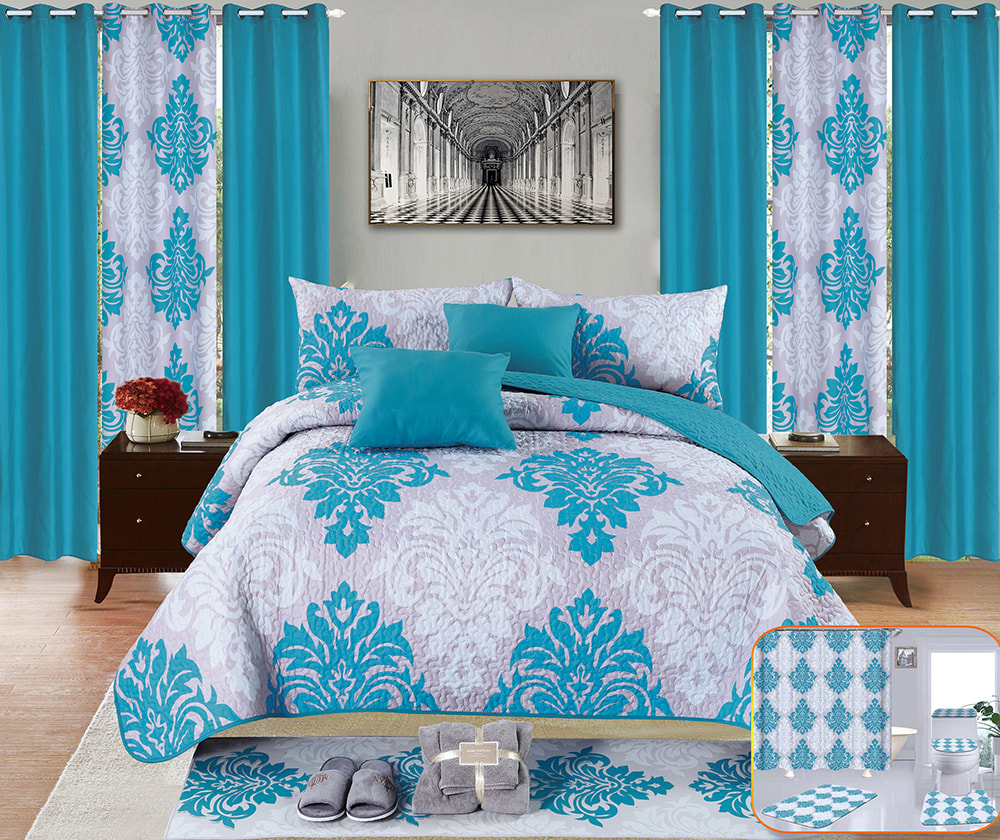
One of the most distinctive elements of the collection is its double-layer curtain design. Curtains are not treated as an unrelated accessory; instead, they are integrated into the overall bedroom composition. The layered construction is intended to combine decorative appeal with light management, helping create a calmer and more comfortable sleeping environment. When the curtains, bed skirt, sheet, and pillowcases share a coordinated print, the room can appear more organized, finished, and intentionally designed.
A Complete Bedroom Solution in Six Coordinated Pieces
The product is structured around six functional components. In the Queen Size version, the package includes one bed sheet measuring 210 by 230 centimeters, one bed skirt measuring 152 by 198 plus 30 plus 40 centimeters, two pillowcases measuring 50 by 70 centimeters, and two curtains measuring 120 by 220 centimeters. In the King Size version, the set includes one bed sheet measuring 235 by 270 centimeters, one bed skirt measuring 198 by 203 plus 30 plus 40 centimeters, two pillowcases measuring 50 by 100 centimeters, and two curtains measuring 120 by 220 centimeters.
The bed sheet provides the main sleeping surface and establishes the primary visual field of the set. The bed skirt adds coverage around the lower portion of the bed, helping conceal the bed base, frame, or stored items beneath the mattress. The pillowcases complete the upper section of the bedding arrangement, while the two curtains extend the pattern into the surrounding room. Together, these pieces can produce a consistent appearance without requiring customers to match several separate product lines.
| Set Component | Queen Size | King Size | Primary Function |
| Bed Sheet | 210 × 230 cm, 1 piece | 235 × 270 cm, 1 piece | Provides the main bedding surface |
| Bed Skirt | 152 × 198 + 30 + 40 cm, 1 piece | 198 × 203 + 30 + 40 cm, 1 piece | Covers the sides and lower area of the bed |
| Pillowcases | 50 × 70 cm, 2 pieces | 50 × 100 cm, 2 pieces | Completes the coordinated pillow arrangement |
| Curtains | 120 × 220 cm, 2 pieces | 120 × 220 cm, 2 pieces | Provides decoration and light management |
The dimensions are provided in centimeters and should be compared with the customer’s mattress, bed frame, pillow, and window measurements before ordering. Because bed construction and window dimensions can vary between markets, careful measurement is important for achieving the intended fit and visual result. For wholesale buyers, offering both Queen Size and King Size versions can make the product line more suitable for different room layouts and consumer preferences.
Why a Coordinated Bedding and Curtain Set Has a Competitive Advantage
Many bedding products compete primarily through fabric softness, color selection, or price. This six-piece collection offers an additional advantage: it is a complete room-coordination product rather than only a bed covering. The inclusion of curtains allows retailers and distributors to position the set as a bedroom transformation solution. Customers do not need to spend time searching for curtains with a similar shade or print, and they can achieve a more cohesive result with a single purchase.
Compared with a basic bedding set containing only a sheet and pillowcases, this product provides greater decorative coverage. The bed skirt conceals the lower bed structure, while the curtains create a visual connection between the bed and the windows. In smaller bedrooms, coordinated textiles can make the design feel more deliberate and less cluttered. In guest rooms, the set can help establish a finished appearance quickly. In hospitality or rental applications, the coordinated format can simplify procurement and replacement.
The product can also be attractive to retailers because it has several selling points within one package. A store can present it as a bedding solution, a room-decoration package, a seasonal refresh product, or a practical gift option. Instead of explaining the benefits of several unrelated products, sales staff can communicate one clear value proposition: the customer receives the central bedding elements and matching window treatments in a single coordinated set.
Another competitive benefit is the balance between decorative appearance and practical usability. Highly ornamental bedding may not be easy to maintain, while extremely basic bedding can lack visual impact. Printed polyester microfiber offers an opportunity to combine a soft, attractive surface with the durability and convenient care associated with synthetic textile construction. The result is suitable for customers who want a visually expressive bedroom without choosing a highly demanding fabric.
The double-layer curtain concept also differentiates the set from products that include decorative curtains only as an afterthought. Layering can support a more flexible approach to light control. Depending on the construction and installation method, one layer may provide a decorative effect while another helps reduce incoming light. This can be useful in bedrooms exposed to strong morning sunlight, street lighting, or changing daytime brightness. It also allows the curtains to contribute to privacy and atmosphere rather than functioning solely as decoration.

Printed 6-Piece Bedspread Set With Double-Layer Curtains
Soft Microfiber-Style Polyester for Year-Round Use
The set is made from 100% polyester, with the product description emphasizing a high-quality microfiber-style textile. Polyester is widely used in home textiles because it offers a practical combination of dimensional stability, color retention, resistance to ordinary wear, and relatively easy maintenance. Microfiber construction can create a fine and smooth surface, giving the fabric a soft touch that is comfortable against the skin and pleasant in daily use.
For bedding, tactile comfort is an important purchase factor. A fabric may have attractive printing, but if it feels rough or stiff, customer satisfaction can be reduced. The soft and delicate hand associated with microfiber-style polyester helps the product compete with ordinary low-grade synthetic bedding. The fabric is intended to feel comfortable without requiring the maintenance routines often associated with more delicate natural fibers.
Breathability is another consideration in bedding design. No single fabric can provide identical comfort in every climate, room, or sleeping preference, but a lightweight and properly finished polyester textile can support comfortable use across different seasons. The set is described as suitable for all-season use, making it appropriate for bedrooms that require flexible bedding rather than separate collections for summer and winter.
Polyester also offers operational advantages for commercial buyers. It can be produced consistently in large quantities, supports repeatable printing, and is suitable for standardized cutting and sewing processes. These characteristics are valuable for importers, wholesalers, hospitality suppliers, and private-label customers who need continuity between purchase batches. Stable production can make it easier to maintain a consistent product range and reduce the risk of major variation in appearance or dimensions.
For consumers, synthetic fiber construction may offer practical benefits such as quicker drying than many heavier fabrics, convenient routine washing, and resistance to common household use. Care instructions should always be confirmed for the final production batch, since washing temperature, detergent selection, drying method, and ironing requirements can affect the long-term appearance of printed textiles. Proper care can help protect the color, surface softness, and shape of the pieces.
Printed Design and Long-Lasting Color Presentation
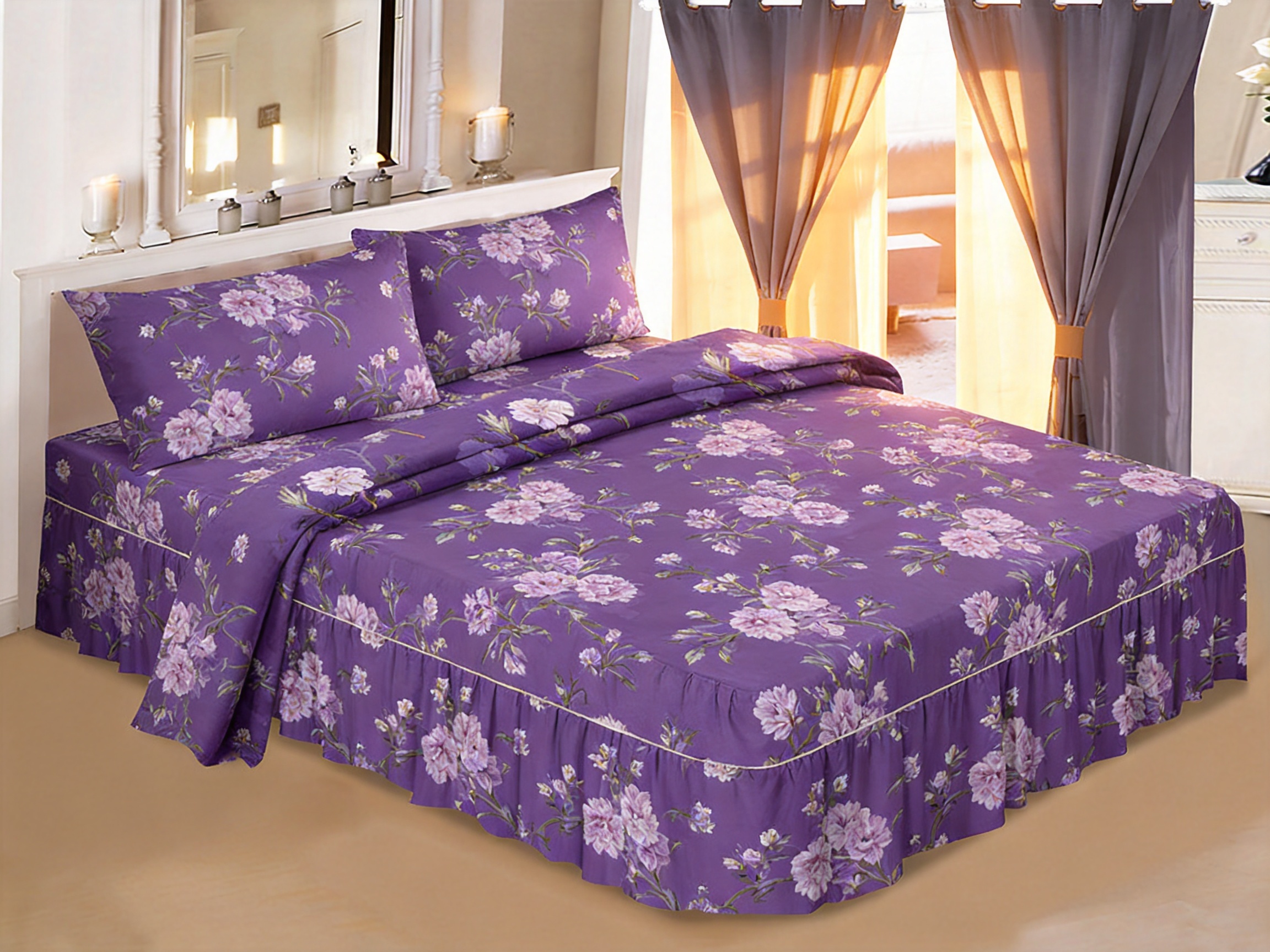
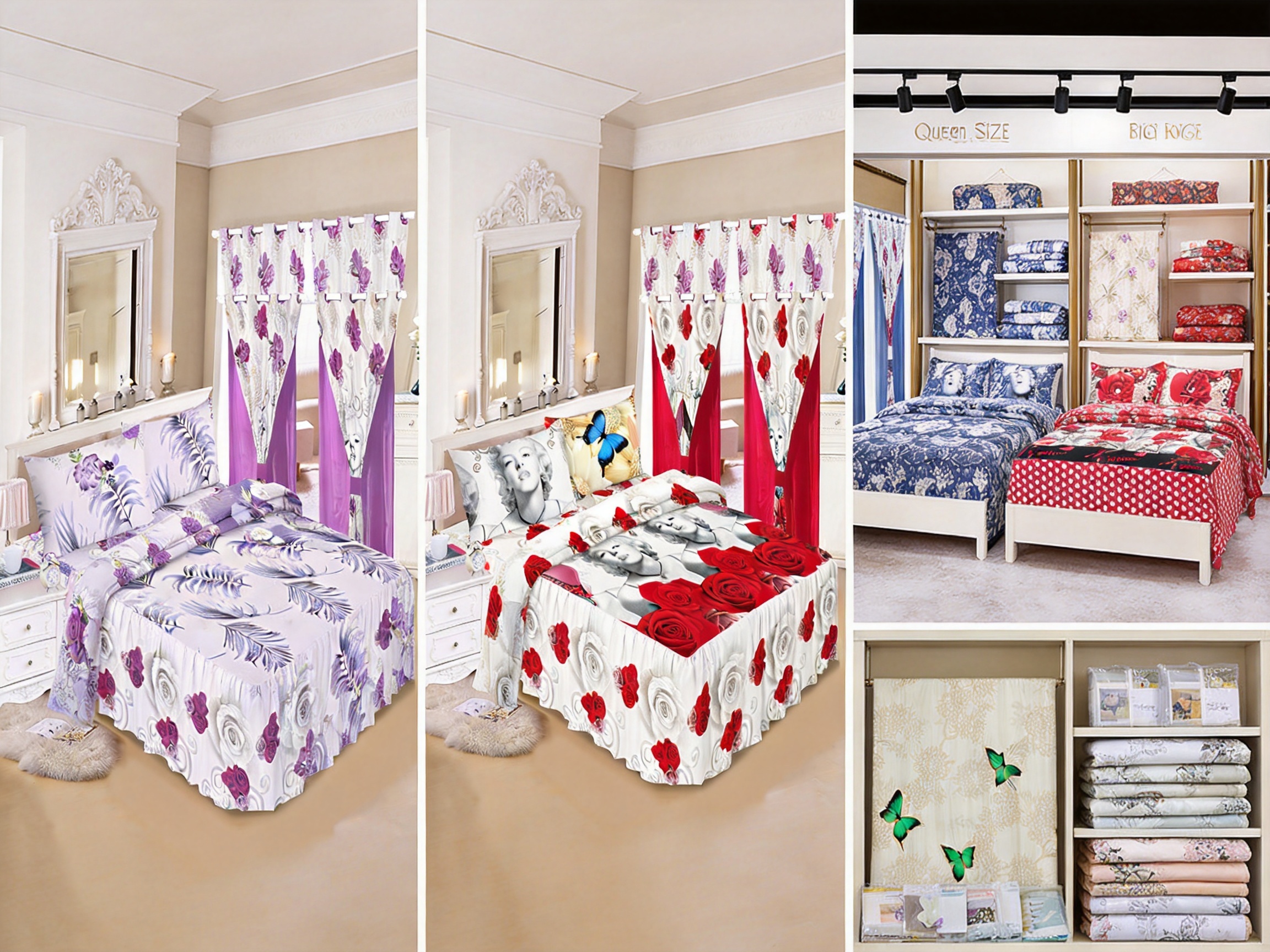
The printed design is central to the product’s visual identity. Instead of relying on a plain fabric, the set uses coordinated patterns across the bed sheet, bed skirt, pillowcases, and curtains. This allows the product to function as part of a complete interior design scheme. Depending on the chosen print, the collection can support modern, classic, romantic, geometric, floral, or fashion-oriented bedroom styles.
Color coordination is particularly important when a product includes both bedding and curtains. If the designs are selected independently, small differences in hue or pattern scale can make a room look inconsistent. Matching or harmonized printing creates continuity. The eye can move naturally from the bed to the windows, making the room feel more unified. For retailers, this visual impact can also strengthen product presentation in catalogs, showrooms, online listings, and display rooms.
The product description emphasizes rich colors that are resistant to fading. Colorfastness is a major concern in printed home textiles because bedding and curtains may be exposed to washing, daylight, body oils, dust, and repeated handling. A well-controlled printing and finishing process can help the colors remain attractive over time. While no textile color remains completely unaffected by unlimited washing or intense sunlight, proper dye or pigment selection, controlled processing, and appropriate finishing can improve practical durability.
Consistent printing also matters when multiple components are sold together. The bed skirt, pillowcases, and curtains should appear to belong to the same collection. Manufacturing controls help reduce differences in shade, pattern placement, and print clarity. For wholesale customers, this type of consistency is especially important because consumers expect all pieces in a package to match when opened.
Pattern scale and placement can influence the perceived size of a room. Larger, more expressive patterns may create a strong focal point, while smaller patterns can produce a quieter appearance. Because this product is offered as a coordinated set, pattern selection should consider the full room rather than only the bed surface. The curtains can extend or soften the visual effect, depending on their placement and the amount of wall and window area visible.
The Functional Role of the Bed Skirt
The bed skirt is more than a decorative border. It can cover the exposed sides of a bed base, hide support structures, and create a cleaner visual line from the mattress to the floor. This is particularly useful when the bed frame has open storage underneath or when the lower structure does not match the bedroom’s decorative style.
Many ordinary bedding sets omit a bed skirt, requiring customers to purchase one separately. A separate purchase can result in differences in color, material, pattern, or length. Including the bed skirt in the six-piece package solves this coordination problem. The matching skirt extends the printed design downward and gives the bed a more complete appearance.
The listed dimensions include the main bed-skirt measurements along with additional sizing figures. Buyers should interpret these measurements together with the specific construction of the product and confirm how the skirt is intended to sit on the bed. Mattress thickness, foundation height, box spring structure, and bed-frame clearance can all influence the final drape. For commercial distribution, clear measurement charts and product photography can help reduce misunderstandings.
A properly positioned bed skirt can also support housekeeping and room presentation. In hotels, guesthouses, furnished apartments, and model bedrooms, concealing the lower bed area can make rooms appear tidier. In private homes, the skirt can provide a finished look while helping reduce the visual presence of stored items beneath the bed. Its practical value therefore complements its decorative function.
Double-Layer Curtains for Light, Privacy, and Atmosphere
The inclusion of double-layer curtains is one of the strongest differentiating features of the set. Curtains influence more than appearance: they affect brightness, privacy, perceived temperature, and the atmosphere of a bedroom. A layered curtain arrangement gives the user more control than a single decorative panel, particularly when the two layers can be adjusted independently or perform different functions.
In a sleeping environment, excessive daylight or artificial light can make it more difficult to rest. A light-managing curtain layer can reduce visual disturbance, while the decorative layer maintains the coordinated appearance of the room. The precise level of light blocking depends on the fabric density, construction, color, lining, installation, and window conditions. The product should therefore be presented as supporting light regulation rather than guaranteeing complete blackout in every setting.
Privacy is another benefit. Windows facing streets, neighboring buildings, corridors, or shared outdoor spaces may require additional coverage. Layered curtains can make the bedroom feel more private while preserving a welcoming appearance. In homes where the bedroom is also used as a reading or relaxation space, the curtains can help create a calmer environment during different times of the day.
The curtains are listed at 120 by 220 centimeters per piece for both Queen Size and King Size versions. Buyers should compare these dimensions with the window width, rod position, desired fullness, and preferred curtain drop. Two panels can be installed together or arranged on opposite sides of a window. If a wider window is involved, several sets may be needed, depending on the desired overlap and fullness.
From a design perspective, matching curtains can make a bedspread set look more premium. They frame the room and distribute the print beyond the bed. This is an advantage over bedding products that leave the window area visually disconnected. The result can be particularly effective in rooms where the bed and window are the two main visual anchors.
Precision Manufacturing and Production Discipline
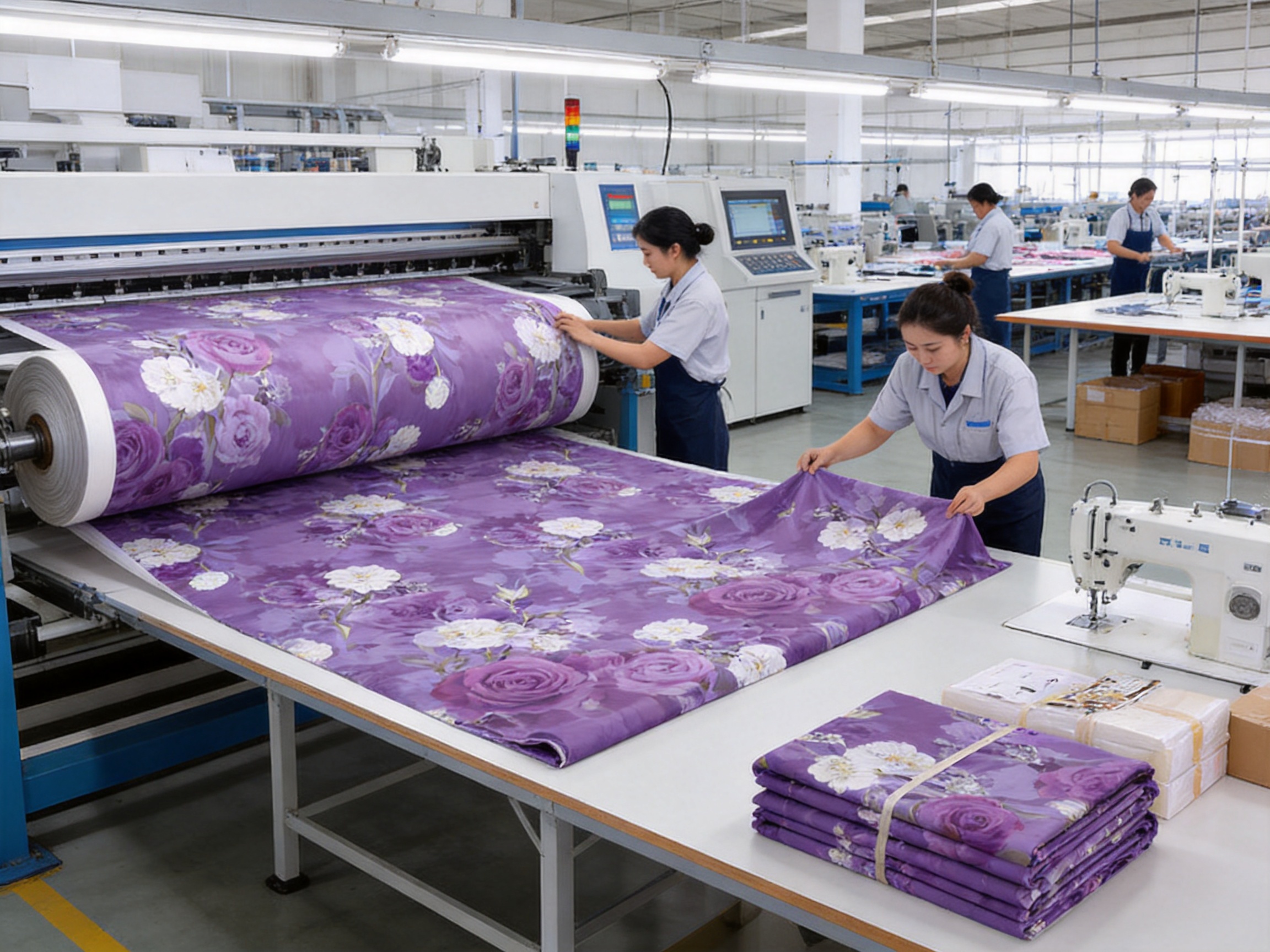
The quality of a coordinated textile set depends not only on the fabric but also on manufacturing discipline. A product containing multiple pieces must maintain consistent dimensions, print quality, stitching, color, and packaging. Even when every individual component is acceptable, inconsistency between pieces can reduce the perceived value of the complete set. A structured production system is therefore essential.
The manufacturer behind this product operates as an industrial and trading enterprise integrating research and development, production, sales, and export. Its factory covers more than 10,000 square meters and is equipped with intelligent production equipment. With more than 100 employees, the company combines standardized management with an experienced foreign trade service team. These capabilities provide a foundation for handling product development, manufacturing, inspection, packaging, and international coordination under an integrated business structure.
Research and development activities can support improvements in pattern selection, fabric handling, construction details, and set configuration. For a product such as this one, development is not limited to creating an attractive print. It also involves ensuring that the print works across differently shaped components, that the dimensions correspond to target markets, and that the bed sheet, bed skirt, pillowcases, and curtains present a coherent finished appearance.
Intelligent production equipment can contribute to repeatability and efficiency. Digital or electronically managed equipment may help control cutting, stitching, printing-related processes, inventory movement, or quality data, depending on the specific production line. Automation does not remove the need for skilled workers. Instead, it can support operators by improving process consistency and reducing avoidable variation.
Standardized management is important for export-oriented home textile production. International buyers generally require clear specifications, stable packing methods, timely communication, and consistent order fulfillment. A standardized system can help coordinate raw-material purchasing, production scheduling, in-process inspection, final inspection, and shipment preparation. These steps are particularly valuable when orders involve multiple sizes, patterns, colors, or private-label requirements.
Fabric Preparation and Incoming Material Control
Production begins with the selection and preparation of fabric and other materials. For this set, 100% polyester fabric must be assessed for weight, width, surface quality, color suitability, print compatibility, and dimensional behavior. Incoming inspection can identify defects such as weaving irregularities, stains, broken filaments, inconsistent texture, or width variation before the material enters cutting and sewing.
Material control is especially important for coordinated products. If different fabric lots have noticeable shade variation, the pieces in one set may not match. Organizing fabric by batch and tracking its use can help ensure that the bed sheet, bed skirt, pillowcases, and curtains in the same order are produced from compatible materials. This supports a more uniform appearance after printing and finishing.
Printing and Pattern Reproduction
The printed surface must reproduce the intended pattern with clarity and stable color. The design is prepared for the fabric width and for the different dimensions of each component. Pattern repeat, alignment, color balance, and edge handling must be considered during production. A pattern that looks attractive on a large bed sheet may require careful placement on smaller pillowcases or on the vertical panels of curtains.
Color management helps maintain consistency between production runs. The manufacturer can use approved color standards, production samples, and inspection procedures to compare printed fabric against the expected result. Monitoring the printing process can help identify problems such as uneven color, blurred edges, streaks, registration errors, or incomplete coverage.
After printing, finishing processes may be used to improve the hand feel, appearance, stability, and usability of the fabric. The precise process depends on the textile construction and production method. Proper finishing can support the soft touch emphasized in the product description while helping the material remain suitable for cutting, sewing, folding, and packing.
Cutting Accuracy and Component Matching
Once the fabric is prepared, accurate cutting is necessary to produce the listed dimensions. Cutting errors can affect fit, symmetry, pattern continuity, and the finished appearance of the set. For a bed skirt, incorrect proportions may change the way the skirt covers the sides of the bed. For curtains, uneven panel lengths can be especially noticeable after installation.
Component matching is another key production step. Each six-piece package should contain the correct number and type of pieces for the selected size. Queen Size and King Size components must be separated and identified accurately. Manufacturing records, work orders, size labels, and packing checks can help prevent mixed-size shipments or missing components.
Stitching, Hemming, and Finishing Details
Fine workmanship and neat stitching contribute directly to the product’s durability and appearance. Seams should be formed consistently, with suitable thread tension and secure ends. Hems should be even, especially on curtains and visible bedding edges. Pillowcases should maintain their intended shape, while the bed sheet and bed skirt should be finished to support repeated handling.
Quality stitching can also improve the consumer’s perception of value. Customers often judge a textile product by small details such as straight seams, clean corners, smooth hems, and the absence of loose threads. These details are particularly visible when a set is displayed in a showroom or photographed for an online store.
The manufacturing team can inspect pieces during sewing rather than waiting until the final stage. In-process inspection allows problems to be corrected before they affect a large quantity of products. Final inspection can then confirm dimensions, appearance, component count, packaging, and labeling before shipment.
Quality Assurance for a Multi-Component Textile Product
Quality assurance for this product should address both individual components and the complete set. Fabric softness, print clarity, stitching, dimensions, color consistency, and packaging are all relevant. A set may be considered successful only when its components work together as intended.
Dimensional inspection helps confirm that the bed sheet, bed skirt, pillowcases, and curtains correspond to the stated specifications. Some textile variation can occur because fabric may relax after production or respond to humidity and handling. A controlled inspection process can identify unacceptable deviations while recognizing normal textile tolerances.
Appearance inspection can identify stains, holes, skipped stitches, uneven hems, print defects, excessive loose threads, and shade differences. The inspection environment should provide sufficient lighting so that color and surface problems are visible. For printed goods, viewing the fabric both at close range and from a normal display distance can be useful, since some minor variations may not affect the overall appearance while others are highly noticeable.
Functional inspection can include checking that seams are secure, edges are properly finished, pillowcases are correctly formed, and curtain panels are suitable for their intended hanging method. The exact checks depend on the final construction and buyer specifications. Where customers require customized labeling, packaging, or testing, those requirements should be incorporated into the quality plan before production begins.
Packaging is also part of product quality. Bedding and curtains should be folded carefully to reduce unnecessary creasing and packed in a way that protects them from dust and moisture during storage and transport. Correct size identification is essential for warehouse handling and retail display. A clear package can help consumers understand the contents and dimensions before opening the product.
Advantages for Wholesale Buyers, Importers, and Private Labels
The product is suitable for business customers seeking a coordinated home textile item with broad market potential. A six-piece set can be easier to promote than several standalone products because the package has a clear purpose and a defined contents list. Buyers can offer it through home textile stores, department stores, online marketplaces, furnishing suppliers, hospitality distributors, and home décor catalogs.
For wholesalers, the product can support multiple retail positions. It may be marketed as an everyday bedding set, a bedroom makeover package, a guest-room furnishing solution, or a seasonal decorative collection. Printed patterns allow product assortments to be refreshed without changing the basic construction. Retailers can select designs according to local preferences while maintaining a consistent product format.
For importers, the integrated factory and export service structure can simplify communication. The company provides research and development, manufacturing, sales, and export capabilities within one organization. This may help buyers coordinate product specifications, samples, production schedules, documentation, and shipment arrangements through a single business relationship.
OEM and customized home textile services are also available based on customer samples. This creates opportunities for buyers that require their own patterns, color palettes, packaging, labels, or collection concepts. Customized development should be discussed in detail, including minimum order quantities, artwork format, sampling fees, color approval, production lead time, testing requirements, and intellectual property ownership.
The manufacturer’s experience in producing bed sheets, quilt covers, pillowcases, cushions, quilts, waterproof mattress protectors, curtains, and other bedding sets supports broader product development. A buyer interested in building a complete home textile assortment may be able to source related products from the same manufacturing partner. This can improve collection consistency and reduce the need to coordinate several factories.
Suitable Applications Across Different Market Segments
Residential Bedrooms
In private homes, the set provides a fast way to refresh the appearance of a bedroom. Matching textiles can make an existing bed, window, and furniture arrangement feel more coordinated. Customers who enjoy decorative prints can use the set as a central style element, while customers who prefer convenience can benefit from purchasing several compatible pieces at once.
Guest Rooms and Furnished Apartments
Guest rooms and furnished apartments often require a polished appearance without excessive decoration or complicated sourcing. A coordinated set can help property owners furnish multiple rooms using a consistent visual concept. The bed skirt can conceal the lower bed structure, and the matching curtains can make the room look complete from the moment a guest enters.
Hotels, Guesthouses, and Hospitality Projects
Hospitality buyers may value the set’s coordinated presentation, especially for boutique accommodations, themed rooms, seasonal room styling, or smaller properties. Before commercial adoption, hospitality customers should assess laundering procedures, replacement availability, room dimensions, fire-safety requirements, and any relevant local textile standards. The set can be considered as a decorative room package, but commercial requirements should be confirmed independently.
Home Textile Retail
Retailers can display the set on a fully dressed bed with the curtains installed nearby. This presentation communicates the product’s complete-room advantage more effectively than showing the pieces separately. Product descriptions should clearly state the material, size, dimensions, number of pieces, and the role of the layered curtains. Clear information can reduce customer confusion and support more confident purchasing decisions.
Care, Handling, and Long-Term Appearance
Correct care is important for preserving the appearance and comfort of printed polyester bedding. Customers should follow the care label supplied with the final product because recommended washing temperatures, drying methods, and ironing settings may vary according to the fabric finish and construction. In general, gentle handling can help preserve surface softness, print clarity, and seam integrity.
Separating dark and light textiles during washing can reduce the risk of unintended color transfer. Excessive heat should be avoided unless specifically permitted by the care instructions. High temperatures can affect synthetic fibers, create unwanted shine, or influence the shape of finished pieces. Curtains may also benefit from careful folding or hanging after washing to reduce deep creases.
Sunlight can gradually affect dyed or printed textiles, particularly when curtains remain exposed for long periods behind a bright window. Layered curtains may help manage light exposure, but placement and local climate still influence fading. Rotating or adjusting curtains when practical, using suitable window coverings, and following care instructions can help maintain the coordinated appearance.
Before first use, buyers may wish to inspect all six pieces to confirm that the size, pattern, and components are correct. Washing before use may be appropriate if recommended by the care label. Retailers should store the sets in clean, dry conditions and protect them from prolonged humidity, direct sunlight, and compression that could create permanent creases.
How This Product Compares with Common Alternatives
A plain single-layer bedding set may be less expensive, but it usually provides less decorative coverage and does not address the window area. A separate bedspread and curtain purchase may offer more flexibility, but matching colors and patterns can require additional time and may produce an inconsistent result. A heavy quilt set may offer warmth, but it can be less suitable for customers seeking a lighter all-season decorative layer.
The six-piece printed set occupies a useful middle position. It provides more coordinated functionality than a basic sheet-and-pillowcase package while remaining more versatile than a highly specialized seasonal comforter. Its polyester construction supports a practical price and care profile, while the print and curtains add visual value.
Compared with unprinted hotel-style bedding, this product is more expressive and suitable for customers who want personality in their bedroom. Compared with highly delicate luxury textiles, it may be easier to handle in ordinary household settings. The strongest competitive position is therefore not based on one feature alone, but on the combination of coordinated design, six-piece completeness, double-layer curtains, soft synthetic fabric, and manufacturer support.
Ordering Considerations for Professional Buyers
Professional buyers should confirm the intended market, size standards, fabric specifications, pattern selection, packaging format, and shipping requirements before placing an order. Queen Size and King Size measurements should be reviewed against the target country’s common bed dimensions. If the product is intended for a specific retailer or hospitality project, sample approval is recommended before bulk production.
Buyers requesting OEM production should provide clear artwork, color references, component dimensions, labels, packaging instructions, and inspection standards. It is helpful to define whether the curtains must be installed using a rod pocket, tabs, rings, or another hanging method, if that detail is not already specified. The bed skirt structure and the meaning of the additional dimensional figures should also be confirmed so that product listings accurately reflect the final construction.
Samples can help evaluate softness, print clarity, color balance, stitching, pattern placement, and overall coordination. A complete sample set is more informative than a single fabric swatch because the visual relationship between the bed and curtains is a central product benefit. Buyers should also examine how the fabric behaves after washing or simulated handling when durability is a key requirement.
For export orders, packaging marks, carton dimensions, gross and net weights, product labels, country-of-origin information, and documentation should be agreed upon in advance. The manufacturer’s experienced foreign trade service team can assist with communication and order coordination, while the buyer remains responsible for confirming import regulations and destination-market requirements.
Responsible Product Communication
Accurate product communication strengthens customer trust. Retail listings should state that the set contains six pieces and identify each component clearly. The phrase “double-layer curtains” should correspond to the actual construction supplied. Light-blocking performance should be described carefully, using terms such as “helps regulate incoming light” unless a specific blackout test or performance rating is available.
The material should be presented as 100% polyester, with microfiber-style softness where supported by the final fabric specification. Claims about breathability, all-season suitability, colorfastness, and durability should be aligned with product testing, approved specifications, and normal consumer use. Clear information about dimensions is especially important because bed and window sizes differ between regions.
Responsible communication also includes explaining that photography, screen settings, lighting, and production batches may create slight differences in perceived color. This is normal for many printed textiles, but the manufacturer’s quality controls should aim to keep variations within an acceptable range. Transparent descriptions help reduce returns and improve satisfaction for both retailers and end users.
Manufacturer Strengths and Long-Term Partnership Potential
The company’s development since its establishment in 2015 demonstrates a focus on home textile manufacturing and export. Its product range includes bed sheets, quilt covers, pillowcases, cushions, quilts, waterproof mattress protectors, curtains, and other bedding sets. This breadth is useful for buyers seeking a supplier that understands the relationship between individual textile products and complete bedroom collections.
The factory’s more than 10,000-square-meter production area provides space for organized manufacturing, material storage, equipment placement, inspection, and packing operations. More than 100 employees contribute to the company’s ability to manage product development and order fulfillment. Intelligent equipment and standardized management can support consistent output, while the foreign trade team helps connect production capabilities with international customer requirements.
The company’s integrated industrial and trade structure can reduce communication gaps that sometimes occur when design, production, and export services are handled by unrelated organizations. Product questions can be directed through a unified business channel. This may be particularly valuable when a buyer needs customized patterns, coordinated bedding collections, sample revisions, or repeat orders based on previously approved standards.
Long-term supplier relationships depend on more than factory size. They require dependable communication, realistic production planning, transparent quality expectations, and a willingness to improve products over time. The manufacturer’s focus on research and development, export experience, and customized home textile services creates a foundation for such cooperation. Buyers should still conduct their own due diligence, approve samples, and establish written specifications for every project.
Frequently Asked Questions
What is included in the six-piece set?
The set includes one bed sheet, one bed skirt, two pillowcases, and two curtains. The bed sheet, bed skirt, pillowcases, and curtains use coordinated printed designs to create a unified bedroom appearance.
What material is used?
The product is made from 100% polyester. The fabric is described as a soft microfiber-style textile with a smooth hand feel, practical durability, and suitability for everyday home use.
Is the set available in different sizes?
Yes. The provided specifications include Queen Size and King Size versions. The bed sheet and bed skirt dimensions differ between the two sizes, while the listed curtain dimensions are 120 by 220 centimeters per panel for both versions.
What is the function of the bed skirt?
The bed skirt helps cover the sides and lower area of the bed. It can conceal the bed base or stored items beneath the bed while extending the printed design to create a more finished appearance.
Are the curtains suitable for light control?
The double-layer curtain design is intended to combine decorative styling with light management and privacy support. The actual level of light reduction depends on the fabric density, color, installation, window conditions, and construction of the final curtain.
Can the set be used throughout the year?
The product is described as suitable for all seasons. Its practical use will depend on the local climate, room temperature, personal sleeping preferences, and whether additional blankets or quilts are needed.
Is the print resistant to fading?
The product description emphasizes rich, long-lasting colors with resistance to fading. As with all printed textiles, extended exposure to strong sunlight, repeated washing, and unsuitable care can influence color over time. Following the supplied care instructions is recommended.
Can the manufacturer produce custom designs?
Customized home textile services are available based on customer samples. Buyers should discuss artwork, color standards, dimensions, labels, packaging, minimum quantities, sampling, lead times, and inspection requirements before confirming a customized order.
What should buyers check before ordering?
Buyers should compare the bed sheet and bed skirt measurements with their target bed sizes, check pillowcase dimensions, measure the intended windows, confirm the curtain hanging method, review the complete piece count, and request a sample when accurate color and construction are important.
Who may benefit from this product?
Residential customers, home textile retailers, wholesalers, importers, hospitality suppliers, guesthouse operators, furnished apartment providers, and private-label brands may all find the set suitable for their product ranges or furnishing projects.
Conclusion
The printed six-piece bedspread set with double-layer curtains is designed as a complete bedroom styling and bedding solution. Its main advantages come from the combination of coordinated printing, a soft 100% polyester microfiber-style fabric, a functional bed skirt, matching pillowcases, and layered curtains that contribute to light management, privacy, and atmosphere.
Compared with simpler bedding packages, the set provides broader room coverage and greater visual coordination. Compared with buying individual products, it offers convenience and a more consistent design. Its Queen Size and King Size options support different bedroom layouts, while its OEM and customization potential makes it relevant to retailers, importers, hospitality businesses, and private-label customers.
The product is supported by a manufacturer with integrated research and development, production, sales, and export capabilities. A factory of more than 10,000 square meters, intelligent production equipment, more than 100 employees, standardized management, and an experienced foreign trade team provide important foundations for consistent manufacturing and international cooperation.
For the best results, buyers should confirm dimensions, construction details, care requirements, packaging, and market-specific standards before ordering. With accurate specifications and appropriate quality control, this coordinated six-piece collection can provide a practical, attractive, and commercially versatile addition to modern home textile assortments.
References
1. Product specification sheet for the printed six-piece bedspread set with double-layer curtains, including materials, dimensions, sizes, and component quantities.
2. Manufacturer information concerning integrated research and development, production, sales, export services, factory capacity, workforce, and customized home textile services.
3. General textile quality-control principles covering fabric inspection, color consistency, dimensional measurement, sewing quality, final inspection, and packaging.
4. General home textile care guidance for printed polyester bedding, pillowcases, bed skirts, and curtains.
5. General interior textile design principles concerning coordinated bedding, window treatments, privacy, light management, and bedroom atmosphere.
Product: Printed 6-Piece Bedspread Set With Double-Layer Curtains


Contact Us for More Details
Don't hesitate to contact when you need us!
Contact Information
Add:
Building 1, East Area, Wanyang Zhongchuang City, Economic Development Zone, Dongyang City, Zhejiang Province, China
Phone:
Tel:
E-mail:
Quick Links
Product Category
QR Code


+86-13616899966
+86-579-86610966
