 English
 русский
 Español
 عربى


Printed Single-Layer Bed Sheet 5-Piece Set: Lightweight Comfort, Coordinated Style, and Reliable Textile Manufacturing
Modern bedrooms increasingly require more than a basic covering for the bed. Homeowners, retailers, hospitality buyers, and project purchasers are looking for bedding that combines visual appeal, practical performance, easy care, and dependable supply. The Printed Single-Layer Bed Sheet 5-Piece Set answers these needs with a lightweight construction, colorful printed styling, soft microfiber polyester fabric, and coordinated accessories designed to create a unified bedroom appearance.
Unlike heavy quilted bedding, this single-layer set focuses on freshness, flexibility, and year-round usability. Its relatively light structure makes it suitable for households that prefer breathable bedding and a neat, uncluttered bed surface. At the same time, its vivid patterns and layered visual effects give the bedroom more character than a plain sheet or simple solid-color bedspread.
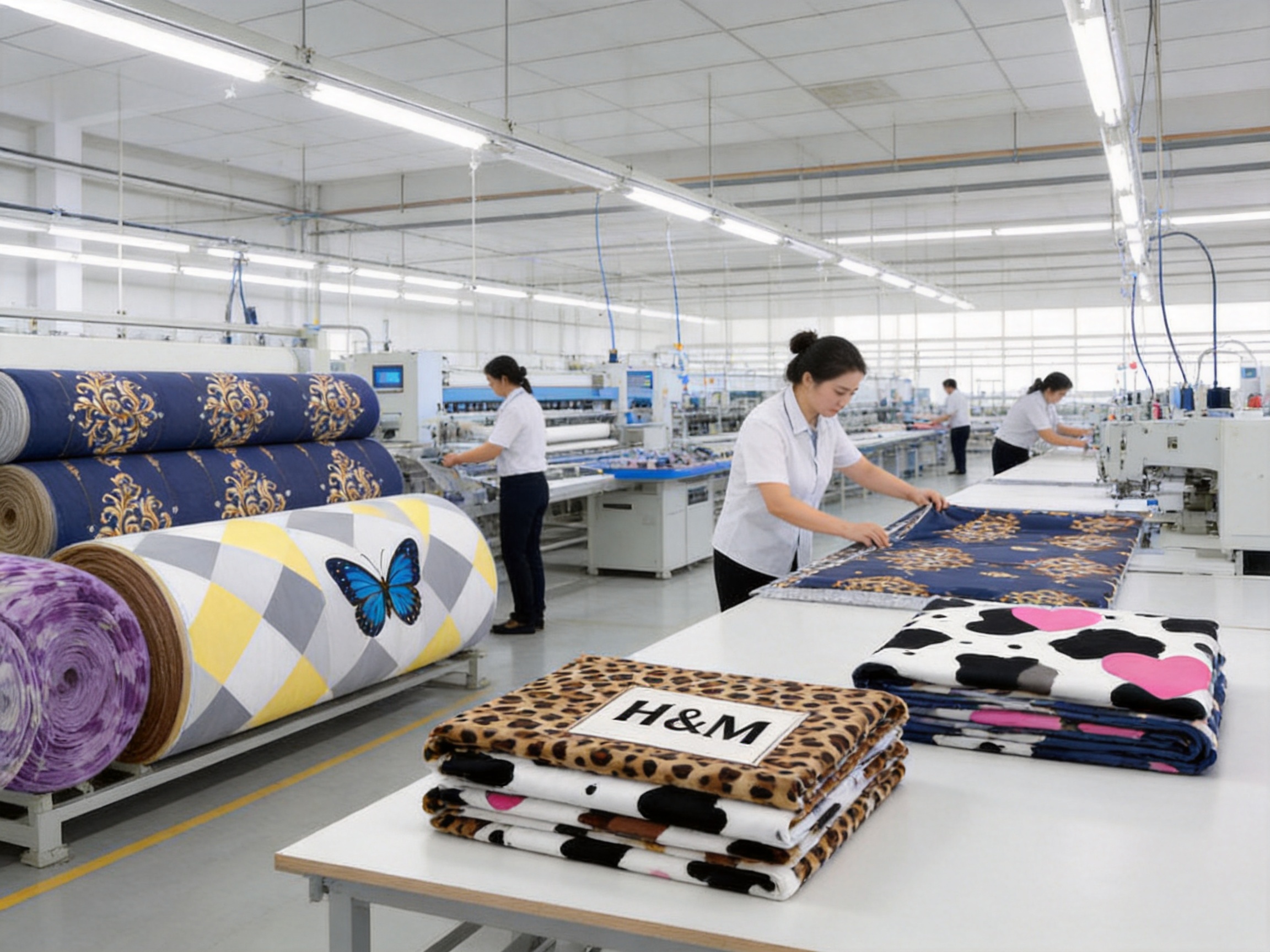
The product is manufactured by Dongyangshi Menghui Textile Co., Ltd., an industrial and trade enterprise specializing in bedding, curtains, and related home textile products. The company integrates research and development, production, sales, and export operations. Its factory covers more than 10,000 square meters and is equipped with intelligent production equipment. With more than 100 employees, standardized management procedures, and an experienced foreign trade service team, the manufacturer is positioned to support both regular orders and customized home textile programs.
This article examines the set in detail, including its fabric characteristics, construction, design value, consumer benefits, care advantages, manufacturing strengths, customization potential, and competitive position in the bedding market.

Printed Single-Layer Bed Sheet 5-Piece Set
1. Product Overview
The Printed Single-Layer Bed Sheet 5-Piece Set is designed as a coordinated bedding solution rather than a single isolated sheet. It combines a printed single-layer bed covering with matching pillowcases and related accessories. The coordinated design helps create a complete visual arrangement without requiring customers to purchase separate pieces from different collections.
The product title identifies it as a five-piece set, while the product category is listed as Bed Skirt. In practical merchandising terms, buyers should verify the exact composition, dimensions, and intended draping style before placing an order, because bedding terminology can differ between markets. Depending on the sales channel, the product may be presented as a bedspread, bed sheet set, or decorative bed covering. The central characteristics remain the same: printed styling, single-layer construction, microfiber polyester fabric, and a coordinated five-piece format.
The set is particularly suited to consumers who want a fresh bedroom appearance without the bulk associated with thick comforters or multi-layer quilts. The light construction allows the bedding to be folded, stored, transported, and changed with relative ease. It can also function as a decorative top layer over existing bedding, helping protect the mattress and improve the visual presentation of the room.
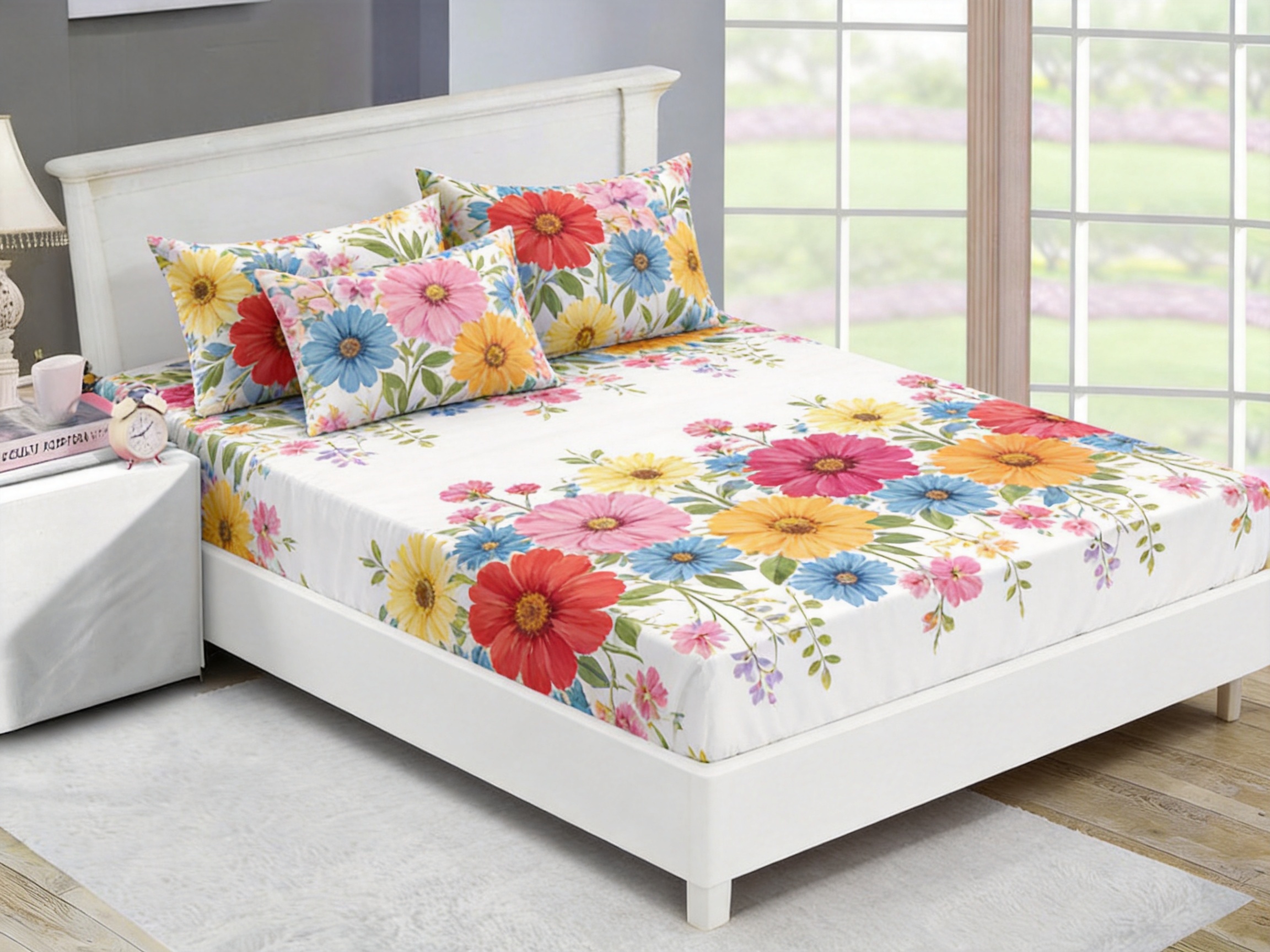
Its printed surface is intended to provide a distinctive atmosphere through vibrant colors and layered patterns. Rather than relying solely on fabric texture or heavy embellishment, the product uses print design to create visual interest. This approach makes it possible to offer a broad range of themes, color combinations, and market-specific patterns while maintaining a practical fabric structure.
Key Product Characteristics
The set is made from 100% microfiber polyester. The material is described as soft to the touch, wrinkle-resistant, colorfast, and suitable for regular washing. These features are important for both household users and commercial buyers because bedding is expected to maintain an attractive appearance through repeated use and care.
The single-layer structure supports breathability and lightness. It is suitable for customers who prefer bedding that does not feel excessively heavy or warm. It can also be used in bedrooms where temperature conditions vary throughout the year, particularly when combined with other layers according to seasonal needs.
The printed design contributes to a unified room concept. Matching pillowcases and accessories complement the primary bed covering, allowing the complete set to appear intentionally coordinated. This is valuable for consumers who want a finished decorative result with minimal styling effort.
| Feature | Product Value | Primary Buyer Benefit |
|---|---|---|
| Single-layer construction | Lightweight and breathable bedding format | Comfortable for year-round use and easy to handle |
| 100% microfiber polyester | Soft surface with practical durability | Comfortable touch and convenient daily use |
| Printed design | Vibrant colors and layered visual patterns | Creates a distinctive bedroom atmosphere |
| Five-piece format | Coordinated bedding and matching accessories | Provides a more complete look than a single item |
| Wrinkle resistance | Helps the fabric retain a neat appearance | Reduces the need for intensive pressing |
| Colorfast fabric performance | Supports longer-lasting printed appeal | Helps preserve the appearance after regular washing |
2. The Advantages of Single-Layer Bedding
Single-layer bedding has a clear place in the modern home textile market. Many consumers do not need a thick, insulated comforter throughout the year. In warmer climates, centrally heated homes, guest rooms, children's rooms, and transitional seasons, lighter bedding can be more comfortable and more convenient.
The reduced bulk of this set makes bed-making easier. A single-layer covering can be spread across the bed quickly and adjusted without the weight or stiffness of a heavily filled product. This is useful for busy households, rental properties, guest accommodations, and retailers seeking bedding that is simple for customers to use.
Lightweight bedding is also easier to store. When not in use, the set can be folded into a relatively compact form, helping households manage linen closets and seasonal rotation. For commercial buyers, reduced bulk may also simplify warehouse organization and handling during packaging, stock movement, and order fulfillment.
Another advantage is styling flexibility. The set can be used on its own during warmer conditions or layered with blankets and quilts when additional warmth is required. This gives customers greater control over comfort instead of locking them into one fixed level of insulation.
The breathable character of the product supports a fresh sleeping environment. While no textile can guarantee a particular personal comfort experience, lightweight microfiber bedding is generally attractive to buyers who prefer a smooth surface and less weight over the body. The single-layer approach is therefore a practical option for consumers who value simplicity and adaptability.
Suitable for Multiple Bedroom Settings
The set can be used in master bedrooms, guest rooms, children's rooms, student accommodations, holiday properties, and furnished rental spaces. Its printed appearance can bring personality to a room that uses neutral furniture, while its coordinated accessories help unify a space with minimal additional decoration.
For a guest room, a lightweight five-piece set can create a welcoming presentation without requiring a large collection of decorative pieces. For a family bedroom, the easy-care fabric and washable construction can be attractive practical features. For a rental or hospitality setting, printed bedding can help establish a consistent room style when multiple units require coordinated soft furnishings.
Retailers may also benefit from the broad positioning of the product. It can be marketed as everyday bedding, decorative bed covering, seasonal bedding, or a coordinated bedroom gift set, depending on the final packaging, dimensions, and market requirements.
3. Fabric Performance and Everyday Comfort
Fabric selection is one of the most important elements in bedding performance. This product uses 100% microfiber polyester, a material widely selected for its smooth hand feel, practical care characteristics, and adaptability to printed designs.
The microfiber surface is described as soft to the touch. This softness contributes to the initial comfort impression when the customer handles the product and when the bedding is used in the bedroom. A smooth fabric surface also supports the clean visual character of the printed pattern, allowing colors and design details to appear clearly across the bed.
Microfiber polyester is also suitable for products that need regular washing and repeated handling. The product description emphasizes wrinkle resistance and colorfastness. These qualities help the bedding maintain a neat appearance after laundering, reducing the likelihood that the bed covering will look heavily creased or visually tired shortly after use.
Wrinkle resistance is particularly useful for lightweight bedding because the product is frequently folded, stored, transported, and spread across the bed. A fabric that recovers its appearance more easily can save time during daily bedroom preparation. For retailers and accommodation providers, this characteristic may also support efficient room presentation.
Colorfastness is important for printed bedding because the design is a central part of the product's value. Vibrant colors and layered patterns must remain visually appealing after normal care. While care conditions always influence textile life, the stated colorfast performance gives buyers confidence that the printed surface is designed for regular use rather than occasional display only.
Balance Between Softness and Practicality
A successful bedding product must balance comfort with durability and ease of maintenance. Very delicate fabrics may feel pleasant but require restrictive care. Highly durable fabrics may be practical but lack a comfortable hand feel. The microfiber construction of this set is intended to provide a middle ground: a soft surface for daily contact, combined with a resilient textile format that can support frequent household use.
The fabric also works well with printed pattern development. A printed polyester base enables manufacturers to create different colorways and graphic themes without changing the fundamental construction of the product. This is useful for retailers that want to offer multiple designs within one product family.
Because the product is made from 100% polyester, buyers should follow the care instructions supplied with the final order. Washing temperature, drying method, detergent choice, and exposure to excessive heat can affect the appearance and service life of any printed textile. Proper care helps preserve the fabric hand, surface smoothness, and printed colors.
4. Printed Design as a Bedroom Styling Tool
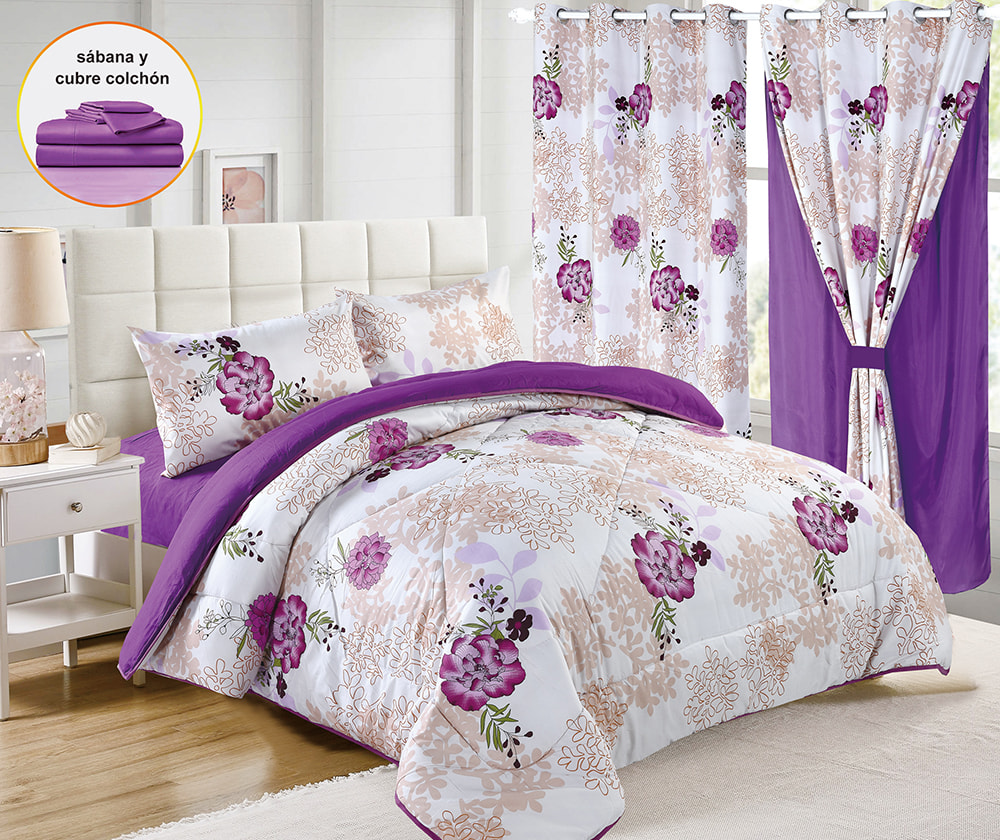
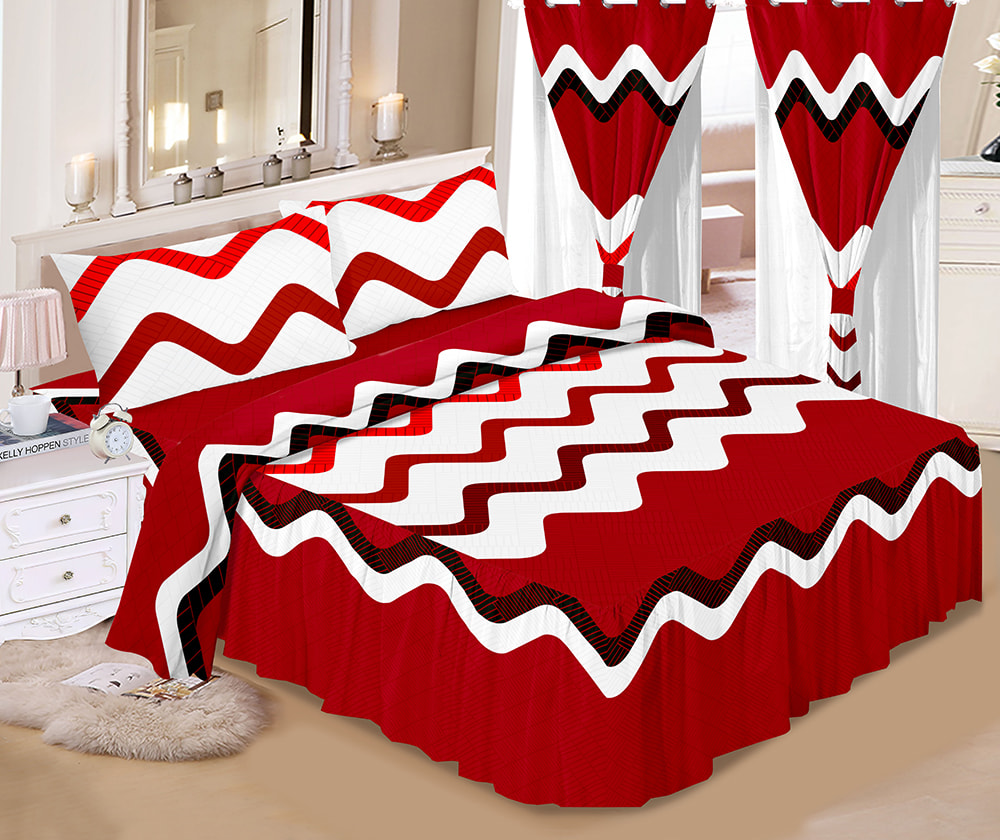
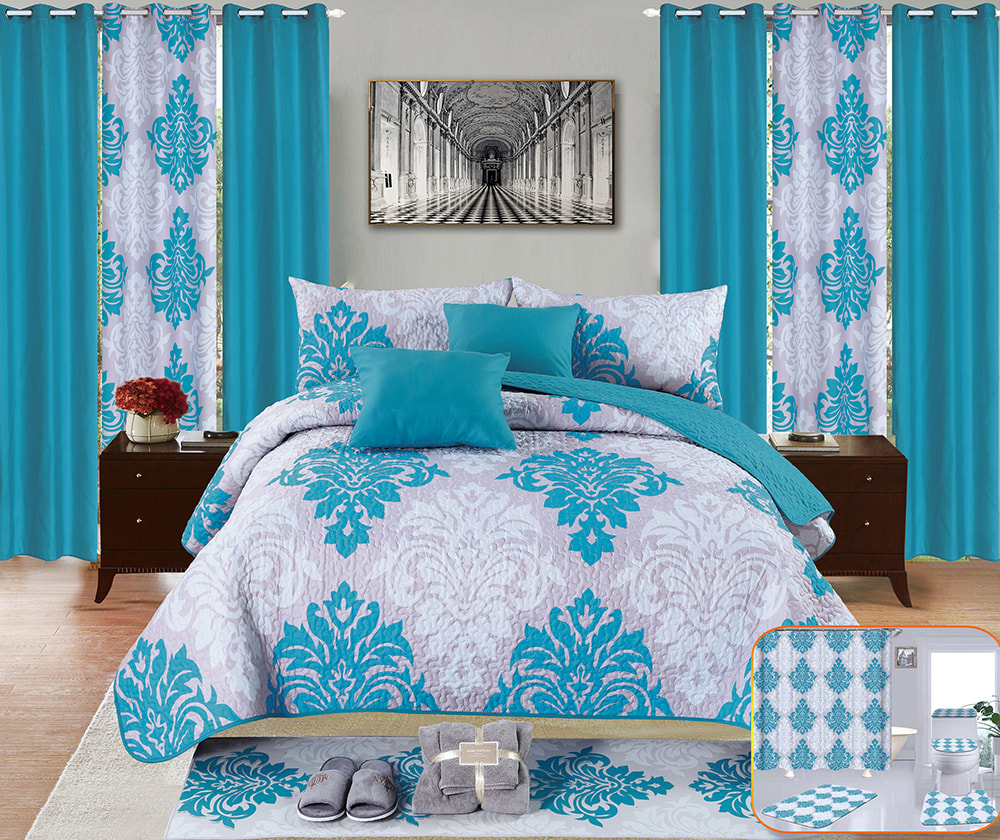
The visual design of bedding can influence the entire atmosphere of a bedroom. A bed occupies a large portion of the room, so a printed bed covering often becomes the dominant decorative element. The Printed Single-Layer Bed Sheet 5-Piece Set uses vibrant colors and layered patterns to create a more distinctive result than a plain sheet.
The phrase “layered patterns” suggests visual depth created through the arrangement of colors, shapes, motifs, or overlapping design elements. This can make the bed appear more dynamic while still preserving the practical simplicity of a single-layer textile. The printed surface provides style without requiring heavy quilting, raised appliqué, or complex decorative construction.
Patterned bedding can be used to introduce contrast into a neutral room. A bedroom with white, beige, gray, or natural wood furnishings can gain energy from a colorful bed covering. Conversely, a room with stronger decorative elements can use a coordinated print to connect existing colors and create a more intentional arrangement.
Matching pillowcases and accessories support the design concept. When the main bed covering and accompanying pieces use compatible patterns or color relationships, the room appears more organized. Customers do not need to spend substantial time searching for separate pillowcases, cushions, or complementary pieces that may not match correctly.
Design Flexibility for Different Markets
Printed bedding can be developed for different consumer preferences. Some markets may favor botanical motifs, geometric designs, abstract graphics, traditional decorative themes, or soft tonal arrangements. Others may prefer strong contrasts, bright colors, or modern artistic patterns. The product's construction allows design development to remain flexible while preserving a consistent basic specification.
For wholesale customers, this flexibility can support seasonal collections, regional preferences, private-label programs, and promotional campaigns. A retailer may select several print designs for one collection, giving customers visual choice without introducing completely different product constructions.
For customized orders, buyers may also discuss colors, artwork, labels, packaging, dimensions, and assortment structure with the manufacturer. Any customization should be confirmed through technical specifications and approved samples before production. The manufacturer's stated ability to provide customized home textile services based on customer samples is especially relevant for brands seeking a more individual product line.
5. Competitive Advantages Compared with Basic Bedding Alternatives
The competitive value of this set comes from the combination of features rather than from one isolated attribute. A basic single sheet may be inexpensive and easy to use, but it may not provide a coordinated decorative appearance. A heavy comforter may offer warmth, but it can be less suitable for warmer seasons or customers who prefer lightweight bedding. A multi-piece collection assembled from unrelated items may offer variety but often lacks visual unity.
This set addresses these differences by combining a light construction, printed design, coordinated pieces, and practical microfiber fabric. The result is positioned between purely functional bedding and heavily decorative bedroom textiles.
Compared with Plain Solid-Color Sheets
Solid-color sheets are versatile, but they may provide limited visual impact. The printed set offers a stronger decorative identity through vibrant colors and layered patterns. It can refresh a room without requiring new furniture, wall decoration, or extensive accessories.
At the same time, the lightweight construction maintains much of the simplicity associated with basic sheets. Customers receive more design value without necessarily accepting the weight or complexity of a thick bedspread.
Compared with Heavy Quilts and Comforters
Quilts and comforters are useful when warmth and insulation are priorities. However, they can be unnecessarily heavy in warm weather or in homes with efficient heating. They may also require more storage space and can be more cumbersome to wash and handle.
The single-layer set is a practical alternative for buyers who want a decorative bed covering that can be used independently or as part of a flexible layering system. It is not intended to replace every type of quilt or comforter, but it provides a lighter option for customers whose requirements differ from those of heavy winter bedding.
Compared with Mismatched Bedding Pieces
Purchasing separate bedding pieces can result in differences in color, pattern scale, fabric hand, and wash behavior. A coordinated five-piece format reduces this problem by presenting the main elements as one design concept. The matching accessories help the bed look finished and professionally arranged.
Compared with Delicate Decorative Bedding
Some decorative bedding products are designed mainly for occasional display. Their fabrics, finishes, or embellishments may require careful handling. This printed microfiber set is positioned for more practical regular use, with the product description emphasizing wrinkle resistance, colorfastness, and suitability for routine washing.
| Alternative | Common Limitation | How This Set Responds |
|---|---|---|
| Plain sheet | Limited decorative impact | Uses vibrant printed patterns and coordinated accessories |
| Heavy comforter | More weight and storage demand | Offers a lighter single-layer format |
| Unmatched individual pieces | Inconsistent colors and styling | Provides a coordinated five-piece arrangement |
| Delicate decorative cover | May require more demanding care | Emphasizes practical microfiber performance and regular use |
| Season-specific bedding | Limited flexibility across the year | Can be used alone or layered according to conditions |
6. Manufacturing Strengths and Production Capability
Product quality depends not only on the chosen fabric and design but also on the manufacturer's ability to control the complete production process. Dongyangshi Menghui Textile Co., Ltd. operates as an integrated industrial and trade enterprise. Its activities include research and development, production, sales, and export, allowing the company to connect product planning with manufacturing and international customer service.
The company was founded in 2015 and focuses on home textile products such as bed sheets, quilt covers, pillowcases, cushions, quilts, waterproof mattress protectors, curtains, and bedding sets. This product range provides experience across related textile categories. Knowledge of different bedding constructions can support coordinated product development and help customers build broader home textile collections.
The factory covers more than 10,000 square meters and is equipped with intelligent production equipment. A facility of this scale can support organized material handling, cutting, sewing, inspection, finishing, packing, and storage operations. Intelligent equipment can also contribute to repeatability when properly managed, particularly for recurring orders that require stable dimensions, consistent stitching, and reliable production scheduling.
Research and Development Integration
Research and development is important for printed bedding because the market changes quickly. Customers may request new color palettes, pattern styles, fabric treatments, packaging formats, or size combinations. An integrated manufacturer can evaluate these requirements alongside production realities instead of treating design and manufacturing as completely separate activities.
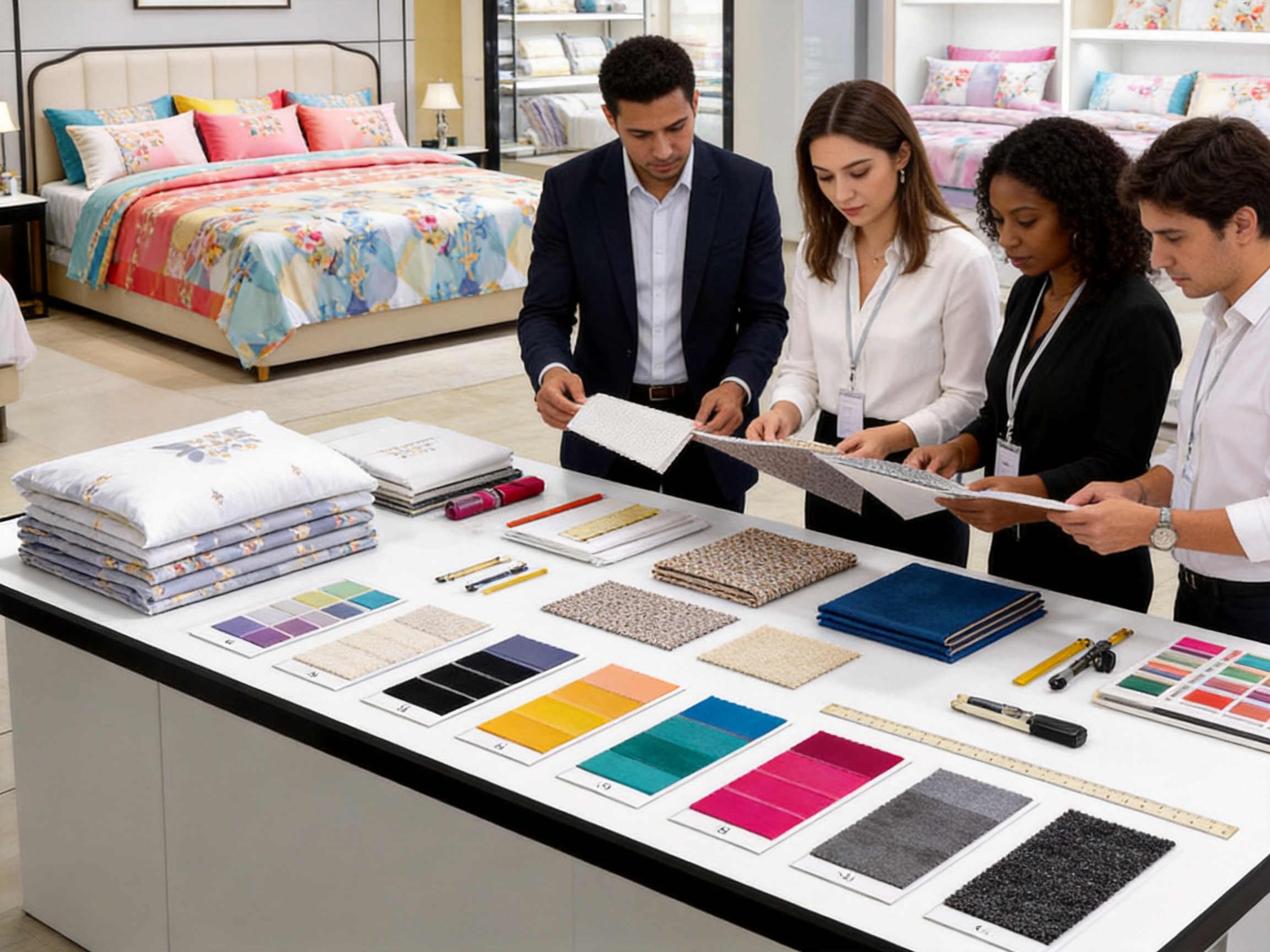
For customized projects, the process may begin with a customer sample, reference artwork, color request, or product brief. The manufacturer can then work toward a production sample for review. Important approval points may include fabric hand feel, print clarity, color appearance, dimensions, seam construction, accessory coordination, labels, and packaging.
Sample-based development helps reduce misunderstandings between the buyer and the production team. It also gives the customer an opportunity to confirm the final appearance before bulk manufacturing. This is especially valuable for printed bedding, where small differences in color balance or pattern scale can influence the overall product impression.
Standardized Management
The company states that it maintains a standardized management system. Standardization is essential for maintaining consistency across orders. In bedding production, it can involve documented specifications, material checks, cutting instructions, sewing procedures, print coordination, inspection standards, packing requirements, and shipment records.
Consistent management is particularly important for wholesale customers. Retailers need products within an order to look and perform similarly, while repeat buyers expect later production runs to remain close to approved samples. A structured system can support communication between departments and help identify deviations before products are packed.
Experienced Foreign Trade Service
Because the company exports all products, foreign trade service is a central part of its operating model. International buyers often need assistance with specifications, sampling, order quantities, packaging, documentation, production updates, and shipment coordination. An experienced foreign trade team can help translate commercial requirements into production instructions.
Effective communication is a competitive advantage in international textile sourcing. It reduces uncertainty, supports faster clarification of technical questions, and helps buyers manage collections across different product categories. The company's combination of factory operations and foreign trade service allows customers to work with one supplier for both production and export coordination.
7. From Material Selection to Finished Set
The manufacturing process for a product such as this involves multiple connected stages. The exact internal procedures may vary according to order requirements, but a professional workflow generally begins with product specifications and material planning.
Step One: Product Specification and Design Confirmation
The first stage is confirming the product concept. For this set, the main points include the single-layer construction, 100% microfiber polyester fabric, printed design, five-piece format, matching accessories, dimensions, and intended market. The buyer and manufacturer should also confirm whether the item will be marketed as a bed sheet set, bedspread, bed skirt, or another local category.
Design confirmation includes pattern selection, color references, repeat size, placement requirements, and print coverage. At this stage, buyers should approve artwork and clarify whether the pattern needs to match across pillowcases and other accessories.
Step Two: Fabric and Print Preparation
Once the specifications are approved, the fabric and printing requirements can be prepared. The material must be suitable for the intended surface appearance, hand feel, and care expectations. Print preparation may involve checking artwork proportions, color relationships, repeat alignment, and production suitability.
For a vibrant printed set, print clarity is essential. The pattern should remain recognizable across the bed covering, and the colors should support the intended atmosphere. If matching pieces are included, the production plan should account for visual coordination among the different component sizes.
Step Three: Cutting and Component Organization
After fabric preparation, the material is cut according to approved dimensions. Accurate cutting supports proper assembly and helps maintain consistency across the set. Component organization is also important because a five-piece order must contain the correct combination of main covering, pillowcases, and accessories.
Organized component handling reduces the risk of mixing prints, sizes, or colorways. It also supports efficient sewing and inspection. For larger orders, systematic identification of each production batch can help maintain traceability from material preparation through packaging.
Step Four: Sewing and Assembly
The cut pieces are sewn and assembled according to the product construction. Seam quality, edge finishing, corner formation, and accessory dimensions influence the finished appearance and service life. Even a visually attractive print can be undermined by uneven seams or inconsistent finishing, so assembly control is a critical part of manufacturing.
The single-layer structure may simplify the construction compared with multi-layer quilted products, but it still requires careful handling. The fabric must be positioned correctly, edges should be finished neatly, and the completed pieces should maintain their intended shape.
Step Five: Inspection and Finishing
Finished products can be checked for visible defects, print irregularities, sewing issues, incorrect dimensions, stains, loose threads, and component completeness. The product description emphasizes a neat and elegant drape, so the final inspection should also consider how the bed covering lays across a mattress.
Finishing may include thread trimming, folding, pressing where appropriate, labeling, and preparation for packing. The objective is to ensure that the customer receives a clean, organized, and presentation-ready set.
Step Six: Packing and Export Preparation
Packaging should protect the printed surface and keep the set's components together. Export orders may require specific carton quantities, barcodes, private labels, language requirements, or packaging formats. These details should be confirmed before bulk production so that the packing process matches the buyer's distribution needs.
The manufacturer's export experience is relevant at this stage. International shipments require coordination between production completion, quality confirmation, packing, documentation, and logistics scheduling. An experienced team can help buyers manage these connected steps more efficiently.
8. Quality Considerations for Buyers
Buyers evaluating this product should review both aesthetic and technical factors. The first consideration is the fabric hand feel. Because softness is one of the product's stated advantages, a physical sample can help confirm the surface character and overall comfort impression.
The second consideration is print quality. Buyers should inspect color intensity, pattern sharpness, repeat consistency, and the relationship between the main bed covering and matching accessories. Printed products can look different under various lighting conditions, so samples should be reviewed in a practical environment whenever possible.
Dimensions are also important. The buyer should confirm mattress size compatibility, drop or overhang requirements, pillowcase dimensions, and the exact measurements of all five pieces. Bedding sizes vary between countries and retail channels, and correct specification is essential for customer satisfaction.
Construction quality should be assessed through seams, hems, corners, edge finishing, and attachment points where applicable. The product should lay neatly and retain a balanced appearance across the bed. Any accessory included in the set should be checked for consistent fabric, print coordination, and finishing.
Care instructions should be clear and appropriate for the fabric and print. Buyers may request washing and drying recommendations for inclusion on labels or packaging. Clear care communication helps consumers protect the product and reduces avoidable complaints.
| Inspection Area | What Buyers Should Confirm |
|---|---|
| Fabric | Microfiber composition, softness, surface smoothness, and overall hand feel |
| Color balance, sharpness, repeat consistency, and visual coordination | |
| Dimensions | Bed size suitability, overhang, pillowcase size, and complete five-piece specification |
| Sewing | Even seams, secure stitching, clean hems, and properly finished edges |
| Shape and drape | Neat laying across the mattress without unwanted distortion |
| Completeness | Correct number and type of pieces in every packed set |
| Care information | Accurate washing, drying, and storage instructions |
| Packaging | Protection, labeling, language, barcodes, and carton requirements |
9. Customization and OEM Opportunities
The manufacturer provides customized home textile services based on customer samples. This capability can be valuable for brands, wholesalers, department stores, online retailers, hotel suppliers, and distributors that require more than standard catalog products.
Customization may cover pattern selection, colorways, fabric specifications, dimensions, labels, packaging, and assortment composition. The precise scope depends on order quantity, production feasibility, and final technical approval. Buyers should provide a clear product brief that identifies their target market, preferred sizes, expected care instructions, packaging needs, and quality standards.
For a printed five-piece bedding set, artwork management is an especially important part of OEM development. Buyers should submit high-quality design files and identify preferred color references. If the design must match a wider bedroom collection, the buyer should also provide the relevant color and pattern standards for curtains, cushions, sheets, or other products.
The company manufactures several related home textile categories, including bed sheets, quilt covers, pillowcases, cushions, quilts, waterproof mattress protectors, curtains, and bedding sets. This product breadth may allow customers to develop coordinated collections through one manufacturing partner rather than sourcing each category separately.
Benefits of a Coordinated Supplier
Working with one supplier for related products can simplify communication, sampling, quality expectations, and shipment planning. It may also help maintain a consistent visual language across a home textile range. A printed bedding design, for example, could be adapted into matching cushions or coordinated curtains if the buyer requests a broader collection and the specifications are approved.
A coordinated supplier relationship can also support product expansion. A retailer may begin with a five-piece bedding set and later introduce waterproof fitted sheets, pillowcases, quilts, or curtains using compatible colors and design themes. This approach can create a more recognizable collection for the end customer.
10. Applications in Retail and Hospitality
The product is suitable for a range of sales and usage environments. In retail stores, it can be displayed as a complete bedroom styling solution. The vivid print can attract attention on a shelf or online product page, while the five-piece format communicates clear value to customers seeking coordinated bedding.
For e-commerce, product presentation should include accurate measurements, fabric information, care instructions, close-up images of the print, and photographs showing the overall bed arrangement. Because colors can vary between screens, retailers should describe the primary color family and provide clear expectations regarding the print design.
In furnished rentals, a lightweight printed set can support room refreshes between seasons or tenant changes. Its easy handling and coordinated format can reduce the time needed to assemble a presentable bed. Property owners should select patterns that complement the room's furniture and wall colors.
Guest rooms and hospitality environments may also use lightweight decorative bedding as part of a layered bed presentation. The suitability for such applications depends on the buyer's laundering standards, required dimensions, replacement plan, and commercial quality specifications. Bulk buyers should request samples and confirm that the product meets their operational requirements.
For gift and seasonal sales, the coordinated five-piece arrangement may appeal to customers purchasing practical home items for a new home, bedroom renovation, holiday refresh, or family occasion. Attractive packaging and a carefully selected design can strengthen its presentation as a complete home textile product.
11. Care, Storage, and Long-Term Appearance
Proper care is essential for preserving any printed bedding product. Customers should follow the manufacturer's recommended washing instructions and avoid unsuitable conditions that could affect the print or fabric. Where care labels are supplied, those instructions should take priority over general advice.
Before washing, the set should be separated from items with rough fasteners or strong dyes that could cause abrasion or color transfer. Matching pieces may be washed together when permitted by the care instructions, helping maintain consistent appearance. Excessive heat should be avoided unless specifically allowed for the product.
After washing, the bedding should be dried according to the recommended method. Prompt removal from the washer or dryer can help reduce creasing. Folding the set neatly after it is completely dry supports organized storage and helps protect it from dust and unnecessary compression.
When stored for a longer period, the bedding should be clean and fully dry. A breathable storage location is preferable to a damp or poorly ventilated space. The printed surface should be protected from prolonged direct sunlight when not in use, since extended exposure can influence the appearance of many dyed or printed textiles.
Maintaining a Neat Bedroom Presentation
The product is designed to lay neatly and elegantly across the bed. Users can improve its appearance by ensuring that the mattress and underlying bedding are evenly arranged before placing the cover. Smoothing the surface from the center toward the edges can help the printed design display more consistently.
Because the set is lightweight, it can be adjusted quickly during daily bed-making. The matching pillowcases and accessories should be arranged in a way that allows the main print to remain visible while maintaining a balanced composition.
12. Why the Manufacturer Is a Strong Sourcing Partner
Dongyangshi Menghui Textile Co., Ltd. offers a combination of manufacturing experience, product breadth, factory resources, and export support. The company was founded in 2015 and has developed an operating model that integrates industrial production with trading and international customer service.
Its factory of more than 10,000 square meters provides a substantial production base for bedding and home textile orders. Intelligent production equipment can support operational efficiency and repeatability when used within a controlled management system. The company's workforce of more than 100 employees provides personnel across production, management, development, inspection, sales, and foreign trade functions.
The company focuses on products that are closely related to the needs of modern bedrooms. Its product range includes bed sheets, quilt covers, pillowcases, cushions, quilts, waterproof mattress protectors, curtains, and complete bedding sets. This allows customers to explore complementary products and develop broader sourcing plans.
Another important strength is the company's export orientation. All products are exported, and the business maintains an experienced foreign trade service team. International buyers can therefore communicate their commercial and technical requirements through a supplier accustomed to overseas order coordination.
The company also offers customized home textile services based on customer samples. This is particularly useful for buyers who want private-label products, exclusive patterns, specific dimensions, or coordinated collections. Sample-based development encourages a clearer approval process and gives the buyer greater control over the finished result.
Integrated Support from Concept to Shipment
An integrated supplier can support the full product journey: initial concept, material selection, print development, sample production, specification approval, bulk manufacturing, inspection, packaging, and export coordination. This reduces the need for buyers to divide responsibility among multiple unrelated vendors.
For the Printed Single-Layer Bed Sheet 5-Piece Set, integrated support is especially useful because the product combines design, textile performance, coordinated accessories, and packaging presentation. All of these elements must work together to deliver a consistent final product.
13. Purchasing Recommendations
Buyers should begin by identifying the target customer and usage environment. A retailer serving warm-climate households may emphasize lightness and breathability, while a decorative home goods store may focus on vibrant patterns and coordinated styling. A hospitality buyer may prioritize repeatability, wash performance, dimensions, and replacement availability.
The exact five-piece composition should be confirmed in writing. Product titles can be interpreted differently across markets, so the buyer should receive a detailed packing list identifying every included component and its dimensions.
Sample approval should cover both appearance and construction. Buyers should examine the printed fabric under different lighting, handle the material, test the drape, inspect the seams, and confirm the accessory match. If the product will be sold online, the final sample should also be photographed for accurate product content.
Order discussions should include minimum order quantity, available sizes, print options, packaging, labeling, production lead time, inspection arrangements, and export terms. These details may vary by project and should be confirmed directly with the manufacturer.
For customized orders, buyers should approve all artwork, color references, labels, packaging, and technical specifications before bulk production. A documented approval process helps protect both parties and supports consistent manufacturing.
14. Frequently Asked Questions
Q1: What is the main construction of this bedding set?
The set uses a lightweight single-layer construction. It is designed to provide a breathable and manageable bed covering rather than the thickness of a heavily filled quilt or comforter.
Q2: What fabric is used?
The product is made from 100% microfiber polyester. The material is described as soft to the touch, wrinkle-resistant, colorfast, and suitable for regular washing when cared for according to the recommended instructions.
Q3: What makes the design different from a basic sheet?
The set features vibrant colors and layered printed patterns. These design elements give the bedroom a more distinctive and stylish appearance than a plain solid-color sheet.
Q4: Is the set suitable for year-round use?
The lightweight single-layer construction is described as suitable for year-round use, especially for customers who prefer fresh and tidy bedding. In colder conditions, users may combine it with blankets, quilts, or other layers according to personal comfort.
Q5: Does the set include matching accessories?
Yes. The product description states that matching pillowcases and accessories complement the printed style. Buyers should confirm the exact contents and dimensions of the five-piece set before ordering.
Q6: Is this product a bedspread, bed sheet set, or bed skirt?
The listing identifies the category as Bed Skirt and the title as a Printed Single-Layer Bed Sheet 5-Piece Set. Since bedding terminology varies by market, buyers should confirm the intended use, dimensions, drop, and final merchandising classification with the supplier.
Q7: Is the fabric wrinkle-resistant?
The product description states that the microfiber polyester fabric is wrinkle-resistant. This helps the set maintain a smooth and neat appearance after regular handling and washing, although proper care remains important.
Q8: Will the printed colors remain attractive after washing?
The product is described as colorfast and designed to maintain its appearance after regular washing. Actual results depend on washing conditions, detergents, drying methods, and long-term use, so the supplied care instructions should be followed.
Q9: Can the product be customized?
The manufacturer provides customized home textile services based on customer samples. Buyers can discuss possible options such as prints, colors, dimensions, labels, packaging, and coordinated products. Custom details require confirmation through samples and technical specifications.
Q10: What other products does the manufacturer produce?
The company's product range includes bed sheets, quilt covers, pillowcases, cushions, quilts, waterproof mattress protectors, curtains, and other bedding sets. This range may support coordinated sourcing for broader home textile collections.
Q11: Is the product suitable for wholesale orders?
The company operates a factory covering more than 10,000 square meters, employs more than 100 people, and exports its products. These capabilities make it suitable for discussions involving wholesale, OEM, and customized orders, subject to project specifications and commercial terms.
Q12: What should buyers check before placing an order?
Buyers should confirm fabric composition, dimensions, exact five-piece contents, print artwork, colors, stitching, packaging, care labels, minimum order quantity, production schedule, inspection requirements, and export documentation. A pre-production sample is recommended for customized products.
15. Conclusion
The Printed Single-Layer Bed Sheet 5-Piece Set combines practical textile performance with a strong decorative identity. Its lightweight and breathable construction makes it a flexible choice for customers who prefer bedding that is easy to handle and suitable for use across different seasons. The 100% microfiber polyester fabric contributes softness, wrinkle resistance, colorfastness, and convenient maintenance.
Its competitive advantage lies in the balance between everyday usability and coordinated bedroom styling. Vibrant printed colors and layered patterns give the product a distinctive appearance, while matching pillowcases and accessories create a complete visual arrangement. Compared with plain sheets, heavy comforters, mismatched pieces, or highly delicate decorative bedding, the set offers a practical middle-ground solution.
The manufacturer strengthens the product proposition through integrated research and development, production, sales, and export operations. Founded in 2015, Dongyangshi Menghui Textile Co., Ltd. operates a factory of more than 10,000 square meters, uses intelligent production equipment, employs more than 100 people, and maintains standardized management and experienced foreign trade support.
For retailers, wholesalers, hospitality buyers, and private-label brands, the product offers a foundation for both standard purchasing and customized development. Its compatibility with related home textile categories, including sheets, quilt covers, pillowcases, quilts, waterproof mattress protectors, cushions, and curtains, also creates opportunities for broader coordinated collections.
Before purchase, buyers should confirm the exact product category, five-piece composition, dimensions, artwork, packaging, and care requirements. With those specifications clearly approved, the set can serve as an attractive and adaptable bedding solution for modern bedrooms and international home textile markets.
References
1. Product specification supplied for the Printed Single-Layer Bed Sheet 5-Piece Set.
2. Manufacturer information supplied for Dongyangshi Menghui Textile Co., Ltd.
3. Manufacturer-provided information regarding microfiber polyester fabric, wrinkle resistance, colorfastness, and single-layer construction.
4. Manufacturer-provided information regarding research and development, intelligent production equipment, factory capacity, standardized management, and export services.
5. General textile care and bedding quality-control principles for printed polyester home textiles.
Product: Printed Single-Layer Bed Sheet 5-Piece Set

Contact Us for More Details
Don't hesitate to contact when you need us!
Contact Information
Add:
Building 1, East Area, Wanyang Zhongchuang City, Economic Development Zone, Dongyang City, Zhejiang Province, China
Phone:
Tel:
E-mail:
Quick Links
Product Category
QR Code


+86-13616899966
+86-579-86610966
