 English
 русский
 Español
 عربى


Solid Color Bedspread 6-Piece Set: A Practical Bedding Solution for Modern Bedrooms

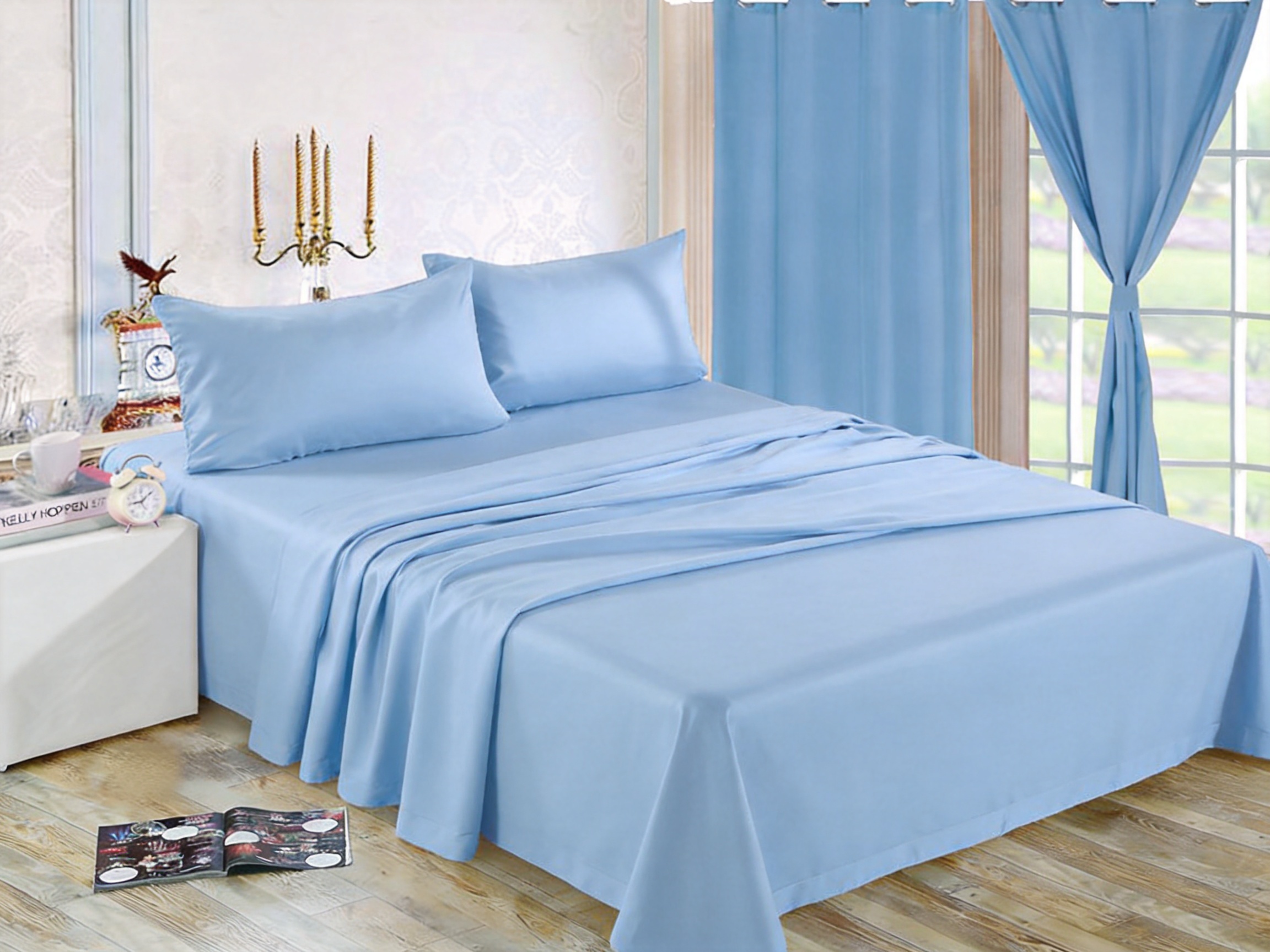
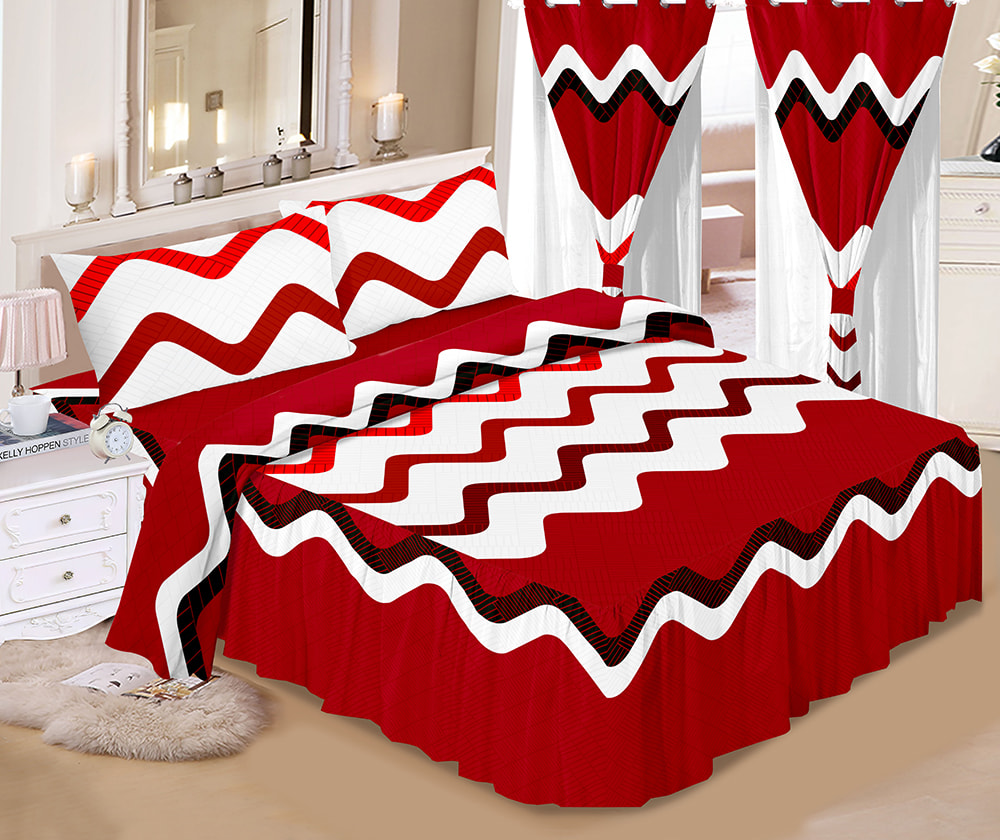
A well-coordinated bedroom depends on more than a comfortable mattress. The appearance, feel, maintenance, and overall compatibility of bedding influence both daily comfort and the visual character of the room. The Solid Color Bedspread 6-Piece Set is designed as a complete home textile solution that combines a bed sheet, bed skirt, pillowcases, and curtains in one coordinated package. Its simple solid-color design, practical dimensions, and polyester construction make it suitable for everyday household use, hospitality applications, retail distribution, and bulk purchasing.
Unlike a basic sheet-only package, this six-piece ensemble provides several complementary textile items at the same time. The bed sheet creates a clean sleeping surface, the bed skirt adds a finished appearance around the bed, the pillowcases complete the sleeping arrangement, and the matching curtains help coordinate the bedroom environment. By supplying these components as one set, the product reduces the difficulty of matching colors, proportions, and fabric appearances across separate purchases.
The set is manufactured by Dongyangshi Menghui Textile Co., Ltd., an industrial and trade enterprise specializing in home textile products. The company’s product range includes bed sheets, quilt covers, pillowcases, cushions, quilts, waterproof mattress protectors, curtains, and other bedding sets. Its manufacturing and export experience supports the development of practical textile products for customers seeking dependable supply, coordinated designs, and OEM-oriented service.
Product Overview
The Solid Color Bedspread 6-Piece Set is built around a unified solid-color concept. Rather than using complex prints or highly decorative patterns, it relies on visual simplicity. This makes the set easier to combine with existing bedroom furniture, wall colors, carpets, lighting, and decorative accessories. Solid colors also have broad market appeal because they can serve different interior styles, from contemporary and minimalist rooms to traditional guest bedrooms and rental properties.
The set is made from 100% polyester, identified in the product information as microfiber polyester for the bedding application. Polyester is widely used in home textiles because it offers a balance of affordability, durability, color versatility, and ease of care. For customers purchasing multiple sets, these characteristics are particularly important. Bedding must withstand repeated washing, regular handling, storage, packaging, and transportation while retaining a presentable appearance.
The design is available in Queen Size and King Size configurations. The Queen Size version includes one bed sheet measuring 210 by 230 centimeters, one bed skirt measuring 152 by 198 plus 30 plus 40 centimeters, two pillowcases measuring 50 by 70 centimeters, and two curtains measuring 120 by 220 centimeters. The King Size version includes one bed sheet measuring 235 by 270 centimeters, one bed skirt measuring 198 by 203 plus 30 plus 40 centimeters, two pillowcases measuring 50 by 100 centimeters, and two curtains measuring 120 by 220 centimeters.
| Set Configuration | Component | Quantity | Dimensions |
|---|---|---|---|
| Queen Size | Bed Sheet | 1 piece | 210 × 230 cm |
| Queen Size | Bed Skirt | 1 piece | 152 × 198 + 30 + 40 cm |
| Queen Size | Pillowcase | 2 pieces | 50 × 70 cm |
| Queen Size | Curtain | 2 pieces | 120 × 220 cm |
| King Size | Bed Sheet | 1 piece | 235 × 270 cm |
| King Size | Bed Skirt | 1 piece | 198 × 203 + 30 + 40 cm |
| King Size | Pillowcase | 2 pieces | 50 × 100 cm |
| King Size | Curtain | 2 pieces | 120 × 220 cm |
The product is classified as a bed skirt set, but its actual configuration is broader than a single bed skirt. It functions as a coordinated bedding and bedroom textile package. This distinction is important for distributors and buyers because the set can be marketed not only as bedding but also as a complete room-refreshing solution.

Solid Color Bedspread 6-Piece Set
Why Solid-Color Bedding Remains Competitive
Interior trends change frequently, but solid-color bedding continues to hold a stable position in the market. Its strength comes from flexibility. A solid-color set can be placed in a bedroom with patterned wallpaper, textured furniture, colorful cushions, or decorative artwork without creating excessive visual competition. It can also support a minimalist room where a calm, uninterrupted color field is preferred.
Patterned bedding often depends on a specific decorative style. A floral pattern may appeal to one customer but appear unsuitable in a modern room. Geometric prints can be attractive but may become visually dated as trends change. Solid-color products generally have a longer selling period because they are less dependent on seasonal design preferences. For wholesalers and retailers, this can help reduce the risk associated with highly specialized patterns.
A coordinated solid-color set also simplifies purchasing decisions. Customers do not need to compare several fabric samples or search for matching curtains and pillowcases. The single-color concept establishes visual consistency from the bed to the surrounding window area. This is especially useful for guest rooms, serviced apartments, student housing, holiday properties, and other environments where multiple rooms need a unified appearance.
The restrained appearance also allows color variation to become a commercial advantage. The same construction can be produced or presented in different colors for different markets, room concepts, and customer groups. Neutral shades can appeal to buyers seeking a timeless appearance, while deeper or more expressive colors can support decorative collections. Because the product is based on a straightforward solid-color format, it can be integrated into private-label and OEM programs more easily than a design dependent on a fixed print.
Advantages of the Six-Piece Configuration
One Purchase for a Coordinated Bedroom
The most immediate advantage of the six-piece format is convenience. A complete package includes the principal textile items needed to create a coordinated bedroom presentation. The bed sheet and pillowcases serve the sleeping area, the bed skirt covers and finishes the lower bed structure, and the curtains extend the same visual theme to the windows.
Buying these items separately can create problems. Slight differences in color, fabric texture, or surface finish may become noticeable when products are placed together. Separate purchases may also involve different suppliers, minimum order quantities, delivery times, and packaging arrangements. A set reduces these complications by presenting the items as one product concept.
A Finished Bed Appearance
The bed skirt contributes to a more orderly and finished appearance. It can help conceal the lower bed frame, storage space, or box-spring structure while adding a decorative layer around the mattress area. The listed dimensions include additional length measurements, which indicate the construction allowance associated with the skirt design. Buyers should confirm the exact fit against their mattress, bed base, and preferred drop length before ordering.
A bed skirt is particularly useful in rooms where the lower part of the bed is visible from multiple angles. It can make a room appear more organized without requiring a separate decorative valance or additional fabric treatment. In hospitality settings, a coordinated bed skirt can also help standardize the appearance of rooms across a property.
Matching Curtains for Room Integration
The inclusion of two curtains makes the set different from many conventional bedding packages. Curtains help extend the solid-color theme beyond the bed. At 120 by 220 centimeters per curtain, the listed pieces are suitable for certain window arrangements, although buyers should verify window width, mounting method, fullness requirements, and desired coverage before purchase.
Matching curtains can create a stronger sense of design continuity. When the bed and window treatments share a color family, the room can look more deliberately furnished. This may be valuable for furniture retailers, home textile stores, and property operators that want to offer a visible room transformation in a single package.
Useful Pillowcase Dimensions
The Queen Size pillowcases measure 50 by 70 centimeters, while the King Size pillowcases measure 50 by 100 centimeters. Providing pillowcases in size-specific configurations helps the set serve different bed formats rather than offering a one-size-fits-all package. The two-piece pillowcase quantity also supports a standard double-pillow arrangement.
For retailers, clearly separating Queen Size and King Size specifications can make product selection easier and reduce customer confusion. Product labels, packaging, and online listings should retain the exact dimensions supplied by the manufacturer and should encourage customers to compare them with their existing pillows.
Material Performance and Daily Use
The set uses 100% polyester, with the bedding described as microfiber polyester. Microfiber construction is valued for its soft hand feel and smooth surface. The supplied product description emphasizes that the fabric is soft to the touch and lays smoothly on the bed. These characteristics support a comfortable and neat everyday experience without relying on elaborate surface decoration.
Polyester is also recognized for practical maintenance. Compared with many natural-fiber alternatives, polyester bedding is often selected for its relatively easy washing and drying behavior, resistance to ordinary handling, and ability to maintain a consistent appearance when properly cared for. Exact care instructions should always be confirmed on the final product label, because washing temperature, detergent choice, drying method, and ironing conditions may vary according to construction and finishing.
For high-volume users, maintenance efficiency is an important part of product value. A bedding set used in homes, guest rooms, or rental properties may be washed regularly. Fabrics that are straightforward to clean can reduce the labor and time associated with routine housekeeping. The smooth solid surface can also make the bed appear presentable after normal arrangement and light adjustment.
The product should not be described as waterproof, fire-resistant, antimicrobial, or certified under a particular standard unless those features are specifically verified for the requested order. Its documented strengths are its polyester construction, soft feel, coordinated six-piece composition, practical dimensions, solid-color design, and suitability for home and bulk purchasing.
Manufacturing Strengths Behind the Product
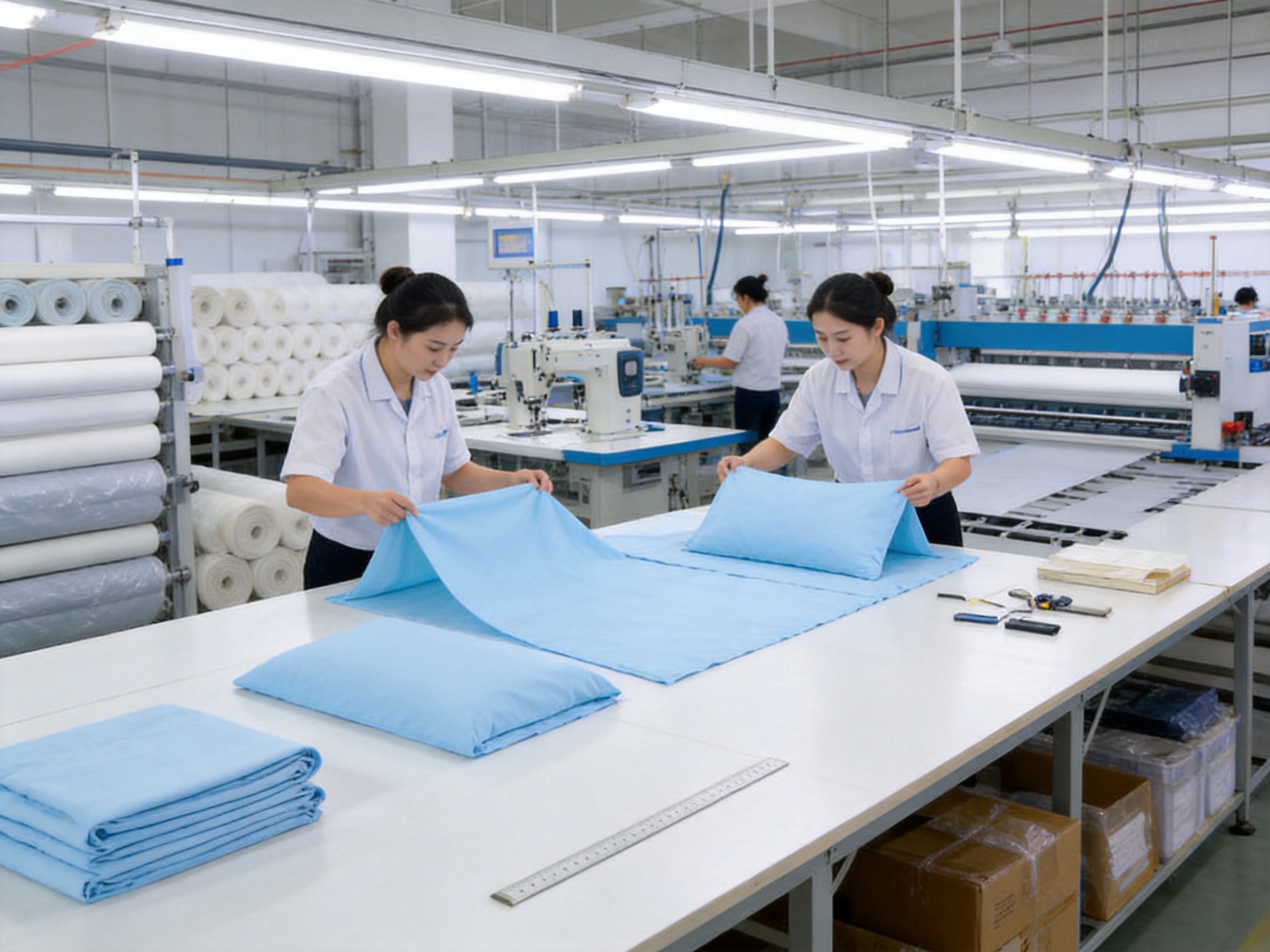
The capabilities of the manufacturer are central to the product’s commercial value. Dongyangshi Menghui Textile Co., Ltd. is described as an industrial and trade enterprise integrating research and development, production, sales, and export. This integrated structure can provide advantages over suppliers that only trade finished goods without direct involvement in product development or factory operations.
According to the supplied company information, the business was founded in 2015 and operates a factory covering more than 10,000 square meters. It has more than 100 employees, intelligent production equipment, a standardized management system, and an experienced foreign trade service team. These resources indicate an organization structured to handle product development, manufacturing coordination, order management, and international supply rather than focusing only on individual retail transactions.
Research and Development Integration
Home textile buyers increasingly expect products that combine appearance, usability, and reliable construction. An internal research and development function can support improvements in fabric selection, sizing, color coordination, sewing details, packaging, and product combinations. For a six-piece set, development work must consider how different items look together, how the dimensions relate to common bed formats, and how the product can be folded and packed efficiently.
Integrated development is also valuable for OEM customers. Buyers may provide reference samples, target dimensions, preferred colors, or packaging requirements. A manufacturer with experience in product development can help translate those requirements into a manufacturable textile program. The company states that customized home textile services are provided based on customer samples, creating an opportunity for buyers to discuss adaptations rather than limiting purchases to a fixed catalog design.
Intelligent Production Equipment
The company’s use of intelligent production equipment is another stated strength. In textile manufacturing, modern equipment can support repeatable cutting, sewing, processing, and production organization. Although the exact machinery and automation level for each product should be confirmed during a technical discussion, the presence of intelligent equipment suggests a focus on improving consistency and production efficiency.
For a coordinated set, consistency is particularly important. The bed sheet, bed skirt, pillowcases, and curtains must maintain a compatible color appearance and overall quality level. Repeated production requires controlled handling of fabric lots, cutting layouts, sewing operations, and final inspection. Production equipment, when combined with trained workers and standardized procedures, can help reduce variation between batches.
Standardized Management
A standardized management system supports order traceability and process organization. This can include procedures for confirming specifications, preparing materials, arranging production, checking finished goods, and organizing export documentation. Buyers should still request the quality-control details appropriate to their order, but a documented management structure can make communication clearer and reduce avoidable misunderstandings.
Standardization is especially useful for wholesale and OEM programs. Retailers may need repeat orders that match earlier deliveries. Hospitality customers may require consistent bedding across multiple rooms or locations. A manufacturer capable of retaining product specifications and communicating production requirements can become a more dependable long-term supply partner.
Foreign Trade and Export Experience
The company states that all products are exported and that it maintains an experienced foreign trade service team. International home textile supply involves more than manufacturing. It may include specification confirmation, sample approval, packing arrangements, shipping coordination, commercial documents, and communication across time zones and languages.
An experienced export team can help buyers clarify product details before production begins. For this six-piece set, important points include the selected bed size, individual dimensions, color requirements, fabric composition, packaging method, labeling, carton quantities, and any customized instructions. Clear confirmation at this stage can reduce the risk of receiving a set that does not match the intended market.
Quality Considerations for Buyers
Product quality should be assessed as a combination of material, construction, appearance, dimensions, and order consistency. A soft fabric alone does not define a successful bedding set. The finished product must also be cut accurately, sewn neatly, packed appropriately, and supplied according to the confirmed specification.
Fabric and Surface Assessment
Buyers evaluating samples should examine the hand feel, surface smoothness, color uniformity, and general appearance of the polyester fabric. Solid-color products make surface irregularities more visible because there is no print pattern to disguise differences. The color should appear consistent across the bed sheet, bed skirt, pillowcases, and curtains, subject to normal variations caused by lighting and production lots.
The fabric should also be reviewed for its intended use. Customers may compare weight, drape, opacity, softness, and recovery after handling. Curtains and bedding may require different performance expectations even when they share a color. The manufacturer and buyer should agree on whether the same fabric construction is intended across all components or whether product-specific construction is used within the set.
Sewing and Finishing
Seams, hems, corners, openings, and attachments deserve attention during sample approval. The bed sheet should have clean edges and a surface that lays smoothly. The bed skirt should maintain its intended shape and provide a visually neat drop. Pillowcases should be checked for accurate dimensions and practical openings. Curtains should be reviewed for hem quality, top treatment, and compatibility with the customer’s preferred hanging system.
Finishing details influence both appearance and service life. Loose threads, uneven hems, skipped stitches, or poorly aligned components can reduce customer satisfaction even when the fabric itself is acceptable. A standardized inspection process can help identify these issues before packing and shipment.
Dimensional Accuracy
Dimensions should be confirmed for each component rather than relying only on the general label of Queen Size or King Size. Bed sizes and mattress constructions vary by market. The supplied measurements provide a product reference, but the suitability of the fit depends on the customer’s bed, mattress thickness, base structure, and desired appearance.
For the bed skirt, the notation 152 × 198 + 30 + 40 centimeters for Queen Size and 198 × 203 + 30 + 40 centimeters for King Size should be clarified with the manufacturer before order placement. Buyers should confirm which measurements refer to the main platform, side drop, end drop, or construction allowance. Precise interpretation supports accurate product listings and helps avoid misunderstandings during retail sales.
Advantages Over Less Comprehensive Competitor Products
The strongest competitive advantage of this product is not simply that it contains six pieces. It is that the pieces work together as a complete visual and functional package. Many competing bedding products focus only on sheets or pillowcases. Others include a bedspread but do not provide matching curtains. This set broadens the customer benefit by addressing several visible elements of the bedroom at once.
Another advantage is the practical solid-color design. Products with highly specific prints may be attractive in a narrow segment but harder to place across different rooms and customer preferences. The solid-color format can serve a wider range of interiors and remain relevant for longer periods. Retailers can also organize the product by color and size without managing a complex collection of individual patterns.
The polyester construction creates a cost-conscious alternative to more expensive textile materials while maintaining a soft, smooth, and presentable surface. This is valuable for bulk buyers who need to balance customer comfort, appearance, and purchase price. It can also support repeat procurement for properties where bedding must be replaced or refreshed across multiple rooms.
The company’s integrated capabilities provide an additional advantage over suppliers with limited manufacturing involvement. Product development, production, sales, export, and customized service are brought together within one business structure. This can simplify communication and create a clearer path from sample approval to finished order.
However, competitive comparisons should be made responsibly. The best supplier depends on the buyer’s exact priorities, including fabric weight, color range, packaging, lead time, minimum order quantity, testing requirements, and customization needs. The supplied product information supports the set’s strengths in coordinated design, practical material, complete configuration, and manufacturer-backed OEM potential. Specific performance comparisons should be verified through samples, technical documents, and approved production standards.
Applications Across Different Markets
Household Bedrooms
For household use, the set provides an efficient way to refresh the bedroom. Customers can replace several mismatched textiles with one coordinated arrangement. The solid color can be paired with contrasting cushions, throws, lamps, or wall decorations. Because the design is simple, the set can be used in master bedrooms, guest rooms, children’s rooms, or secondary sleeping spaces, subject to the selected color and size.
Guesthouses and Hospitality Properties
Guesthouses, serviced apartments, and small hotels may value the set because it supports consistency across rooms. Matching bed skirts and curtains can create a standardized visual identity without requiring a separate sourcing process for every textile component. The polyester construction and practical maintenance profile are also relevant in environments where laundry and room turnover are regular operational concerns.
Hospitality buyers should confirm their own requirements for commercial laundering, fabric testing, colorfastness, flame regulations, hygiene procedures, and replacement cycles. The six-piece configuration provides a useful foundation, but commercial users should order samples and conduct suitability checks before placing a large project order.
Rental and Property Management
Rental properties often need bedding that looks neat, works with different room layouts, and can be replenished efficiently. A coordinated set can help landlords and property managers create a consistent furnishing standard across apartments or guest units. The solid-color design is less likely to conflict with existing furniture, while the curtains can help provide a more complete room presentation.
Retail and Wholesale Distribution
For retailers, the product can be positioned as a value-oriented room set rather than a single bedding component. It may be displayed in physical stores as a coordinated visual package or marketed online through size and color options. Wholesalers can present it to furniture stores, home textile shops, hospitality distributors, and importers seeking practical bundled products.
The product’s clear size categories and defined component list also support organized inventory management. Stock can be divided by Queen Size and King Size, with colors added as further selling variations. Before purchasing, distributors should confirm carton dimensions, gross weight, packing method, barcode or label requirements, and the number of sets per shipping carton.
OEM and Customization Potential
The company provides customized home textile services based on customer samples. This is relevant for buyers who want to create a private-label bedding collection or adapt the standard set for a specific market. Customization may involve fabric selection, color development, label placement, packaging design, component combinations, or dimension adjustments, depending on production feasibility and order requirements.
Sample-based development is useful because textile preferences can vary between countries and sales channels. A buyer may have a preferred fabric hand feel, a particular shade, a different curtain size, or a packaging format designed for shelf display. Supplying an approved reference sample helps establish a shared visual and construction target.
Customization should be managed through a formal approval process. The buyer and manufacturer should confirm the final material composition, measurements, tolerances, color references, sewing details, care labeling, packaging, and inspection criteria. Any change from the standard six-piece configuration should be recorded clearly so that the production team can follow the approved instructions.
OEM customers may also benefit from the company’s broader product range. Since the manufacturer produces bed sheets, quilt covers, pillowcases, cushions, quilts, waterproof mattress protectors, curtains, and other bedding sets, buyers may be able to develop complementary products from the same supply source. A broader product portfolio can help a retailer build a coordinated home textile collection rather than purchasing every category from a different factory.
Packaging, Ordering, and Supply Planning
Packaging is an important part of bedding supply because textile products must be folded, protected, labeled, and transported efficiently. The exact packaging format for this set should be confirmed with the manufacturer. Possible considerations include individual retail packaging, inner cartons, master cartons, protective bags, size labels, color labels, care instructions, and private-brand packaging.
For online sales, packaging should protect the product while keeping the parcel compact and attractive. For wholesale orders, outer-carton strength and clear identification are important for warehouse handling. Buyers should also consider how the six-piece set will be displayed. A package that clearly communicates the size, included pieces, material, and care information can improve customer understanding at the point of sale.
Order planning should begin with a detailed product specification sheet. The sheet should identify the selected size, exact dimensions, fabric composition, color, quantity of each component, packing method, labeling requirements, and inspection standard. If curtains are included, the buyer should specify whether the dimensions describe each panel or the combined pair and whether any hanging accessories are included.
Production planning may also be influenced by fabric availability and color matching. Solid-color collections require careful handling of dye lots or color batches, particularly when multiple components will be used together. Buyers placing repeat orders should discuss color continuity and approval procedures with the manufacturer. A retained approved sample or color standard can support future consistency.
How to Position the Product in the Market
The product can be positioned around convenience, coordination, and practical value. A suitable retail message should explain that the set is more than a bed sheet package. It provides a complete bedroom textile arrangement with matching bedding and curtains. This point can distinguish it from competitors that sell individual pieces or smaller sets.
Marketing should highlight the solid-color appearance and the ability to coordinate with different decorative environments. The product can be presented as a bedroom refresh, a guest-room solution, a rental-property furnishing option, or a bulk-friendly home textile package. The message should remain accurate and avoid making unsupported claims about medical benefits, premium certifications, or specialized performance.
Product listings should show the contents clearly. Customers should be able to identify the number of bed sheets, bed skirts, pillowcases, and curtains included. Queen Size and King Size specifications should be displayed separately, with dimensions presented in a consistent format. Since bed skirt fit can vary according to bed construction, the listing should encourage measurement before purchase.
Color photography and sample presentation are especially important for solid-color textiles. Lighting can affect how colors appear, so buyers should use consistent images and, where possible, provide color references. Retailers selling multiple colors can organize them into neutral, warm, cool, or seasonal groupings, depending on their merchandising strategy.
Care and Maintenance Guidance
Care instructions should follow the final manufacturer label supplied with the product. In general, polyester bedding is selected for practical laundering, but the appropriate washing temperature, cycle, detergent, drying method, and ironing setting must be confirmed for the actual fabric and finish. Customers should avoid assuming that all polyester textiles have identical care requirements.
Routine care can help preserve the appearance of the set. Bedding should be washed according to its use level, dried thoroughly, and stored in a clean, dry environment. Curtains may require separate washing or different handling depending on their construction and any attached components. The bed skirt should be removed carefully to avoid stressing seams or catching the fabric on the bed frame.
For commercial users, a written laundry procedure can help maintain consistency. Staff should be trained to separate colors when appropriate, inspect seams during folding, and report damage before the next room installation. Proper storage and rotation can also help distribute wear across multiple sets.
Responsible Purchasing and Product Verification
Buyers should request a sample before committing to a large order. A sample allows the customer to evaluate the fabric feel, color, dimensions, sewing quality, packaging, and overall relationship between the components. It also gives the buyer an opportunity to place the bed skirt on the intended bed and check the curtains against the planned window.
Material claims should be confirmed through the manufacturer’s product documentation and, when necessary, independent testing. The stated composition for this product is 100% polyester. Any additional claims, such as recycled content, special finishing, or regulatory compliance, should be supported by appropriate documents before appearing in advertising or packaging.
Buyers should also establish an inspection standard before production. The standard may cover acceptable dimensional tolerance, color variation, stitching defects, stains, holes, loose threads, packaging damage, and quantity accuracy. Clear inspection expectations protect both parties by defining what constitutes an acceptable finished product.
Communication is particularly important for international orders. The manufacturer’s foreign trade team can assist with specification confirmation and export coordination, but the buyer should provide complete instructions and respond promptly to sample or production questions. A detailed purchase order reduces ambiguity and supports a smoother manufacturing process.
Q&A: Solid Color Bedspread 6-Piece Set
What is included in the six-piece set?
The set includes one bed sheet, one bed skirt, two pillowcases, and two curtains. The exact dimensions depend on whether the buyer selects the Queen Size or King Size configuration.
What material is used?
The listed material is 100% polyester. The bedding description also identifies the construction as microfiber polyester. Buyers requiring a specific fabric weight, weave, finish, or testing standard should confirm those details with the manufacturer before ordering.
Is the product available in Queen Size and King Size?
Yes. The supplied specifications include both Queen Size and King Size versions. The bed sheet, bed skirt, and pillowcase dimensions differ between the two configurations, while the listed curtain dimensions remain 120 by 220 centimeters per curtain.
Are the curtains included in the package?
Yes. Two curtains are included in each listed size configuration. Buyers should confirm whether the stated 120 by 220 centimeter dimension applies to each curtain panel and should verify the window coverage required for their application.
Can the bed skirt fit every Queen or King bed?
Not necessarily. Bed frames, mattresses, platforms, and drop heights vary. Customers should compare the listed bed skirt dimensions with the actual mattress and bed structure. The manufacturer should be consulted if a custom dimension is required.
What makes the solid-color design useful?
A solid-color design is easy to coordinate with different bedroom styles and furnishings. It can suit minimalist, contemporary, traditional, rental, guest-room, and hospitality environments. It also offers broader long-term usability than a highly specialized decorative print.
Is the set suitable for wholesale purchasing?
Yes. The product description identifies it as suitable for home use and bulk purchasing. Wholesale buyers should confirm minimum order quantities, color options, packaging, production lead time, shipping terms, and inspection requirements.
Can the product be customized?
The company provides customized home textile services based on customer samples. Potential customization should be discussed in advance and may include dimensions, colors, labels, packaging, or component arrangements, subject to production feasibility and order conditions.
Does the manufacturer produce other home textile products?
Yes. The stated product range includes bed sheets, quilt covers, pillowcases, cushions, quilts, waterproof mattress protectors, curtains, and other bedding sets. This broader range may support coordinated sourcing for retailers and project buyers.
Where is the manufacturer located?
The manufacturer is located in Dongyang City, Zhejiang Province, China. Its listed facility is in the East Area of Wanyang Zhongchuang City, Economic Development Zone, Dongyang City.
What should be confirmed before placing an order?
Buyers should confirm size, individual dimensions, material composition, color, fabric construction, packaging, labels, care instructions, minimum order quantity, delivery schedule, inspection standards, and any customization requirements. A pre-production sample or approved reference is recommended for substantial orders.
Conclusion
The Solid Color Bedspread 6-Piece Set offers a practical combination of coordinated design and everyday home textile functionality. Its package includes the essential bedding elements of a bed sheet, bed skirt, and pillowcases while adding matching curtains to create a more complete bedroom presentation. The solid-color style supports broad decorative compatibility, and the polyester microfiber construction is intended to provide a soft, smooth, and manageable textile surface.
For consumers, the set simplifies bedroom furnishing and reduces the need to match separate products. For retailers and wholesalers, it creates a straightforward product concept with Queen Size and King Size options. For hospitality, rental, and project buyers, it offers a potential way to standardize room appearance across multiple units.
The manufacturer’s stated strengths further support the product’s supply potential. Its integrated research and development, production, sales, export, and customization capabilities are backed by a factory of more than 10,000 square meters, intelligent production equipment, more than 100 employees, standardized management, and an experienced foreign trade service team. These capabilities can be valuable for buyers seeking repeatable production, OEM cooperation, and broader home textile sourcing.
As with any textile order, final suitability depends on confirmed specifications, sample approval, quality requirements, and intended use. When these details are managed carefully, the Solid Color Bedspread 6-Piece Set can serve as a versatile and commercially relevant addition to modern bedding and home textile collections.
References
1. Product specification sheet for the Solid Color Bedspread 6-Piece Set, including material, components, sizes, and dimensions.
2. Manufacturer-provided company information regarding research and development, production capacity, factory operations, export activities, and customized home textile services.
3. General textile product evaluation principles covering fabric composition, dimensional accuracy, sewing quality, color consistency, packaging, and inspection procedures.
4. General home textile care guidance for polyester and microfiber bedding products, subject to the care label supplied with the finished product.
5. General purchasing guidance for OEM bedding, including sample approval, specification confirmation, packaging review, and quality-control planning.
Product: Solid Color Bedspread 6-Piece Set


Contact Us for More Details
Don't hesitate to contact when you need us!
Contact Information
Add:
Building 1, East Area, Wanyang Zhongchuang City, Economic Development Zone, Dongyang City, Zhejiang Province, China
Phone:
Tel:
E-mail:
Quick Links
Product Category
QR Code


+86-13616899966
+86-579-86610966
