 English
 русский
 Español
 عربى


Printed Single-Layer Bed Sheet 5-Piece Set: Lightweight Comfort, Lasting Style, and Reliable Textile Manufacturing
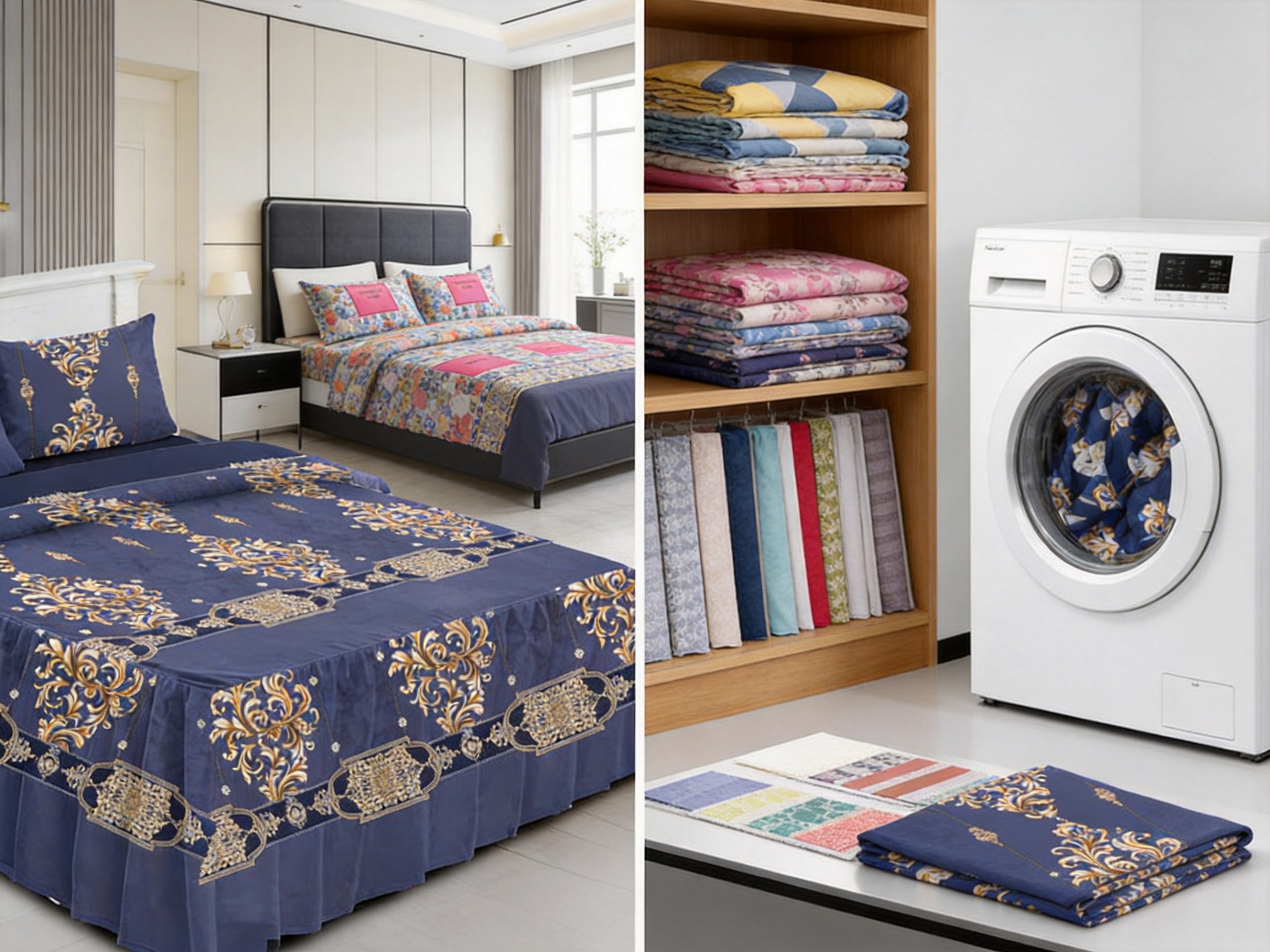
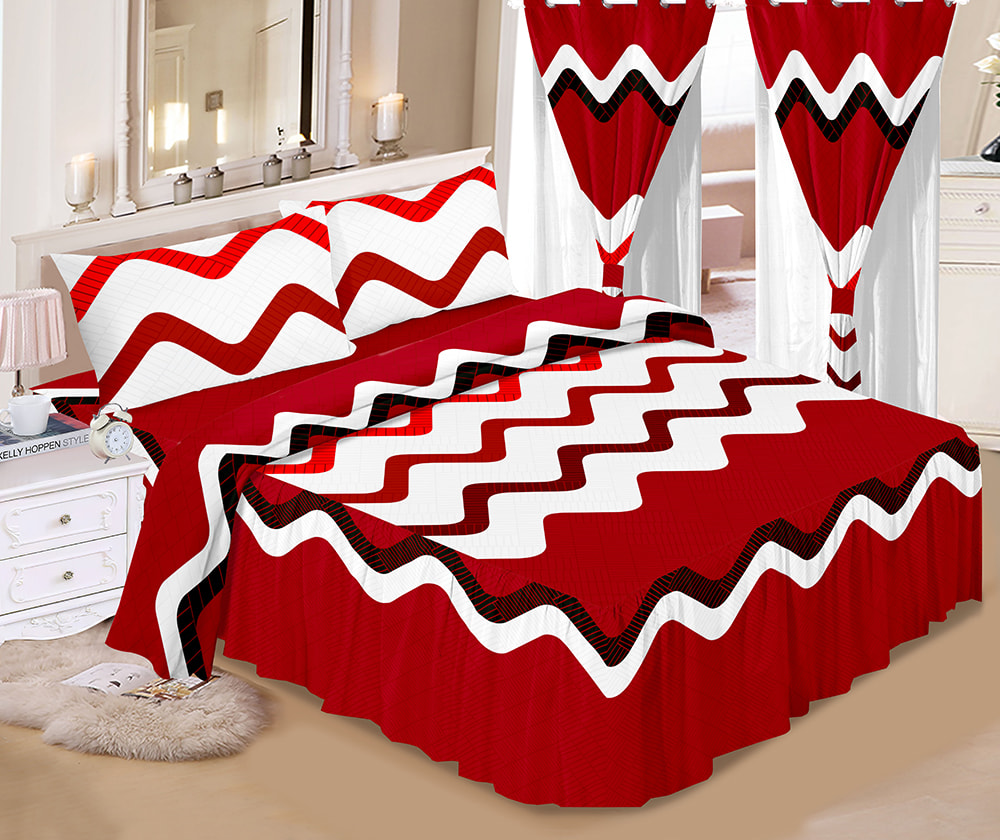
In modern bedrooms, bedding is expected to do more than cover a mattress. It should create a polished visual impression, feel pleasant against the skin, withstand repeated laundering, and remain practical throughout the year. The Printed Single-Layer Bed Sheet 5-Piece Set is designed around these needs. It combines a lightweight single-layer construction with vibrant printed styling, soft microfiber polyester, coordinated accessories, and easy-care performance. The result is a bedding solution that gives bedrooms a tidy, expressive, and comfortable appearance without the excessive weight associated with heavily filled quilts or multilayer bedspreads.
This set is particularly suitable for households that value a fresh bedroom environment, distinctive decorative patterns, and straightforward maintenance. Its single-layer format supports year-round use, while the printed surface introduces color and personality to the room. Because the design, fabric character, and supporting accessories are developed as a coordinated set, the finished bed can appear more unified than it would with separately selected sheets, pillowcases, and decorative pieces.
Behind the product is an integrated textile manufacturer with experience in research and development, production, sales, and export. The manufacturer operates a factory of more than 10,000 square meters and employs more than 100 people. Its product range includes bed sheets, quilt covers, pillowcases, cushions, quilts, waterproof mattress protectors, curtains, and other bedding sets. This broader manufacturing capability is important because it allows the company to understand bedding as a complete textile system rather than as a single isolated product.
The following article examines the set’s materials, design, comfort, maintenance, production strengths, customization potential, and suitability for different markets. It also explains how a lightweight printed construction can offer practical advantages over heavier or less coordinated alternatives.
1. Product Overview and Design Concept
The Printed Single-Layer Bed Sheet 5-Piece Set is built around a simple but effective idea: provide a complete visual bedding solution with a light, breathable construction and a strong decorative identity. The printed design uses vibrant colors and layered patterns to create a distinctive atmosphere. Rather than relying on complicated quilting or thick filling, the product uses the surface design and coordinated set structure to deliver much of its visual impact.
A single-layer bedspread or sheet set can be especially useful in homes where bedding must be changed, washed, folded, and stored frequently. Since there is no bulky internal filling, the product is easier to handle than many thick comforters. It can be spread across the bed with minimal effort, folded into a relatively compact form, and stored when seasonal or decorative rotation is required.
The five-piece format also supports a coordinated bedroom presentation. The principal bed covering is visually matched with pillowcases and related accessories, allowing the user to create a consistent color and pattern story. This can be valuable for residential bedrooms, guest rooms, rental properties, hospitality settings, and retail collections where a complete appearance is more attractive than a collection of unrelated individual pieces.
The product is identified as a printed single-layer bed sheet five-piece set. In commercial listings, bedding terminology can vary by market, and some buyers may classify a lightweight bedspread-style set under bed skirt, bed cover, or sheet-set categories. For purchasing accuracy, buyers should confirm the exact dimensions and component list before placing an order. The design concept, however, is clear: a lightweight, printed, coordinated bedding set intended to protect the mattress area and improve the overall look of the bedroom.
2. Material Performance: 100% Microfiber Polyester
The set is made from 100% microfiber polyester. Microfiber polyester is widely used in household textiles because it can provide a smooth hand feel, practical durability, and consistent surface coloration when properly processed. In this product, the fabric supports the goal of creating bedding that is soft, visually crisp, and easy to maintain.
One of the key material advantages is the soft touch. The fine fibers can create a smooth surface that feels comfortable during daily use. This tactile quality is particularly important for bedding because the product remains in close contact with the user for extended periods. A soft fabric can contribute to a more pleasant sleeping environment while also making the bed feel carefully finished and well presented.
Microfiber polyester is also associated with easy-care performance. The product description emphasizes wrinkle resistance and colorfastness, two features that help preserve the appearance of bedding after regular washing. Wrinkle resistance reduces the need for extensive ironing or pressing, which is useful for busy households and commercial users. Colorfastness helps the printed design retain its intended character over time when the product is washed according to suitable care instructions.
The fabric’s smoothness supports a neat visual effect. After the bedspread is placed on the mattress, the surface can lie more evenly and appear crisp without requiring the heavy structure of a padded cover. This makes the set suitable for users who prefer a clean, orderly bedroom but do not want a thick or overly warm top layer.
Another practical benefit of polyester microfiber is its relatively manageable weight. Compared with many filled bedding products, a single-layer polyester set is easier to lift, fold, transport, and store. This is an important advantage in homes with limited storage space and in hospitality or retail operations where staff may need to handle large quantities of bedding.
Softness and Everyday Contact
Softness is not only a comfort feature; it also influences how a product is perceived at the point of purchase. When customers touch a bedding sample, a smooth and gentle surface can immediately communicate quality. For wholesalers, retailers, and project buyers, this tactile impression can support product presentation in showrooms, catalogs, and sample rooms.
The microfiber surface also complements the visual purpose of the printed pattern. A smooth fabric allows colors and layered motifs to appear more clearly, helping the design become an intentional part of the room rather than a rough or visually interrupted surface.
Wrinkle Resistance and Neat Appearance
Bedrooms often look more inviting when the bed is arranged neatly. However, bedding that creases heavily can require frequent adjustment. The wrinkle-resistant character described for this set helps reduce the time needed to restore a clean appearance after washing or daily use.
This feature can provide particular value in guest accommodation, serviced apartments, dormitories, and other environments where bed presentation must remain consistent. A product that can be spread smoothly and maintain a tidy look with limited effort can reduce routine labor while improving the perceived quality of the room.
Colorfast Printed Styling
The set’s printed design is one of its principal differentiators. Vibrant colors and layered patterns create a stronger visual identity than a plain fabric, while the colorfast quality helps support long-term appearance. Patterned bedding can function as a major decorative element, allowing users to update a room without repainting walls, replacing furniture, or purchasing multiple decorative accessories.
Because patterns can influence how a room feels, the set can be offered to markets with different aesthetic preferences. Depending on the selected print, it may suit contemporary bedrooms, expressive youth rooms, guest rooms, seasonal collections, or customers who prefer a more individual home style.

Printed Single-Layer Bed Sheet 5-Piece Set
3. Advantages of the Single-Layer Construction
The single-layer format is a defining product advantage. Many consumers want the visual richness of a bedspread but do not need the warmth or bulk of a thick quilt. A lightweight layer can provide surface coverage, decorative impact, and basic mattress-area protection while allowing users to add blankets or duvets separately when colder weather requires additional warmth.
This flexible approach makes the product suitable for year-round use. In warm seasons, the set can be used as a light cover or bedspread. In cooler periods, it can be combined with other bedding layers according to personal preference and indoor temperature. This adaptability reduces the need to purchase an entirely different decorative bed covering for every season.
Single-layer construction also makes daily handling easier. Users can place the product on the bed without managing the weight and volume of a filled comforter. It can be removed quickly for washing, folded into a cabinet, or transported between rooms. For elderly users, children, short-term renters, and hospitality staff, lower handling weight can be a meaningful practical benefit.
Breathability and Seasonal Flexibility
A lightweight construction generally allows more comfortable use in climates or rooms where excessive warmth is undesirable. Although comfort depends on temperature, humidity, sleepwear, and additional blankets, a single-layer bed covering is naturally more flexible than a thick insulated product. It can help create a fresh, less crowded bed environment and is especially appropriate for families who prefer light bedding.
Breathability is also relevant to room presentation. A lighter cover tends to settle naturally on the bed rather than forming a bulky mound. This supports the smooth, elegant appearance described for the product and allows the printed surface to remain visible.
Lower Storage and Handling Demands
Storage is often overlooked when bedding is selected. Thick products occupy significant cabinet space and can be difficult to fold consistently. A lightweight single-layer set generally requires less room, making it appropriate for apartments, dormitories, vacation homes, and hospitality operations with limited linen storage.
From a supply-chain perspective, lighter products may also be more convenient to pack, count, and distribute. The exact shipping efficiency depends on packaging, dimensions, order volume, and logistics arrangements, but a non-filled design avoids the internal bulk associated with many padded products. This can help buyers plan inventory more easily and reduce the physical burden of warehouse handling.
4. Printed Design as a Bedroom Styling Tool
Bedding occupies a large visual area in most bedrooms. Consequently, the choice of bed covering can influence the entire atmosphere of the space. The vibrant printed design of this five-piece set is intended to do more than provide functional coverage. It creates a focal point and introduces a coordinated decorative direction.
Layered patterns can add depth and movement to an otherwise simple room. When combined with matching pillowcases and accessories, the print helps connect the center of the bed with the surrounding sleep area. This coordinated appearance can make the bedroom feel more deliberately designed, even when the furniture and wall finishes remain understated.
Printed bedding can also be used to refresh interiors economically. A customer may change the visual character of a room by replacing the bed covering and pillowcases rather than purchasing new furniture. For seasonal retail, a fresh print can support collection updates and encourage customers to make relatively simple home décor changes.
Coordinated Accessories
The matching pillowcases and accessories are important to the product’s overall value. Purchasing individual pieces separately can create difficulties in matching shades, pattern scale, and fabric appearance. A coordinated five-piece set avoids much of this uncertainty and provides a ready-made design solution.
For retailers, sets can also simplify merchandising. A complete bed display can be arranged with fewer separate stock-keeping decisions, while customers can understand the intended look immediately. For project buyers, coordinated sets support consistency across multiple rooms, which is useful when a unified interior standard is required.
The precise contents of a five-piece set can differ according to size, market, and order specification. Buyers should verify whether the package includes the main sheet or bedspread, pillowcases, and any additional matching pieces, as well as the dimensions of each component.
5. Comparison with Common Bedding Alternatives
The product’s advantages become clearer when it is compared with several common alternatives. It is not intended to replace every type of bedding. Instead, it serves users who prioritize lightness, decoration, coordinated styling, and easy maintenance.
| Bedding Option | Typical Strength | Potential Limitation | Position of the Single-Layer Printed Set |
|---|---|---|---|
| Heavy filled comforter | High warmth and substantial loft | Bulkier, heavier, and more demanding to store or wash | Provides a lighter decorative layer that can be used alone or with separate warm bedding |
| Plain sheet set | Simple, practical, and easy to coordinate with other décor | May offer less visual impact and a less complete presentation | Adds vibrant patterns and coordinated accessories for a more distinctive bedroom style |
| Thick quilted bedspread | Structured appearance and additional weight | Can feel warmer and require more handling effort | Offers a smooth, lightweight alternative for users who prefer a fresh and less bulky bed |
| Individually purchased bedding pieces | Maximum freedom to select each item | Color, size, and pattern matching can be difficult | Provides a coordinated five-piece solution with a unified design language |
Compared with a heavy comforter, the single-layer design is more focused on decorative coverage and flexible layering than on insulation. This distinction makes it attractive to warm-climate users and to customers who prefer to control warmth with separate blankets or duvets.
Compared with a plain sheet set, the printed design provides stronger visual character. The product can serve as a decorative statement while still retaining the practical advantages of a washable textile set. Compared with a thick quilted bedspread, it offers lower weight and easier handling. Compared with individually selected pieces, it reduces the risk of mismatched patterns or tones.
These advantages can give the product a clear position in the market: a stylish, lightweight, coordinated bedding solution for year-round home use and selected commercial applications.
6. Manufacturing Strengths and Integrated Textile Capability
The manufacturer behind the product is an industrial and trade enterprise integrating research and development, production, sales, and export. This integrated structure is valuable because each stage of the product journey can inform the others. Design decisions can be evaluated against production realities, factory teams can respond to customer requirements, and export experience can help support documentation and communication for overseas buyers.
Founded in 2015, the company has developed a product portfolio covering a broad range of home textiles. Its factory covers more than 10,000 square meters and is equipped with intelligent production equipment. The company has more than 100 employees, a standardized management system, and an experienced foreign trade service team.
For bedding buyers, these capabilities indicate a production environment designed to support repeat manufacturing rather than occasional small-scale output. A standardized system can help organize material purchasing, pattern production, cutting, sewing, inspection, packaging, and shipment. Intelligent equipment can support efficiency and consistency in suitable production stages, while experienced staff can help manage the coordination required for export orders.
Research and Development
Research and development is important in printed bedding because product success depends on the relationship between pattern, fabric, construction, size, and intended market. A design that looks attractive in a digital image must also translate effectively onto the selected textile surface. The production team must consider how colors, layered motifs, and fabric handling interact during manufacturing and laundering.
An integrated research and development function can help the company evaluate product concepts before they become large-scale orders. It can also support adjustments based on customer samples, target market preferences, room styling trends, and practical requirements such as easy care or lightweight use.
Intelligent Production Equipment
The use of intelligent production equipment supports a more organized manufacturing process. Such equipment may assist with precision, repeatability, material handling, or production monitoring, depending on the specific operation. It should not be interpreted as a guarantee that every process is fully automated, but it does indicate investment in modern production capability.
For a printed five-piece set, production consistency matters across multiple components. The main bed covering and matching pillowcases need to maintain visual coordination. Accurate cutting and controlled sewing help ensure that the finished pieces conform to the intended specifications. Organized equipment and standardized work methods can reduce avoidable variation between production batches.
Standardized Management
A standardized management system can contribute to more reliable order execution. Bedding production involves many interconnected details, including fabric selection, print confirmation, size specifications, component quantities, sewing instructions, finishing requirements, inspection, packing, and shipping documentation.
When these details are recorded and managed systematically, the risk of misunderstanding can be reduced. This is especially important for overseas buyers, who may be ordering from reference samples or product specifications prepared in another language. Clear communication and controlled production records can help align expectations between buyer and factory.
Export and Foreign Trade Experience
The company states that all products are exported and that it maintains an experienced foreign trade service team. Export experience can be a significant advantage for international customers because successful overseas supply requires more than manufacturing alone. It involves communication, quotation, sample handling, production scheduling, packaging coordination, shipping preparation, and after-sales communication.
A dedicated foreign trade team can help customers navigate these steps more efficiently. It can also support buyers who need customized products based on customer samples. The ability to work from samples is particularly useful for retailers, private-label programs, hospitality suppliers, and distributors seeking a specific appearance rather than a completely standard catalog item.
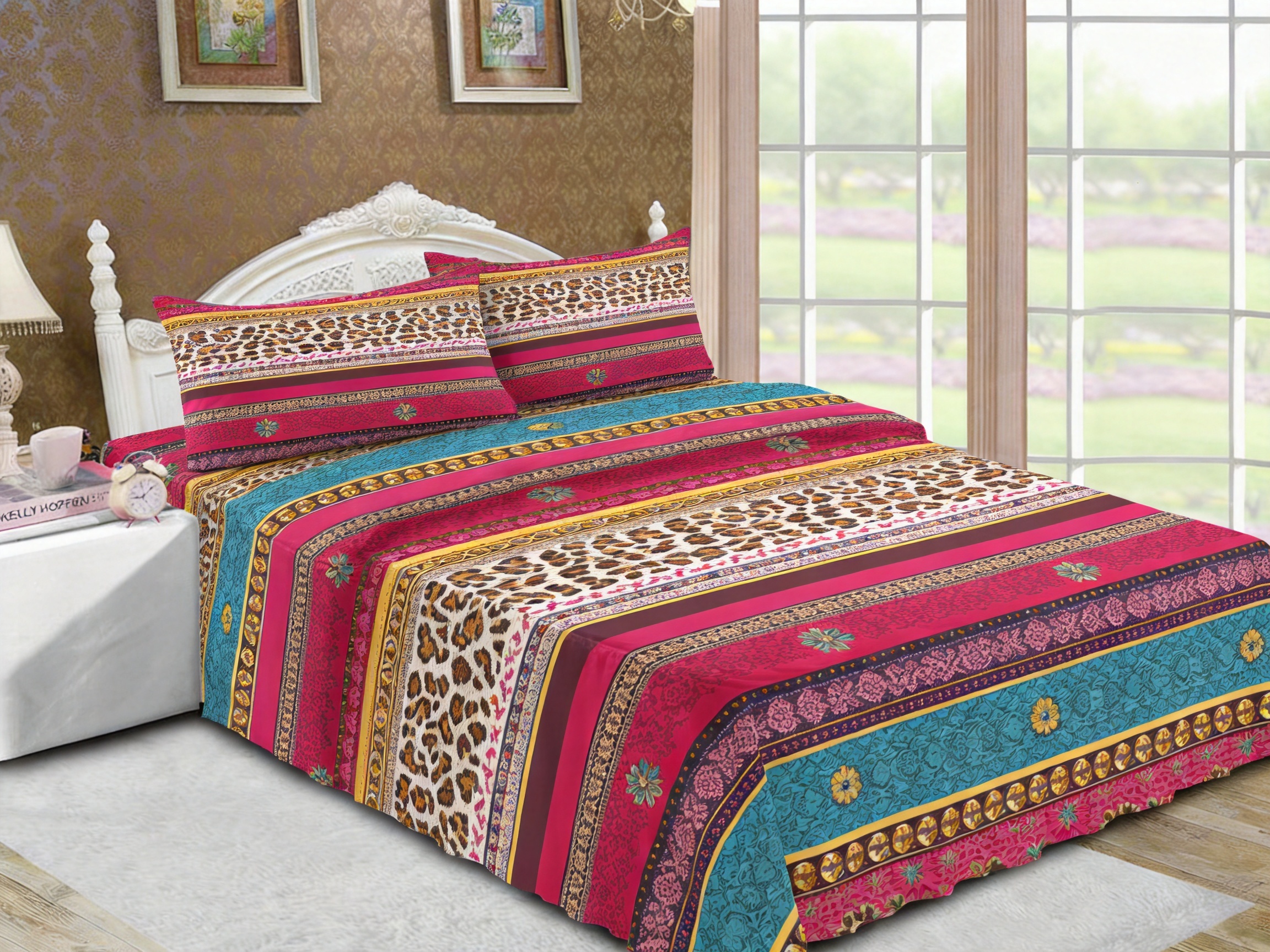
7. Production Process for a Printed Single-Layer Bedding Set
Although exact factory procedures may vary according to order requirements, a professional production workflow for this type of product normally begins with material and design confirmation. The buyer and manufacturer first establish the fabric composition, print artwork, color expectations, dimensions, piece count, construction details, packaging, and quality requirements.
Step One: Design and Specification Confirmation
At the beginning of an order, the printed pattern and product specifications must be clearly confirmed. This includes the placement and scale of the design, the intended color appearance, the size of the main piece, the number of pillowcases or accessories, and the final packing method. Any ambiguity at this stage can create problems later, so written specifications and approved samples are valuable.
For customized programs, the buyer may provide a physical sample, reference image, artwork file, or preferred color direction. The manufacturer’s research and development and foreign trade teams can then coordinate the feasibility review and prepare a sample or production reference.
Step Two: Fabric Preparation
The selected 100% microfiber polyester fabric must be prepared for printing and cutting. Fabric inspection may focus on surface consistency, width, shade, cleanliness, and general suitability for the intended product. Consistent fabric preparation is important because irregularities can affect the visual quality of the printed pattern and the appearance of the finished bedding.
Step Three: Printing and Color Control
The print is applied according to the approved design. Vibrant colors and layered patterns require attention to color balance, registration, and overall clarity. The purpose is to achieve a surface that reflects the intended design while maintaining an attractive and consistent appearance across the main bed covering and matching components.
Color control is especially important in coordinated sets. If pillowcases or accessories differ noticeably from the main piece, the unified appearance may be weakened. Controlled production references and sample comparison can help reduce this risk.
Step Four: Cutting
After the printed fabric is ready, it is cut into the required component shapes and sizes. Accurate cutting helps maintain dimensional consistency and supports clean sewing. It also helps ensure that the printed design is positioned appropriately on each piece, particularly when the pattern has directional elements or a deliberate layered arrangement.
Step Five: Sewing and Assembly
The cut pieces are assembled according to the product construction. Sewing quality influences durability, appearance, and ease of use. Straight seams, suitable edge finishing, and consistent dimensions contribute to a more professional result. Since the product is lightweight, the sewing process must balance secure construction with a smooth and comfortable finished surface.
Step Six: Finishing and Inspection
Finishing may include thread trimming, surface checking, folding, and preparation for packing. Inspection should evaluate the printed appearance, sewing, measurements, component count, general cleanliness, and packaging condition. Buyers with specific requirements can define additional inspection points in advance.
Step Seven: Packing and Export Preparation
The final sets are folded and packed according to the agreed specification. Proper folding helps the product present neatly when opened and can support efficient storage during transportation. Export preparation may include carton marking, quantity confirmation, shipping documentation, and coordination with the buyer’s logistics arrangements.
This process illustrates why integrated manufacturing matters. A product’s appearance and performance depend on multiple stages working together. A strong design cannot compensate for inaccurate cutting, and good fabric cannot fully compensate for inconsistent sewing. The manufacturer’s combined production, management, and export capabilities are therefore relevant to the product’s overall value.
8. Quality and Durability Considerations
Durability in home textiles is influenced by fabric quality, print performance, seam construction, laundering practices, and frequency of use. The product is designed with wrinkle resistance and colorfastness in mind, supporting continued visual appeal after regular washing. However, proper care remains essential for preserving the fabric and print.
When evaluating the set, buyers should consider several practical quality points. The surface should feel smooth and consistent. The print should appear clear and appropriately aligned. Seams should be even and secure. The finished dimensions should correspond to the confirmed specification. Pillowcases and other accessories should match the main design in color and pattern character.
Commercial purchasers may also wish to establish an inspection standard before production begins. This can include acceptable measurement tolerances, print shade requirements, seam quality, labeling, packaging, and carton quantities. Defining these requirements in advance supports clearer communication and more consistent order evaluation.
The company’s standardized management system and export service experience can support this type of coordination. Nevertheless, buyers should always approve samples and confirm final specifications before mass production, particularly for customized designs or private-label programs.
9. Care and Maintenance Guidance
Microfiber polyester bedding is generally valued for convenient maintenance, but care instructions should be based on the final product label and the manufacturer’s recommendations. In general, users should sort printed bedding by color, select an appropriate washing program, avoid harsh treatment, and ensure the product is thoroughly dried before storage or reuse.
To protect the printed surface, users should avoid unnecessarily high temperatures or aggressive washing conditions unless the care label specifically permits them. Mild detergent is typically preferable for maintaining fabric feel and color appearance. Strong bleaching agents may affect printed colors or fabric performance and should not be used unless expressly approved.
Because the set is wrinkle-resistant, extensive ironing may not be necessary. Removing the bedding promptly after washing, gently smoothing it, and folding it carefully can help maintain a neat appearance. If ironing is required, the user should follow the temperature guidance on the care label.
Regular airing can help maintain freshness between washes, especially when the bedspread is used as a decorative top layer rather than as the only sleeping layer. When stored, the set should be completely dry and placed in a clean, dry area away from direct sunlight for prolonged periods.
10. Applications in Residential and Commercial Settings
The product is primarily suited to residential bedrooms, where its combination of decorative print, lightweight construction, and coordinated accessories can create a comfortable and visually complete environment. It may be especially appealing to families who prefer fresh, tidy rooms and customers who want bedding with a more individual style.
Guest rooms are another suitable application. A printed five-piece set can establish a welcoming appearance without requiring complex decoration. Property owners can select coordinated designs for different rooms while maintaining a consistent quality level across the accommodation.
Rental apartments and vacation homes may also benefit from the product’s manageable handling and complete presentation. Since the set includes coordinated pieces, property managers can refresh the room’s appearance efficiently. The lightweight construction can make routine laundering and linen rotation easier than handling thick filled products.
Retailers and distributors can position the set as an affordable room-refreshing product. Printed bedding is often attractive to customers who want a visible home update without undertaking renovation. Different patterns and color directions can be developed for different consumer groups, room styles, or seasonal campaigns.
Hospitality and project buyers should confirm whether the fabric, dimensions, packaging, and care performance match their operational requirements. The manufacturer’s ability to provide customized home textile services based on customer samples may be valuable when a project requires a specific print, size, or coordinated collection.
11. Customization and OEM Potential
The manufacturer provides customized home textile services based on customer samples. This capability can support OEM and private-label programs that require more than a standard catalog item. Buyers may approach the manufacturer with a reference product, color direction, pattern concept, size schedule, packaging design, or target market specification.
Customization should be managed through a structured development process. The buyer should provide as much information as possible about the desired fabric, print, construction, dimensions, component count, labels, packaging, and quality expectations. The manufacturer can then evaluate feasibility and prepare a sample or production reference for approval.
For printed bedding, artwork preparation deserves special attention. Buyers should confirm whether they are providing a finished print file or only a visual concept. They should also discuss color expectations, repeat size, pattern direction, and how the design should appear on different components. These details can strongly influence the final result.
Customization may also involve the weight and feel of the fabric, edge finishing, label placement, and retail presentation. Although the supplied product information identifies the base material as 100% microfiber polyester, buyers should confirm whether alternate fabric weights, finishes, or constructions are available for a particular project.
The company’s factory scale, product range, and foreign trade team provide a foundation for coordinating customized orders. Buyers should still request clear sampling, production timelines, minimum order information, and quality standards before confirming a commercial program.
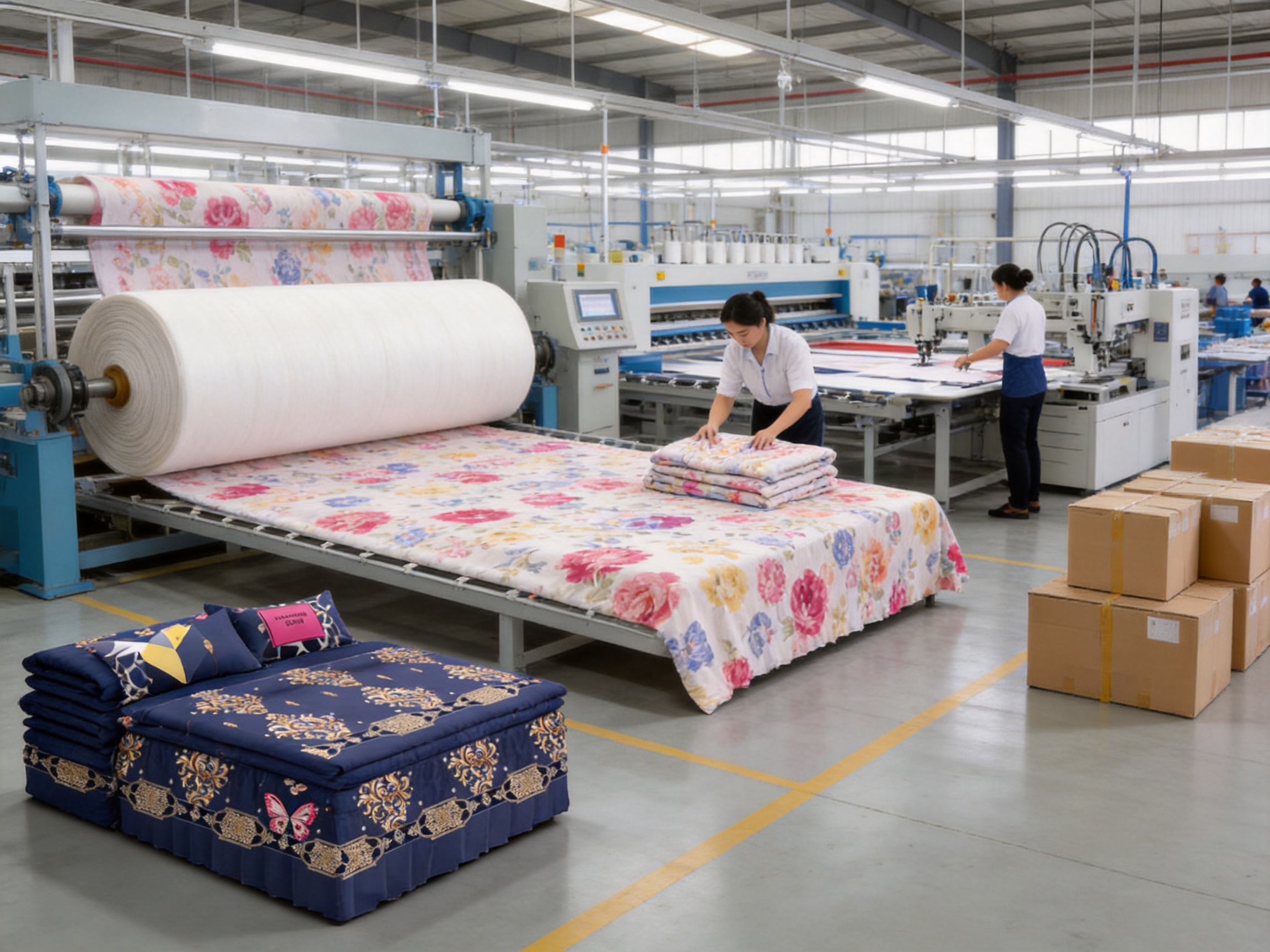
12. Why Buyers May Prefer This Product
The product offers a balanced combination of decorative impact and practical usability. Its main strengths can be summarized as follows:
Lightweight year-round construction: The single-layer format is suitable for users who prefer bedding that is easy to handle and not excessively warm. It can be used alone in mild conditions or combined with other layers when additional warmth is needed.
Soft microfiber surface: The 100% microfiber polyester fabric provides a smooth hand feel that supports everyday comfort and a polished product impression.
Vibrant printed design: The layered print gives the bedroom a distinctive atmosphere and helps the product stand out from plain bedding options.
Wrinkle-resistant appearance: The fabric is designed to remain neat and crisp with regular care, reducing the need for extensive pressing.
Colorfast performance: The printed design is intended to maintain its visual appeal after repeated washing when suitable care practices are followed.
Coordinated five-piece presentation: Matching pillowcases and accessories create a unified look and simplify bedroom styling.
Efficient handling and storage: The non-filled construction is easier to fold, move, and store than many bulky comforters or heavily quilted bedspreads.
Manufacturer support: Integrated research and development, production, export, and customized service capabilities can support both standard and project-based orders.
These strengths make the set competitive in a market where consumers increasingly expect home textiles to combine function, aesthetics, and convenience. It is not merely a basic sheet, but it also avoids the weight and complexity of a heavily insulated comforter. Its value lies in this middle position.
13. Buyer Checklist Before Ordering
Before purchasing, buyers should confirm the exact product details with the manufacturer or seller. The following checklist can help prevent misunderstandings:
First, confirm the bed size and finished dimensions of the main piece. Mattress sizes and bedding terminology vary between countries, so measurements should be reviewed in centimeters or inches rather than relying only on labels such as single, double, queen, or king.
Second, confirm the contents of the five-piece package. The product description mentions matching pillowcases and accessories, but the precise number and type of pieces should be documented in the quotation or order confirmation.
Third, review the printed design, color references, and pattern placement. For customized orders, an approved sample or documented color standard is recommended.
Fourth, confirm fabric composition and any available fabric-weight information. The stated composition is 100% microfiber polyester, while the final hand feel and drape may depend on fabric construction and finishing.
Fifth, request care instructions and clarify expectations for washing, drying, and color maintenance. This is particularly important for hospitality or commercial applications involving frequent laundering.
Sixth, discuss packaging, labeling, carton quantities, shipping marks, and private-label requirements if the product is intended for retail distribution.
Finally, confirm production lead time, sampling arrangements, minimum order quantity, inspection procedures, and export documentation. These details help buyers evaluate the product as a complete supply solution rather than only as a finished sample.
14. Q&A
Q1: What is the main construction of this bedding set?
The set uses a lightweight single-layer construction. It is designed as a decorative and practical bed covering rather than a thick, filled comforter. This makes it easier to handle and suitable for flexible, year-round use.
Q2: What material is used?
The product is made from 100% microfiber polyester. The material is described as soft to the touch, wrinkle-resistant, and colorfast when maintained according to suitable care instructions.
Q3: Is the set suitable for all seasons?
Its lightweight construction is suitable for year-round use, especially in mild or warm conditions. In colder weather, users can place it over a blanket, duvet, or other warming layer according to personal comfort.
Q4: Does the product include pillowcases?
The product description states that matching pillowcases and accessories complement the printed design. Because five-piece configurations can vary, buyers should confirm the exact component list and dimensions before ordering.
Q5: How does this set compare with a heavy comforter?
A heavy comforter is normally designed to provide insulation and loft. This single-layer set focuses more on lightweight coverage, decorative style, easy handling, and flexible layering. It may be preferable for users who do not need a thick warming layer.
Q6: Is the printed design suitable for modern bedrooms?
Yes. The vibrant colors and layered patterns are intended to create a distinctive and stylish home atmosphere. The exact suitability depends on the selected print and how it is coordinated with walls, furniture, flooring, and other décor.
Q7: Is the bedding easy to maintain?
The microfiber polyester fabric is described as wrinkle-resistant and colorfast, which supports convenient maintenance. Users should follow the product care label, use appropriate washing conditions, and avoid unsuitable bleaching or high-temperature treatment.
Q8: Can the product be customized?
The manufacturer provides customized home textile services based on customer samples. Buyers can discuss print designs, dimensions, component specifications, packaging, and other requirements with the foreign trade and production teams.
Q9: What manufacturing capabilities support the product?
The manufacturer integrates research and development, production, sales, and export. It operates a factory covering more than 10,000 square meters, employs more than 100 people, uses intelligent production equipment, and maintains a standardized management system.
Q10: Is this product suitable for wholesale or project orders?
It may be suitable for wholesalers, retailers, hospitality suppliers, rental properties, and other project buyers, subject to order specifications and production requirements. Buyers should confirm quantity, packaging, delivery, inspection, and customization details in advance.
Q11: What should be checked before mass production?
Buyers should approve the fabric, print, dimensions, component list, sewing details, labels, packaging, and care instructions. A documented sample and written specification can help ensure that the final production matches the intended product.
Q12: Can the product replace a fitted sheet or waterproof mattress protector?
Not necessarily. This printed set is a lightweight bedding and bed-covering solution. It should not automatically be treated as a fitted sheet or waterproof mattress protector unless the specific order configuration states that it includes those functions.
15. Conclusion
The Printed Single-Layer Bed Sheet 5-Piece Set is designed for customers who want bedding that is light, attractive, coordinated, and practical. Its 100% microfiber polyester construction provides a soft touch and supports wrinkle-resistant, colorfast performance. Its vibrant printed surface gives the bedroom a distinctive decorative character, while the matching pillowcases and accessories create a more unified appearance.
The single-layer format is a central advantage. It makes the set easier to spread, fold, wash, transport, and store than many bulky filled alternatives. It also supports year-round use by allowing customers to add or remove separate warming layers as the season changes. For homes that value a fresh and tidy appearance, this balance of style and convenience can be particularly appealing.
The manufacturer strengthens the product proposition through integrated research and development, production, sales, and export capabilities. A factory of more than 10,000 square meters, intelligent production equipment, more than 100 employees, standardized management, and an experienced foreign trade team provide a foundation for consistent manufacturing and international cooperation. The company’s ability to develop customized home textiles from customer samples further expands the product’s value for OEM, wholesale, retail, and project applications.
For the best purchasing result, buyers should verify exact measurements, package contents, print specifications, care requirements, packaging, and quality standards before ordering. With these details clearly established, the set can serve as an effective solution for consumers and businesses seeking expressive printed bedding with lightweight comfort and dependable manufacturing support.
References
1. Product specification: Printed Single-Layer Bed Sheet 5-Piece Set, including material, construction, design, and performance information.
2. Manufacturer company profile: Integrated research and development, production, sales, export, and customized home textile services.
3. Manufacturer factory information: Production facility exceeding 10,000 square meters, intelligent production equipment, standardized management, and experienced personnel.
4. Textile care principles for microfiber polyester bedding, including washing, drying, color preservation, and wrinkle reduction considerations.
5. General home textile product-development practices covering fabric preparation, printing, cutting, sewing, inspection, packing, and export coordination.
Product: Printed Single-Layer Bed Sheet 5-Piece Set



Contact Us for More Details
Don't hesitate to contact when you need us!
Contact Information
Add:
Building 1, East Area, Wanyang Zhongchuang City, Economic Development Zone, Dongyang City, Zhejiang Province, China
Phone:
Tel:
E-mail:
Quick Links
Product Category
QR Code


+86-13616899966
+86-579-86610966
