 English
 русский
 Español
 عربى


Why a Two-Tone Seven-Piece Comforter Set Is a Smart Choice for Modern Bedrooms
Modern bedrooms increasingly demand more than a single decorative item. Homeowners, retailers, hospitality buyers, and interior designers are looking for bedding that combines visual appeal, daily practicality, coordinated styling, and dependable manufacturing quality. A well-designed bedding set can simplify room decoration while providing the comfort and versatility needed for year-round use. The Plain-Colored Two-Tone Comforter Set, available in seven coordinated pieces, is developed around these priorities.
This bedding collection uses a calm two-tone solid-color design to create visual depth without relying on complex prints. It is made from 100% polyester, with the product description identifying the fabric as microfiber polyester, and is designed to provide a smooth hand feel, practical durability, warmth, and breathability. The set includes a quilt, a flat bed sheet, a fitted sheet, two pillowcases, and two curtains. Together, these seven pieces provide a coordinated solution for the bed and selected areas of the room.
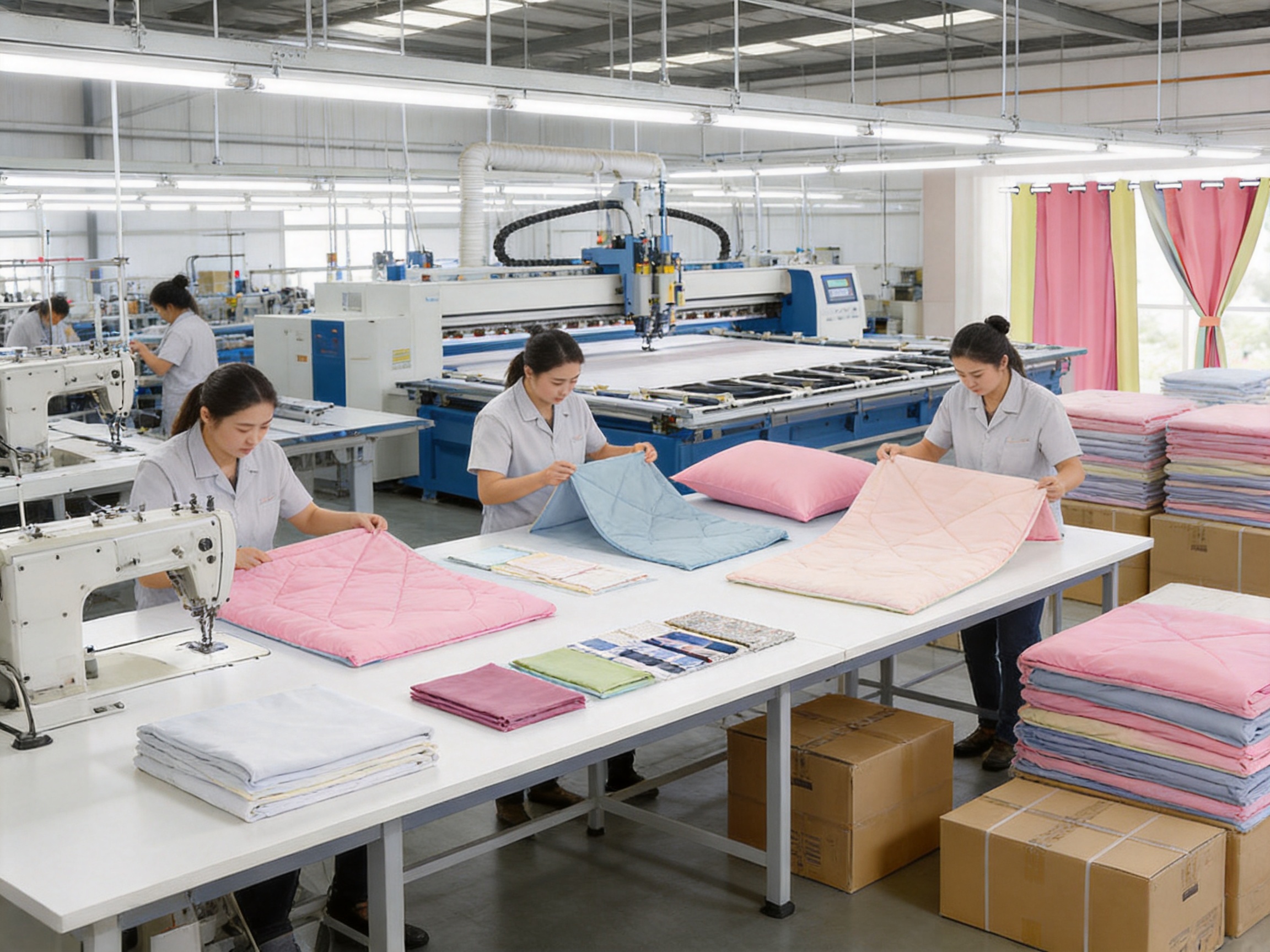
Beyond its appearance, the set reflects the capabilities of a professional home textile manufacturer. Its development involves fabric selection, pattern coordination, cutting, sewing, finishing, inspection, packing, and export service. The manufacturer operates an industrial and trading enterprise with research and development, production, sales, and export functions, supported by a factory of more than 10,000 square meters, intelligent production equipment, over 100 employees, and an experienced foreign trade service team.
This article examines the product’s design, construction, dimensions, functional benefits, manufacturing strengths, commercial value, and suitability for different markets. It also compares the advantages of a coordinated seven-piece solution with more limited bedding products and explains how buyers can evaluate quality before placing an order.
1. A Coordinated Bedding Solution for Contemporary Homes
The central concept of this product is coordination. Instead of asking customers to purchase a comforter, sheets, pillowcases, and room accessories separately, the set combines the major pieces into one visual and functional package. The result is a bedroom that can be refreshed quickly and decorated with a consistent color story.
The design uses two solid colors rather than a highly detailed pattern. This creates a layered appearance while preserving the simplicity of a modern bedroom. Two-tone styling can be especially effective in rooms where furniture, flooring, wall color, and lighting already provide visual interest. The bedding adds contrast and structure without overwhelming the rest of the interior.
Solid colors also offer broad market appeal. Printed designs may be attractive to a specific customer segment, but they can be difficult to match with changing furniture or seasonal decoration. A two-tone solid-color set is more adaptable. It can work in minimalist apartments, family bedrooms, guest rooms, rental properties, dormitory-style accommodations, and selected hospitality environments.
The set is positioned as a practical choice for consumers who prefer an understated but finished appearance. The two colors create a sense of dimension, while the coordinated components help the room look intentionally arranged. This combination of simplicity and visual layering is one of the product’s key competitive advantages.
Benefits of the two-tone concept
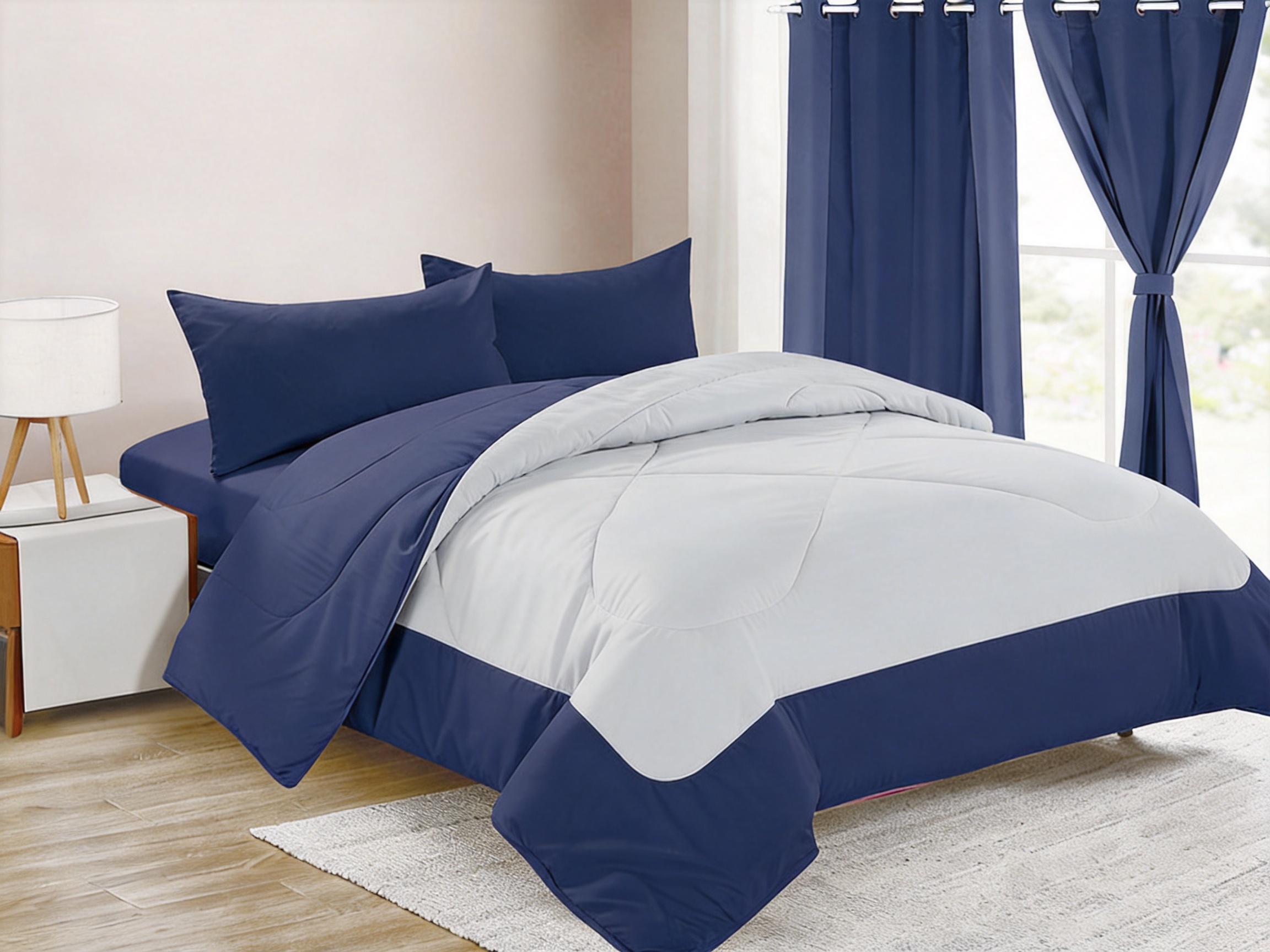
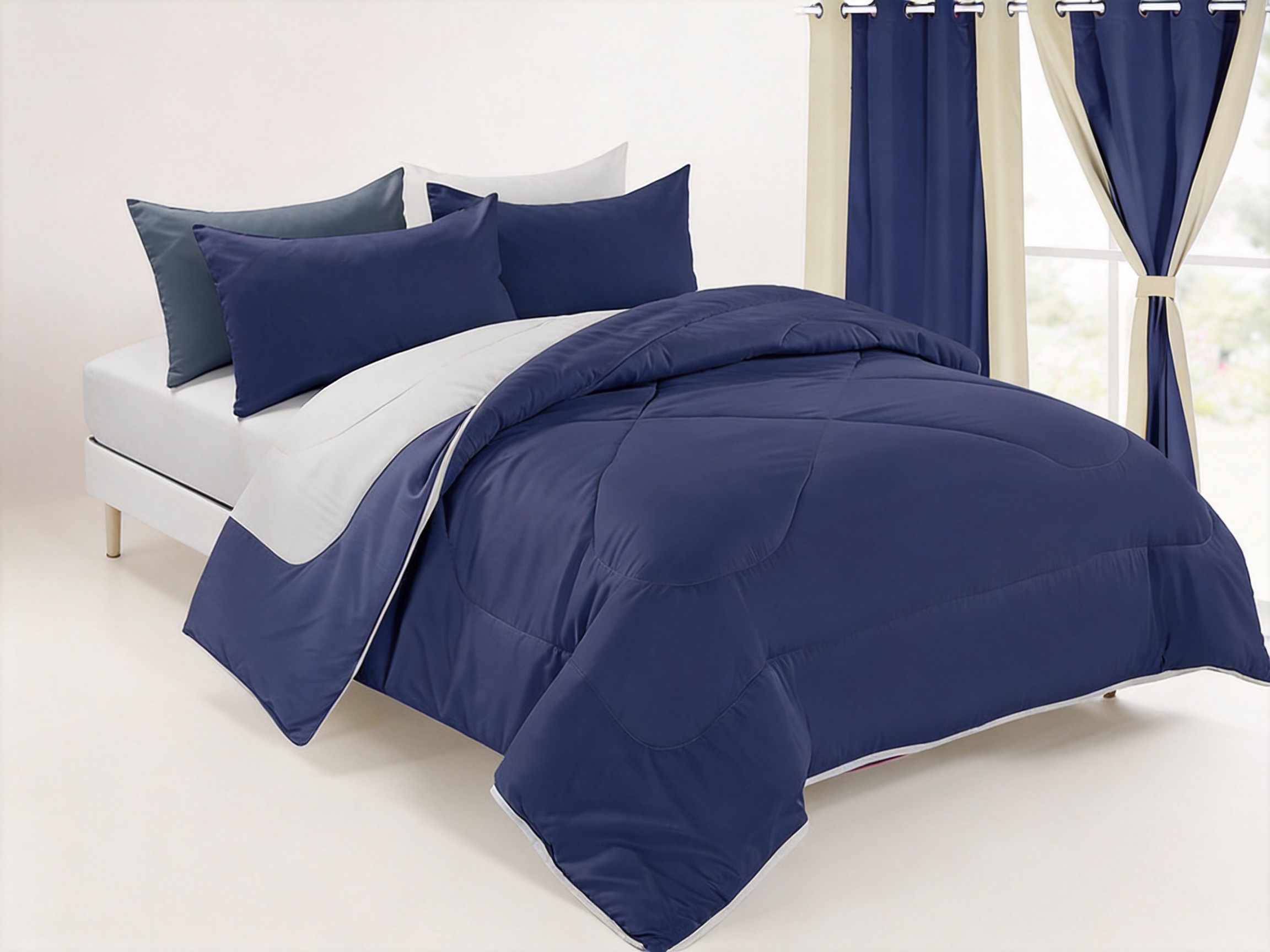
Two-tone bedding can make a bed look more structured than a single-color design while remaining easier to coordinate than a complicated print. The contrast between the colors may highlight the quilt surface, create a border effect, or visually separate different sections of the bedding. Depending on the selected color combination, the result can be warm, neutral, elegant, or contemporary.
Because the design is not dependent on seasonal motifs, it can remain relevant for longer periods. This is useful for retailers that want products with extended selling potential. It also benefits households that prefer to purchase bedding for long-term use rather than replace it whenever interior trends change.
Another advantage is presentation. A two-tone set can be photographed effectively for online retail, showroom display, catalog presentation, and wholesale sampling. Its visual simplicity allows buyers to understand the design quickly, while the contrast provides enough detail to make the product distinctive.
2. What the Seven-Piece Set Includes
The seven-piece configuration is designed to cover the principal bedding requirements of a bedroom. The exact components are one quilt, one flat bed sheet, one fitted sheet, two pillowcases, and two curtains. This arrangement provides both bed linen and coordinated room accessories in one package.
| Component | Quantity | Queen Size Dimension | King Size Dimension |
|---|---|---|---|
| Quilt | 1 piece | 223 × 228 cm | 226 × 260 cm |
| Bed sheet | 1 piece | 210 × 230 cm | 235 × 270 cm |
| Fitted sheet | 1 piece | 152 × 203 + 30 cm | 198 × 203 + 30 cm |
| Pillowcases | 2 pieces | 50 × 70 cm | 50 × 100 cm |
| Curtains | 2 pieces | 120 × 220 cm each | 120 × 220 cm each |
The combination of a flat sheet and a fitted sheet gives customers flexibility. The fitted sheet is designed to cover the mattress and includes an approximately 30-centimeter depth allowance. The flat sheet can be used as a top sheet, an additional protective layer, or a decorative layer depending on personal preference and local bedding habits.
The two pillowcases complete the main sleeping arrangement. Their dimensions differ between the Queen Size and King Size versions, allowing the set to correspond more closely to the intended bed size and pillow proportions.
The two curtains are an unusual and useful addition. Many bedding sets stop at the bed itself, leaving customers to purchase matching room accessories separately. By including curtains, this collection extends the color theme beyond the mattress. The curtains measure 120 × 220 centimeters each in both listed size options. Buyers should confirm the intended window width, hanging method, and installation requirements before use.
A practical seven-piece configuration
The product should be understood as a seven-piece bedroom coordination set rather than simply a comforter package. This distinction is important for retailers and consumers. A standard comforter set may include only a quilt and pillowcases, while a basic sheet set may exclude decorative elements. This product combines both categories and adds curtains to create a more complete visual solution.
For customers moving into a new home, preparing a guest room, or updating a bedroom quickly, the coordinated package can reduce the time spent selecting matching products. For retailers, the seven-piece configuration can create a clear product story and make the item easier to merchandise as a complete room solution.
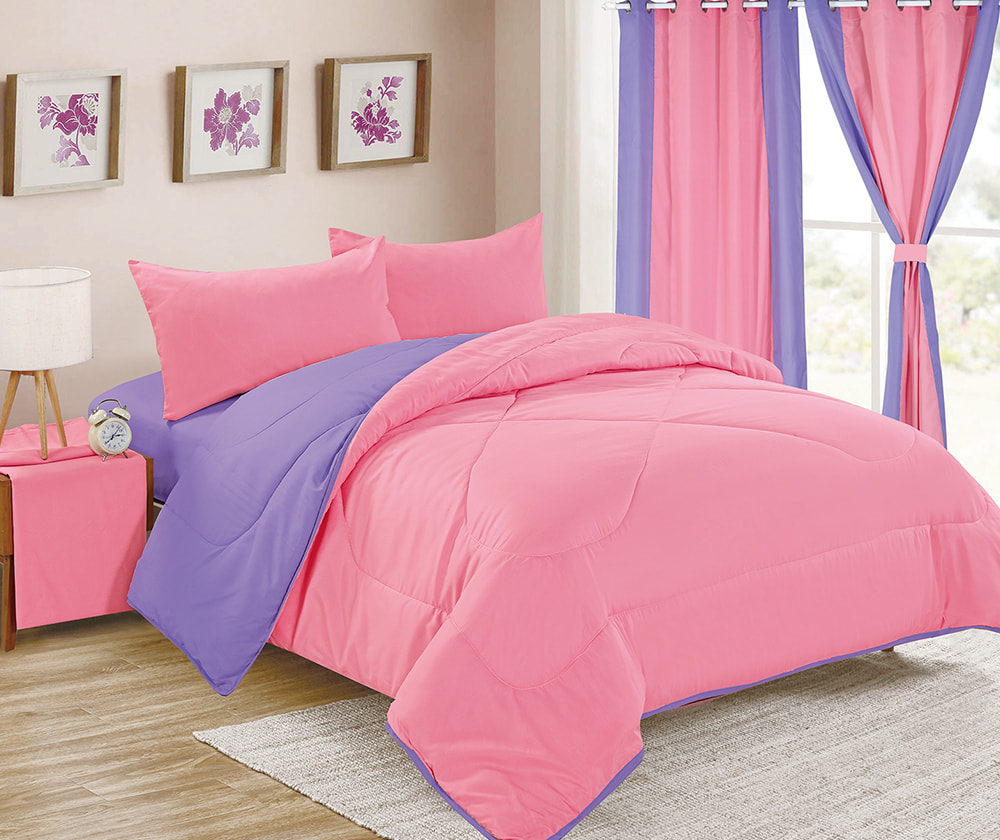
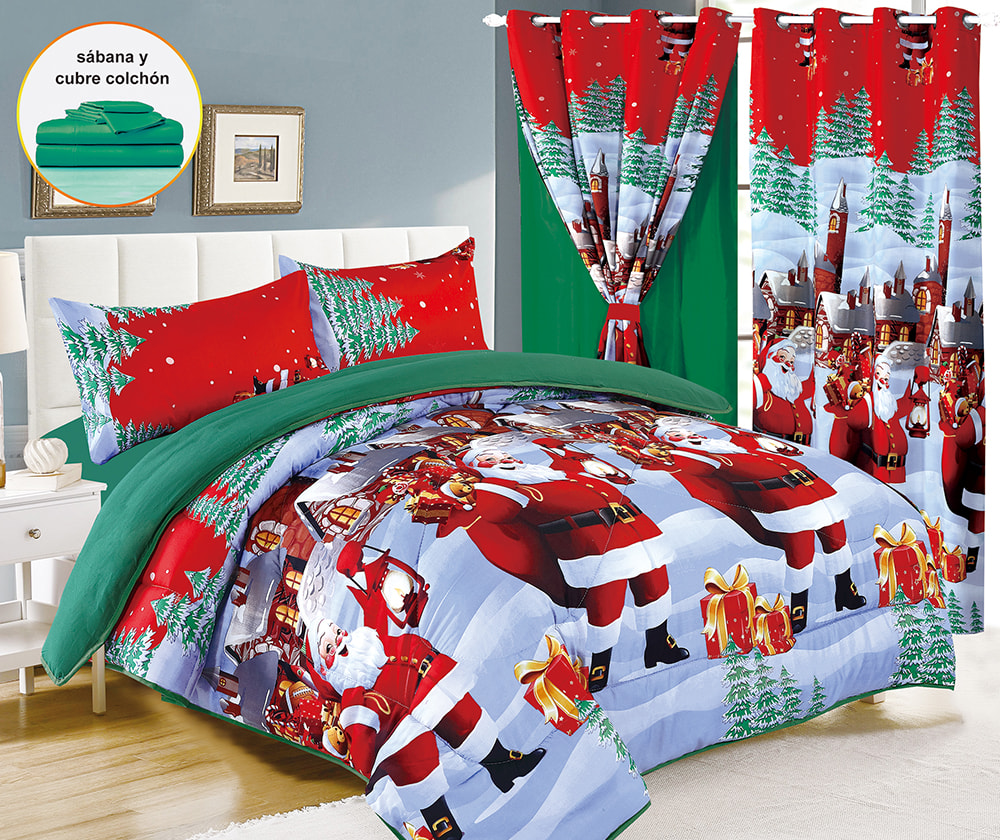
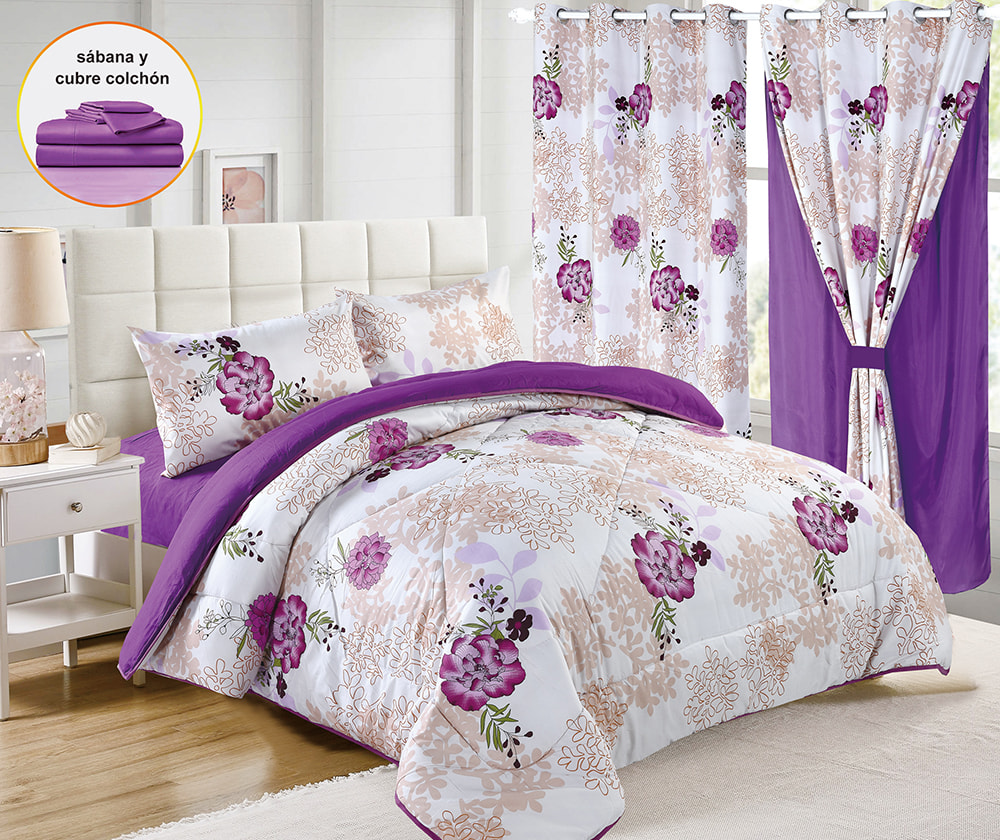
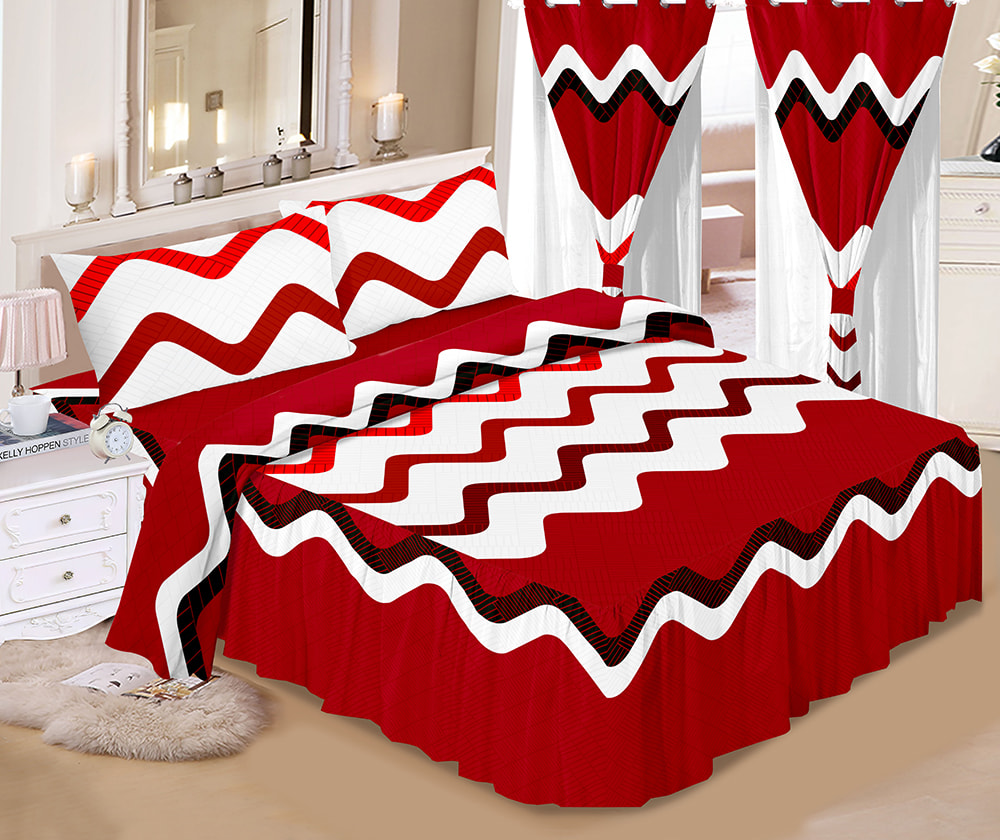
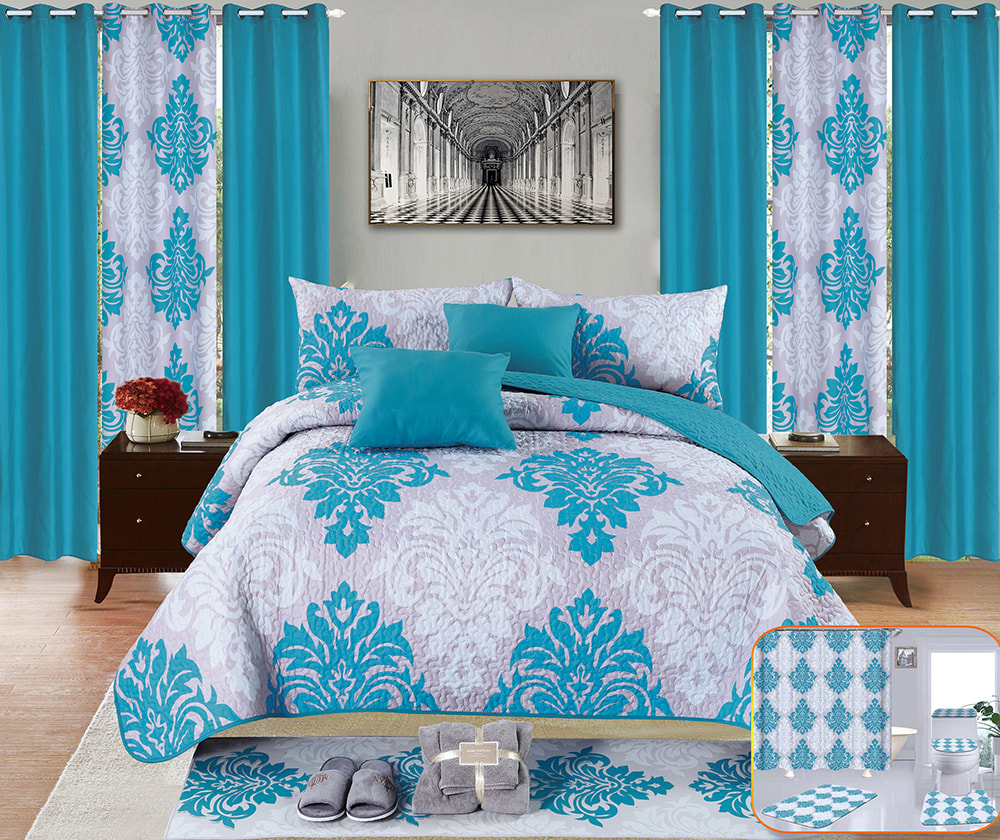
Plain-Colored Two-Tone Comforter Set (7 Pieces)
3. Fabric, Hand Feel, and Everyday Comfort
The product information identifies the material as 100% polyester and describes the fabric as microfiber polyester in the product title and specifications. Polyester is widely used in bedding because it offers a balance of softness, durability, color retention, production efficiency, and ease of care. Microfiber construction can provide a smooth surface and a lightweight feel when properly manufactured.
The comforter is described as balancing warmth and breathability. This balance is important because bedding that feels warm but traps too much heat may be uncomfortable for some sleepers, while bedding that is too light may not provide adequate comfort in cooler conditions. The actual experience depends on the filling, fabric construction, quilting method, bedroom temperature, and individual preferences. Nevertheless, the product is designed around a practical middle ground for everyday home use.
A smooth surface is also beneficial for sleeping comfort. Fabrics with a fine hand feel can reduce the roughness sometimes associated with lower-grade textiles. They may also create a cleaner, more refined appearance when placed on the bed. For retailers, a soft hand feel is an important sampling feature because customers often judge bedding quality through touch as well as appearance.
Durability and maintenance considerations
Polyester fibers are known for their resistance to ordinary wear, making them suitable for products that are washed and used regularly. Compared with more delicate fabrics, polyester bedding can be practical for busy households, rental properties, guest rooms, and commercial buyers who need dependable performance.
The product description emphasizes meticulous workmanship and durable stitching. Strong seams are essential in a multi-piece bedding set because the components experience different types of use. The quilt may be folded, washed, and spread repeatedly. Fitted sheets are stretched over mattress corners. Pillowcases are handled frequently, and curtains may be opened, closed, and exposed to sunlight.
Care instructions should be confirmed according to the final production specification and market requirements. In general, customers should follow the washing label, use suitable water temperatures, avoid harsh chemicals unless recommended, and dry the products according to the care instructions. Proper care helps preserve color, surface softness, seam integrity, and overall appearance.
4. Advantages Over Conventional Bedding Options
The product’s competitive position comes from the combination of design, component count, material practicality, and manufacturing support. It is not competing only as a quilt. It is competing as a coordinated bedroom textile solution.
Advantage one: coordinated styling without excessive complexity
Many printed bedding products rely on large motifs, floral patterns, geometric graphics, or seasonal themes. These designs can be attractive, but they may limit compatibility with existing interiors. The two-tone solid-color approach is less restrictive. It introduces visual contrast while allowing the bedding to work with a wider range of wall colors, furniture finishes, and decorative accessories.
This broad compatibility can reduce the risk of a design becoming outdated. For wholesalers and retailers, adaptable styling may help the product appeal to a larger customer base. For consumers, it means the bedding can remain suitable when the room is redecorated.
Advantage two: more complete than a basic comforter set
A basic comforter set may contain a comforter and two pillowcases, leaving the customer to purchase sheets separately. This creates additional decisions about color, size, fabric, and matching. The seven-piece set addresses more of these needs in one package by including both a flat sheet and a fitted sheet.
Including two types of sheets is particularly practical. Some users prefer the smooth appearance of a flat sheet, while others prioritize the secure fit of a fitted sheet. Providing both options makes the set more versatile.
Advantage three: curtains extend the design beyond the bed
The inclusion of two curtains differentiates this product from many ordinary bedding collections. Matching or coordinated curtains can help unify the room. Even when the curtains are used in a limited window area, they can reinforce the two-tone palette and create a more finished appearance.
This feature is also useful for promotional presentation. A retailer can display the quilted bed, pillowcases, and curtains together to demonstrate how the product transforms the overall room rather than only the sleeping surface.
Advantage four: practical polyester construction
For many market segments, 100% polyester is a practical material choice. It can support consistent production, reliable color results, and everyday durability. It is also generally suitable for products that need to be produced in volume and supplied to multiple markets.
Microfiber polyester can provide a smooth touch and an attractive drape when the fabric is properly finished. This supports the product’s positioning as an affordable yet polished home textile option. It may be especially attractive to buyers seeking a balance between appearance, usability, and cost control.
Advantage five: Queen Size and King Size availability
The availability of two size options expands the product’s commercial flexibility. Queen Size dimensions are suitable for a broad range of bedrooms, while the larger King Size option addresses customers who need greater bed coverage and larger pillowcases.
Offering clearly differentiated dimensions also helps retailers organize stock and reduce confusion during order processing. However, mattress dimensions vary between countries and manufacturers. Retailers should communicate the actual measurements rather than relying only on general size names.
5. Product Dimensions and Size Selection
Size selection is one of the most important factors in bedding satisfaction. A quilt that is too small may leave the sides of the mattress exposed, while an oversized quilt may be difficult to manage or may not fit the intended washing equipment. The listed dimensions provide a useful basis for purchasing, but buyers should compare them with the actual mattress and bed frame measurements.
The Queen Size quilt measures 223 × 228 centimeters. The corresponding flat sheet measures 210 × 230 centimeters, and the fitted sheet measures 152 × 203 centimeters with an approximately 30-centimeter depth allowance. The Queen Size pillowcases measure 50 × 70 centimeters.
The King Size quilt measures 226 × 260 centimeters. The King Size flat sheet measures 235 × 270 centimeters, and the fitted sheet measures 198 × 203 centimeters with an approximately 30-centimeter depth allowance. The King Size pillowcases measure 50 × 100 centimeters.
The fitted-sheet notation “+30 cm” indicates an additional depth allowance, generally intended to accommodate the mattress thickness and tuck beneath the mattress. Because mattress thicknesses differ, customers should confirm that the allowance is appropriate for their bed. A mattress topper may also increase the required depth.
Recommendations for retailers
Retail listings should show every finished measurement clearly. Product descriptions should distinguish between the quilt dimensions, sheet dimensions, fitted-sheet surface dimensions, and pocket depth. It is also helpful to explain that the curtains are supplied as two pieces measuring 120 × 220 centimeters each.
Retailers should avoid assuming that Queen Size and King Size have identical definitions in every market. The actual centimeter measurements should be placed prominently in product listings, packaging, catalogs, and wholesale quotations.
6. Manufacturing Capabilities Behind the Product
A bedding collection is only as dependable as the manufacturing system behind it. The manufacturer of this product is an industrial and trade enterprise integrating research and development, production, sales, and export. This integrated structure can support communication between product development, production planning, quality control, and customer service.
The company was founded in 2015 and operates a factory covering more than 10,000 square meters. It has more than 100 employees and uses intelligent production equipment. These resources provide a foundation for organized manufacturing and help support product consistency across larger orders.
The company specializes in bed sheets, quilt covers, pillowcases, cushions, quilts, waterproof mattress protectors, curtains, and other bedding sets. This product range is relevant because the manufacturer is not limited to a single category. Its experience across bed linen and curtains supports the development of a set that combines both types of home textile products.
Research and development
Research and development is important in bedding because product performance depends on more than fabric selection. Designers and technical staff must consider dimensions, color coordination, sewing structure, component compatibility, packaging, and target-market preferences.
For a two-tone set, development may include selecting colors that create a clear contrast without appearing harsh, determining where each color should be placed, and ensuring that the design remains attractive across different piece sizes. The quilt, sheets, pillowcases, and curtains must appear coordinated even though they serve different functions.
Customer samples can also inform development. The company provides customized home textile services based on customer samples, allowing buyers to discuss construction, color, dimensions, and other requirements. This is valuable for wholesalers, private-label retailers, hospitality businesses, and importers with established product specifications.
Intelligent production equipment
Intelligent production equipment can help improve process organization and repeatability. In bedding production, consistent cutting and sewing are essential because even small deviations can affect the appearance and fit of a finished product.
Equipment-supported production may assist with fabric preparation, cutting accuracy, sewing efficiency, quilting, edge finishing, and inspection procedures. The precise equipment used for a specific order should be confirmed with the manufacturer, but the presence of intelligent production resources indicates an emphasis on modernized manufacturing rather than purely manual processing.
Modern equipment also supports higher-volume orders. When multiple sizes and multiple components are produced together, production planning becomes more complex. A structured equipment base can help coordinate the sequence of operations and maintain more stable output.
Workmanship and durable stitching
The product description highlights meticulous workmanship and durable stitching. These qualities are particularly important for a seven-piece set because the components must maintain a consistent appearance and withstand repeated handling.
Quality stitching helps reduce problems such as loose threads, uneven seams, puckering, and premature opening at stress points. It also contributes to the visual quality of the quilt and the clean appearance of the sheets and pillowcases. For curtains, properly finished edges and secure construction can improve hanging performance and extend service life.
Buyers evaluating samples should examine seam straightness, corner construction, hems, elastic installation on the fitted sheet, pillowcase openings, and curtain finishing. These details provide useful evidence of production discipline.
7. Quality Control and Order Reliability
Quality control in home textiles should cover the full production process rather than relying only on final inspection. Fabric condition, color consistency, cutting, sewing, filling distribution, dimensions, finishing, and packaging all influence the customer experience.
For this product, color control is particularly important. The two-tone appearance depends on a clear relationship between the selected colors. Variations between production batches may affect the visual balance. Buyers should discuss color standards, approved samples, tolerance expectations, and inspection procedures before mass production.
Dimensional accuracy is another important consideration. The quilt, flat sheet, fitted sheet, pillowcases, and curtains each have separate measurement requirements. The fitted sheet requires special attention because both the mattress surface and the depth allowance affect its usability.
Suggested inspection points
Incoming fabric inspection can help identify weaving defects, stains, shade differences, or uneven finishing before cutting begins. During production, in-process checks can identify problems with stitching, panel alignment, seam allowance, or component matching. Final inspection can verify measurements, appearance, quantity, packaging, and labeling.
For buyers placing larger orders, a quality agreement may define the approved sample, acceptable tolerances, packaging requirements, carton markings, and inspection method. This can reduce misunderstandings and provide a clearer basis for cooperation.
Packaging should protect the bedding from moisture, dust, compression damage, and handling during transportation. Because the set contains several components, internal organization is also important. Each package should make it easy to identify the size and confirm the piece count.
8. OEM and Customized Home Textile Services
Customization is increasingly important in the home textile market. Retailers may need private labels, special colors, market-specific dimensions, packaging designs, or product combinations that differ from standard offerings. The manufacturer provides customized home textile services based on customer samples, creating opportunities for more tailored cooperation.
A buyer may provide a physical sample, a reference image, a color specification, a technical drawing, or a written product brief. The manufacturer can then discuss the feasibility of the requested construction, material, size, and packaging. The final customization scope should be confirmed through samples and written specifications.
For this two-tone bedding concept, customization may involve alternative color combinations, adjusted dimensions, different curtain sizes, revised pillowcase measurements, or changes to the number of pieces. Depending on the order, buyers may also discuss labels, washing instructions, barcode placement, carton design, and retail packaging.
Why an integrated supplier is valuable
An integrated supplier can simplify communication because product development, production, export coordination, and commercial service are handled within one business structure. This may be more efficient than coordinating separate factories for quilts, sheets, pillowcases, and curtains.
Integrated production can also support better visual consistency. When all components are manufactured under coordinated specifications, the colors, fabric hand feel, and finishing details are more likely to match. This is especially important for a set marketed as a complete room solution.
The company’s export experience is relevant to international buyers. Export orders often require attention to documentation, packaging, lead times, shipping arrangements, product labeling, and communication across time zones. An experienced foreign trade service team can help buyers clarify these requirements before production begins.
9. Commercial Applications
The seven-piece comforter set can serve several market segments. Its calm color palette and complete configuration make it appropriate for home furnishing retailers, online bedding stores, department stores, wholesalers, importers, and selected hospitality buyers.
Home retail
For home retail, the product can be presented as an easy bedroom refresh. Customers who want a coordinated appearance without purchasing multiple items may find the seven-piece package attractive. The two size options allow retailers to serve households with different bed dimensions.
Online retail
Online sellers can highlight the complete piece count, two-tone design, material, measurements, and room coordination benefits. High-quality images should show the quilt, sheets, pillowcases, and curtains clearly. Because customers cannot touch the product online, descriptions should explain the fabric feel, construction, and care requirements accurately.
Wholesale and private label
Wholesale buyers may value the product’s broad appeal and customization potential. The understated design can serve as a base for a private-label collection, especially when the buyer wants a neutral product that can be marketed across different regions.
Guest rooms and rental properties
Guest rooms and rental properties often need bedding that looks polished, is practical to maintain, and can be replaced or reordered consistently. The polyester construction and coordinated packaging may support these requirements. Buyers should separately evaluate their laundering systems, fire-safety rules, colorfastness expectations, and local textile regulations.
Hospitality and project purchasing
Hospitality projects may use coordinated bedding to create a consistent visual identity across rooms. The curtains can support a more unified interior presentation, although project buyers must confirm whether the dimensions and technical specifications meet the requirements of the intended property.
10. How the Product Supports Modern Interior Design
Modern interior design often emphasizes clean lines, controlled color palettes, and functional decoration. The two-tone quilt set fits this approach by providing contrast without visual clutter. Its solid-color construction allows the bedding to complement wood furniture, upholstered headboards, neutral walls, and contemporary lighting.
The set can also support transitional interiors that combine classic and modern elements. A carefully selected color combination may work with traditional furniture while retaining a fresh appearance. In smaller bedrooms, a restrained design can help maintain a sense of order.
The curtain components may contribute to continuity between the bed and the surrounding space. When the curtains echo the bedding colors, the room can appear more deliberately designed. Customers may also use the curtains in a limited area, such as a small window, divider, or decorative background, depending on the installation environment.
Seasonal versatility
Because the set uses solid colors rather than strongly seasonal imagery, it can remain appropriate throughout the year. Customers can adjust the room with cushions, throws, rugs, or decorative objects while retaining the same bedding base.
The quilt’s warmth and breathability balance may make it suitable for a range of indoor conditions, but regional climate and personal preference should always be considered. Buyers in particularly cold or hot regions may request different filling weights or fabric constructions.
11. Product Presentation and Merchandising Strategy
Effective merchandising should communicate three ideas quickly: the refined two-tone appearance, the seven-piece value, and the manufacturing quality behind the product. The product should be photographed on a fully made bed whenever possible, with additional images showing the curtains, pillowcases, fitted sheet, and fabric surface.
Retail packaging should list the exact contents rather than using only the phrase “seven-piece set.” Customers should be able to see that the package contains one quilt, one flat sheet, one fitted sheet, two pillowcases, and two curtains. This clarity can reduce returns caused by misunderstandings.
Size information should be displayed in centimeters and, where necessary, converted according to the target market’s preferred format. The actual dimensions should remain visible even if familiar size names such as Queen Size and King Size are used.
Material information should be consistent across the product page, packaging, label, and commercial invoice. Since the product information refers to both 100% polyester and microfiber polyester, the final approved material description should be confirmed before publication. Accurate material communication is important for consumer trust and regulatory compliance.
Recommended selling points
Retailers can focus on the calm two-tone design, complete seven-piece configuration, smooth polyester microfiber feel, Queen Size and King Size options, coordinated curtains, practical sheet combination, and professional manufacturing support.
Claims should remain accurate and supported by product specifications. For example, it is appropriate to describe the product as designed for softness, warmth, breathability, and everyday durability. It would be inappropriate to promise medical benefits, guaranteed temperature regulation for every sleeper, or performance characteristics that have not been tested.
12. Sustainability and Responsible Production Considerations
Modern buyers increasingly consider the environmental and social aspects of textile production. Polyester bedding can offer long service life when properly made and cared for, which may reduce the frequency of replacement. Durable stitching, stable construction, and practical design all contribute to product longevity.
Responsible purchasing also involves reducing avoidable waste. Accurate cutting plans, appropriate packaging, efficient production scheduling, and quality control can help limit defective goods and unnecessary material loss. Buyers may ask the manufacturer about fabric sourcing, production waste management, packaging materials, and available recycled polyester options if these factors are important to their market.
The product information confirms the use of intelligent production equipment and a standardized management system. These foundations can support more organized manufacturing, although buyers seeking specific sustainability certifications or environmental claims should request the relevant documentation.
For consumers, following care instructions and avoiding unnecessary over-washing can help extend the usable life of the bedding. For retailers, clear care labels can help customers maintain the product properly and reduce avoidable complaints.
13. Questions and Answers
Q1: What is included in the seven-piece set?
The set includes one quilt, one flat bed sheet, one fitted sheet, two pillowcases, and two curtains. The total is seven pieces.
Q2: What material is used?
The listed material is 100% polyester, and the product description refers to microfiber polyester. Buyers should confirm the final fabric specification and labeling details with the manufacturer before placing a commercial order.
Q3: Is the product available in different sizes?
Yes. The product information lists Queen Size and King Size versions. The dimensions differ for the quilt, flat sheet, fitted sheet, and pillowcases, while the listed curtain dimensions remain 120 × 220 centimeters each.
Q4: What are the Queen Size quilt dimensions?
The Queen Size quilt measures 223 × 228 centimeters.
Q5: What are the King Size quilt dimensions?
The King Size quilt measures 226 × 260 centimeters.
Q6: What does the “+30 cm” on the fitted sheet measurement mean?
The “+30 cm” indicates an additional depth allowance intended to fit over the mattress sides and tuck beneath the mattress. Customers should compare this allowance with the thickness of their mattress and any topper.
Q7: Are the curtains included in both size options?
Yes. Two curtains are listed for both Queen Size and King Size sets, with each curtain measuring 120 × 220 centimeters.
Q8: What makes the two-tone design different from a printed bedding set?
The two-tone design uses two solid colors to create contrast and visual depth without relying on complex graphics or motifs. This can make it easier to coordinate with different bedroom styles and decorative accessories.
Q9: Is the set suitable for year-round use?
The product is designed to balance warmth and breathability for comfortable everyday use. Actual suitability depends on climate, bedroom temperature, quilt filling, and personal preference. Buyers in extreme climates may wish to discuss alternative weights or constructions.
Q10: Can the manufacturer provide customized products?
Yes. The company provides customized home textile services based on customer samples. Buyers can discuss colors, dimensions, construction, packaging, labels, and other requirements with the manufacturing and export teams.
Q11: What types of quality checks should buyers request?
Buyers should consider checks for fabric defects, color consistency, dimensions, stitching, fitted-sheet depth, pillowcase construction, curtain finishing, piece count, packaging, and labeling. An approved sample and written quality requirements can make inspection more effective.
Q12: Is the product suitable for wholesale purchasing?
The complete configuration, two size options, adaptable styling, and manufacturer’s export capabilities make it suitable for wholesale discussion. Order quantities, lead times, packaging, customization, and compliance requirements should be confirmed for each project.
Q13: How should the product be cared for?
Customers should follow the care label supplied with the final product. Washing temperature, detergent selection, drying method, ironing, and storage should be based on the approved fabric and finishing specifications.
Q14: Can the curtains be used on any window?
The curtains measure 120 × 220 centimeters each, but window sizes, rod systems, fullness preferences, and installation methods vary. Buyers should measure the intended window and confirm whether the supplied dimensions are suitable.
14. Ordering and Buyer Evaluation Checklist
Before ordering, buyers should request a complete specification sheet. This should identify the fabric composition, quilt construction, filling information, color references, finished measurements, packaging method, care instructions, and labeling requirements.
A physical sample is especially valuable for this product because the two-tone effect, fabric hand feel, stitching quality, and curtain appearance are difficult to evaluate through written information alone. The approved sample should be retained as a reference for mass production.
Buyers should also clarify whether the curtains use the same fabric as the bedding, whether the quilt is reversible, how the two colors are arranged, and whether the fitted-sheet elastic is fully enclosed or applied in another construction. These details can affect both appearance and use.
Commercial discussions should cover minimum order quantity, production lead time, payment terms, packaging, shipping method, inspection arrangements, and documentation. International buyers should identify any destination-market labeling, chemical, flammability, or textile regulations that apply to their products.
Key questions for a pre-production meeting
What is the confirmed fabric composition and fabric weight?
What filling material and filling weight are used in the quilt?
What are the acceptable measurement tolerances?
How are the two colors matched and controlled during production?
What is the approved packaging format for retail or wholesale shipment?
What quality inspection method will be used before shipment?
Can the manufacturer provide private labeling or customized packaging?
What documents are available for the destination market?
15. Overall Product Assessment
The Plain-Colored Two-Tone Comforter Set stands out because it combines a modern visual concept with a highly practical component structure. Its two solid colors provide depth while maintaining broad compatibility with different bedroom interiors. Its seven-piece configuration goes beyond a basic comforter package by including a flat sheet, fitted sheet, pillowcases, and curtains.
The use of 100% polyester, described in the product materials as microfiber polyester, supports a smooth feel, practical durability, and efficient large-scale production. The stated focus on warmth, breathability, and durable stitching addresses the most important everyday expectations for bedding. The availability of Queen Size and King Size dimensions provides additional commercial flexibility.
Its strongest advantage is the combination of completeness and simplicity. Consumers receive a coordinated bedroom solution without needing to purchase every component separately. Retailers gain a product that can be explained clearly and presented attractively. Wholesale and private-label buyers can work with a manufacturer experienced in bedding, curtains, export, and customized textile services.
The manufacturing foundation further strengthens the product’s position. Research and development capability, a factory exceeding 10,000 square meters, intelligent production equipment, more than 100 employees, standardized management, and an experienced foreign trade team provide the organizational support required for consistent home textile production.
As with any bedding product, buyers should confirm the final specifications, care instructions, compliance requirements, and quality standards before ordering. With those details properly established, this two-tone seven-piece collection can serve as a versatile and commercially attractive choice for modern home textile markets.
References
1. Product specification sheet for the Plain-Colored Two-Tone Comforter Set, including component dimensions, material information, and size options.
2. Manufacturer-provided company information concerning research and development, production, export operations, factory scale, personnel, and customized home textile services.
3. General textile manufacturing practices for fabric inspection, cutting, sewing, finishing, measurement control, and final product inspection.
4. General home textile merchandising principles concerning product presentation, size communication, coordinated bedroom design, and retail packaging.
5. General consumer guidance for bedding care, mattress measurement, fitted-sheet selection, and textile product maintenance.
Product: Plain-Colored Two-Tone Comforter Set (7 Pieces)

Contact Us for More Details
Don't hesitate to contact when you need us!
Contact Information
Add:
Building 1, East Area, Wanyang Zhongchuang City, Economic Development Zone, Dongyang City, Zhejiang Province, China
Phone:
Tel:
E-mail:
Quick Links
Product Category
QR Code


+86-13616899966
+86-579-86610966
