 English
 русский
 Español
 عربى


Printed Six-Piece Bedspread Set with Double-Layer Curtains: Coordinated Comfort for Modern Bedrooms
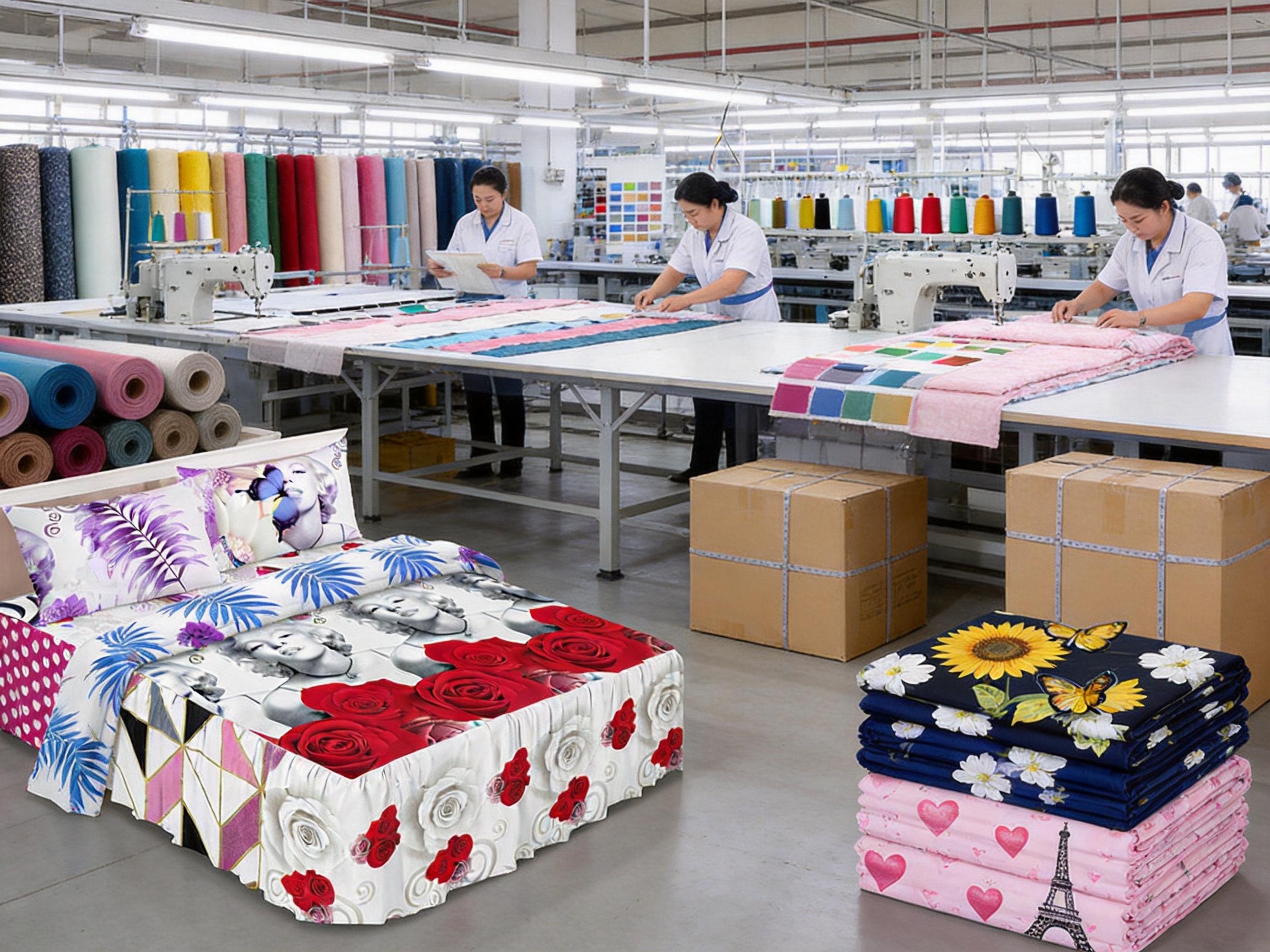
A bedroom becomes more inviting when its major textile elements share one coordinated design. The printed six-piece bedspread set with double-layer curtains is created for homeowners, hospitality buyers, retailers, and project purchasers who want to combine bedding and window treatment in one visually unified solution. Instead of selecting a bed covering, pillowcases, and curtains from separate collections, this set brings the essential pieces together in a matching pattern and color story.
The set is designed around practical everyday use. It includes a bed sheet, a bed skirt, two pillowcases, and two curtains. Available in Queen and King sizes, it uses 100% polyester fabric, including microfiber-style textile construction, to provide a soft hand feel, easy care, dependable dimensional performance, and suitability for year-round bedroom use. The bed skirt helps create a finished appearance around the bed, while the coordinated curtains extend the decorative effect from the sleeping area to the surrounding room.
Its strongest distinction is the combination of coordinated bedding and double-layer curtains. Many competing bedding products focus only on the mattress and pillows, leaving customers to find suitable curtains separately. This six-piece solution reduces that design gap. It offers a more complete room concept, supports efficient purchasing, and gives bedrooms a consistent appearance with less effort.

Printed 6-Piece Bedspread Set With Double-Layer Curtains
A Complete Bedroom Textile Solution
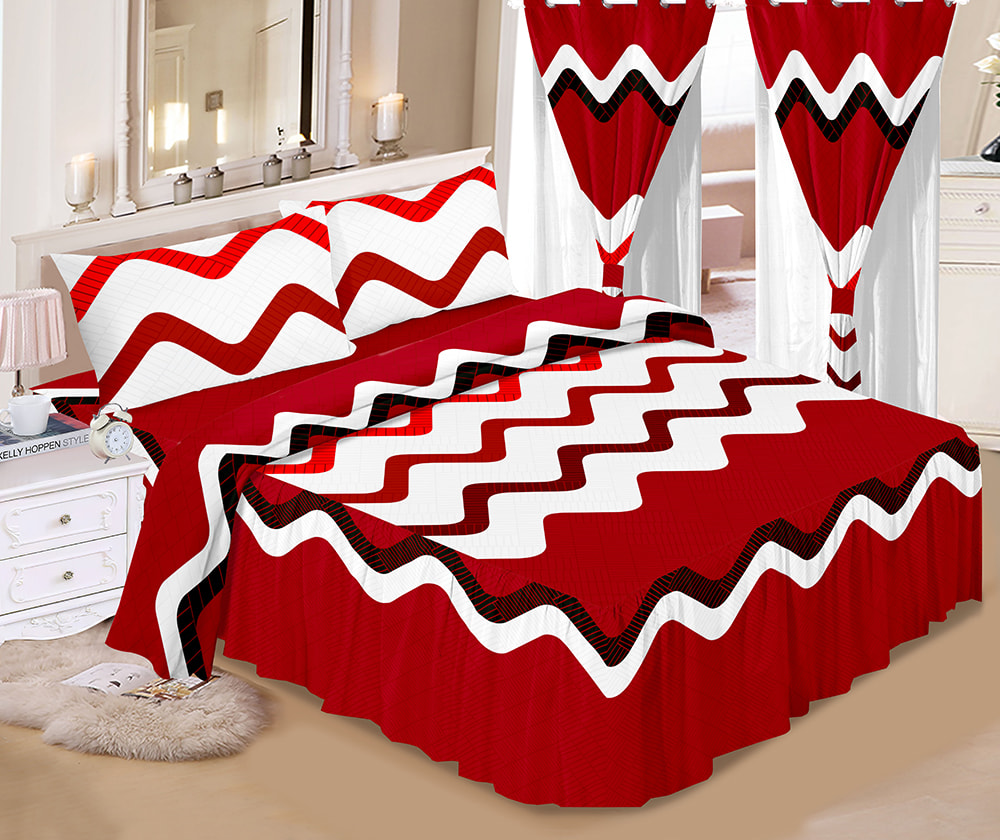
The printed six-piece set is more than a conventional bed linen package. It is a coordinated bedroom textile system containing the main soft furnishings needed to refresh the visual character of a room. The bed sheet provides the foundation for the sleeping surface, the bed skirt conceals the lower bed structure, the pillowcases complete the upper bedding area, and the curtains frame the room with the same or complementary printed design.
The six included pieces are arranged as follows:
| Component | Quantity | Queen Size | King Size |
|---|---|---|---|
| Bed sheet | 1 piece | 210 × 230 cm | 235 × 270 cm |
| Bed skirt | 1 piece | 152 × 198 + 30 + 40 cm | 198 × 203 + 30 + 40 cm |
| Pillowcase | 2 pieces | 50 × 70 cm | 50 × 100 cm |
| Curtain | 2 pieces | 120 × 220 cm each | 120 × 220 cm each |
The dimensions are suitable for common Queen and King bedroom arrangements, while buyers should always compare the listed measurements with their own mattress, bed frame, pillow, and window dimensions before ordering. This is particularly important for the bed skirt, because mattress height, foundation thickness, and the distance from the mattress top to the floor can vary between bedrooms.
Combining six coordinated components in one package can simplify procurement for wholesalers, retailers, furniture projects, serviced apartments, guest rooms, and residential developments. A buyer can source a complete visual theme with fewer individual purchasing decisions. For end users, the set offers a convenient way to update a bedroom without searching for several matching products across different collections.
Design Coordination from Bed to Window
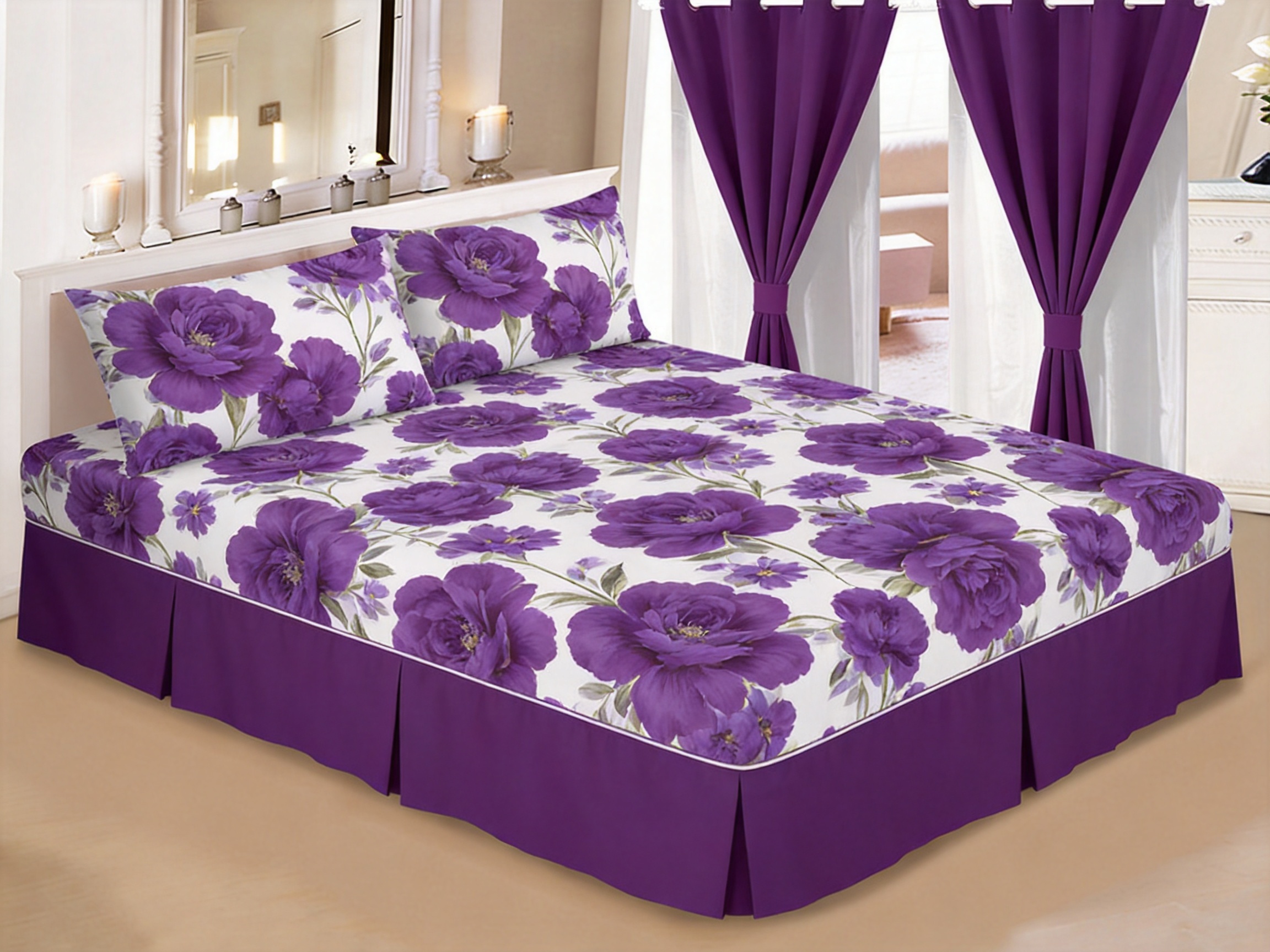
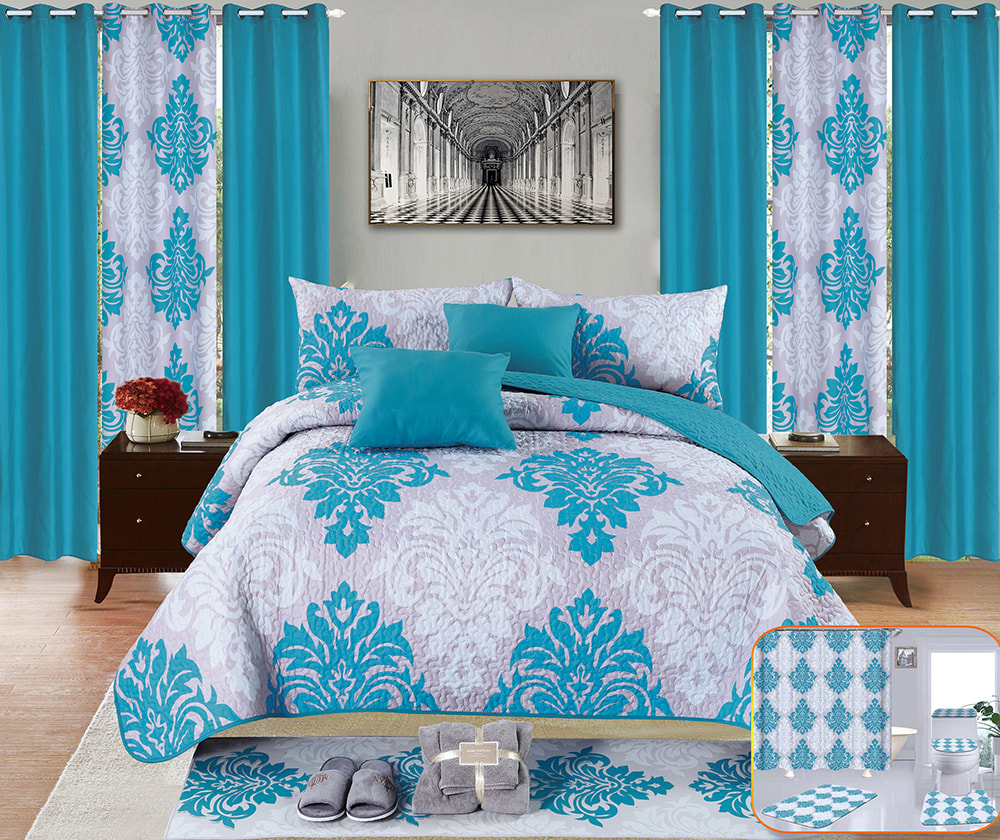
One of the clearest advantages of this product is its unified pattern placement. The bedspread-style bedding elements and curtains are designed to work together, helping create a harmonious relationship between horizontal and vertical surfaces. The bed becomes the visual center of the room, while the curtains reinforce the same color direction around the windows.
When bedding and curtains are selected independently, small differences in tone, print scale, fabric surface, or color temperature can make the room appear disjointed. Even products described as similar may vary noticeably after installation. A coordinated set reduces these inconsistencies. The matching design makes it easier to create a polished bedroom appearance, even when the room contains simple furniture or neutral walls.
The printed surface can also support different interior styles depending on the selected pattern. Floral, geometric, botanical, abstract, and traditional motifs can each influence the mood of the space. Rich colors can add character to a plain room, while a restrained pattern can provide interest without requiring additional decoration. Because the set includes multiple visible surfaces, the design has a stronger overall presence than a single printed bed covering.
For retailers, coordinated styling is valuable because it allows the product to be displayed as a complete lifestyle solution. A bed dressed with the matching curtains can communicate the product’s purpose quickly in a showroom, catalog, or digital listing. Customers can immediately understand how the components work together instead of imagining whether separately purchased items will match.
Soft, Skin-Friendly Polyester Construction
The set is made from 100% polyester, with a microfiber-oriented product description emphasizing a soft and delicate hand feel. Polyester is widely used in modern home textiles because it offers a practical balance of comfort, durability, color retention, and maintenance convenience. For products that are washed and used regularly, fabric resilience is an important part of long-term value.
The textile is designed to feel comfortable against the skin while remaining breathable for ordinary bedroom conditions. Its smooth surface can contribute to a pleasant sleeping environment, and the lightweight nature commonly associated with polyester bedding makes the set suitable for use across different seasons. In warmer weather, it can function as a lighter decorative layer, while in cooler conditions it can be combined with blankets, quilts, or duvets according to personal preference.
Polyester also supports consistent production. Compared with some natural fibers, it can offer improved resistance to shrinking and wrinkling when properly processed and cared for. This helps the bed skirt and curtains maintain a neat appearance after repeated use. The material is also suitable for printing, allowing detailed patterns and rich colors to be reproduced across multiple components of the collection.
Fabric comfort depends on yarn selection, weave or knit structure, finishing, and final construction, not just fiber content. The product description emphasizes careful workmanship, neat stitching, and a soft surface. These factors help improve the practical experience of the set. Well-constructed seams reduce the risk of premature fraying, while orderly finishing contributes to a cleaner appearance on the bed and at the window.
Printed Color Performance and Visual Longevity
The printed pattern is a major part of the product’s appeal. Bedding occupies a large area of a bedroom, so the quality of its print has a direct effect on the room’s appearance. The design is intended to provide rich, long-lasting colors that resist fading under normal use and care. This helps the set retain its coordinated appearance over time.
Color consistency is especially important when several components are used together. If the bed sheet, bed skirt, pillowcases, and curtains do not share a balanced color appearance, the room can lose its sense of unity. Coordinated production allows the printed elements to be planned as part of one collection rather than as unrelated items.
For commercial buyers, print quality can influence customer satisfaction, repeat sales, and product presentation. A design that looks attractive in product photography but loses clarity quickly in use may lead to complaints and returns. A focus on durable color performance gives retailers a stronger value proposition when presenting the set as a long-term bedroom refresh rather than a temporary decorative purchase.
Care instructions should be followed according to the final product label and buyer requirements. As with printed home textiles generally, mild washing conditions, similar-color washing, appropriate detergent use, and avoidance of excessive heat can help preserve the fabric and print. Buyers purchasing for retail distribution may also request customized packaging and care labeling to match their market requirements.
The Practical Function of the Bed Skirt
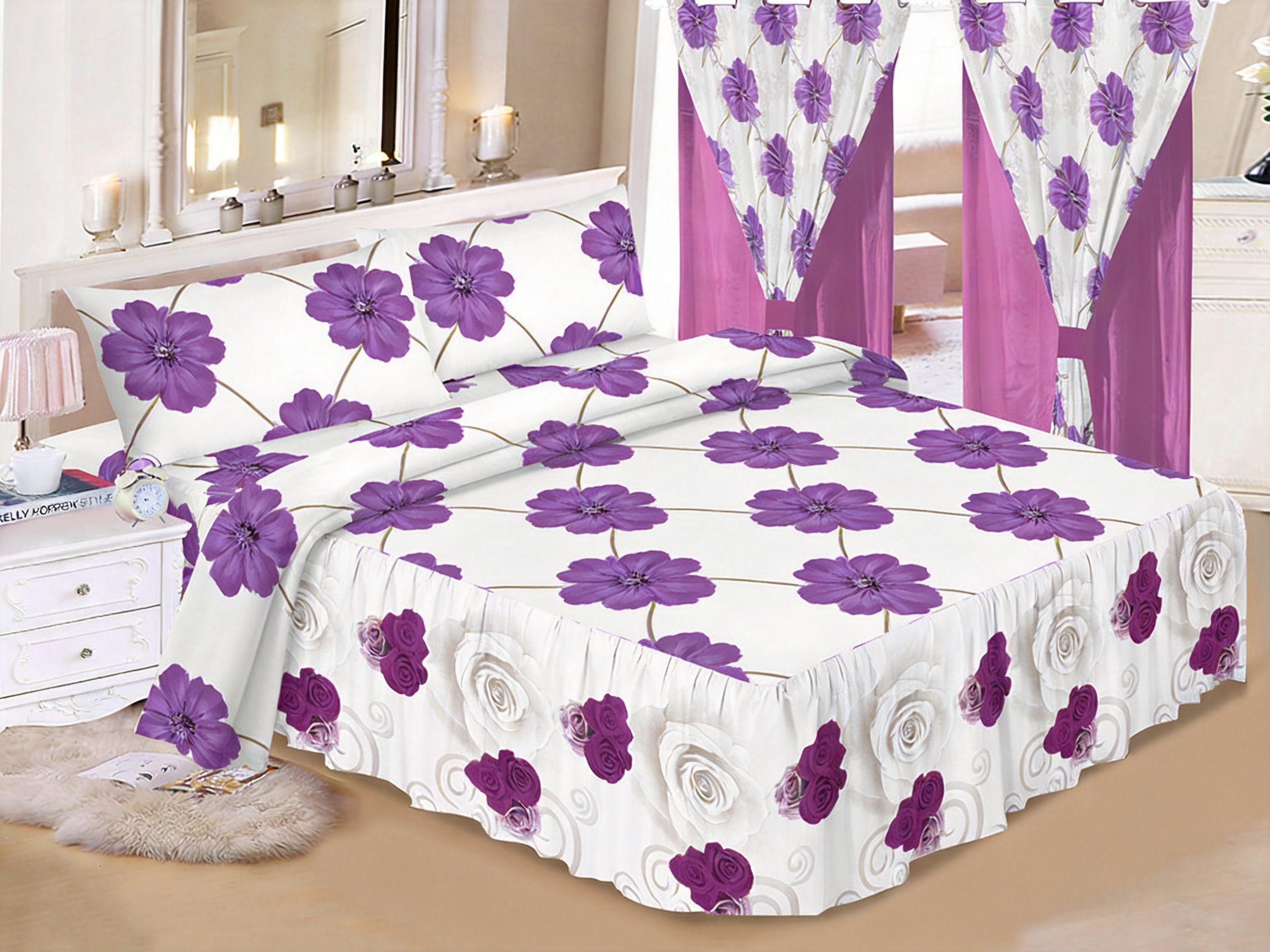
The bed skirt is an important feature that differentiates this product from a basic sheet and pillowcase set. It extends around the lower portion of the bed, helping conceal the bed base, under-bed storage, support structure, or other visually distracting elements. This produces a more finished and decorative appearance.
A bed skirt can also help visually define the bed as a complete furniture centerpiece. When its print matches the sheet and pillowcases, the lower part of the bed does not look like an afterthought. Instead, the entire structure presents a deliberate design from the mattress surface down toward the floor.
The listed bed skirt dimensions include additional measurements indicated by the “+30+40” format. These details are relevant to the skirt’s drop and construction and should be interpreted alongside the manufacturer’s measurement guide. The precise fit may depend on mattress dimensions, bed frame structure, and the desired amount of floor coverage. Professional buyers can confirm the construction details, edge finishing, and installation method before placing a production order.
In comparison with a loose decorative throw, a bed skirt offers more consistent coverage around the bed. A throw can shift during use, while a properly fitted skirt is designed to remain in position as part of the bedding arrangement. This makes it useful in bedrooms where presentation and organization are equally important.
Double-Layer Curtains for Light Management and Decoration
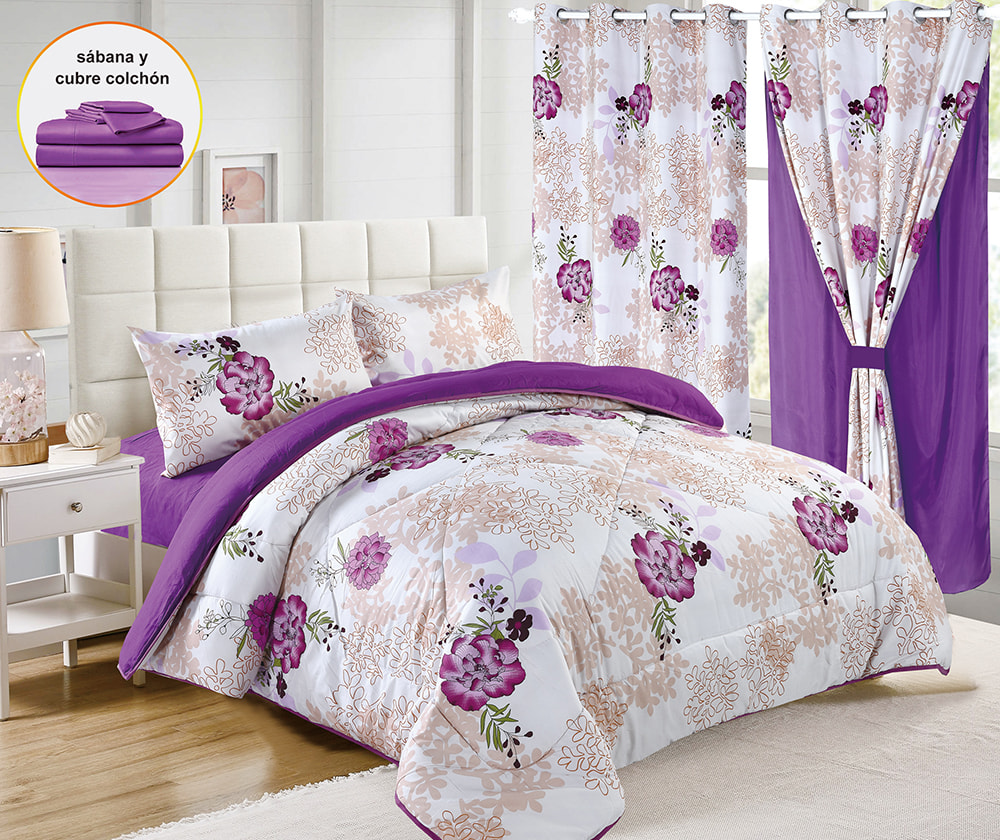
The two curtains are designed with a double-layer structure that combines decorative appeal with light-management functionality. Layered window treatment can provide a more flexible indoor environment than a single lightweight curtain. One layer may contribute visual softness and decoration, while the denser or more light-resistant layer helps moderate incoming light.
This structure can be useful in bedrooms exposed to strong morning sunlight, street lighting, or changing daylight conditions. By regulating the amount of light entering the room, the curtains can support a quieter and more comfortable sleeping environment. They also add privacy and help the window area feel more integrated with the bedding design.
The double-layer construction should not automatically be interpreted as complete blackout performance. Actual light blocking depends on fabric density, lining, color, installation, window coverage, and the gap between the curtain and the wall. Buyers with specific blackout requirements should confirm the technical specifications and request samples or test information before purchasing. Nevertheless, the layered design provides a practical advantage over a single decorative panel because it offers more than one visual and functional surface.
Each curtain is listed at 120 × 220 cm. The two-panel format can be arranged across a standard window or adapted to different hanging configurations depending on the room. Purchasers should check the total window width, desired fullness, rod placement, and finished drop to ensure the panels achieve the intended appearance.
Because the curtains share the bedding pattern, they can make a bedroom feel more complete. The window no longer appears visually separate from the bed. This is especially valuable in compact rooms, guest rooms, rental properties, and hospitality interiors where a coordinated textile treatment can create a strong decorative result without extensive remodeling.
Advantages Compared with Separately Purchased Bedding
The first competitive advantage is purchasing efficiency. A customer seeking a coordinated bedroom may otherwise need to buy a bed sheet, bed skirt, pillowcases, and curtains from different suppliers. That approach creates additional work, increases the risk of mismatched colors, and may result in different fabric qualities. The six-piece set consolidates those requirements into one product concept.
The second advantage is design consistency. Matching print development across the components creates a more intentional appearance than combining unrelated products. This can be particularly persuasive for customers who want a decorated bedroom but do not have the time or confidence to coordinate individual pieces.
The third advantage is broader room coverage. Many bedding sets improve only the bed surface. This product also addresses the window area, which is one of the most visible vertical spaces in a bedroom. The result is a stronger transformation from one purchase.
The fourth advantage is material and maintenance alignment. When the components are made and supplied as one collection, buyers can receive clearer information about fabric content and care expectations. Coordinated polyester textile construction helps maintain a consistent visual and tactile experience throughout the room.
The fifth advantage is suitability for multiple sales channels. The set can be positioned as a decorative bedding package, a bedroom makeover product, a seasonal home textile item, a hospitality supply, or an OEM collection. Its practical components and coordinated appearance give distributors several ways to present it to different customer groups.
Advantages Compared with Single-Layer Curtain Sets
A single-layer curtain may provide decoration, but it often has limited flexibility in managing light and privacy. The double-layer structure used in this product creates a more substantial window treatment and can support different levels of light filtering depending on how the layers are arranged.
The layered approach also adds visual depth. A single flat panel can appear minimal, while two coordinated layers create dimension around the window. This additional depth complements the bedspread and helps the room feel more thoughtfully furnished.
Another advantage is the connection between function and design. Some curtain sets prioritize light control but use patterns unrelated to the bedding. Others focus on decorative prints without offering a layered structure. This product combines both considerations in a single coordinated package, giving buyers a more balanced bedroom solution.
Advantages of 100% Polyester for Commercial and Residential Use
Polyester is a practical choice for a textile product that may be handled, laundered, packed, transported, and displayed many times. Its durability helps it withstand regular household use, while its printability supports a wide variety of patterns and color combinations.
For retailers, polyester can help reduce concerns related to excessive shrinkage and inconsistent sizing when the product is properly manufactured and cared for. Stable sizing is important because customers expect the bed skirt to fit the advertised bed size and the curtains to maintain their intended drop.
For hospitality and project buyers, the material offers a useful balance between visual presentation and operational practicality. Bedding and curtains in guest rooms must look attractive while also supporting routine cleaning and turnover. The product’s fabric composition can be evaluated alongside the buyer’s laundering procedures, performance standards, and local requirements.
Polyester also allows manufacturers to create products at different price levels through variations in yarn, weight, surface finish, printing method, and construction. This supports OEM development for buyers who need a particular market position, print collection, or packaging format.
Manufacturing Strengths Behind the Product
The manufacturer is an industrial and trade enterprise integrating research and development, production, sales, and export. This integrated structure is significant because it connects product development with manufacturing execution and international customer service. Rather than treating design, production, and export as completely separate activities, the company can coordinate these stages within one operating system.
The company was founded in 2015 and operates a factory covering more than 10,000 square meters. A factory of this scale provides room for organized production areas, material handling, cutting, sewing, inspection, packing, and finished-goods storage. Efficient use of factory space is especially important when a product contains multiple components that must be matched by pattern and color.
More than 100 employees support the operation, including production personnel and an experienced foreign trade service team. A skilled workforce contributes to sewing accuracy, order coordination, inspection, packaging, and communication with overseas customers. For export-oriented home textile production, reliable communication is essential because specifications often include multiple sizes, customized labels, packaging instructions, and sample approvals.
The company also reports the use of intelligent production equipment. Advanced equipment can improve production consistency, support more efficient cutting and sewing, and help standardize repeated operations. In a coordinated six-piece set, consistency is particularly important because all pieces must work together in appearance and size.
From Product Development to Finished Set
The manufacturing process begins with product planning and material selection. For a printed bedding and curtain collection, development teams must consider pattern scale, color balance, fabric hand feel, component dimensions, sewing construction, and the intended market. The same design must remain visually coherent when applied to the bed sheet, bed skirt, pillowcases, and curtains.
During sampling, the manufacturer can review how the print appears across different cut panels and how the fabric behaves during sewing. This stage is useful for identifying potential issues such as pattern alignment, seam placement, edge curling, insufficient curtain fullness, or an unsuitable bed skirt drop. Sample review also gives OEM customers the opportunity to confirm their preferred design direction before bulk production.
Fabric inspection is a central quality consideration. The material can be checked for visible defects, color variation, print irregularities, width consistency, and surface condition. Because the set contains multiple matching components, controlling fabric shade variation is essential. A slight difference between production lots can become more noticeable when the bed and curtains are displayed in the same room.
After inspection, the fabric is prepared for cutting. Accurate cutting helps ensure that the bed sheet, skirt, pillowcases, and curtains meet the specified dimensions. It also supports efficient material utilization, which can improve production economics and reduce unnecessary waste. For printed goods, cutting plans may need to account for pattern direction and repeat alignment.
Sewing follows the approved specifications. Neat stitching and orderly seams contribute to both appearance and durability. The bed skirt requires attention to its dimensions and drop, pillowcases require appropriate opening construction, and curtains require secure hems and layered assembly. Each component must be checked as an individual item and as part of the complete six-piece set.
Layer assembly is particularly important for the curtains. The two layers should be joined or finished according to the approved construction so that they hang properly and maintain a clean appearance. The manufacturer’s production team can evaluate the relationship between the layers, the top treatment, the hem, and the overall curtain drop.
After sewing, finished components can undergo inspection for measurements, stitching, print appearance, stains, loose threads, missing pieces, and packaging requirements. Set assembly must confirm that every package contains one bed sheet, one bed skirt, two pillowcases, and two curtains in the correct size and design.
Final packing protects the textile during storage and transportation. Proper folding and packaging help reduce unnecessary creasing, keep sets organized, and support efficient inventory management. Export customers may specify carton markings, inner packaging, labels, barcodes, polybags, or customized presentation materials as part of the order process.
Quality Control for a Coordinated Six-Piece Product
Quality control for this set involves more than checking the fabric surface. It requires a complete review of appearance, measurements, construction, color coordination, and quantity. A defect in one component can affect the customer’s perception of the entire set, so inspection should cover every piece.
Dimensional control is important for both Queen and King versions. The bed sheet must correspond to the selected size, the bed skirt must provide the intended coverage, the pillowcases must accommodate the specified pillows, and the curtains must be produced at the correct width and drop. Consistent measurement control supports customer confidence and reduces avoidable fitting issues.
Print inspection helps confirm that the design remains clear and consistent. Inspectors may look for uneven color, blurred areas, streaks, misplaced patterns, or visible defects. They can also compare the major components to ensure that the same collection appearance is maintained throughout the package.
Sewing inspection focuses on straight seams, secure thread tension, finished edges, corner construction, and the absence of loose threads. Fine workmanship is not only a visual advantage; it can also support the product’s useful life by reducing stress points and preventing early unraveling.
Packaging inspection confirms that the correct size, quantity, labels, and accessories are included. This is especially important when Queen and King products are produced simultaneously. Clear identification helps prevent mixing during warehouse handling and shipment preparation.
A standardized management system supports these activities by providing repeatable procedures. When production and inspection steps are documented and communicated clearly, employees can work toward consistent results across orders. This is valuable for both standard collections and customized OEM projects.
OEM and Customized Home Textile Development
The manufacturer provides customized home textile services based on customer samples. This capability is useful for buyers who already have a design concept, physical reference, private-label program, or established product line. Instead of selecting only from ready-made patterns, customers may discuss fabric, color, sizing, component selection, packaging, and other production details.
OEM development can be adapted to different market requirements. A retailer may need a private label and specific packaging. A hospitality buyer may require standardized sizes and repeatable replacement orders. A wholesaler may want an exclusive print. A project purchaser may need a coordinated group of bedding and curtain products for a particular interior scheme.
Sample-based development also supports more precise communication. Buyers can evaluate the hand feel, print appearance, stitching, measurements, and curtain layering before committing to a larger order. Technical details should be confirmed during the sampling stage, including fabric weight, color reference, shrinkage expectations, care labeling, packaging, and acceptable tolerances.
The company’s combination of factory production and foreign trade service can simplify communication for international customers. An experienced export team can help coordinate specifications, order schedules, shipping documents, packaging instructions, and production updates. Clear communication is particularly important when a set contains several components and multiple size options.
Applications Across Different Markets
Residential Bedrooms
For individual households, the set provides an efficient bedroom update. It can refresh the appearance of a room without repainting walls, replacing furniture, or purchasing separate window treatments. The coordinated pattern is useful for bedrooms where customers want a finished decorative look with minimal planning.
Guest Rooms and Hospitality
Hotels, guesthouses, serviced apartments, and vacation properties can use coordinated textiles to create a consistent visual identity across rooms. A bed skirt can conceal bed bases and support a tidy presentation, while matching curtains reinforce the room’s decorative scheme. Buyers should evaluate the product against their own commercial laundering and durability requirements.
Furniture and Home Textile Retailers
Retailers can present the product as a complete room solution rather than a single bedding item. Its six-piece composition creates opportunities for bundled merchandising, seasonal promotions, and coordinated bedroom displays. The set can appeal to customers who value convenience, visual harmony, and a strong decorative effect.
Wholesale and Distribution
Wholesalers can benefit from a product that combines several commonly purchased textile categories. One package can serve customers looking for bed linens and curtains together, potentially expanding the product’s relevance across different sales channels. Queen and King options provide a straightforward size structure for inventory planning.
Interior Projects
Interior designers and project contractors can consider the set for residential developments, furnished apartments, dormitory-style accommodations, and other spaces where a coordinated textile package is desirable. Custom development may allow the product to be aligned with a project’s color palette or branding direction.
How to Select the Correct Size
Buyers should begin by measuring the mattress length and width, followed by the mattress thickness and the distance to the floor or bed base. These measurements help determine whether the listed bed sheet and bed skirt dimensions are suitable. The “Queen” and “King” labels provide a useful starting point, but mattress standards can vary by region and manufacturer.
Pillow dimensions should also be checked. The Queen pillowcases are listed at 50 × 70 cm, while the King pillowcases are listed at 50 × 100 cm. Customers should compare these measurements with their existing pillows and consider the desired fit.
For curtains, measure the window width, the intended hanging height, and the desired finished drop. The two curtain panels are each listed at 120 × 220 cm. The total visual coverage will depend on whether the panels overlap, the amount of fullness required, and the position of the curtain rod.
Professional buyers should request a complete technical specification when necessary. This may include fabric weight, construction details, pattern repeat, shrinkage, color references, packaging dimensions, carton quantity, and production tolerance. Confirming these details before bulk production can reduce misunderstandings and support smoother order fulfillment.
Care and Use Considerations
Proper care helps preserve the softness, print appearance, and shape of polyester home textiles. The final care label should always take priority, particularly for customized products. In general, customers should use suitable washing conditions, avoid overly aggressive chemicals, separate strongly contrasting colors when appropriate, and follow the recommended drying method.
Before first use, washing may help remove residual handling odors and allow the fabric to settle. The bed skirt should be installed carefully so that its corners and drop are evenly positioned. Pillowcases should be turned and arranged smoothly, while the curtains should be hung according to the design of the rod or track.
Regular airing and careful storage can help maintain the textiles between uses. If the set is stored seasonally, it should be completely dry before folding and placing it in a clean, dry storage area. Avoiding prolonged exposure to intense direct sunlight can also help preserve printed colors, even when the fabric has been designed for improved color durability.
Why the Product Is Suitable for Modern Home Living
Modern buyers often want home products that combine decorative impact with practical convenience. The printed six-piece set responds to this preference by bringing several room-enhancing functions into one coordinated package. It provides a comfortable textile surface, a finished lower-bed appearance, matching pillow presentation, and layered window treatment.
The product also supports flexible styling. It can become the main decorative feature in a simple room or complement existing furniture in a more developed interior. Since the print extends across the bed and window, relatively few additional accessories may be needed to create a complete look.
Its polyester construction supports everyday practicality, while the soft hand feel helps maintain comfort. The double-layer curtains add flexibility in managing light and privacy. Together, these features make the set relevant to customers who value both appearance and usability.
From a supply perspective, the product reflects the advantages of integrated manufacturing. A factory with research and development, production, export, and customization capabilities can support buyers from initial concept through finished shipment. This is particularly useful for customers who require repeat orders, private labeling, or coordinated textile collections.
Purchasing Guidance for Importers and Distributors
Importers should begin by confirming the target market’s preferred bed sizes, curtain dimensions, color trends, packaging expectations, and care-label requirements. Queen and King measurements should be reviewed against local standards because mattress naming conventions differ between countries.
Sample approval is recommended before bulk production. A sample allows the buyer to check the fabric hand feel, print color, bed skirt construction, pillowcase size, curtain layering, stitching, and packaging. If the product will be sold under a private label, the buyer can also confirm labels, inserts, barcodes, and carton markings at this stage.
Order planning should account for the fact that a six-piece set contains several coordinated items. Production schedules, inspection, packing, and inventory counts must all reflect the complete set rather than a single product unit. Clear quantity statements can help prevent missing-piece issues.
Buyers may also discuss custom patterns or customer-supplied samples with the manufacturer. The company’s experience in home textile development and export services can support communication across the design, sampling, manufacturing, and shipping stages.
Frequently Asked Questions
What is included in the six-piece set?
The set includes one bed sheet, one bed skirt, two pillowcases, and two curtains. The bed sheet, bed skirt, pillowcases, and curtains are designed to share a coordinated printed appearance.
What fabric is used?
The listed material is 100% polyester. The product description also identifies a soft microfiber-style construction. Buyers seeking exact fabric weight, weave, finish, or technical performance should confirm those details with the manufacturer before ordering.
Is the set available in different bed sizes?
Yes. The supplied specifications identify Queen and King sizes. Queen and King versions have different bed sheet, bed skirt, and pillowcase dimensions, while the listed curtain size is 120 × 220 cm per panel.
Does the bed skirt cover the entire lower bed area?
The bed skirt is designed to provide decorative coverage around the bed, but the final appearance depends on the mattress, bed frame, foundation, and floor clearance. Buyers should compare the listed dimensions with their bed before ordering.
Are the curtains fully blackout?
The curtains use a double-layer design intended to combine decoration and light management. However, complete blackout performance depends on fabric density, lining, color, installation, window coverage, and side gaps. Buyers requiring certified or specific blackout performance should request detailed technical information.
Can the pattern or packaging be customized?
The manufacturer provides customized home textile services based on customer samples. Buyers can discuss pattern development, fabric specifications, labeling, packaging, and other OEM requirements during the sampling and quotation process.
Is the product suitable for all seasons?
The product description identifies the fabric as suitable for all seasons. In practice, seasonal comfort depends on room temperature, personal preference, and how the set is combined with quilts, blankets, or other bedding layers.
How should buyers confirm the correct size?
Measure the mattress length, width, and thickness, as well as the bed’s lower clearance. Also measure pillows and windows. Compare those measurements with the Queen or King specifications and confirm any uncertainties with the manufacturer before placing an order.
What manufacturing capabilities support this product?
The company operates an industrial and trade enterprise with research and development, production, sales, and export functions. It has a factory covering more than 10,000 square meters, more than 100 employees, intelligent production equipment, standardized management, and an experienced foreign trade service team.
Why choose a coordinated set instead of buying each item separately?
A coordinated set reduces the effort of matching colors and patterns across different products. It also provides a more complete bedroom transformation by including both bedding and curtains in one package. This can simplify purchasing and create a more consistent room appearance.
Conclusion
The printed six-piece bedspread set with double-layer curtains combines comfort, coordinated design, and practical bedroom function. Its 100% polyester construction supports softness, durability, easy-care performance, and reliable printing. The bed sheet, bed skirt, pillowcases, and matching curtains work together to create a unified room concept, while the double-layer curtain design adds visual depth and helps regulate indoor light.
Compared with separate bedding and curtain purchases, the set offers greater convenience and stronger design consistency. Compared with single-layer curtain products, it provides a more flexible window treatment. Compared with a basic bed linen package, it extends the decorative effect to the lower bed and window area.
The manufacturer’s integrated industrial and trade structure, more than 10,000-square-meter factory, intelligent equipment, skilled workforce, standardized management system, and export service experience provide a strong foundation for consistent production. Its OEM and sample-based customization capabilities also make the product suitable for retailers, wholesalers, hospitality buyers, interior projects, and private-label home textile programs.
For customers seeking a complete, attractive, and practical bedroom textile solution, this coordinated six-piece set offers a balanced combination of visual impact and everyday usability. With accurate size selection, confirmed technical specifications, suitable care, and careful quality control, it can support both residential comfort and commercial home textile distribution.
References
1. Product specification sheet for the printed six-piece bedspread set with double-layer curtains.
2. Manufacturer-provided company profile and home textile production overview.
3. General textile quality-control principles for fabric inspection, dimensional control, sewing inspection, and finished-goods packaging.
4. General home furnishing guidance for measuring mattresses, bed skirts, pillows, and window treatments.
5. General textile care principles for printed polyester bedding and curtain products.
6. General sourcing practices for OEM home textile development, sample approval, private labeling, and export order coordination.
Product: Printed 6-Piece Bedspread Set With Double-Layer Curtains


Contact Us for More Details
Don't hesitate to contact when you need us!
Contact Information
Add:
Building 1, East Area, Wanyang Zhongchuang City, Economic Development Zone, Dongyang City, Zhejiang Province, China
Phone:
Tel:
E-mail:
Quick Links
Product Category
QR Code


+86-13616899966
+86-579-86610966
