 English
 русский
 Español
 عربى


Printed 7-Piece Bedding Set with Double-Layer Curtains: Coordinated Comfort for Modern Bedrooms
A bedroom becomes more inviting when its essential textiles share a consistent design, coordinated color palette, and dependable level of comfort. The Printed 7-Piece Bedding Set with Double-Layer Curtains is developed around this principle. Instead of purchasing a quilt, sheets, pillowcases, and curtains separately, homeowners, retailers, hospitality buyers, and project purchasers can select one integrated textile solution for a visually unified bedroom.
The set combines a printed quilt, a bed sheet, a fitted sheet, two pillowcases, and two curtains. Available in Queen and King sizes, it is designed to meet practical sleeping needs while also contributing to the decorative character of the room. The bedding uses 100% polyester fabric, specifically described as a microfiber polyester material, offering a soft touch, easy everyday care, and suitability for regular home use.
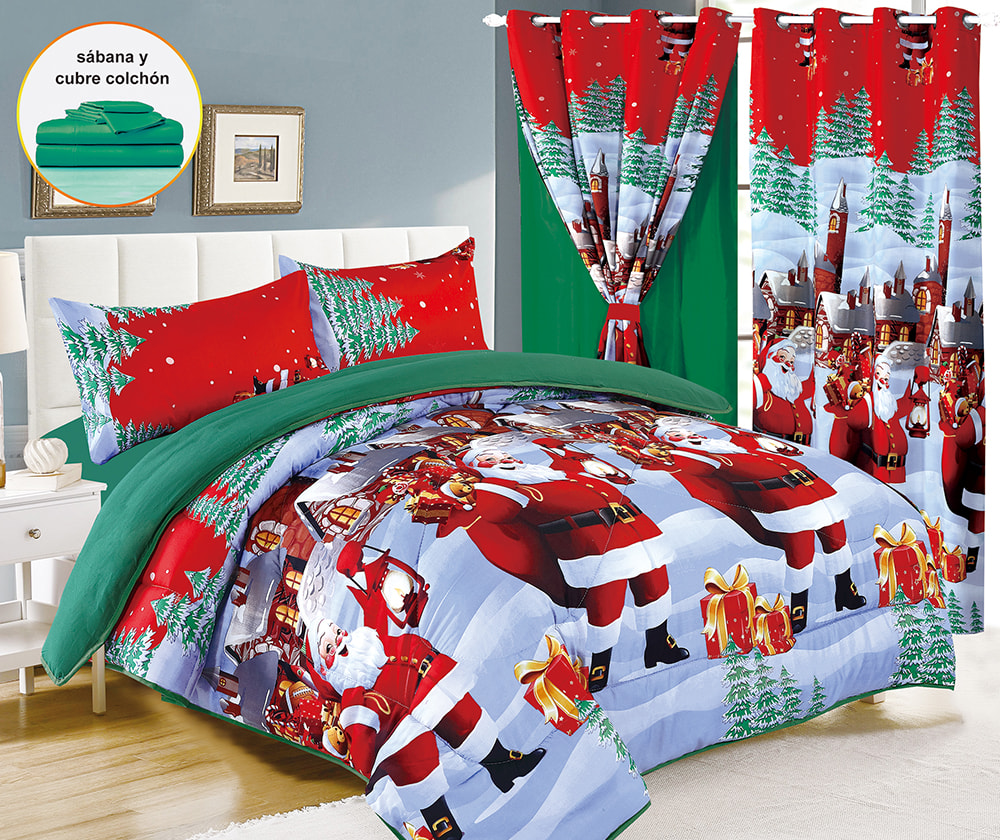
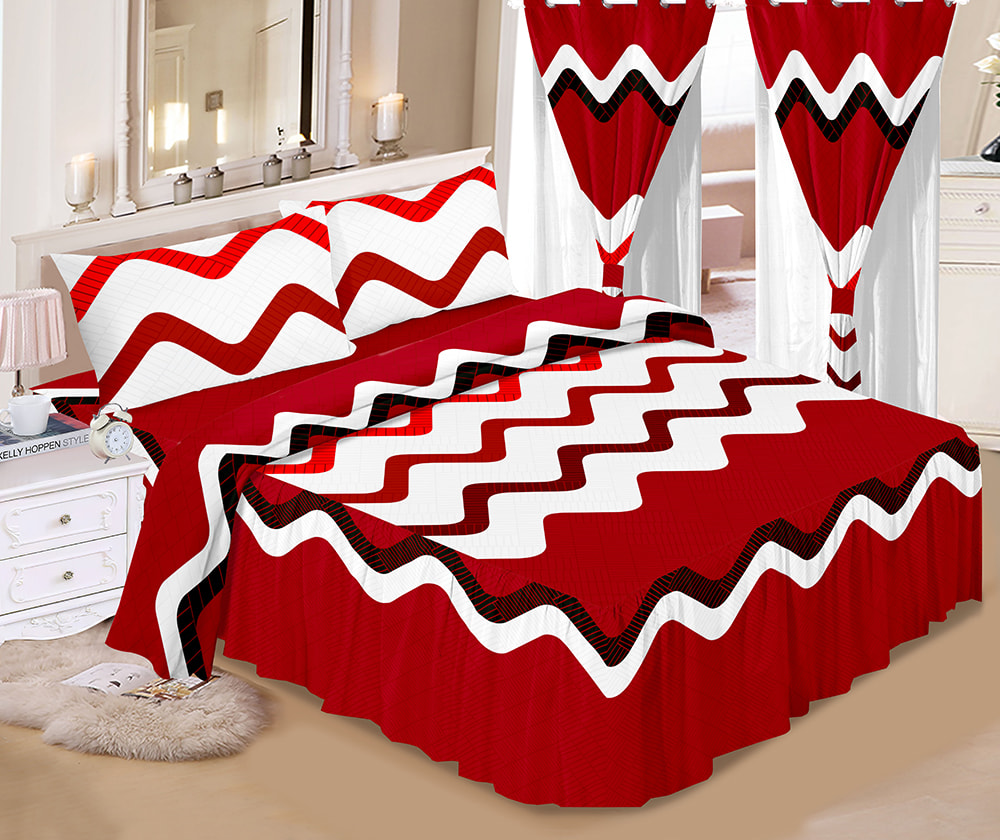
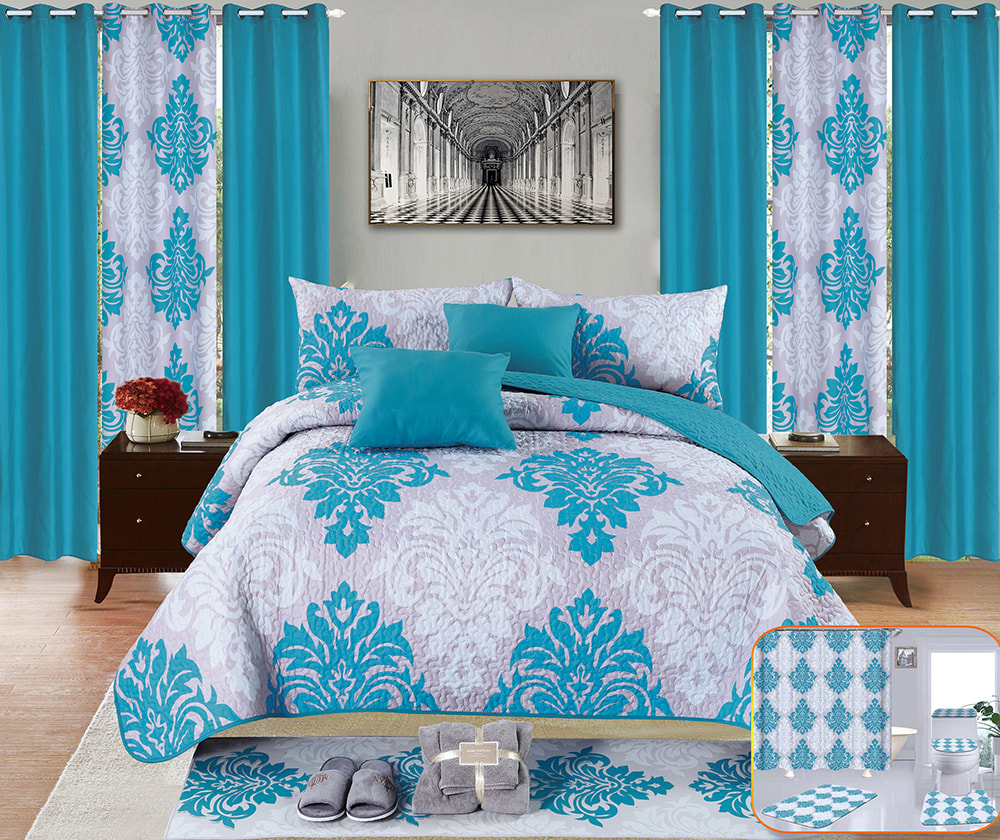
Its most distinctive feature is the inclusion of double-layer curtains. Bedding sets often concentrate only on the bed, leaving customers to find matching window treatments afterward. This product approaches the room as a complete interior setting. The bed and curtains can share the same printed design language, helping create a more harmonious appearance and reducing the difficulty of coordinating separate products.
The set is manufactured by Dongyangshi Menghui Textile Co., Ltd., an industrial and trade enterprise specializing in home textiles. The company integrates research and development, production, sales, and export operations. Its product range includes bed sheets, quilt covers, pillowcases, cushions, quilts, waterproof mattress protectors, curtains, and complete bedding sets. This broad product experience supports the development of coordinated bedroom collections rather than isolated textile items.
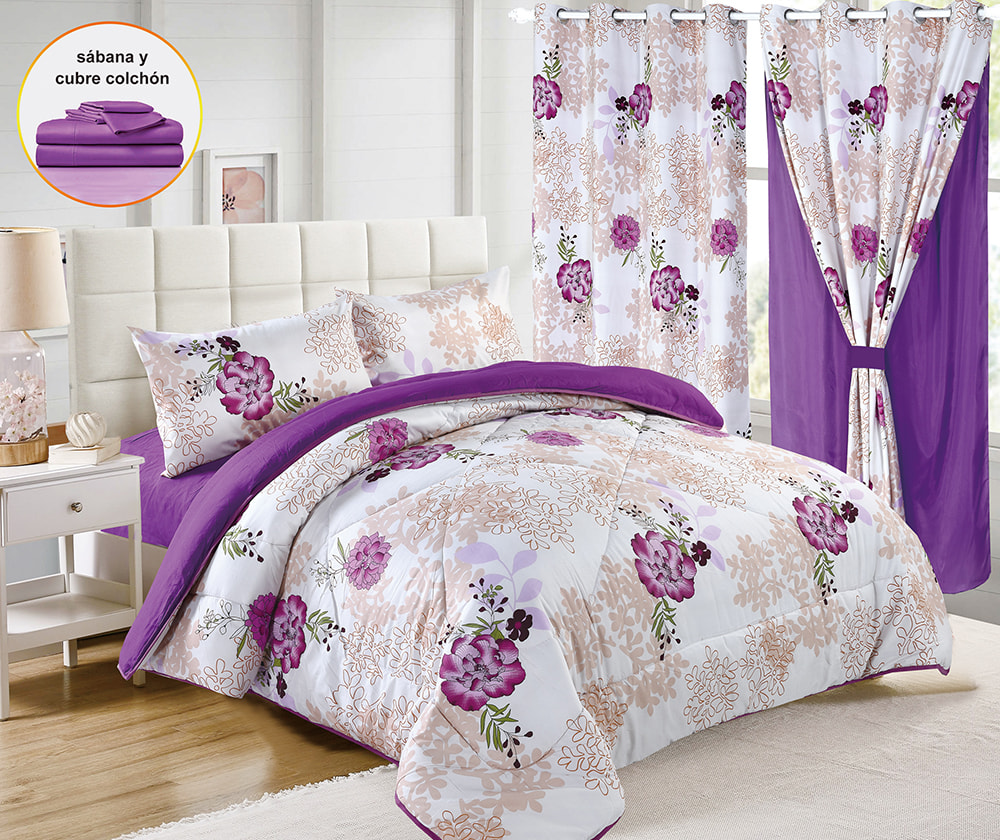
Printed 7-Piece Bedding Set With Double-Layer Curtains
1. A Complete Bedroom Textile Solution
The central advantage of the product is its complete seven-piece configuration. The set contains the primary layers required for a furnished bed together with two matching curtain panels. In the Queen configuration, the components are one 223 × 228 cm quilt, one 210 × 230 cm bed sheet, one 152 × 203 + 30 cm fitted sheet, two 50 × 70 cm pillowcases, and two 120 × 220 cm curtains.
The King configuration includes one 226 × 260 cm quilt, one 235 × 270 cm bed sheet, one 198 × 203 + 30 cm fitted sheet, two 50 × 100 cm pillowcases, and two 120 × 220 cm curtains. The fitted-sheet dimensions include an additional 30 cm depth allowance, making the specification clearer for buyers who need to match the product with a mattress profile.
| Configuration | Component | Quantity | Dimension |
|---|---|---|---|
| Queen | Quilt | 1 piece | 223 × 228 cm |
| Queen | Bed sheet | 1 piece | 210 × 230 cm |
| Queen | Fitted sheet | 1 piece | 152 × 203 + 30 cm |
| Queen | Pillowcase | 2 pieces | 50 × 70 cm |
| Queen | Curtain | 2 pieces | 120 × 220 cm |
| King | Quilt | 1 piece | 226 × 260 cm |
| King | Bed sheet | 1 piece | 235 × 270 cm |
| King | Fitted sheet | 1 piece | 198 × 203 + 30 cm |
| King | Pillowcase | 2 pieces | 50 × 100 cm |
| King | Curtain | 2 pieces | 120 × 220 cm |
This configuration offers several practical benefits. First, it simplifies purchasing. A buyer does not need to compare the colors, patterns, and fabric qualities of multiple suppliers. Second, it supports visual consistency, which is particularly important in guest rooms, furnished apartments, hotels, dormitories, and retail bedding collections. Third, it provides a more complete presentation for consumers who want a bedroom makeover without assembling every element individually.
Although the product is listed within the curtains category, its structure is broader than a conventional curtain item. It should be understood as a coordinated bedding and window-treatment package. The curtains are not an unrelated accessory; they are part of the overall design concept. This positioning gives retailers an opportunity to present the product as a room solution rather than simply another bedding SKU.
2. Coordinated Printed Design
The printed pattern is designed to create a unified visual effect across the bed and window area. Clear and delicate printing helps the quilt, sheets, pillowcases, and curtains appear connected. Natural and pleasing colors are intended to complement everyday bedroom interiors without requiring extensive additional decoration.
In a bedroom, the bed usually occupies the largest visual area. Curtains frame the room and influence the amount of light entering the space. When these two areas use coordinated textiles, the room can appear more organized and intentionally designed. The result is especially useful for buyers who prefer a finished decorative style rather than a collection of unrelated solid-color products.
Printed bedding can also support different commercial positioning strategies. Retailers may present it as a practical bedroom refresh, a seasonal home textile collection, a giftable household product, or an affordable decorative upgrade. Property managers may use the set to standardize the appearance of multiple rooms. Hospitality buyers can benefit from a consistent design language across guest spaces.
The design is not based only on visual decoration. A successful printed textile must balance appearance with regular usability. The product description emphasizes clear patterns, delicate detail, and colors designed to resist fading. While the actual service life will depend on washing, drying, exposure to sunlight, and care practices, color-retention performance is an important consideration for customers who expect the set to remain attractive after repeated use.
Compared with buying a printed quilt and unrelated curtains from different sources, a coordinated set reduces the risk of color mismatch. It also helps buyers avoid variations in fabric texture, print scale, and tone that can make a room feel visually inconsistent. This integrated approach is one of the product’s strongest advantages over basic bedding sets that do not include matching window treatments.
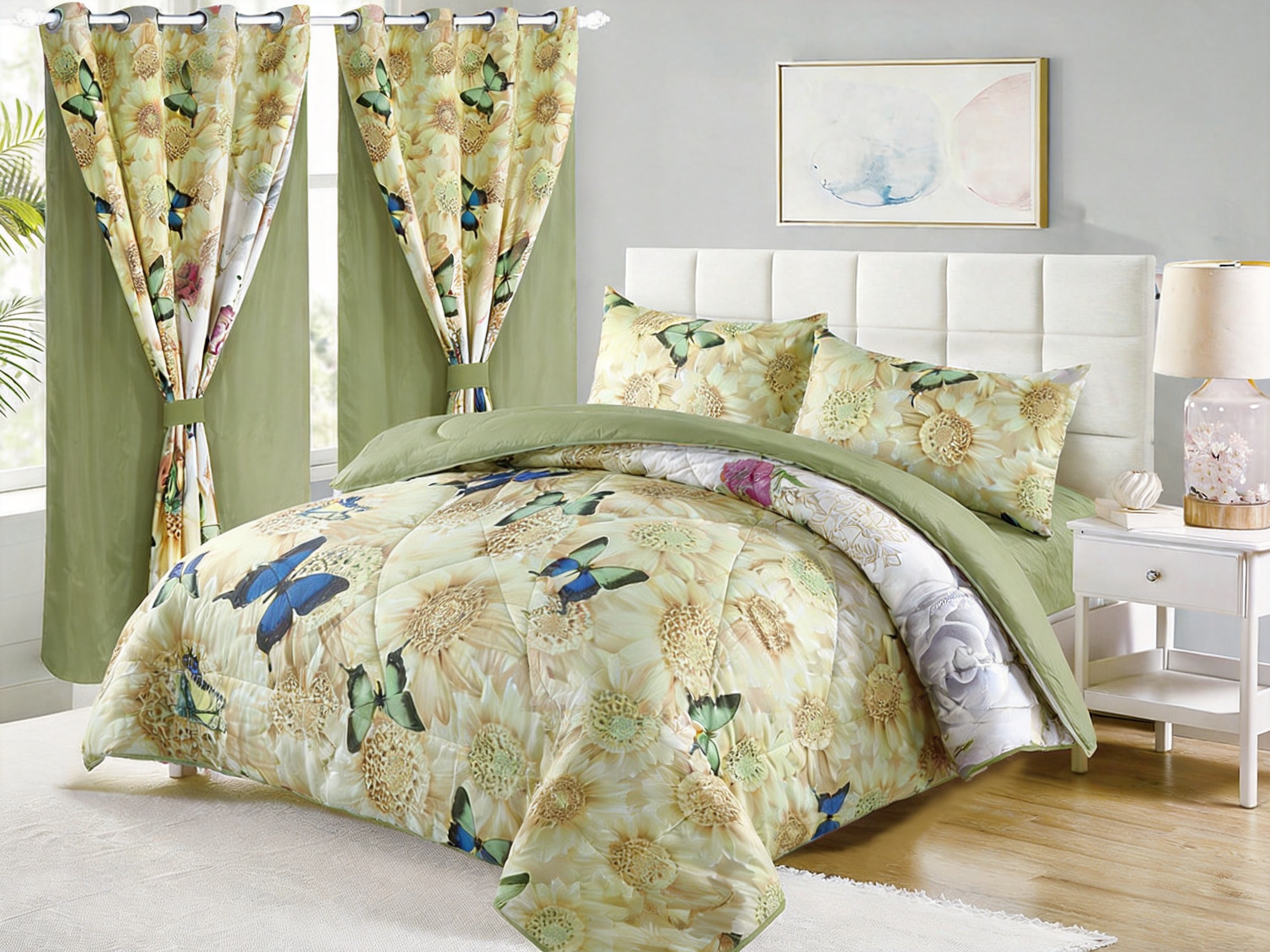
3. Microfiber Polyester for Everyday Comfort
The set is made from 100% polyester, with the product information identifying the material as microfiber polyester. Microfiber construction is widely used in contemporary home textiles because it can provide a smooth hand feel, lightness, flexibility, and practical durability when properly manufactured and finished.
For bedding, softness is a primary purchase consideration. The supplied product description characterizes the fabric as soft and comfortable to the touch, breathable, and skin-friendly. These qualities are intended to make the set suitable for everyday home use. The fabric is designed to offer a comfortable surface against the body while remaining easy to handle during laundering, storage, and routine bed making.
Polyester also provides useful advantages in production. Its fiber characteristics support consistent dyeing and printing, helping manufacturers reproduce patterns across multiple components. This is important for a seven-piece set because the quilt, sheets, pillowcases, and curtains must work together visually. Consistent material behavior can make it easier to maintain a similar appearance across different fabric panels and sewing processes.
Another practical strength is the balance between comfort and maintenance. Consumers often want bedding that feels pleasant but does not demand complicated care. Polyester-based fabrics are generally valued for their quick-drying characteristics, resistance to ordinary household wear, and manageable storage requirements. Care instructions should always be followed for the specific product, but the material selection is appropriate for customers seeking convenient daily textiles.
The fabric also supports export-oriented product development. A standardized 100% polyester specification is familiar to international buyers and can be adapted to different retail channels. It allows the manufacturer to offer a consistent base material while customizing print patterns, colors, sizes, packaging, and other details according to customer requirements.
Comfort for Different Bedroom Uses
In a private home, the set can be used in the primary bedroom, guest room, teenager’s room, or furnished rental. The coordinated structure makes it suitable for spaces where buyers want a decorative result without purchasing multiple product lines. In hospitality environments, the set can contribute to a consistent guest-room appearance, although buyers should evaluate their own commercial laundry requirements before placing a large order.
For seasonal use, the quilt can serve as a decorative top layer or an everyday covering depending on local climate and personal preference. The product description emphasizes general home use rather than specifying a particular fill weight or thermal rating. Buyers should therefore confirm the quilt filling, fabric construction, care label, and applicable comfort requirements when ordering for a specific climate or institutional application.
4. The Functional Role of the Double-Layer Curtains
The inclusion of double-layer curtains gives the product a practical dimension beyond bedroom decoration. Curtains influence light, privacy, atmosphere, and perceived room comfort. The two-layer structure is intended to help block light and sound while creating greater spatial depth.
Light control is particularly important in bedrooms. Morning sunlight, street lighting, vehicle headlights, and nearby buildings can affect sleep quality and privacy. A layered curtain arrangement can provide more coverage than a single lightweight panel, especially when the curtain is correctly installed and fully drawn. The precise level of light reduction will depend on fabric density, color, lining, window size, installation method, and gaps around the window.
The product description also highlights sound reduction. Textile curtains cannot be treated as complete acoustic insulation, and results will vary according to the room and installation conditions. However, layered fabric can help soften reflected sound and reduce the sense of exposure to outdoor activity. Combined with appropriate window sealing and room furnishings, curtains may contribute to a calmer sleeping environment.
Double-layer construction can also improve decorative flexibility. One layer may provide the primary printed appearance, while the second layer can add visual fullness or support light control. The combination creates more depth around the window and helps the room feel warmer and more finished. This is a useful distinction from basic bedding products that leave the window area untreated.
The curtains are specified at 120 × 220 cm per piece for both Queen and King configurations. Buyers should compare these dimensions with the actual window width, height, mounting position, and desired fullness. For larger windows, multiple sets may be required. Confirming curtain quantity and hanging style before installation will help ensure the intended appearance and performance.
| Feature | Potential Practical Benefit | Buyer Consideration |
|---|---|---|
| Double-layer design | Improved visual depth and greater coverage | Performance depends on installation and fabric density |
| Coordinated print | Consistent appearance between bed and window | Confirm color and pattern requirements for each order |
| 120 × 220 cm curtain panels | Suitable for many standard bedroom windows | Measure the window and allow for fullness |
| Polyester material | Practical handling and routine household use | Follow care instructions and confirm finishing details |
5. Advantages Over Conventional Bedding Sets
Many bedding sets contain only a quilt cover, sheet, or pillowcases. They may be attractive and useful, but they do not always address the entire bedroom environment. The Printed 7-Piece Bedding Set with Double-Layer Curtains differentiates itself by combining sleep surfaces and window textiles in one coordinated package.
The first advantage is convenience. A customer can obtain the principal bed components and matching curtains through one product selection. This reduces shopping time and makes it easier to achieve a finished appearance. For wholesale purchasers, the integrated package can also simplify product planning, photography, catalog presentation, inventory organization, and promotional campaigns.
The second advantage is design continuity. Separate products often have subtle differences in color, pattern scale, and texture. Even when two items are described as having the same color, they may not visually match. Manufacturing the components as a coordinated collection allows the product to be developed around a common design direction.
The third advantage is room transformation. Replacing bedding alone changes the bed, but adding coordinated curtains can change the perceived atmosphere of the entire room. This gives the set stronger decorative value than a basic quilt-and-sheet package. Customers can use it to create a warmer, quieter, and more unified sleeping environment.
The fourth advantage is multi-channel suitability. The product can be positioned in home textile stores, online marketplaces, furniture packages, hotel supply catalogs, furnished apartment programs, and export collections. Its clear size options and complete component list make it easier for buyers to classify and promote.
The fifth advantage is customization potential. The manufacturer provides customized home textile services based on customer samples. This creates opportunities for buyers who require special prints, private-label packaging, adjusted dimensions, or coordinated items across a larger collection. Customization must be confirmed case by case, but the company’s product structure indicates experience with flexible home textile requirements.
In comparison with low-cost products that focus only on initial price, the seven-piece set provides value through completeness, design coordination, and broader use. In comparison with premium decorative collections, it may offer a more accessible way to create a coordinated bedroom while retaining the practical advantages of polyester textile construction. The final value will depend on order specifications, finishing, packaging, and quality-control requirements.
6. Manufacturing Capabilities and Production Strengths
Product quality is influenced not only by the selected fabric but also by the organization behind production. Dongyangshi Menghui Textile Co., Ltd. is described as an industrial and trade enterprise integrating research and development, manufacturing, sales, and export. This integrated model can support more direct communication between product design, production planning, quality management, and international customer service.
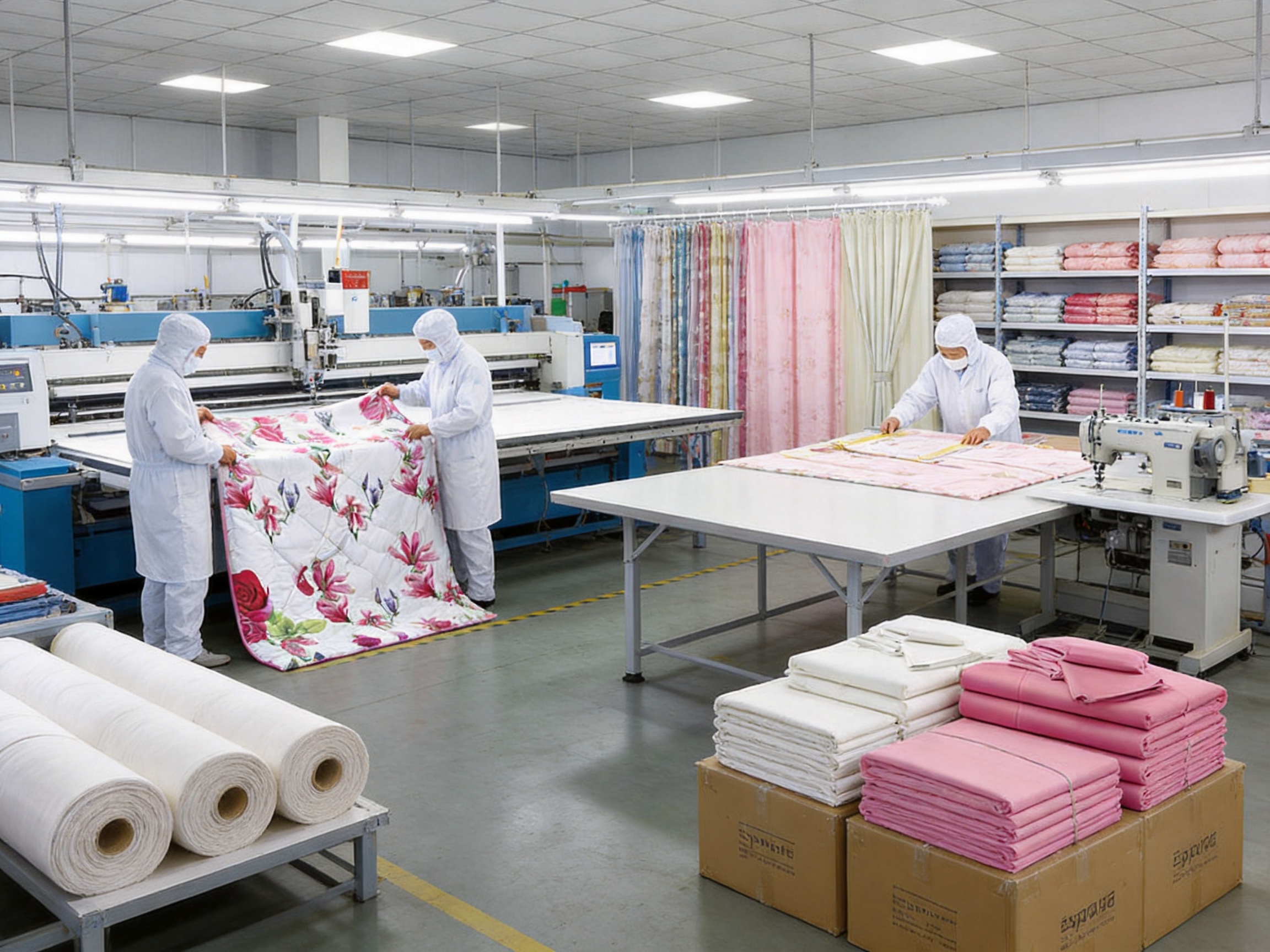
The company was founded in 2015 and operates a factory covering more than 10,000 square meters. The facility is equipped with intelligent production equipment and employs more than 100 people. These resources provide a substantial operating base for developing and producing bedding, curtains, and associated home textile products.
A factory of this scale can support several important stages of the product process. These include fabric preparation, pattern development, digital or conventional printing coordination, cutting, sewing, inspection, finishing, folding, packing, and shipment preparation. The exact equipment and workflow will depend on the order, but the company’s stated manufacturing structure indicates that it is positioned to manage more than simple trading or resale.
Research and Development Integration
Research and development is important for a product that combines multiple components. A coordinated seven-piece set must consider print placement, color consistency, size grading, fabric hand feel, curtain construction, and packaging. Development work can help ensure that the final set appears as one collection rather than as separate pieces assembled at the end of the process.
R&D also supports customer-specific projects. A buyer may provide a sample, artwork, preferred color reference, target dimensions, or packaging concept. The manufacturer can then evaluate fabric suitability, printing requirements, sewing construction, and production feasibility. This process is especially relevant to OEM customers that want their own designs while relying on an experienced factory for execution.
Intelligent Production Equipment
The company states that its factory is equipped with intelligent production equipment. Modern equipment can improve production repeatability, measurement accuracy, cutting efficiency, and workflow organization. In printed bedding, consistent cutting and sewing are essential because pattern alignment affects the perceived quality of the finished product.
Automation and organized equipment can also help reduce avoidable variation between production batches. When a buyer orders a repeat collection, stable processes are valuable for maintaining similar dimensions, print appearance, seam quality, and packaging presentation. Equipment alone does not guarantee quality; it must be supported by trained personnel, documented procedures, and inspection standards. The combination of intelligent equipment and standardized management is therefore particularly important.
Standardized Management
The company reports a standardized management system and an experienced foreign trade service team. Standardization can cover order confirmation, material selection, sample approval, production scheduling, inspection, packing, documentation, and export coordination. These procedures help reduce misunderstandings, especially when customers are purchasing in different sizes or requesting customized details.
For overseas buyers, communication is a major part of product quality. Accurate confirmation of Queen and King dimensions, curtain quantity, pillowcase size, print color, packing method, labeling, and delivery requirements helps prevent errors. An experienced foreign trade team can support this process by organizing technical details between the customer and the factory.
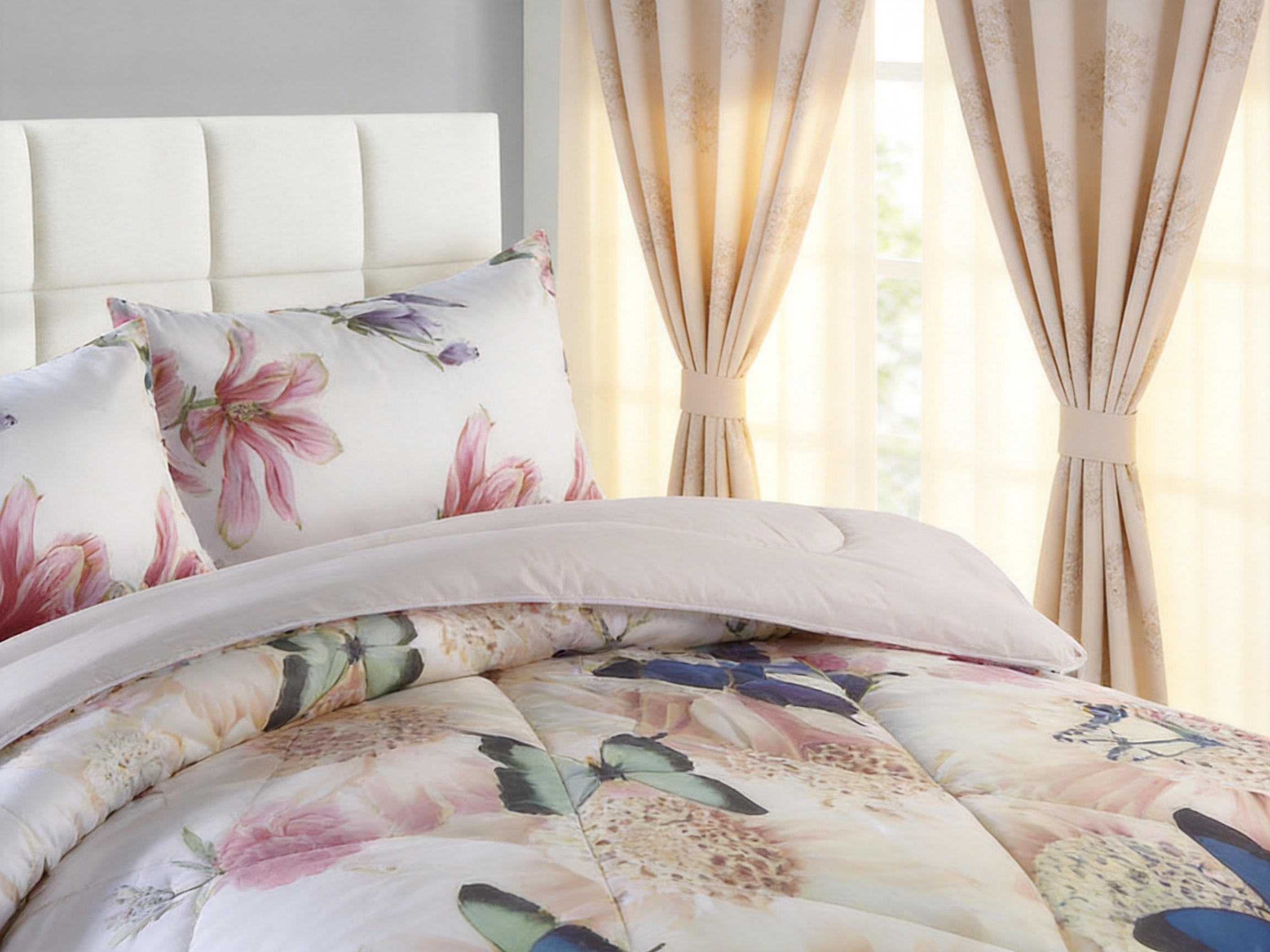
7. A Typical Production Workflow
A reliable bedding collection normally begins with product planning. The manufacturer reviews the design concept, target market, fabric specification, dimensions, component list, and packaging requirements. For this seven-piece set, planning must account for both bedding and curtains. The print should remain visually compatible across different component sizes, and the cutting plan should use the fabric efficiently without compromising design placement.
Step One: Material and Design Confirmation
The material is specified as 100% polyester microfiber. Before bulk production, buyers should confirm fabric weight, width, construction, finish, color standard, and hand feel. Print artwork should be reviewed for scale, repeat, sharpness, and color expectations. If a physical sample is supplied, it can serve as a reference for development and approval.
At this stage, the manufacturer and buyer can also clarify whether the quilt is intended as a filled comforter, decorative quilt, or another construction. The supplied information identifies it as a quilt and also refers to comforter and duvet terminology in the title field. Because these terms can vary by market, the filling material, quilting method, thickness, and care instructions should be confirmed in the purchase specification.
Step Two: Printing and Color Control
Printed fabrics require attention to color consistency and pattern clarity. The supplied product description emphasizes clear, delicate patterns and natural colors. To achieve this result, production teams need to control artwork preparation, printing settings, fabric movement, drying or curing conditions, and inspection procedures.
Color approval is especially important when a set includes curtains. A slight difference between the curtain fabric and bedding can be more noticeable because both are displayed in the same room. A documented color reference and approved pre-production sample can help establish the expected appearance before bulk manufacturing begins.
Step Three: Cutting and Component Preparation
Once fabric is approved, it is cut according to the Queen or King specification. The cutting stage must account for seam allowances, hems, elastic channels, pillowcase construction, quilt dimensions, and curtain finishing. Accurate cutting contributes to better fit and cleaner presentation.
For the fitted sheet, the additional 30 cm specification indicates mattress-depth consideration. The elastic and corner construction should be checked against the intended mattress size. A well-prepared fitted sheet should remain secure during ordinary use, although actual fit will depend on mattress thickness, corner design, and elastic quality.
Step Four: Sewing and Assembly
Sewing brings the separate panels into finished products. Quilts require consistent quilting or joining, secure edge finishing, and an even overall appearance. Sheets require clean hems and stable seams. Pillowcases must be sized accurately and finished in a way that allows practical insertion and removal of pillows.
Curtains require particular attention to panel dimensions, hems, upper-edge construction, and the relationship between the two layers. The finishing method should match the buyer’s intended installation system, such as rod pockets, tabs, hooks, or another structure. These details should be specified before production because they affect both appearance and usability.
Step Five: Inspection and Finishing
Inspection may include checking dimensions, fabric defects, printing, color consistency, seam security, stains, loose threads, and packaging completeness. A seven-piece set must be counted carefully so that each package contains the correct quilt, sheet, fitted sheet, pillowcases, and curtain panels.
Finishing typically includes thread trimming, folding, pressing where appropriate, labeling, and packing. A carefully packed set is easier to store, transport, display, and sell. It also creates a stronger first impression when opened by the end customer.
8. Quality Considerations for Buyers
Buyers evaluating this product should consider more than the appearance shown in a catalog image. A complete specification helps protect both sides of the transaction. Important points include fabric composition, fabric weight, filling type, printing method, color standard, finished dimensions, stitching requirements, curtain hanging method, packaging, labeling, and inspection expectations.
For bedding, buyers may request confirmation of shrinkage performance, colorfastness, seam strength, pilling resistance, and washing instructions. For curtains, they may review light-blocking expectations, panel fullness, hanging construction, and dimensional stability. The product description presents the set as soft, breathable, skin-friendly, durable, and resistant to fading, but customers with specific regulatory or testing requirements should communicate them before production.
Sampling is an important part of the process. A pre-production sample allows the buyer to evaluate the actual fabric hand, print quality, color, dimensions, sewing, and overall coordination. Because screen displays can differ from physical products, a sample is particularly useful when color and pattern are central selling points.
Bulk inspection can further confirm whether the final shipment matches the approved sample. Depending on the buyer’s purchasing system, inspection may be performed by the factory, a third-party service, or the buyer’s own quality team. Clear acceptance standards help establish an objective basis for approval.
| Quality Area | Recommended Verification |
|---|---|
| Material | Confirm 100% polyester composition and agreed fabric specifications |
| Review sharpness, color consistency, repeat alignment, and visible defects | |
| Quilt | Check finished size, filling, quilting, edge construction, and surface uniformity |
| Sheets | Confirm flat-sheet and fitted-sheet dimensions, hems, elastic, and seams |
| Pillowcases | Verify quantity, dimensions, closure or opening, and sewing quality |
| Curtains | Check quantity, dimensions, layer construction, hems, and hanging method |
| Packaging | Confirm set completeness, labels, folding, carton protection, and shipping marks |
9. Retail and Wholesale Opportunities
The product has strong potential for retailers that want to offer complete bedroom styling. Its coordinated format can be displayed as a visual room collection, allowing customers to understand the finished effect immediately. Product photography can show the set in a furnished bedroom, while close-up images can communicate the printed surface and fabric texture.
For online retail, clear information is especially important. Listings should state the material, size, component count, individual dimensions, curtain dimensions, and care expectations. Because the set includes both Queen and King options, product pages should make the selection process easy and should clearly distinguish the pillowcase sizes and bed measurements.
Wholesale buyers may use the set in several ways. A home textile distributor can add it to a printed bedding collection. A furniture supplier can include it in a bedroom package. A property furnishing company can use coordinated sets to prepare multiple rooms efficiently. A hotel or guesthouse may evaluate it for decorative consistency, subject to commercial durability and laundering requirements.
The set can also support OEM and private-label programs. The manufacturer’s stated ability to provide customized home textile services based on customer samples suggests that buyers may discuss special patterns, colors, labels, packaging, or related products. A coordinated OEM program could extend beyond the seven-piece set to include cushions, additional pillowcases, mattress protectors, duvet covers, or other products from the same textile collection.
10. Sustainability and Responsible Product Management
Responsible home textile purchasing includes attention to product life, care, packaging, and production efficiency. A durable set that remains attractive through regular use can reduce the need for frequent replacement. Clear care instructions can help consumers wash and dry the product appropriately, protecting both fabric performance and print appearance.
Polyester microfiber is a synthetic material, so buyers may wish to discuss the source of the fiber, production standards, packaging materials, and any available testing or compliance documentation. The company’s stated factory structure and standardized management system provide a foundation for these discussions, but specific sustainability claims should be supported by project documentation rather than assumed.
Efficient manufacturing can also contribute to responsible resource use. Accurate cutting may reduce fabric waste, while production planning can help optimize fabric rolls, packaging, and shipment quantities. When customers order coordinated products from one manufacturer, consolidated production and shipping may reduce the complexity associated with sourcing multiple items from separate suppliers.
End users should follow the care label and avoid unnecessarily harsh treatment. Proper storage, balanced washing loads, suitable temperatures, and complete drying can help maintain the product’s appearance and usability. Curtains should be cleaned according to their construction and fabric finish, particularly if the two layers use different structures.
11. How to Choose Between Queen and King Sizes
The Queen and King versions differ in quilt, bed-sheet, fitted-sheet, and pillowcase dimensions. Buyers should not choose only by the name of the bed because mattress standards vary by country and manufacturer. Measuring the mattress length, width, and depth is the safest way to confirm compatibility.
The Queen fitted sheet is specified at 152 × 203 + 30 cm, while the King fitted sheet is 198 × 203 + 30 cm. The additional depth allowance should be compared with the actual mattress thickness, including any topper or protective layer. If a mattress is unusually deep, the buyer should ask whether a customized fitted-sheet depth is available.
The pillowcase dimensions also differ. Queen includes two 50 × 70 cm pillowcases, while King includes two 50 × 100 cm pillowcases. Consumers should confirm that these dimensions match their pillows. Retail listings should show this information prominently because pillow sizes are not universal across markets.
The curtain dimensions remain 120 × 220 cm per piece in both configurations. This means the curtain selection should be based on the window rather than only the bed size. A King bedroom may have a larger window than the two supplied panels can cover, while a smaller Queen room may require attention to fullness and mounting position.
12. Care and Long-Term Use
Care practices influence the appearance and service life of printed bedding. Customers should consult the supplied care label, but general textile-care principles include sorting colors, using an appropriate washing cycle, avoiding excessive heat, and ensuring that the fabric is completely dry before storage.
Printed surfaces should be protected from unnecessary abrasion. Overloading a washing machine can create friction and reduce cleaning effectiveness. Harsh detergents or improper bleaching may affect colors and fibers. When ironing is necessary, the user should follow the recommended temperature and avoid damaging printed areas.
Curtains may collect dust and should be cleaned at intervals appropriate to the room. Regular gentle maintenance can reduce the need for aggressive washing. Because curtains are larger and may have specialized finishing, users should pay attention to hooks, loops, hems, and layered construction when removing them for cleaning.
Storage should be dry, clean, and protected from prolonged direct sunlight. The quilt should not be compressed for excessive periods if doing so affects its loft or shape. Folded sheets and pillowcases can be stored together so that the complete set remains organized. Keeping the original packaging or using a breathable textile storage bag can make seasonal rotation easier.
13. The Manufacturer’s Integrated Business Model
Dongyangshi Menghui Textile Co., Ltd. combines manufacturing and trade activities. This structure is useful for international buyers who need both product development and export coordination. Rather than separating factory production from external trading communication, an integrated enterprise can manage more of the customer journey within one organization.
The company’s stated product range demonstrates experience across several home textile categories. It produces bed sheets, quilt covers, pillowcases, cushions, quilts, waterproof mattress protectors, curtains, and bedding sets. This range is relevant to the featured product because the seven-piece set combines several of these categories in one collection.
The company was founded in 2015 and has developed a factory operation with more than 10,000 square meters of space, more than 100 employees, intelligent equipment, standardized management, and an experienced foreign trade service team. These resources support the company’s positioning as a supplier for export orders and customized home textile programs.
Customer sample-based customization is another important strength. Home textile buyers often have precise requirements that cannot be met by selecting from a fixed catalog. They may need a new print, revised dimensions, specific packaging, a different product combination, or a coordinated room collection. The ability to work from samples can help transform a buyer’s concept into a manufacturable product.
For serious sourcing projects, customers should discuss minimum order quantities, sample lead times, production lead times, testing, inspection, packaging, payment terms, shipping arrangements, and customization limits directly with the manufacturer. This practical communication is essential for converting the product concept into a successful commercial order.
14. Frequently Asked Questions
Q1: What is included in the seven-piece set?
The set includes one quilt, one bed sheet, one fitted sheet, two pillowcases, and two curtains. Together, these components make seven pieces. The curtains are designed as part of the coordinated bedroom collection rather than as separate, unrelated accessories.
Q2: What material is used?
The product information specifies 100% polyester and identifies the fabric as microfiber polyester. Buyers requiring a particular fabric weight, finish, filling, or testing standard should confirm those details before placing an order.
Q3: Which sizes are available?
The listed sizes are Queen and King. Queen and King versions have different quilt, sheet, fitted-sheet, and pillowcase dimensions. The curtain panels are specified at 120 × 220 cm per piece in both versions.
Q4: What are the Queen-size dimensions?
The Queen set includes a 223 × 228 cm quilt, a 210 × 230 cm bed sheet, a 152 × 203 + 30 cm fitted sheet, two 50 × 70 cm pillowcases, and two 120 × 220 cm curtains.
Q5: What are the King-size dimensions?
The King set includes a 226 × 260 cm quilt, a 235 × 270 cm bed sheet, a 198 × 203 + 30 cm fitted sheet, two 50 × 100 cm pillowcases, and two 120 × 220 cm curtains.
Q6: Are the curtains suitable for blackout use?
The double-layer curtains are designed to help block light and contribute to a quieter sleeping environment. Actual blackout performance depends on fabric density, color, window coverage, installation, and gaps around the window. Buyers requiring a certified blackout specification should request confirmation before ordering.
Q7: Do the curtains provide complete soundproofing?
No textile curtain should automatically be considered complete soundproofing. The layered construction may help soften reflected sound and reduce some perceived outdoor noise, but results depend on the building, window, installation, and surrounding environment.
Q8: Can the print or color be customized?
The company provides customized home textile services based on customer samples. Buyers can discuss custom prints, colors, dimensions, packaging, and related requirements with the manufacturer. Feasibility, minimum order quantities, and development charges should be confirmed for each project.
Q9: Is the product suitable for hotels or rental properties?
The coordinated seven-piece format can be useful for guest rooms, furnished apartments, and rental properties that need a consistent decorative appearance. Commercial buyers should first confirm laundering requirements, durability expectations, replacement planning, and any applicable compliance standards.
Q10: How should buyers confirm the correct size?
Measure the mattress width, length, and depth, including any mattress topper. Also measure the pillows and windows. Compare these measurements with the listed product dimensions rather than relying only on the terms Queen or King.
Q11: What should be checked before bulk production?
Buyers should approve the fabric, print, colors, finished dimensions, quilt construction, fitted-sheet depth, pillowcase size, curtain hanging method, packaging, labeling, and set contents. A physical pre-production sample is strongly recommended for customized orders.
Q12: What makes the manufacturer suitable for export orders?
The company integrates production and trade operations, has a factory of more than 10,000 square meters, employs more than 100 people, uses intelligent production equipment, maintains standardized management, and has an experienced foreign trade service team. These capabilities are intended to support international supply and customer communication.
15. Final Assessment
The Printed 7-Piece Bedding Set with Double-Layer Curtains offers a practical and decorative approach to bedroom furnishing. Its value lies in the relationship between its components: the quilt, sheets, pillowcases, and curtains are intended to work together as a unified room collection.
The 100% polyester microfiber fabric supports a soft hand feel, convenient everyday use, and consistent printed presentation. The coordinated pattern helps create a more finished interior, while the double-layer curtains contribute to light control, privacy, decorative depth, and a calmer room atmosphere.
Compared with ordinary bedding sets, the product provides broader room coverage and greater purchasing convenience. Compared with separately sourced bedding and curtains, it reduces the risk of mismatched colors and patterns. For retailers, wholesalers, hospitality buyers, and OEM customers, the complete configuration creates opportunities for simplified sourcing and coordinated product presentation.
The manufacturer strengthens the offer through integrated R&D, production, sales, and export capabilities. Its factory scale, intelligent equipment, standardized management system, experienced foreign trade team, and sample-based customization services provide a foundation for both catalog products and tailored home textile projects.
As with any textile purchase, final performance depends on confirmed specifications, manufacturing controls, installation, and care. Buyers should evaluate samples, verify measurements, define quality requirements, and communicate commercial needs clearly. With those steps in place, this seven-piece collection can serve as an efficient solution for creating comfortable, coordinated, and visually appealing bedrooms.
References
1. Product specification sheet for the Printed 7-Piece Bedding Set with Double-Layer Curtains, including material, component list, sizes, and dimensions.
2. Manufacturer-provided company profile for Dongyangshi Menghui Textile Co., Ltd., including factory scale, product categories, production resources, and export services.
3. General textile quality-control principles for printed bedding, including dimensional inspection, color evaluation, seam checking, and packaging verification.
4. General home-textile care guidance concerning polyester fabrics, printed surfaces, washing, drying, storage, and curtain maintenance.
5. General interior textile-design principles concerning coordinated bedding, window treatments, light control, privacy, and bedroom atmosphere.
Product: Printed 7-Piece Bedding Set With Double-Layer Curtains

Contact Us for More Details
Don't hesitate to contact when you need us!
Contact Information
Add:
Building 1, East Area, Wanyang Zhongchuang City, Economic Development Zone, Dongyang City, Zhejiang Province, China
Phone:
Tel:
E-mail:
Quick Links
Product Category
QR Code


+86-13616899966
+86-579-86610966
